
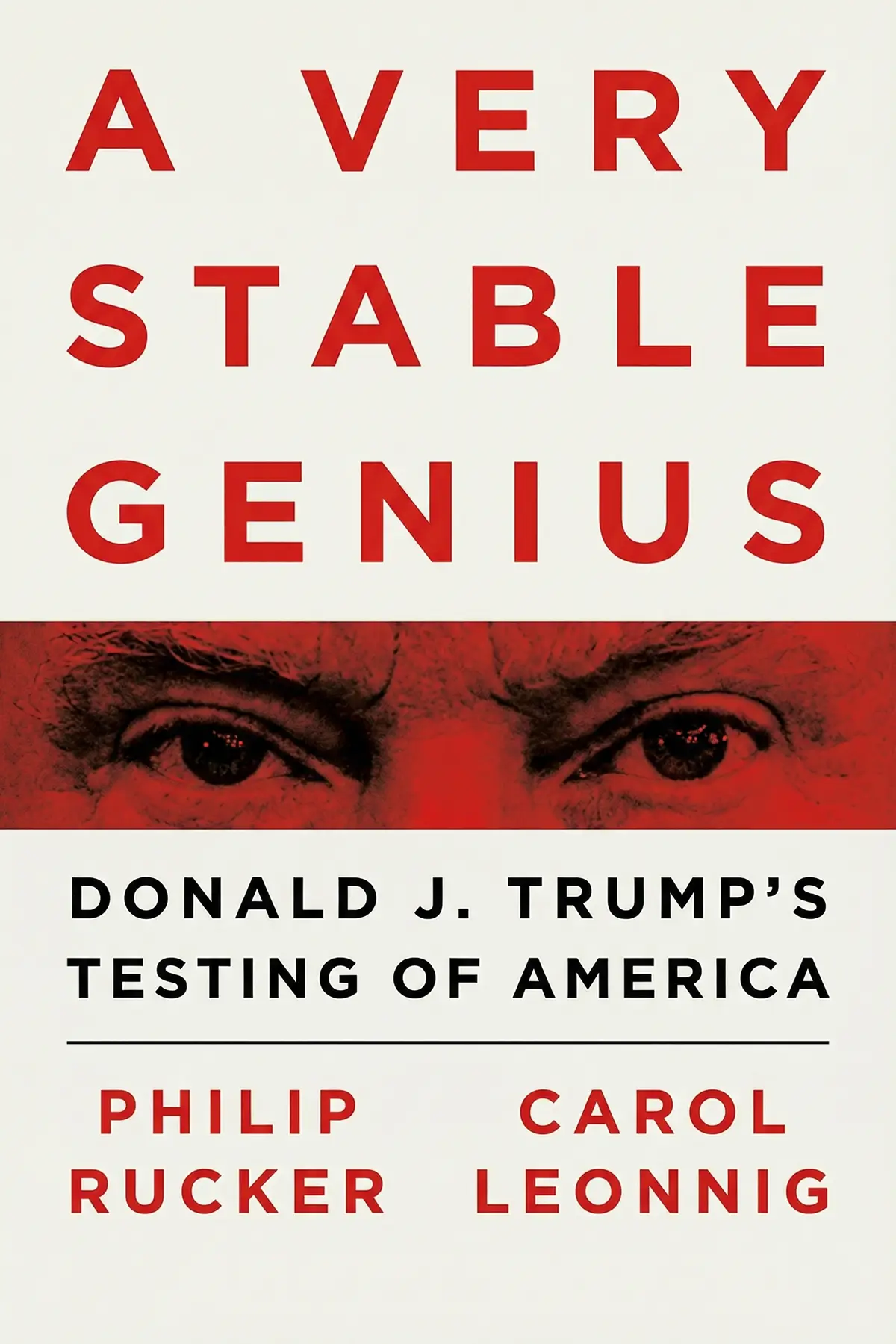
18 min 15 sec
Democracy in America
A thoughtful analysis of 19th-century American society, exploring how equality, local involvement, and religious values shaped a new political system while warning of risks like the tyranny of the majority and social isolation.
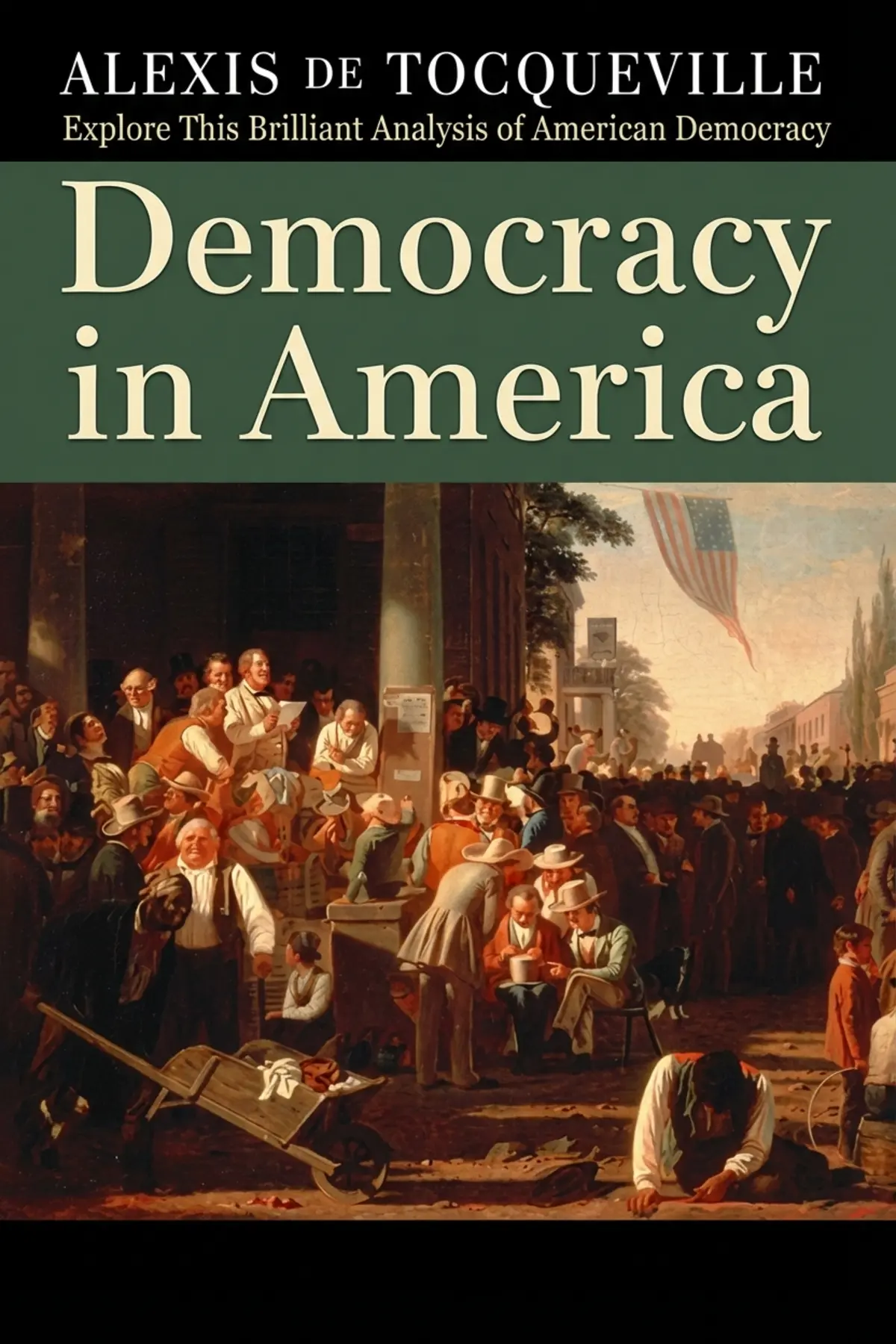
Table of Content
1. Introduction
1 min 31 sec
Imagine standing on the deck of a ship in 1831, watching the coastline of a young United States emerge from the Atlantic mist. On board is Alexis de Tocqueville, a young French aristocrat and diplomat. He hasn’t come for the scenery or the commerce; he’s come to witness a radical experiment that was sending shockwaves back to the royal courts of Europe. At a time when the Old World was still reeling from the chaos of the French Revolution and clinging to the remnants of feudalism, America was offering a glimpse into a future defined by equality.
Tocqueville’s journey resulted in one of the most profound works of political science ever written: Democracy in America. But this isn’t just a dry historical record. It is a vibrant, sometimes nervous, and deeply insightful exploration of what happens when a society tries to balance the competing forces of freedom and equality. He wasn’t just asking how the government worked; he was asking what this new way of life did to the human soul.
In this summary, we will walk through Tocqueville’s most essential observations. We’ll look at why he believed American equality was an unstoppable force of history and how that very equality created unique dangers—like the tendency for individuals to pull away from society and the risk of the majority silencing the minority. We will explore the secret weapons he identified that kept American democracy healthy, from the way neighbors organized local clubs to the peculiar role of religion in a secular state. Most importantly, we’ll see through his eyes the throughline of the American experiment: a constant struggle to ensure that the voice of the people doesn’t become the voice of a tyrant.
2. The Shift from Aristocracy to Equality
1 min 49 sec
A French diplomat discovers a world without fixed social classes, leading him to conclude that a global democratic revolution is inevitable.
3. The Tension Between Liberty and Individualism
1 min 47 sec
Equality can lead people to withdraw into their private lives, creating a new kind of social isolation that threatens the health of the republic.
4. Decentralization as a Shield Against Tyranny
1 min 47 sec
Dividing power among local and state levels prevents the central government from becoming an overbearing force in daily life.
5. The Subtle Danger of Majority Rule
2 min 03 sec
The greatest threat to a democracy isn’t a single dictator, but the overwhelming pressure of the majority to crush dissenting opinions.
6. The Crucial Role of Civic Associations
1 min 49 sec
By joining together in clubs and organizations, Americans learn the habits of cooperation that prevent social decay.
7. The Existential Threat of Slavery
1 min 51 sec
The brutal reality of racial injustice stood as a massive contradiction to the American promise of equality and freedom.
8. Religion as a Moral Foundation
1 min 50 sec
Faith provides a necessary check on the materialism of a democratic society while flourishing through its separation from the state.
9. The Restless Character of the American People
1 min 53 sec
In a world where anyone can rise, no one ever feels they have enough, leading to a culture of constant striving and pragmatism.
10. Conclusion
1 min 55 sec
As we look back at Tocqueville’s journey, it’s clear that his analysis of American democracy was both a celebration and a warning. He saw a nation that had found a way to unleash the potential of the common person, creating a society of unprecedented energy and equality. He identified the essential ‘guards’ of this system—the local governments that keep power close to home, the civic associations that turn strangers into neighbors, and the religious values that provide a moral framework for freedom. These are the tools that allow a republic to thrive.
Yet, he also left us with profound questions that remain relevant today. He warned us about the ‘individualism’ that can make us lonely and disconnected. He cautioned us about the ‘tyranny of the majority’ that can turn the public square into a place of quiet conformity. And he pointed to the deep, structural injustices of slavery and racial prejudice as the greatest threats to the American promise.
The ‘throughline’ of Tocqueville’s work is that democracy is not a machine that runs on its own; it is a living thing that requires constant care and attention. It requires citizens who are willing to step out of their private lives and engage with their communities. It requires a commitment to protecting the rights of those we disagree with. And it requires a recognition that equality, while a beautiful ideal, can only be sustained if we also cherish the individual liberty that makes us unique.
Ultimately, Tocqueville saw America as a work in progress—an unfinished project that would continue to inspire and challenge the world. His insights remind us that the health of a democracy is found not just in its laws, but in the hearts and habits of its people. Whether we are building a local club, debating a national issue, or simply speaking up for an unpopular truth, we are participating in the very experiment that Tocqueville so masterfully described nearly two centuries ago.
About this book
What is this book about?
This summary explores Alexis de Tocqueville’s landmark study of the American experiment. Visiting from France in the 1830s, Tocqueville observed a nation where the rigid hierarchies of Europe were being replaced by a radical equality of conditions. He sought to understand how a society could remain free while its citizens grew more similar. The promise of the book is a timeless framework for understanding democracy’s durability and its inherent flaws. The narration delves into why local participation is the lifeblood of liberty and how the pressure to conform can become its greatest threat. By examining the roles of religion, civic clubs, and the dark stain of slavery, the text provides a comprehensive look at the mechanisms that keep a republic stable—or lead it toward soft despotism. It is a deep dive into the American character and the structural safeguards necessary to maintain a healthy democracy.
Book Information
About the Author
Alexis de Tocqueville
Alexis de Tocqueville (1805–1859) was a prominent French diplomat and political scientist. He is primarily remembered for his classic work Democracy in America, published in 1835 following an extensive nine-month tour of the United States. His observations during this period offered a groundbreaking analysis of how democratic ideals functioned in practice. Beyond his study of America, Tocqueville authored influential texts regarding the French Revolution, the design of political institutions, and the landscape of European politics, cementing his legacy as a foundational figure in social and political theory.
Ratings & Reviews
Ratings at a glance
What people think
Listeners view this work as essential reading for political leaders and a helpful tool for grasping political science, as one listener mentions how it fosters a strong feeling of civil order and community. Furthermore, its ongoing pertinence is highly praised, with one listener pointing out its timeless observations, and the prose is lauded as an effective introduction to de Tocqueville's ideas. On the other hand, opinions on the translation quality are varied; some believe the translation is well-done, while others feel differently. Lastly, listeners value the book’s unique outlook, with one noting that it fundamentally shifts their perception of democracy and America.
Top reviews
Hassan
This is arguably the most essential reading for anyone trying to grasp the machinery of Western governance. Tocqueville manages to dissect the American spirit with a level of precision that feels almost surgical for someone who only spent nine months on these shores. I was particularly struck by his insights into how local associations foster a deep sense of community and civil order, preventing the "tyranny of the majority" he so feared. While some of the historical context regarding Andrew Jackson feels dated, the core analysis of our political science remains a foundational masterpiece. It truly offers a transformative perspective on why the American experiment succeeded where others faltered during that era. Every aspiring statesman should have a dog-eared copy of this on their nightstand.
Show morePranee
Picked this up during a period of personal transition, looking for a way to ground my understanding of my own country. I didn't expect to find such a poetic and hauntingly accurate reflection of the American character in a 19th-century text. Tocqueville captures that restless, money-obsessed ambition that still defines us today, yet he balances it with a genuine admiration for our self-reliance. The way he describes the "mannerisms" of the people as the true glue of the Constitution—rather than the document itself—changed how I view our current social frictions. It’s a dense read, and you definitely need a quiet space to process his long, winding sentences, but the payoff is immense. This book provides a much-needed sense of civil order in an otherwise chaotic political landscape.
Show moreSureerat
It’s genuinely eerie how a French aristocrat in his thirties could understand the American soul better than most people born here. His writing style is surprisingly crisp when you find the right translation, full of aphorisms that you’ll want to highlight and revisit. I was particularly captivated by his discussion on how a democratic mind struggles with "habitual inattention," a warning that feels incredibly relevant in our age of digital distraction. He treats the American experiment with a mix of awe and skepticism that is refreshing compared to modern partisan bickering. This book isn't just a history lesson; it's a guide to understanding the delicate balance required to maintain a functioning society. If you want to understand the future of global democracy, you have to start here.
Show moreSebastian
Few books change your entire worldview, but Tocqueville’s masterpiece did exactly that for me. I started reading it as a way to understand the roots of American civil order and ended up with a profound new perspective on the nature of equality itself. He perfectly captures the irony of a classless society—how it forces everyone into a constant, feverish race for status and material comfort. His analysis of the "middle-class" ambition is so spot-on it feels like it could have been written last week. I actually enjoyed the longer, more analytical sentences because they forced me to slow down and really think about the implications of his words. It’s a monumental achievement in sociology that remains the gold standard for understanding our nation.
Show moreJai
The sheer scope of this two-volume work is enough to intimidate even the most seasoned readers of political theory. I found the first volume from 1835 much more engaging as a travelogue and survey of government, whereas the 1840 follow-up leans heavily into abstract philosophical comparisons. Truth is, the translation I read was a bit stiff in places, making some of the more complex arguments about industry and "new aristocracies" feel like a chore to get through. However, Tocqueville’s ability to predict the future rivalry between the United States and Russia is nothing short of prophetic. He sees the "plowshare" and the "sword" as the two paths for these emerging giants, and reading that today gives me chills. It’s a valuable resource, even if you have to skim some of the more repetitive sections.
Show moreFrida
Ever wonder why Americans are so obsessed with work and pragmatism compared to our European counterparts? Tocqueville traces this back to the Puritan influence and the lack of a traditional class system, creating a society of "good men" rather than "great" ones. It’s a fascinating, albeit sometimes gloomy, look at how equality can actually lead to a certain cultural mediocrity. I appreciated his observations on how commerce encourages stability, though his dismissal of Native American and Black futures in the states was difficult to stomach. To be fair, he recognizes the horror of slavery, even if he couldn't quite envision the Civil War coming. It’s a complex, multifaceted work that demands your full attention but rewards you with a deeper understanding of our national DNA.
Show moreTippawan
After hearing about it for years in various history podcasts, I finally decided to tackle this beast of a book. Frankly, I was surprised by how much Tocqueville got right about race relations, even if his specific prediction of a "race war" didn't play out exactly as he imagined. He understood that legal freedom for enslaved people wouldn't automatically erase deep-seated prejudices, a reality we are still grappling with today. The writing is incredibly sharp, and he has this amazing knack for condensing complex social theories into single, punchy paragraphs. My only gripe is that Volume Two feels a bit repetitive compared to the fresh observations in the first half. Still, it’s a vital resource for anyone who wants to move beyond surface-level political debates.
Show morePrayoon
As someone who appreciates history, I found it fascinating to see the United States through the eyes of an outsider from the 1830s. Tocqueville’s "literary good-bye kiss" to the old world while exploring the new one provides a unique vantage point that no American writer could replicate. He manages to be both an admirer and a critic, highlighting our work ethic while mourning the loss of "higher" aristocratic pursuits. The translation I used was quite clear, though some of the legalistic sections in Volume One were a bit of a grind. Overall, it’s a brilliant marriage of facts and reasoning that explains the "why" behind so many American quirks. It really helps you see the broader patterns of democracy that we often take for granted.
Show moreManop
Not gonna lie, this was one of the most demanding books I’ve ever attempted to finish. While I recognize its status as a must-read for statesmanship, the sheer density of the prose often felt like wading through molasses. There are moments of brilliant insight, especially regarding the power of the press and the role of religion in public life, but they are buried under pages of dry exposition. Look, his take on Andrew Jackson as a man of "mediocre talents" felt a bit biased, reflecting his own aristocratic leanings more than objective reality. I also found the translation I picked up to be incredibly inconsistent, which didn't help with the already complex sentence structures. It's a significant work, but maybe one better consumed in excerpts rather than a cover-to-cover marathon.
Show moreMia
To be fair, I struggled to stay awake through a lot of this, and I say that as someone who usually enjoys political science. The praise for this being a "timeless guide" feels a bit hyperbolic when you encounter his long-winded chapters on outdated administrative details. I found the translation to be clunky and archaic, which made an already difficult text feel nearly impenetrable at times. While his predictions about Russia and the US are cool, they comprise only a tiny fraction of a massive, thousand-page slog. I think the book's reputation rests more on its historical novelty than its actual readability for a modern audience. If you aren't a scholar or a hardcore history buff, you might find this more frustrating than enlightening.
Show moreReaders also enjoyed
A Warning
Miles Taylor
Abolish Rent: How Tenants Can End the Housing Crisis
Tracy Rosenthal
Abortion: Our Bodies, Their Lies, and the Truths We Use to
Jessica Valenti

Adults in The Room: My Battle With Europe’s Deep Establishment
Yanis Varoufakis
21 Lessons for the 21st Century
Yuval Noah Harari
A Different Kind of Power: A Memoir
Jacinda Ardern
AUDIO SUMMARY AVAILABLE
Listen to Democracy in America in 15 minutes
Get the key ideas from Democracy in America by Alexis de Tocqueville, plus 5,000+ more titles in English and Thai.
- 5,000+ titles
- Listen as much as you want
- 7-day free trial
- Cancel anytime







