
23 min 32 sec
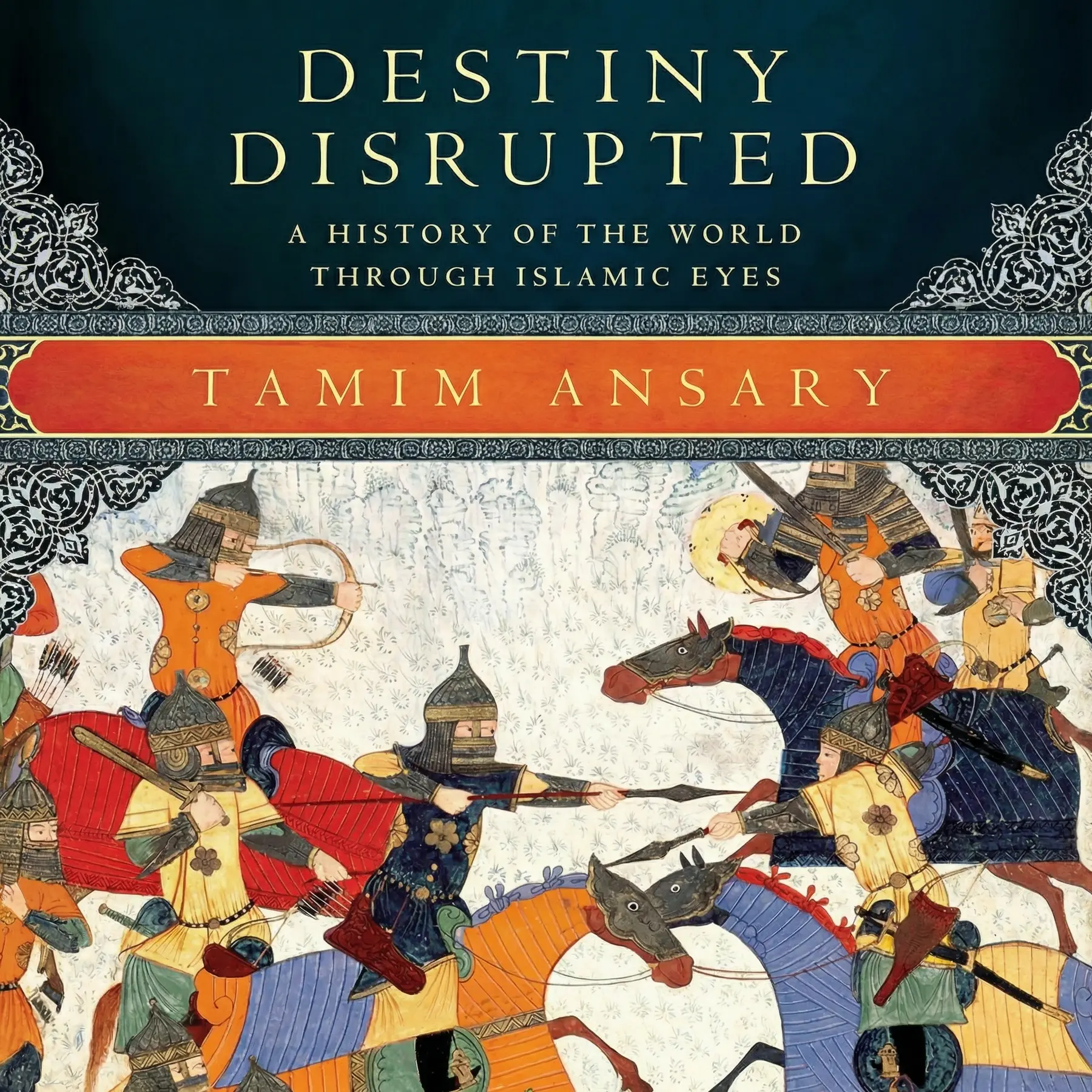
Destiny Disrupted: A History of the World Through Islamic Eyes
By Tamim Ansary
Destiny Disrupted provides a profound exploration of world history from an Islamic perspective, tracing the evolution of Muslim civilizations from the Prophet’s era to the modern political and economic challenges of today.
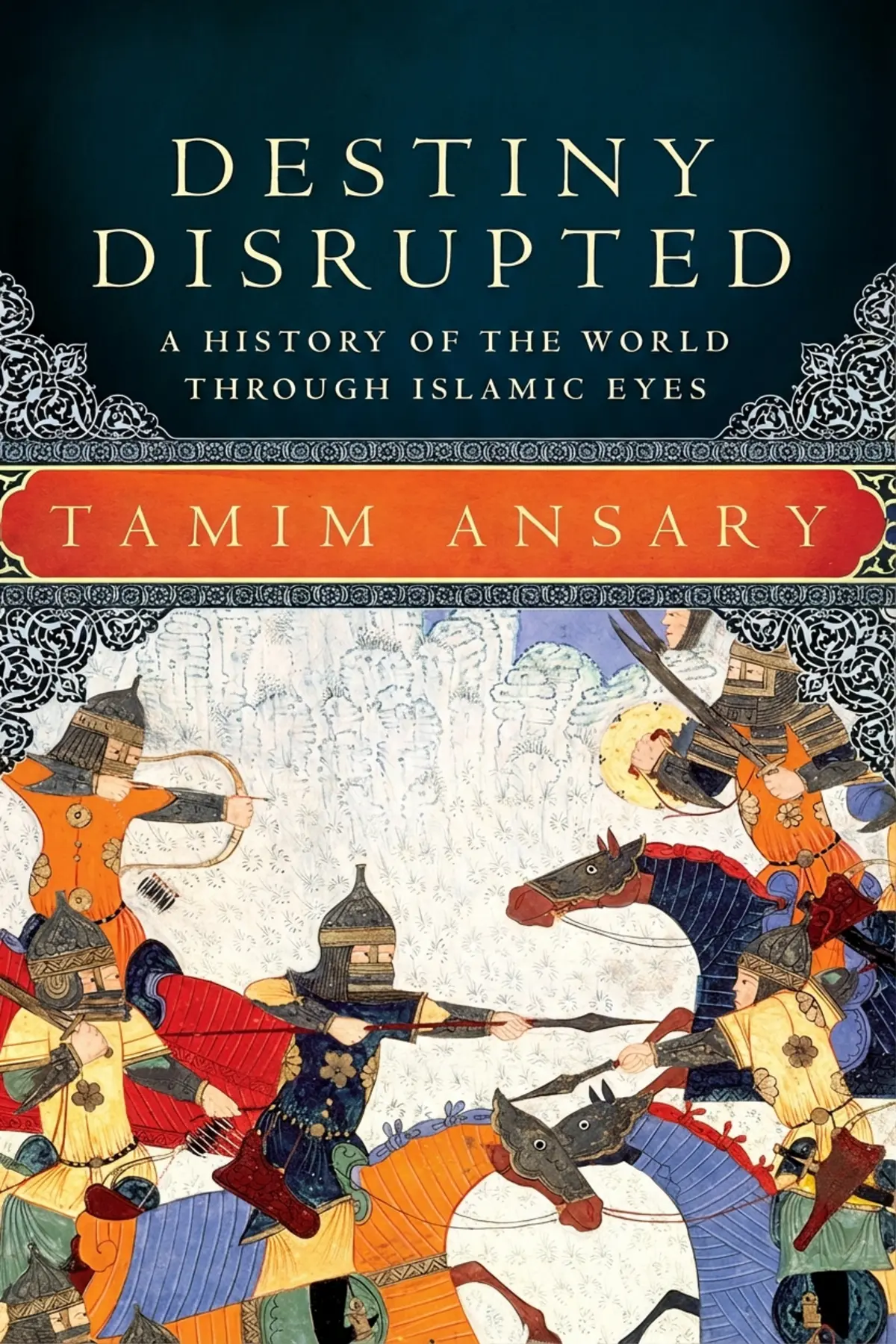
Table of Content
1. Introduction
1 min 43 sec
When we study history, we often imagine a single, linear progression of events that led the world to where it is today. In the Western tradition, this usually involves a path from the ancient Mediterranean to the European Enlightenment and beyond. But imagine for a moment that you are standing in a different spot on the globe, looking at the same span of centuries through an entirely different lens. This is the perspective offered by Tamim Ansary, who invites us to step away from the familiar Western-centric narrative and walk through the past as it was experienced by the Islamic world.
To understand the present state of global affairs, it isn’t enough to simply watch the news. We have to understand the ‘throughline’ of a civilization that, for over a thousand years, saw itself as the center of the world. For vast stretches of time, while Europe was struggling through what were once called the Dark Ages, the Islamic world was a vibrant, interconnected hub of trade, scientific discovery, and philosophical debate. It was a world that felt it was fulfilling a divine destiny—one that was eventually disrupted by the rise of a different kind of global power.
In this journey, we will explore the birth of a faith that transformed a merchant society into a sprawling empire. We will look at the intellectual heights of the Golden Age, the devastating trauma of the Mongol invasions, and the slow, complex unraveling of Muslim power in the face of the Industrial Revolution. By the end, the goal is to see history not as one story, but as two parallel stories that have finally, and often violently, collided. This is more than just a history lesson; it is an attempt to understand the internal logic of a culture that has shaped the lives of billions, offering a vital perspective on why the world looks the way it does today.
2. Defining the Middle World
1 min 51 sec
Discover how the very term ‘Middle East’ hides a rich, independent history of a region that served as the true center of global civilization long before the modern era.
3. The Emergence of a Radical New Faith
1 min 50 sec
Witness the transformation of a merchant society as a single voice challenged the status quo and introduced a vision of social justice that resonated far beyond the Arabian sands.
4. The Era of the Rightly Guided Deputies
1 min 56 sec
Explore the turbulent period following the Prophet’s death, where the first four leaders struggled to maintain unity while expanding a burgeoning empire.
5. A House Divided: Dynasties and Schisms
2 min 00 sec
Delve into the power struggles between the Umayyads and Abbasids that solidified the divide between Sunni and Shi’i Muslims, shaping the faith’s future.
6. The Intellectual and Mystical Flowering of Islam
2 min 00 sec
Uncover the Golden Age where Islamic scholars and mystics synthesized ancient knowledge with new discoveries, laying the groundwork for modern science.
7. Catastrophe and the End of the First Era
1 min 58 sec
Witness the Islamic world’s struggle against the twin threats of the European Crusades and the devastating Mongol invasions that leveled cities.
8. The Rebirth: Three Great Muslim Empires
1 min 59 sec
Experience the spectacular rise of the Ottoman, Safavid, and Moghul Empires, which restored Islamic prestige and created some of history’s most iconic monuments.
9. The Economic Shift and European Encroachment
1 min 57 sec
Learn how the discovery of the Americas and the Industrial Revolution allowed Europe to slowly dismantle the economic foundations of Islamic power.
10. Reform, Secularism, and the Nation-State
2 min 10 sec
Examine the 19th-century movements that sought to modernize the Islamic world, leading to a clash between traditional religious law and Western-style nationalism.
11. The Roots of Modern Grievance
2 min 12 sec
Understand the historical events, from the creation of Israel to Cold War interventions, that fueled contemporary anti-Western sentiment across the Middle World.
12. Conclusion
1 min 56 sec
As we reach the end of this journey through the history of the Middle World, we are left with a much clearer picture of why the global stage looks the way it does today. Tamim Ansary has shown us that there isn’t just one ‘world history,’ but rather multiple stories happening at once. For over a millennium, the Islamic world operated with its own internal logic, its own heroes, its own catastrophes, and its own vision of a divine destiny. It was a world of immense intellectual achievement and political power that, for a long time, didn’t even feel the need to look toward Europe for answers.
The ‘disruption’ of that destiny came not because one culture was inherently superior to the other, but because of a massive shift in economic and industrial power that caught the great Muslim empires off guard. The friction we see today—the tension between secularism and tradition, the deep-seated resentment toward Western intervention, and the search for a unified Muslim identity—are all direct results of this historical collision. When two civilizations, both believing they are the center of the story, finally collide, the result is bound to be turbulent.
What can we take away from this? The most actionable insight is the importance of perspective. To find any kind of path forward in global relations, we must be able to step outside our own ‘throughline’ and understand the story the other side is telling itself. If we only see the Islamic world through the lens of Western interests or modern headlines, we miss the depth of a civilization that has contributed so much to the human story. By acknowledging this parallel history, we can begin to approach modern conflicts not with confusion, but with a necessary and profound empathy for a world that is still trying to find its place in the wake of a great disruption. The future depends on our ability to see both sides of the story and recognize that we all share a single, increasingly interconnected world.
About this book
What is this book about?
For many in the West, history is viewed through a specific lens—the rise of Greece and Rome, the Middle Ages, the Renaissance, and the Industrial Revolution. However, this narrative often overlooks a parallel history unfolding in what Tamim Ansary calls the Middle World. Destiny Disrupted shifts the focus to this alternative timeline, providing a comprehensive account of global events as seen through Islamic eyes. The book promises to bridge the gap between two different perceptions of the world. It begins with the birth of Islam in the seventh century and follows the expansion of a faith that became a civilization, a legal system, and a scientific powerhouse. By exploring the rise and fall of great dynasties like the Abbasids and Ottomans, the narrative explains how internal fragmentation and external pressures—from Mongol invasions to European colonialism—reshaped the Islamic world. Ultimately, it offers a necessary historical context for understanding contemporary conflicts and the deep-seated grievances that often dominate modern headlines.
Book Information
About the Author
Tamim Ansary
Tamim Ansary has been a major contributing writer to several history textbooks. In addition to publishing several essays and commentaries in the San Francisco Chronicle, Salon and Alternet, he has a monthly column on Encarta.com. Ansary is also the author of the memoir West of Kabul, East of New York and co-author of The Other Side of the Sky.
Ratings & Reviews
Ratings at a glance
What people think
Listeners consider this work a superb investigation of global history, with one listener emphasizing its thorough exploration of over 1,000 years of Islamic history. Additionally, the prose is captivating and accessible, while the narrative remains seamless and organized effectively. The book also provides distinctive perspectives on the Islamic world, shifting perceptions and offering an alternative lens on past occurrences. Listeners value the high caliber of the content, with one listener mentioning how it facilitates the use of parallels and comparisons that help deepen their comprehension.
Top reviews
Chloe
Finally got around to reading this, and I’m genuinely stunned by how much I didn’t know about the 'Middle World.' Tamim Ansary manages to turn 1,400 years of complex history into a narrative that flows like a propulsive novel. He frames the Crusades not as the world-shaking event we learn about in the West, but as a minor nuisance compared to the devastating Mongol invasions. The chatty, almost slangy prose makes even the dense theological splits between Sunnis and Shias feel accessible and urgent. To be fair, some sections move at a breakneck speed, but the sheer clarity of the 'mismatched histories' concept is a total game-changer.
Show moreMason
Wow. This is exactly how history should be written if we actually want people to remember it. Ansary acts like a friendly professor who grabbed a beer with you to explain why the world looks the way it does today. The way he describes the 'intertwining' of Western and Muslim narratives during the Cold War was particularly eye-opening. Not gonna lie, I was confused by the different dynasties at first, but his 'speeded-up film' approach helps you see the big picture without getting bogged down in dates. It’s an essential primer for anyone trying to understand the roots of current global friction.
Show moreMan
Tamim Ansary writes history like a storyteller spinning an epic yarn around a campfire, and I was hooked from the first page. He brilliantly illustrates how the Muslim world was the center of global civilization while Europe was still 'crawling in the mud.' The revelation that the steam engine was invented in the Islamic world centuries before the Industrial Revolution—but didn't take off—was fascinating. Look, the book covers a staggering amount of ground, from the Prophet’s life to the tragedy of 9/11, yet it never feels disjointed. It provides a much-needed lens that challenges the typical Eurocentric version of world events.
Show moreSupatra
Picked this up on a whim after a friend recommended it, and it completely shifted my perspective on Islamic culture. The book does an incredible job of explaining the concept of the 'Ummah' and why community matters so much more than individual salvation in this context. I loved the chapters on the Golden Age of Baghdad and how the Mongol sack of the city became the ultimate trauma for the region. The truth is, most Westerners have a huge blind spot when it comes to this part of the world. Ansary fills that void with humor, insight, and a prose style that is incredibly hard to put down.
Show moreHenry
Ever wonder why 'jihad' is such a misunderstood term or why the 1967 war was such a turning point for Islamic fundamentalism? This book answers those questions without falling into the trap of being an apologist or an antagonist. Ansary’s analysis of 'discipline versus decadence' as a core conflict between the East and West is one of the most brilliant insights I’ve read in years. The prose is punchy and conversational, making it feel like a long, fascinating chat rather than a lecture. It’s a dense 1,300 years of history, but the structure is so logical that you never feel lost in the timeline.
Show moreKanokporn
This book should be required reading for anyone who thinks they understand the current 'clash of civilizations.' Ansary dismantles the idea that we are destined to fight and instead shows how our histories have simply been moving on separate tracks. I was particularly gripped by the sections on the Safavids and the Ottomans, which are usually ignored in Western schools. The narrative is fast-paced and witty, proving that history doesn't have to be dry to be educational. It’s a masterful piece of work that manages to be both informative and deeply entertaining from start to finish.
Show moreZoey
As a history buff who usually finds textbooks dry, I found Ansary’s storytelling style to be a breath of fresh air. He avoids the typical 'clash of civilizations' trope and instead highlights how two distinct worldviews simply stopped talking to each other. I specifically appreciated the deep dive into the 1953 CIA coup in Iran; it provided context for modern tensions that I had never fully grasped. Frankly, the later chapters on the 20th century felt a bit rushed compared to the sweeping epic of the early Caliphates. Still, the information quality is top-notch and it bridges a massive gap in Western education.
Show moreRatree
After hearing so many people rave about this, I finally dove in and found the 'Middle World' framework to be incredibly helpful. The author’s ability to draw parallels between the Protestant Reformation and the lack of a similar movement in Islam was a highlight for me. However, I did find some of the slangy language, like describing the Crusades as 'mosquitos,' a bit distracting at times. Personally, I would have preferred a slightly more formal tone for such weighty historical events. Despite that, the information quality is fantastic, and it definitely provides a perspective that is missing from most history curriculums.
Show moreSienna
While the narrative is undeniably fluid and easy to digest, I have some reservations about the depth of the analysis. As someone with a background in Middle Eastern studies, I felt the 20th-century political summaries were a bit too slanted toward a pro-West interpretation. The author is an excellent communicator, but he occasionally oversimplifies the nuances of secular modernist leaders and their eventual downfalls. To be fair, it’s a brilliant introductory text for a general audience, but it skips over some of the heavier theological debates. It’s a great 'story,' just keep in mind that it is exactly that—one man's storytelling of history.
Show morePetch
I really wanted to love this given the premise, but I struggled with the author’s perspective throughout the book. While it claims to be history through 'Islamic eyes,' it felt more like a Western liberal analysis wrapped in an Eastern-centric package. In my experience, if you are looking for a truly decolonial account, this book might leave you feeling a bit disappointed. The tone is often too casual—almost flippant—when discussing deeply significant religious transformations. It’s certainly a fast read, but it lacks the academic rigor I was expecting for such a massive subject.
Show moreReaders also enjoyed
A Splendid Exchange: How Trade Shaped the World
William J. Bernstein
A Spy Among Friends: Philby and the Great Betrayal
Ben Macintyre
1491: New Revelations of the Americas Before Columbus
Charles C. Mann
A Year in the Life of William Shakespeare: 1599
James Shapiro
1929: Inside the Greatest Crash in Wall Street History--and How It
Andrew Ross Sorkin
AUDIO SUMMARY AVAILABLE
Listen to Destiny Disrupted in 15 minutes
Get the key ideas from Destiny Disrupted by Tamim Ansary, plus 5,000+ more titles in English and Thai.
- 5,000+ titles
- Listen as much as you want
- 7-day free trial
- Cancel anytime







