
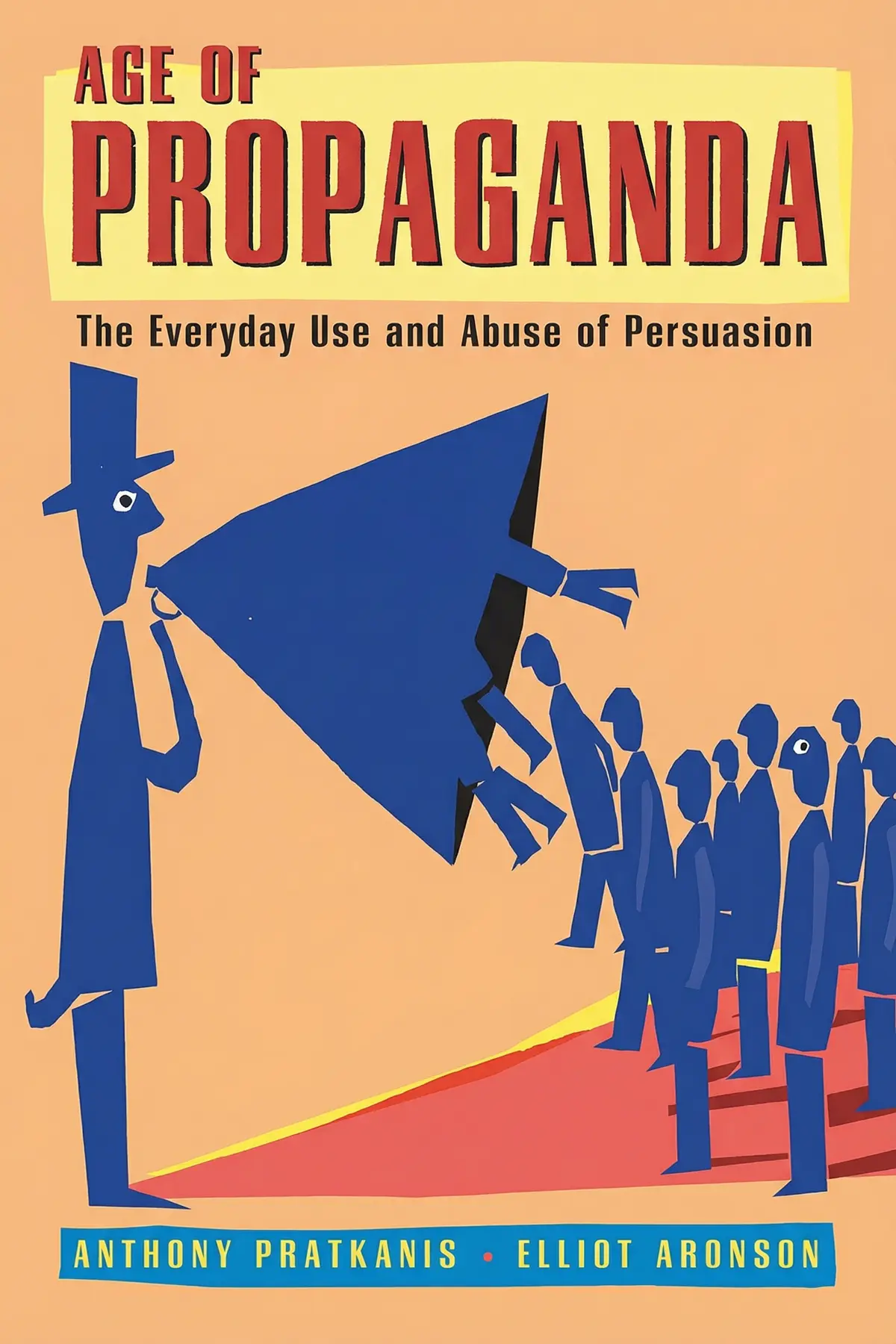
Age of Propaganda: The Everyday Use and Abuse of Persuasion
Anthony Pratkanis
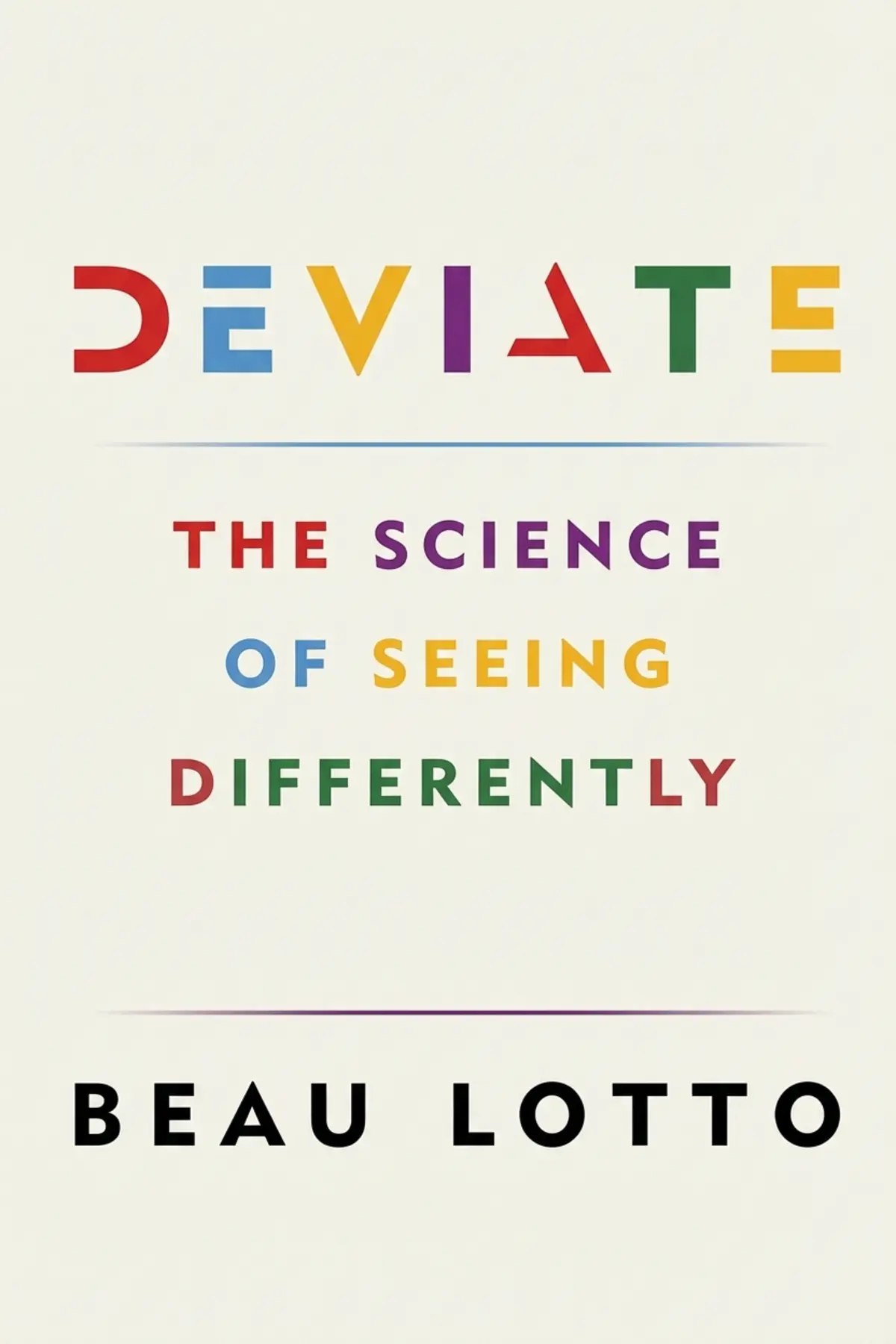
In Deviate, neuroscientist Beau Lotto explores the subjectivity of perception. He reveals how our brains construct reality based on context and evolution, offering tools to unlock creativity through conscious observation.
1 min 53 sec
Step for a moment into a world where everything you think you see is actually a highly sophisticated guess. Think about the room around you—the colors of the walls, the texture of the furniture, the distance to the door. We move through life with a profound sense of certainty that we are perceiving an objective, stable reality. We assume our eyes are like cameras and our ears are like microphones, recording the world exactly as it exists ‘out there.’ But what if that certainty is actually the greatest illusion of all?
In the following exploration of Beau Lotto’s research, we are going to pull back the curtain on the human brain to see how it truly functions. We will discover that our minds are not passive recorders; they are active storytellers. The brain doesn’t just show us the world; it interprets it, often taking massive liberties with the truth in order to help us navigate life more effectively. This isn’t a flaw in our biology; it is a feature that has allowed us to survive for millennia. However, this same feature can also trap us in old ways of thinking, limiting our potential for growth and innovation.
By delving into the science of perception, we can begin to see the invisible structures that dictate our choices and our beliefs. We will look at why we get into arguments over the color of a dress, how our past determines our present, and why uncertainty—though uncomfortable—is the essential ingredient for any creative breakthrough. This journey is about learning to deviate from the paths our brains have naturally paved for us. It’s about understanding the ‘why’ behind our quirks so that we can intentionally choose a new way of seeing. Through this process, we won’t just understand neuroscience; we will learn a new way to live, work, and innovate in a world that is constantly shifting. So, let’s begin by questioning the very first thing we notice when we open our eyes: the colors and shapes that we take for granted as reality.
2 min 20 sec
Explore why our brains often disagree on simple images and how optical illusions prove that reality is a mental construction rather than a literal recording.
2 min 13 sec
Understand how the brain filters a chaotic flood of sensory data to create a simplified, survivable version of the world around us.
2 min 10 sec
Discover how the brain’s physical structure changes through experience and why active engagement is the key to expanding our mental capabilities.
2 min 19 sec
Learn why nothing we perceive exists in a vacuum and how our history dictates the meaning we find in our current surroundings.
2 min 15 sec
Discover the incredible power of the human imagination to override sensory input and intentionally alter how we interpret the world.
2 min 06 sec
Examine the mental shortcuts that allow us to navigate life quickly but also keep us trapped in repetitive and narrow-minded thinking.
2 min 28 sec
Learn why the secret to solving complex problems often lies in throwing out the ‘obvious’ facts and reconsidering the basic parts of the puzzle.
2 min 22 sec
Examine the evolutionary roots of our fear of the unknown and how learning to ‘pause’ can help us turn that fear into a creative opportunity.
2 min 32 sec
Learn how to balance the freedom of ‘blue-sky thinking’ with the practical need for efficiency to foster true, lasting innovation.
1 min 31 sec
As we reach the end of this exploration into the mind, the central message of Deviate becomes clear: the world you see is a reflection of who you are. We began by realizing that our eyes and ears are not objective instruments, but rather storytellers that weave a narrative of survival based on our past and our biology. We saw how context and assumptions act as invisible barriers, keeping us tethered to the familiar and the ‘certain.’
But we also discovered that we have the power to break those tethers. By understanding the mechanics of our own perception, we gain the ability to step outside of our automatic reactions. We can learn to question the obvious, to embrace the discomfort of the unknown, and to treat our lives as an ongoing experiment in play and discovery. Innovation isn’t just about inventing new gadgets; it’s about the courage to see a different world than the one everyone else is seeing.
The next time you find yourself in a heated disagreement, or the next time you feel stuck on a problem that seems unsolvable, remember the lesson of the dress and the spinning diamond. Your brain is giving you its best guess, but it is not giving you the only possible truth. Take a breath, find the pause, and ask yourself what assumptions you are making. Be willing to be wrong, and be willing to be confused. In that moment of uncertainty, you aren’t lost—you are finally in a position to see something truly new. The world is much bigger and more vibrant than your brain usually allows you to see. All you have to do is deviate.
Have you ever wondered why two people can look at the same object and see something completely different? Deviate addresses this fundamental mystery of human existence by diving deep into the mechanics of the brain. Rather than being a passive mirror reflecting the world as it is, your brain is an active translator that filters, molds, and occasionally invents what you perceive. This book serves as both a scientific exploration and a practical guide to shifting your mindset. Beau Lotto explains that our perceptions are not direct windows into reality but are instead useful illusions crafted by millions of years of evolution. By understanding how past experiences, biological constraints, and environmental contexts shape our worldview, we can learn to see the world with fresh eyes. The promise of this journey is a newfound capacity for innovation. When you understand the logic behind your own mental shortcuts and assumptions, you gain the power to deviate from them. This shift allows for greater creativity, better problem-solving, and a more resilient approach to the uncertainties of life in a rapidly changing world.
Beau Lotto is a distinguished professor of neuroscience based at the University of London. Beyond his academic work, he is the founder of the Lab of Misfits, which is a unique neuro-design studio dedicated to studying human perception in real-world environments. Lotto’s expertise in cognitive function has led to prominent features on the BBC and in National Geographic. He is also a frequent contributor to global conversations on science and creativity, famously delivering multiple TED Talks that challenge how we think about what we see.
Listeners find the book highly accessible and full of practical insights, with one listener emphasizing the scientific tools it offers for grasping human conduct. Opinions on the prose and tempo are varied; while some consider the writing well-crafted, others characterize it as dreadful, and one listener remarked that the second half was not tolerable. The aesthetic presentation earns praise, including one comment on how clearly the illusion of reality is presented, and listeners value the ideal blend of empirical research and narrative.
Ever wonder why we see what we see? Beau Lotto takes us on a journey through the 'ecology of innovation' and explains how our brains are essentially delusional—but in a necessary way for survival. The breakdown of the famous 'Dress' meme was a highlight for me, proving that reality is far more subjective than we dare to admit. To be fair, the science is dense in spots, but the stories about Ben, the boy who used echolocation, keep the narrative grounded and emotionally resonant. I loved the idea of 'Not-A' and how we have to step into uncertainty to truly create something new. It’s a beautifully designed book that challenges you to stop assuming the ground won't give way. This is essential reading for anyone who feels stuck in their own rigid perspective.
Show moreThe chapter on Ben, who regained a sense of 'sight' through sound, was worth the price of admission alone. It’s a phenomenal example of how the brain can be trained to identify meaningless sensory information and turn it into something useful. I’ve read a lot of psychology books, but few explain the 'why' behind our perceptions as clearly as Lotto does. He uses simple visual illusions—like the trees in the window—to prove how easily our minds are tricked by distance and context. This isn't just a book about science; it's a manual for living more consciously. The presentation is top-notch, and the rotating diamond is a fun touch that reinforces the theme of constant change. I felt like I was participating in a laboratory experiment rather than just reading a dry text.
Show moreWow, my brain feels like it’s been through a workout—in the best way possible. This book isn't just about reading; it's about experiencing the 'creative power' of your own mind. The examples, from the viral dress to the way different species view the same objects, are incredibly well-chosen. Personally, I found the 'ecology of innovation' section to be a game-changer for my own work habits, especially the balance between efficiency and creativity. The book proves that nothing is truly right or wrong, only perceived through our individual filters. It’s an 'heretical' book in many ways because it asks us to untrain our minds and question our most foundational assumptions. If you're looking for a mix of hard science and inspirational storytelling, this is it.
Show moreFinally got around to reading this one after seeing it on a few recommendation lists and I’m mostly glad I did. The book sits at a fascinating intersection of physics, psychology, and neuroscience, offering tools to understand why we fear the dark or crave certainty. Lotto’s writing style is punchy and energetic, though it occasionally veers into 'motivational speaker' territory. I particularly enjoyed the section on how our past creates a 'perceptual history' that dictates our future actions. It’s a bit of a mind-trip to realize that free will might just be an illusion built on narratives we tell ourselves. My only real gripe is the fine print, which made it a literal headache to read at times—I’d suggest the Kindle version for anyone with sensitive eyes. Still, the insights into how diversity drives systems to evolve made it worth the effort.
Show moreLotto makes a compelling case for the power of doubt, arguing that celebrating uncertainty is the only way to truly innovate. I found the discussion on 'internal vs. external ecologies' to be quite profound, especially the idea that we can restructure our brains through trial and error. The book is filled with 'jaw-dropping' findings that make you question every assumption you've ever held about your own senses. Not gonna lie, some of the physics sections went a bit over my head, but the psychological implications are huge. It’s the kind of book that makes you want to 'stop' and just observe the world more minutely. If you can get past the somewhat repetitive nature of the examples, there’s a lot of wisdom here about moving from A to Not-A.
Show moreAs someone who loves pop-science, I found the blend of neurology and creativity here to be quite refreshing. The author explains that our brains evolved for survival, not for seeing the 'truth,' which is a hard pill to swallow but a necessary one. I specifically liked the take on how 'noise' can actually increase the adaptability of a system. To be fair, the tone can be a little obnoxious at times, acting as if these 'revolutionary' ideas are entirely new when they've been around in philosophy for centuries. However, the way he connects these concepts to modern problems like business efficiency and social change is genuinely clever. It’s a quick read, despite the page count, and it left me with plenty of questions to ponder.
Show moreAfter hearing about this book through a fan club for the late actor Sushant Singh Rajput, I was curious to see why a deep thinker like him would recommend it. It didn't disappoint. It’s a book for people who are willing to admit they don't know everything and are open to 'deviating' from their usual path. The discussion on how our past influences our future perceptions was especially resonant. I appreciated the sections on how we create meaning out of the meaningless, though some of the chapters felt a bit 'dragged' by excessive detail. Still, it’s a fascinating dive into why we are so afraid of the unknown and how we can learn to embrace the 'darkness' of uncertainty. A solid 4-star read.
Show moreAbout everything and nothing at the same time, this book is a bit of a mixed bag for me. While the visual experiments and the 'flip book' diamond are genuinely cool, the core message gets buried under a lot of repetition. You’ll hear about the same concepts of 'uncertainty' and 'assumptions' until they start to lose their impact. Truth is, the first half is brilliant and engaging, but the second half drags significantly as it tries to turn neurobiology into a business model for innovation. I appreciated the case studies on how experts can be 'blind' to new questions, yet the book itself felt like it was playing it a bit too safe with its generalizations. It’s a decent introductory text for pop-science fans, but seasoned readers might find it a bit too surface-level.
Show moreI was really hoping for a guidebook on creativity, especially given the 'Creative Power' subtitle, but this felt more like a collection of academic abstractions. While the anecdotes about the Ebola patient and medical school were supposed to be profound, they felt like overreaching metaphors that didn't land for me. Frankly, I found the 'space of possibilities' jargon to be a hollow placeholder for actual, actionable advice. I try to break my own preconceptions by reading diverse authors, which feels much more effective than wading through these generalizations. The unusual formatting and that little rotating diamond at the bottom are clever, sure, but they can't save a book that feels this thin on substance. If you want a deep dive into neurology, look elsewhere; if you want a TED talk in print form, this might be your speed.
Show moreLook, I really wanted to like this, but it overloaded my BS meter within the first fifty pages. The author seems to think that using phrases like 'space of possibilities' ad nauseam qualifies as scientific rigor. In my experience, real neuroscience shouldn't feel this much like a self-help seminar or a bloated TED Talk. The dismissal of a doctor's years of medical training in favor of some 'deep well of possibilities' was particularly annoying and felt quite disrespectful to actual expertise. It’s flashy, yes, and the design is meant to 'deviate' from the norm, but there is no meat on the bones here. One star for the effort on the illustrations, but zero for the actual content which was just a series of lofty, unproven claims.
Show moreAnthony Pratkanis

Virginia Woolf
Richard Wiseman
AUDIO SUMMARY AVAILABLE
Get the key ideas from Deviate by Beau Lotto, plus 5,000+ more titles in English and Thai.







