

14 min 47 sec
Devil in the Grove: Thurgood Marshall, the Groveland Boys, and the Dawn of a New America
By Gilbert King
A gripping account of Thurgood Marshall’s dangerous legal battle to save four young Black men from a wrongful conviction and state-sanctioned violence in Jim Crow-era Florida.
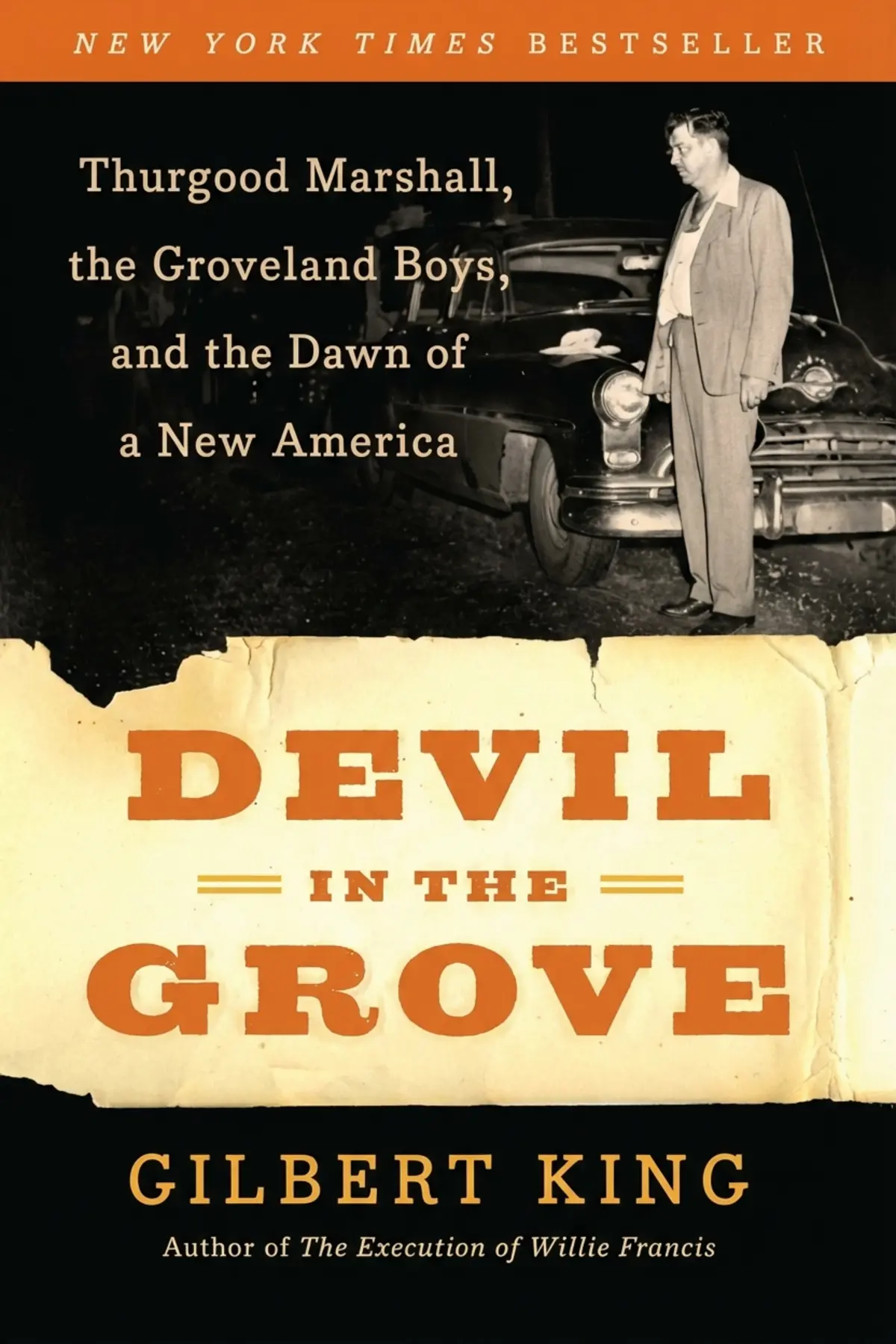
Table of Content
1. Introduction
1 min 36 sec
Step back into the late 1940s, into a Florida that few travel brochures would dare to advertise. This wasn’t the land of sun-drenched vacations, but rather a sprawling empire of citrus groves where the law was often dictated by the whim of powerful white landowners and a particularly ruthless brand of law enforcement. In this atmosphere, a single accusation could ignite a wildfire of violence and institutional corruption. This is the world Gilbert King reconstructs in his powerful narrative, focusing on a pivotal but often overlooked chapter in the struggle for American justice.
At the center of this storm is the Groveland case, involving four young Black men who found themselves trapped in a nightmare of false accusations. But standing against the tide of Jim Crow was a man who would become a legend: Thurgood Marshall. Long before he sat on the Supreme Court, Marshall was a traveling lawyer for the NAACP, risking his life to bring the Constitution into the most dangerous corners of the South.
In the following sections, we will trace the arc of the Groveland Four, from a midnight encounter on a remote road to the highest courts in the land. We’ll examine the terrifying power of Sheriff Willis McCall, the strategic brilliance of the NAACP’s Legal Defense Fund, and the sheer resilience required to seek truth in a place where the truth was a dangerous commodity. This isn’t just a story about a trial; it’s a throughline to understanding how the modern civil rights movement was forged in the heat of life-and-death legal battles. Let’s explore how one case in a small Florida town helped change the trajectory of a nation.
2. The Strategic Mind of Thurgood Marshall
1 min 52 sec
Meet the man known as Mr. Civil Rights as he navigates the deadly reality of defending the marginalized in the Deep South.
3. A Midnight Encounter and a False Narrative
2 min 02 sec
A simple car problem on a dark Florida road spiraled into a nightmare of rape allegations and mob violence.
4. The Brutal Hand of Sheriff Willis McCall
1 min 45 sec
Explore the systemic corruption and violence that defined the law in Lake County under a powerful and unchecked sheriff.
5. A Preordained Verdict
1 min 56 sec
Witness the legal charade where evidence was suppressed and an all-white jury ignored the truth.
6. Blood on the Roadside and the High Court's Intervention
1 min 55 sec
The fight for justice takes a lethal turn when the Sheriff takes matters into his own hands after a legal setback.
7. The Bitter End and a Governor’s Conscience
2 min 09 sec
From the murder of a civil rights leader to a secret investigation, see how the Groveland case finally concluded.
8. Conclusion
1 min 32 sec
The saga of the Groveland Four remains one of the most poignant and harrowing examples of the struggle for civil rights in America. It wasn’t just a localized failure of justice; it was a systemic exhibition of how racism could be institutionalized through law enforcement, the courts, and communal violence. Through the tireless work of Thurgood Marshall and the NAACP, the case exposed the rot at the heart of the Jim Crow South and forced the highest levels of government to reckon with the reality of state-sponsored terror.
Ultimately, the throughline of this story is one of resilience. It highlights the incredible courage of young men like Walter Irvin, who refused to plead guilty to a crime he didn’t commit even when facing the electric chair. It showcases the strategic brilliance of Marshall, who understood that changing the law required more than just logic—it required a willingness to walk into the lion’s den.
As you reflect on the events in Lake County, consider the importance of institutional transparency and the necessity of persistent advocacy. The Groveland case teaches us that justice is rarely given; it must be demanded, often at a terrible cost. While we have moved beyond the era of Sheriff McCall, the lessons of Groveland—the dangers of unchecked power and the power of a single, unwavering voice—remain as relevant as ever. If you feel compelled by this narrative, consider seeking out Gilbert King’s full work to fully grasp the intricate details of this transformative moment in American history.
About this book
What is this book about?
This summary explores the harrowing story of the Groveland Four, young Black men in 1940s Florida who were falsely accused of a capital crime. It follows the tireless efforts of Thurgood Marshall and the NAACP Legal Defense Fund as they navigate a landscape of systemic corruption, Ku Klux Klan influence, and a ruthless sheriff. The narrative promises a deep look at the dawn of the American civil rights movement. It illustrates how legal brilliance and sheer physical courage were required to challenge the entrenched racism of the South, ultimately paving the way for landmark legal precedents despite the immense personal and social costs involved.
Book Information
About the Author
Gilbert King
Gilbert King is an award-winning author whose works focus on race, civil rights, and criminal justice. He wrote, produced, and cohosted Bone Valley, a crime podcast set in central Florida in the 1980s. His other books include Beneath a Ruthless Sun and The Execution of Willie Francis.
Ratings & Reviews
Ratings at a glance
What people think
Listeners describe this work as an engrossing narrative that brings the account of Thurgood Marshall and the Groveland Boys to life, labeling it essential for all audiences. The writing is highly detailed and skillfully crafted, with one listener highlighting the author's ability to clarify every contributing element. Listeners view it as required reading for a deeper grasp of 20th-century history in America and value its deep perspectives. Although listeners call the text a gripping chronicle of a tragic era, some feel it is more unsettling than it is pleasant.
Top reviews
Valentina
This book is a gut punch that every American needs to experience. Gilbert King does a masterful job of peeling back the layers of a dark chapter in Florida’s history that I knew nothing about. Focusing on Thurgood Marshall before he became a Supreme Court legend, we see a man navigating a legal system that was actively trying to kill his clients. The Groveland Boys case is a nightmare of corruption, yet the narrative remains propulsive and clear. While the violence is graphic and difficult to stomach, it’s necessary to understand the stakes these men faced. Marshall’s bravery is inspiring, but the book also highlights the collective effort of the NAACP. It’s a dense read, sure, but the research is so impeccable that you feel like you're standing in those citrus groves yourself. This isn't just a history book; it's a reminder of how easily justice can be subverted when power goes unchecked.
Show moreRiley
Wow. I am absolutely floored by the level of detail Gilbert King managed to pull together for this account. It is a harrowing look at "south of the South" Florida, where lynchings and KKK influence were arguably worse than in the Deep South. Thurgood Marshall comes across as a superhero of sorts, but a very human one who loved his whiskey and his work. The scene where he tracks down Chief Justice Vinson during a card game with Truman is worth the price of admission alone. It really shows how Marshall's wit and guts were just as important as his legal mind. This book will make your blood boil, especially when you realize how much the system was rigged against the four young men in the Groveland case. It’s a painful read, but King’s prose is so engaging that you can't look away. Truly a must-read for anyone trying to understand the roots of systemic injustice.
Show moreLeila
Ever wonder how much history is hidden just beneath the surface of our favorite vacation spots? Picking this up changed how I look at Florida forever. Gilbert King exposes the "Devil in the Grove," referring both to the KKK and the specific brand of law enforcement that ruled the citrus regions. The Groveland Boys case is heartbreaking, and the fact that Sheriff McCall stayed in office until the 1970s is just mind-blowing. Thurgood Marshall is the star here, and King portrays him as a brilliant strategist navigating a literal minefield. The book manages to be both a first-rate legal thriller and a deeply researched biography. Not gonna lie, I had to take breaks because the cruelty described is so visceral. But those are the parts we need to remember. This is an incredible achievement in narrative non-fiction that feels more relevant today than ever before.
Show morePacharapol
Finally got around to reading this, and it lives up to every bit of the hype. King manages to weave together the biography of Thurgood Marshall with the specific, terrifying events of the Groveland case. It’s impressive how the author manages to make complex legal procedures easy for a layman to follow without dumbing anything down. The dynamic between the NAACP’s Legal Defense Fund and the local Florida officials is a fascinating study in power. You really get a sense of the danger Marshall was in; the river scene where he’s almost lynched is terrifying. This book serves as a perfect companion to The Warmth of Other Suns. It’s a vivid, expertly researched, and ultimately essential account of American history. If you think you know the Civil Rights movement, read this and realize how much was happening in the shadows of the Sunshine State.
Show morePhu
Not what I expected at all, but in the best way possible. I thought this would be a dry account of a court case, but it’s actually a sweeping narrative about the soul of a state. The way King describes Lake County as a place where the law was whatever Sheriff Willis McCall said it was is chilling. Marshall is such a compelling protagonist—fearless, charismatic, and incredibly smart. Seeing him move from a card game with the President to a dusty Florida courtroom really drives home his versatility. The book doesn't shy away from the horrific violence of the era, which can be hard to stomach, but it’s handled with respect for the victims. It’s a powerful summary of a deeply troubling time and place. I walked away with so much more respect for the lawyers who fought these battles when the odds were essentially zero.
Show moreTawee
After hearing so many people rave about this Pulitzer winner, I finally dove in. To be fair, I expected a dry legal history, but King writes with the pace of a thriller. He captures the suffocating atmosphere of Lake County, Florida, in the late 40s perfectly. Sheriff Willis McCall is a villain straight out of a horror movie, except he was real and stayed in power for decades. The book does an excellent job of showing how the citrus industry's greed fueled the racial tensions of the era. My only real gripe is that there are so many figures to keep track of that I occasionally had to flip back to remember who was who. However, the way it intertwines the Groveland case with the larger Civil Rights movement—including the lead-up to Brown v. Board of Education—is brilliant. It’s an essential, if deeply upsetting, piece of historical writing.
Show moreChanon
The chapter on the Columbia, Tennessee, incident alone is enough to give you nightmares about what civil rights lawyers faced in the Jim Crow era. Truth is, I had no idea Thurgood Marshall was essentially risking his life every time he stepped off a train in the South. This book focuses on the 1949 Groveland rape case, where four black men were accused with zero evidence. Gilbert King doesn’t just tell the story of the boys; he explains the entire ecosystem of Lake County. From the exploitative citrus grove owners to the brutal Sheriff McCall, you see how every level of society was complicit. The writing is sharp and well-paced, though the middle section gets a bit bogged down in legal filings. Even so, the sheer injustice of the situation keeps the pages turning. It’s a sobering reminder that our history is much messier than the textbooks usually admit.
Show moreChai
As someone who enjoys historical biographies, I found this deep dive into Thurgood Marshall’s early career to be fascinating. It’s not a full life story, but rather a focused look at how he handled the impossible Groveland case in Florida. The book illustrates the sheer absurdity of the charges against the four men. It also highlights the internal politics of the NAACP, which was a nice touch. King’s writing is descriptive and evocative, particularly when he talks about the physical landscape of the groves and the shantytowns. To be fair, some of the legal segments dragged a little, and the ending felt slightly rushed compared to the build-up. But overall, it provides a crucial perspective on the judicial system’s failings. It's an eye-opening read that makes the past feel very immediate and personal. Definitely worth picking up if you want to understand the pre-1960s struggle.
Show moreHazel
Frankly, this book is more disturbing than enjoyable, but that’s exactly why it’s a necessary read. Gilbert King takes us into the heart of the 1940s citrus industry, where modern slavery was basically the status quo. The Groveland Boys were caught in a nightmare fueled by racism and economic exploitation. While the book focuses on Thurgood Marshall, I appreciated how much time was spent on the secondary characters, like the local reporters and the other NAACP attorneys. The detail about the FBI's involvement (or lack thereof) under Hoover was also quite revealing. My only minor complaint is that the author’s tone can be a bit repetitive when describing the villains, but when you’re dealing with people like McCall, it’s hard not to be. It’s a riveting account of a sad time that provides profound insights into how far we’ve come—and how much hasn't changed.
Show moreThida
Look, there is no denying the importance of the subject matter here, but I found the book a bit of a slog at times. The research is clearly meticulous—Gilbert King didn't miss a single detail. However, that's also the problem. There are dozens of characters introduced, from minor KKK members to various local attorneys, and I constantly felt like I needed a spreadsheet to keep track of everyone. The timeline also jumps around a bit as King tries to connect the Groveland case to Marshall’s broader work with the NAACP and the Brown v. Board of Education case. It’s obviously a tragic and infuriating story, and Marshall is a fascinating figure, but the pacing felt uneven to me. It's a solid history book, but it didn't quite have the "unputdownable" thriller quality that others have mentioned. Useful for students of history, but a bit dense for casual reading.
Show moreReaders also enjoyed

1491: New Revelations of the Americas Before Columbus
Charles C. Mann

A Year in the Life of William Shakespeare: 1599
James Shapiro

A Force for Good: The Dalai Lama's Vision for Our World
Daniel Goleman
1929: Inside the Greatest Crash in Wall Street History--and How It
Andrew Ross Sorkin
Age of Anger: A History of the Present
Pankaj Mishra

A Room of One’s Own
Virginia Woolf

A Biography of Loneliness: The History of an Emotion
Fay Bound Alberti

Agent Sonya: The Spy Next Door
Ben Macintyre
AUDIO SUMMARY AVAILABLE
Listen to Devil in the Grove in 15 minutes
Get the key ideas from Devil in the Grove by Gilbert King, plus 5,000+ more titles in English and Thai.
- 5,000+ titles
- Listen as much as you want
- 7-day free trial
- Cancel anytime







