
20 min 37 sec
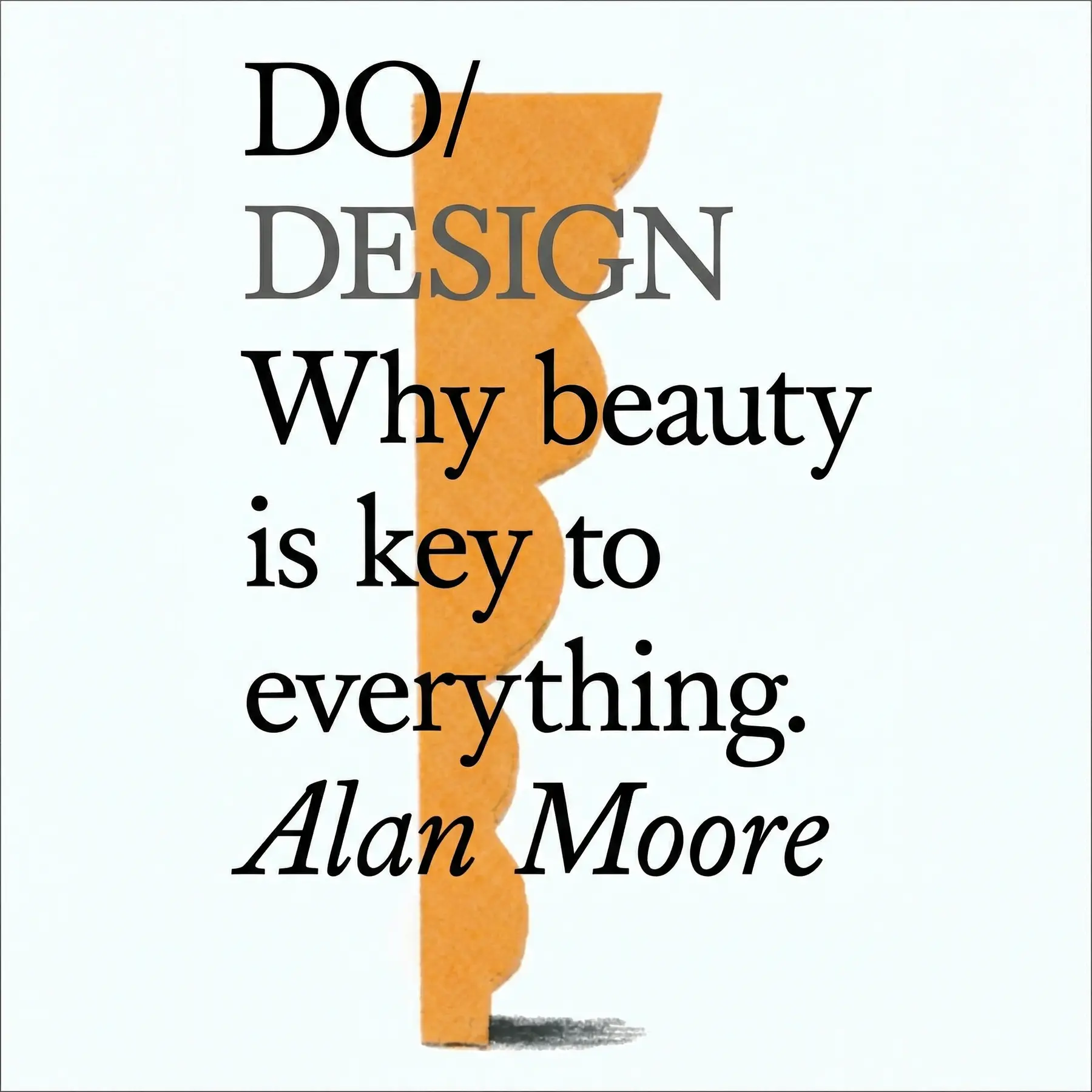
Do Design: Why Beauty is Key to Everything
By Alan Moore
Do Design explores how beauty, when viewed as a blend of utility and joy, can revolutionize our products, businesses, and lives. Alan Moore advocates for intentional craftsmanship and visionary thinking in every creative endeavor.
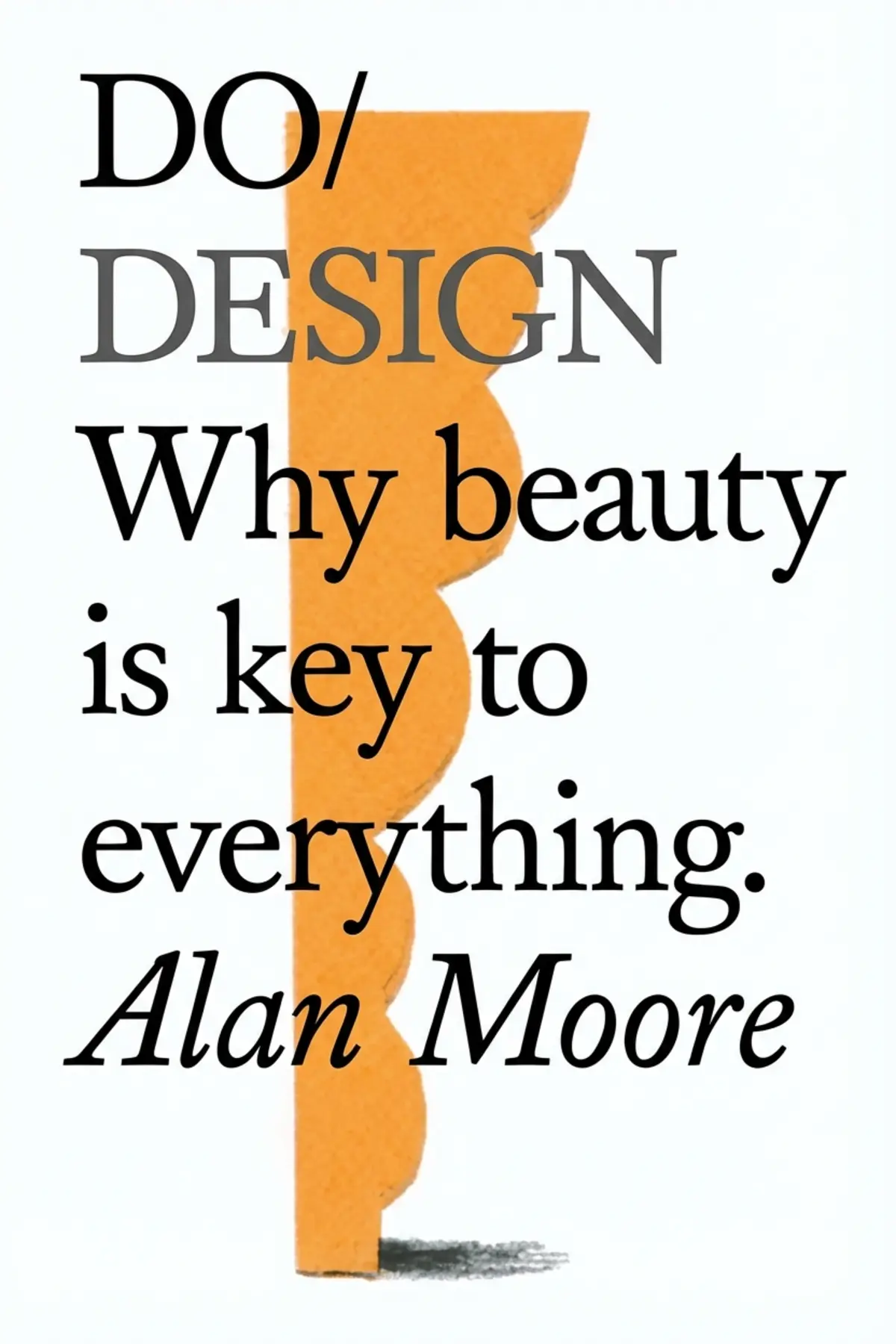
Table of Content
1. Introduction
2 min 05 sec
Think for a moment about the objects and systems that fill your day. From the smartphone that wakes you up to the layout of the streets you drive on, and even the organizational structure of your workplace—everything you interact with is the result of a design choice. But here is the critical question: how many of those things were designed with beauty in mind? Often, we treat design as a secondary concern, something to be ‘added on’ after the ‘real work’ is done. We think of beauty as a coat of paint or a decorative flourish. But what if we’ve been looking at it entirely the wrong way? What if beauty isn’t a luxury, but a fundamental necessity for a life well-lived and a business well-run?
In this exploration of Alan Moore’s insights, we are going to dive deep into the philosophy of creating with intention. We are going to look at why beauty is actually the key to everything. This isn’t just a guide for graphic designers or architects; it is a manifesto for anyone who wants to turn their vision into a reality. Whether you’re leading a massive corporation, starting a small craft project, or simply trying to redesign your personal habits, the principles of good design apply to you. We are all creators in one way or another, and the act of bringing something new into the world is perhaps the most quintessentially human thing we can do.
Over the next few minutes, we’ll move through a journey that connects the wisdom of old-world craftsmen with the cutting-edge strategies of modern tech giants. We’ll see how a shift in perspective—from the mundane to the sublime—can unlock levels of innovation you never thought possible. We’ll learn how to train our eyes to see the beauty that already exists and how to use that inspiration to build a legacy that lasts. The throughline here is simple but profound: when we design for beauty, we design for humanity. We create things that don’t just work, but things that sing. Let’s begin by redefining what beauty actually means in the context of our daily work and lives.
2. The True Definition of Beauty
2 min 05 sec
Forget everything you know about aesthetics. Discover why true beauty in design is a perfect marriage between high-level utility and the spark of human joy.
3. The Soul of the Craftsman
2 min 08 sec
Authenticity isn’t just a buzzword; it’s the foundation of great design. Learn how a dedicated, craftsman-like mindset can give your work a lasting spirit.
4. Designing for the Human Experience
2 min 08 sec
Good design is often invisible. Explore how creating intuitive, long-lasting products builds a profound emotional connection with the user.
5. The Power of Future Visioning
2 min 06 sec
Great designers don’t just look at what is; they look at what could be. Learn the art of working backward from a finished vision to change the world.
6. Cultivating a Mindset for Inspiration
2 min 16 sec
Inspiration isn’t a random lightning strike; it’s a guest you can invite. Discover how to open your senses and bracket your disbelief to spark new ideas.
7. Borrowing and Deconstructing Good Ideas
1 min 55 sec
Innovation doesn’t happen in a vacuum. Learn why identifying, analyzing, and rearranging successful models is a legitimate and powerful design strategy.
8. The Collaborative and Open Model
2 min 09 sec
Design is a team sport. Discover how radical candor and open sharing can accelerate innovation and build an unbreakable company culture.
9. The Total Perspective
2 min 00 sec
Short-term thinking is the enemy of beauty. Explore ‘The Total’ philosophy and how seeing the big picture leads to more ethical and profitable outcomes.
10. Conclusion
1 min 45 sec
As we wrap up our journey through the world of intentional design, the core message is clear: beauty is not an elective. It is the heart of anything that matters. We have seen that beauty is the perfect harmony of function and joy, and that achieving it requires the soul of a craftsman and the vision of a storyteller. We’ve learned that design isn’t just about the objects we can hold in our hands; it’s about the way we organize our businesses, the way we collaborate with our peers, and even the way we view our place in the cosmos.
When you leave this summary, try to carry the ‘overview effect’ with you into your daily life. Look at the projects you are working on not just as tasks to be checked off, but as opportunities to create something beautiful. Remember that even the smallest details matter because they contribute to the ‘total’ experience. If you can infuse your work with authenticity and grace, you won’t just be making a living; you’ll be making a difference. You’ll be building a legacy that people will cherish long after you are gone.
To help you get started on this path, here is one very simple, actionable piece of advice: go out and buy a small, beautiful notebook and a pen that feels good in your hand. Keep it with you at all times. Inspiration is often a quiet whisper that comes when you least expect it. When you have a dedicated place to capture those fleeting thoughts, doodles, and observations, you are telling the universe that you are ready to listen. You are training yourself to be a collector of beauty. Over time, those scribbles will become the blueprints for your next great design. Start today, start small, but always, always do it with beauty in mind.
About this book
What is this book about?
Do Design is a call to action for anyone who creates, whether they are professional designers, entrepreneurs, or simply individuals looking to improve their daily lives. The book challenges the traditional notion of beauty as a superficial luxury, instead positioning it as an essential requirement for meaningful work and sustainable business practices. By integrating functionality with the capacity to inspire delight, creators can build things that last and leave a positive legacy. The promise of this exploration is a complete paradigm shift. It moves away from short-term, profit-driven motives toward a holistic approach where every detail matters. From the way a team collaborates to the way an object feels in a user's hand, Moore demonstrates that intentionality and grace are the keys to innovation. By looking at examples from high-tech innovators to traditional craftsmen, readers learn to cultivate a mindset that recognizes beauty everywhere and uses it to solve the world's most complex problems.
Book Information
About the Author
Alan Moore
Alan Moore is a British designer, artist, and entrepreneur who believes in the power of beauty to change the world. He has served as a strategic advisor for global giants including Hewlett Packard, Microsoft, and Coca Cola, helping them refine their products and business models. Moore is the author of four books on creativity and business, including No straight lines: Making Sense of Our Nonlinear world. He is dedicated to living and creating as beautifully as possible every day.
Ratings & Reviews
Ratings at a glance
What people think
Listeners describe this work as a hopeful and positive manual that motivates makers to center their efforts on beauty and intention. Though some listeners think the content doesn't offer much technical detail, many others value the brief chapters for providing immediate hits of creative energy. Furthermore, they point to the emphasis on Shaker values—simplicity, utility, and honesty—as a revitalizing approach to the creative cycle. Also, they observe that the design itself is very attractive, with one listener commenting that it acts as a "powerful antidote" to the turbulence of today's world for creative professionals.
Top reviews
Manop
Rarely do I find a book that feels like a literal breath of fresh air for the creative soul. Moore’s exploration of Shaker principles—simplicity, utility, and honesty—reminds us that design is more than just aesthetics; it is a way to serve the human spirit. I found the short, punchy chapters incredibly refreshing because they offer direct bursts of inspiration without the usual fluff. It’s an optimistic guide that encourages us to look at the world through a lens of purpose. Some might find it too simple, but isn't that the point of great design? This book is a powerful antidote to the chaos of modern life.
Show moreTuck
Every page breathes a sense of curiosity and wonder that is often lost in professional design circles. It is a short read, yet it manages to touch on profound themes like truth, materials, and the importance of stillness. Moore’s focus on Shaker furniture as a pinnacle of utility and beauty is spot on. It’s an incredibly inspiring little volume that doesn't waste words on unnecessary adornment. I’d recommend this to any entrepreneur or artist who feels stuck in a rut. It helps you redefine your destination so you can actually figure out how to get there.
Show moreYam
Alan Moore captures the essence of what it means to create with intention. This isn't a manual; it’s a manifesto for a more beautiful world. I loved the emphasis on how our mindset limits our potential. If we believe something is impossible, we won't try as hard. That’s a simple truth, but seeing it framed within the context of design and Shaker honesty was powerful. It’s a slim volume that fits in your hand, yet it carries the weight of a much larger philosophy. It’s definitely a book I’ll return to whenever I feel my creative energy starting to flag.
Show moreTern
In a world that feels increasingly fragmented, this book offers a hopeful vision for how creators can make a difference. Moore suggests that by designing with optimism, we can actually uplift humanity. I really enjoyed the sections on 'Beauty for Humans' and how technology can be a provider of beauty if used correctly. Look, it’s definitely not a textbook on engineering or graphic design, and some concepts are a bit oversimplified. But for someone just starting their creative journey, these pages provide a necessary foundation of purpose. It’s about more than just making things; it’s about why we make them in the first place.
Show moreChan
Picking this up felt like a reset button for my brain. I especially liked the idea of working backwards from the desired end result—focusing on what the design should accomplish for the user before getting bogged down in specs. The author notes that good design is often unnoticeable because it functions so seamlessly, which is a great takeaway for anyone in UX. My only gripe is that the appendix contains more detailed stories that I wish were integrated into the main chapters. Still, the message about commitment giving you freedom is something I’ll be thinking about for a long time.
Show moreBenjamin
Design isn't just about fancy numbers or bragging about specifications; it's about how a product works overall to bring joy. That seems to be the core thesis here, and it’s a perspective I really appreciate. The book is short enough to read in one sitting, but I found it better to take it chapter by chapter as daily meditations. Frankly, the staccato style grew on me—it mirrors the simplicity the author advocates for. While I would have liked more concrete examples of his work with Microsoft or HP, the focus on 'choosing to see' is a valuable mental exercise for any creator.
Show moreNina
The physical object itself is stunning, which is fitting for a book titled 'Do Design.' However, I found myself wishing for more 'showing' and less 'telling' throughout the text. Moore mentions photographers like Sebastião Salgado, yet we don't get to see the images or a detailed analysis of why they are beautiful. Instead, the author places the burden on the reader to 'learn to see.' While I appreciate the invitation to think for myself, I bought the book to learn from his expert perspective. The staccato writing works in short bursts, but it lacks the technical depth needed to really change a seasoned designer’s process.
Show moreSing
Not gonna lie, the section headings in this book are massive compared to the actual text they precede. You’ll turn a page to a title like 'The Roots of Design' and find only two small paragraphs. It’s a bit jarring. I think Moore has some truly interesting thoughts on 'pattern languages' and how companies work, but he doesn’t show his work enough. It feels like he is satisfied with the cleverness of the phrasing without doing the heavy lifting of explanation. If you want a quick jolt of optimism, it’s fine, but don't expect a deep dive into history or theory.
Show morePrinya
I expected a lot more from a consultant who has worked with global giants like Coca-Cola and HP. Truth is, this book is disappointingly light on actual substance. While the staccato writing style might be a result of the author’s dyslexia, it makes the reading experience feel fragmented and unpolished. It reads more like a series of disconnected diary entries or a Twitter thread than a cohesive design philosophy. There is a lot of talk about how beauty is the key to everything, but Moore never really defines what beauty actually is. I wanted deeper dives into the 'roots of design' and more than just a couple of paragraphs per section. It’s a beautiful book to hold, but the content doesn’t live up to the premise.
Show morePairot
Function must always come first in design, and on this point, I think Alan Moore is fundamentally wrong. I don't need my kitchen utensils to be beautiful; I need them to work efficiently. The idea that beauty is the 'key' feels like a shallow, utopian distraction from the hard work of technical mastery. This book provides a lot of soundbite philosophy that you’d find scrolling through social media, but very little in the way of practical application. If you’re looking for a book on the design process, this isn’t it. It’s more of a decorative object for a coffee table than a useful tool for a working professional.
Show moreReaders also enjoyed
AUDIO SUMMARY AVAILABLE
Listen to Do Design in 15 minutes
Get the key ideas from Do Design by Alan Moore, plus 5,000+ more titles in English and Thai.
- 5,000+ titles
- Listen as much as you want
- 7-day free trial
- Cancel anytime







