
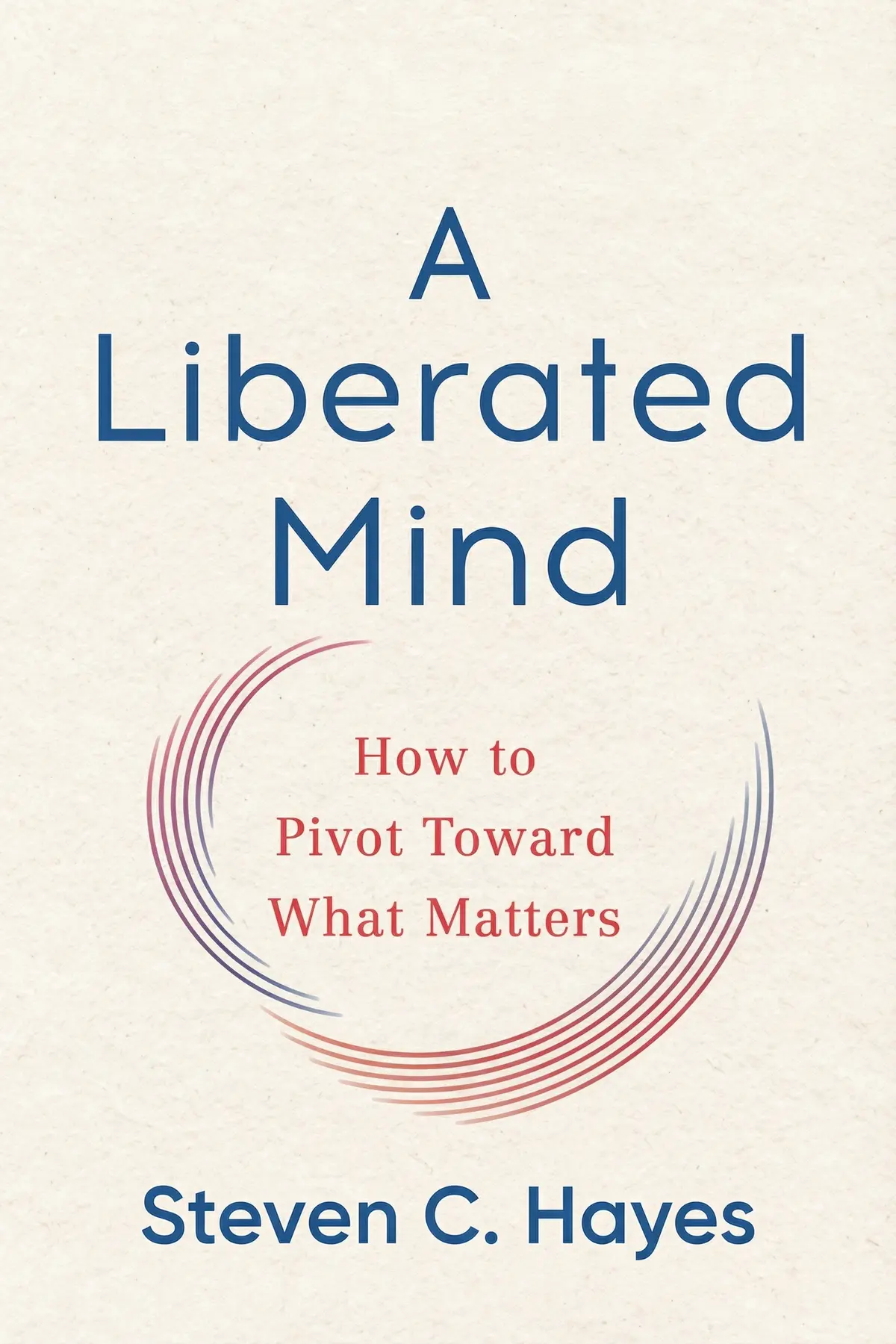
A Liberated Mind: How to Pivot Toward What Matters
Steven C. Hayes
Explore the psychological mechanics of human misery and discover how to find peace. This guide explains why our interpretations of reality cause more harm than reality itself and how to stop overthinking.
1 min 56 sec
Throughout history, thinkers and spiritual leaders have grappled with a deeply confusing aspect of the human experience. On one hand, every person desires happiness and tranquility. On the other hand, most of us seem to be strangely tethered to our own misery. We repeat habits that we know make us feel worse, and we find ourselves stuck in loops of worry that serve no practical purpose. It is a paradox that has fascinated everyone from ancient religious figures to the pioneers of modern psychology.
Sigmund Freud suggested that we are often sabotaged by parts of our psyche we aren’t even aware of, while Buddhist traditions take a slightly different view. In the Buddhist framework, it isn’t some hidden monster in the basement of the mind that causes our pain; rather, it is the very process of active thinking itself. This brings us to a vital distinction between two very different experiences: pain and suffering. Pain is an unavoidable part of being alive. We experience loss, we get sick, and we encounter disappointments. Suffering, however, is a different story. Suffering is what happens when we take that initial pain and run it through a meat grinder of interpretation, resentment, and anxiety.
When we react to life’s challenges with a narrative of self-hatred or victimhood, we aren’t just reacting to the world; we are actively manufacturing a state of misery. The fascinating shift suggested here is that the solution isn’t necessarily to think more positively. Instead, the goal is to learn how to stop the machine of interpretation altogether. By understanding how to let our thoughts exist without engaging in a constant tug-of-war with them, we can actually clear the path to our highest potential. As we dive into this exploration, we will look at how we create our own versions of heaven and hell, why our brains are naturally wired for worry, and how to finally find the mental stillness we’ve been looking for.
2 min 27 sec
Uncover how your internal mental state, rather than external events, defines your experience of life. Using a classic Zen parable, we explore why heaven and hell are truly psychological states.
2 min 26 sec
Discover why our brains are hardwired for anxiety and how an ancient survival mechanism, once essential for staying alive, now generates unnecessary psychological suffering in our safe, modern world.
2 min 33 sec
Learn to distinguish between the effortless arrival of thoughts and the exhausting, judgment-filled process of thinking. Understanding this difference is the key to stopping your emotional roller coaster.
2 min 32 sec
Explore the concept of ‘mushin’ and the flow state to see how doing less with your mind can actually lead to doing more in your life. Learn why your mind, like water, clears itself when left alone.
1 min 41 sec
In the end, the journey toward a peaceful and fulfilling life isn’t about acquiring new information or working harder to fix ourselves. It is about a fundamental shift in how we perceive the activity in our own heads. We have seen that our brains are essentially ancient survival machines, perfectly designed for a world of physical danger but prone to malfunction in a world of social and psychological complexity. By recognizing that our suffering is a self-generated layer of interpretation placed over the simple reality of our lives, we gain the power to set that burden down.
The most important takeaway is the distinction between having thoughts and the active, often painful process of thinking about those thoughts. We can’t stop thoughts from appearing, but we can stop the energy-intensive labor of judging and dwelling on them. Like the Zen master showed the samurai, the difference between heaven and hell is simply a matter of our internal state. When we learn to let the ‘murky water’ of our minds settle through non-intervention, we find that clarity is our natural state of being.
As you move forward, remember that you don’t have to believe everything you think. Your feelings are a compass; when you feel the weight of overthinking, take it as a sign to step back and let the thoughts pass. By embracing the principles of mushin or the flow state, you can move from a life of constant mental friction to one of effortless action. True potential isn’t found in the depth of your analysis, but in the stillness that remains when the overthinking stops. The peace you are seeking isn’t somewhere out in the world; it is waiting for you in the moments when you finally let your mind be at rest.
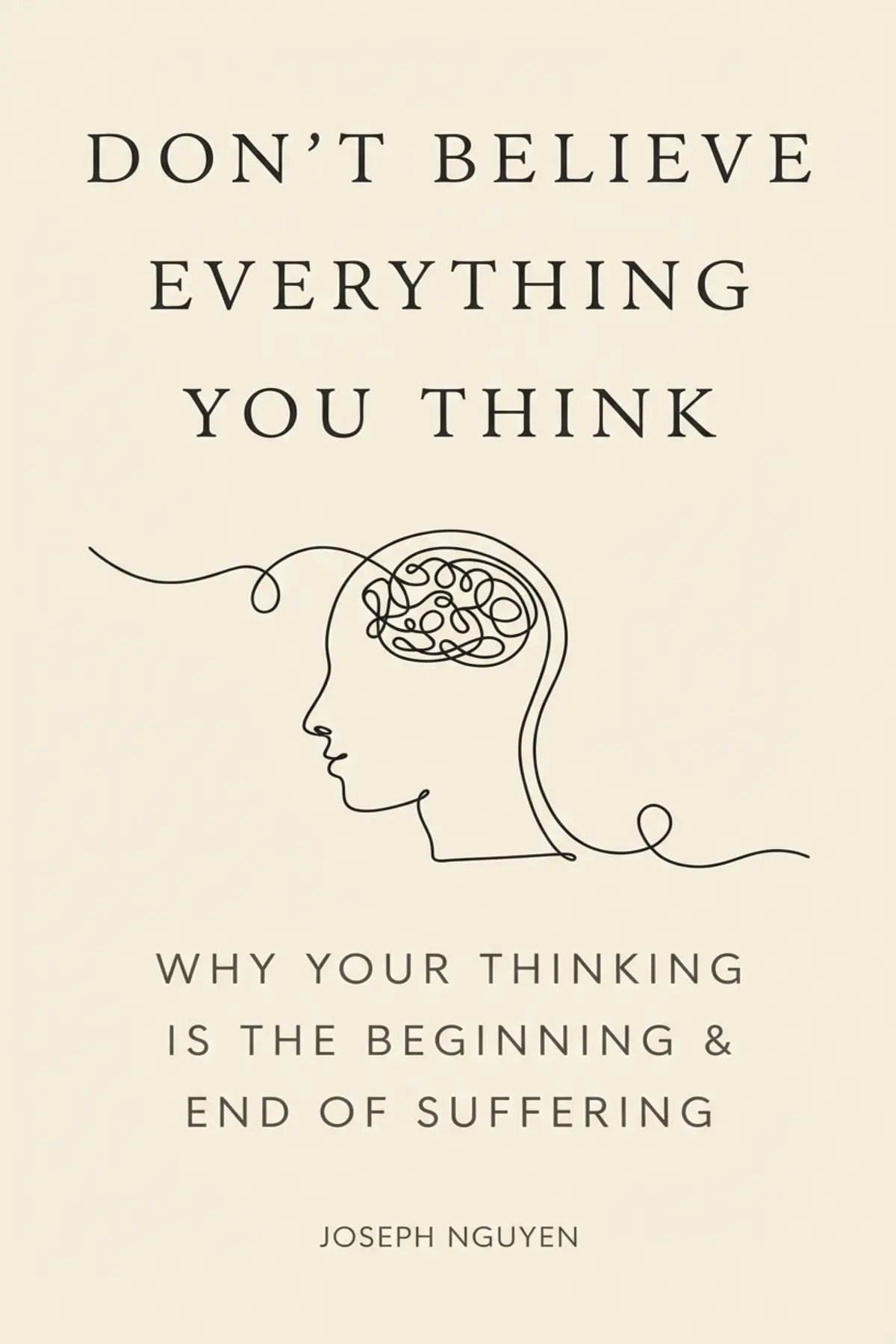
Have you ever wondered why we often feel miserable even when our lives are objectively safe and stable? This summary explores the profound idea that human suffering is not a result of external events, but rather a product of our own internal mental processing. By distinguishing between spontaneous thoughts and the labor-intensive act of thinking, the text provides a roadmap for de-escalating the mind's constant alarm systems. Readers will learn about the evolutionary origins of our anxiety and why our prehistoric brains are ill-suited for the modern information age. Through metaphors like the samurai warrior and the bowl of murky water, the narrative illustrates how we can achieve a state of mental clarity and peak performance. The ultimate promise is a shift from a life of constant emotional turbulence to one of quiet potential, showing that we are always just one shift in perspective away from inner peace.
Joseph Nguyen is an author, teacher, and public speaker best known for his spiritual approach to self-healing and self-help. His previous books include Beyond Thoughts, a poetry collection exploring the roots of emotional suffering, and The Art of Creating, a study of creativity. His best-selling book Don’t Believe Everything You Think has been translated into over thirty languages.
Listeners find this book to be a brief, profound experience that shifts their mindset and alters their perspective on life. Its clear presentation makes intricate theories easy to grasp, and listeners appreciate the actionable advice and stimulating concepts provided. They value how it clarifies their mental habits and suggests methods to stop overthinking, all while delivering instant comfort from tension and worry.
Wow, this tiny book absolutely shifted my entire perspective on how I handle stress. I’ve read a lot of books in this genre, but something about Nguyen’s simple explanation of ending suffering through the cessation of thinking just clicked for me. I also loved that he referred to God using She/Her pronouns—it was a small detail but very inclusive and refreshing to see! The book feels like a conversation with a wise friend who is helping you uncover the wisdom that already exists inside you. It provided me with immediate relief from a cycle of chronic overthinking that I've been stuck in for months. If you’re looking for a sign to stop worrying about the future and start living, this is it.
Show moreFinally got around to reading this, and the chapter on unconditional love was exactly what I needed to hear. Nguyen has a way of stripping back all the complex jargon to remind us that our internal wisdom is already there, just waiting to be uncovered. It’s a very fast read, but the relief it provides from the constant 'thinking' loop is immediate. Personally, I think everyone who struggles with chronic anxiety should have a copy of this on their nightstand. It’s not a dense scientific study, but as a manual for mental peace, it’s undeniably effective. It really helped me understand my own thinking process and gave me the tools to finally find some quiet in my head.
Show moreDon't let the short length fool you into thinking there's no depth here. This book is a powerful tool for anyone looking to defeat overthinking and find a more peaceful way of existing in the world. By distinguishing between having an unbidden thought and the active process of 'thinking,' Nguyen gives the reader a practical way to step out of emotional suffering. I found the guidance to be straightforward and easy to implement right away. It’s a great little guide for training your consciousness to stay in the present moment and raising your vibrations. Honestly, it's one of the most transformative things I've read all year. Essential reading for the modern, over-stimulated mind.
Show morePicked this up on a whim after seeing a clip of the author on social media. As someone who has lived in a mental rabbit hole for years, I found the practical guidance here to be a breath of fresh air. Nguyen doesn't waste time with unnecessary filler; instead, he goes step-by-step toward unraveling how we can train our brains to just let go. The book is written in a very accessible way that makes complex concepts about consciousness feel easy to understand. I especially liked how he structured the path to peace through becoming aware of our internal vibrations. It’s not the most academic book on the shelf, but for someone looking for immediate relief from stress and a way to defeat overthinking, it’s a solid choice.
Show moreAfter hearing so much about this book, I finally decided to see if it lived up to the hype. It’s a very quick read—I finished it in about ninety minutes—but the impact on my outlook was significant. The author draws on his own experiences to show how we can stop our minds from going crazy with constant calculation and analysis. While there are some distracting typos and the writing style is very basic, the core message about living a state of joyous being is powerful. It’s essentially a modernized, simplified version of Buddhist mindfulness practices. I found the frameworks for dealing with emotional dysregulation particularly helpful for my daily life. If you can look past the lack of professional editing, there is real wisdom to be found here.
Show moreNguyen attempts to provide a roadmap for those of us struggling with constant mental noise. The chapters are crisp and move at a fast pace, which I appreciated since I usually dread lengthy non-fiction. What really jumped out at me was the idea of focusing our goals around passion rather than necessity—that lesson hit me in the gut and made me reevaluate my current career path. Even though the book is short, it manages to deliver some truly thought-provoking ideas about how our emotions are provoked by our own ruminations. There is a bit of repetition, but sometimes you need to hear a message multiple times before it actually sinks in. It’s a great tool for anyone needing a quick reset on their thinking patterns.
Show moreThe chapters are incredibly brief, which makes the complex psychological concepts feel way more accessible than your typical self-help book. I loved how the author included a section on creation and unconditional love; it gave me a refreshing perspective that I hadn't encountered in other mindfulness literature. It’s clear that Nguyen’s heart is in the right place, and his desire to help people find peace is evident on every page. My only real gripe is that I wish he’d delved more into the 'how' rather than just the 'what.' Still, for a self-published work, it’s an insightful guide that offers some genuine 'aha' moments. It definitely helped me become more aware of my own self-sabotaging behaviors and how to structure a path toward true happiness.
Show moreTo be fair, the message is important, but the execution felt incredibly repetitive. The author spends nearly 100 pages explaining a single thesis: that thinking is the root of our suffering. While I agree that overthinking is a major issue, the book never really develops a cogent argument or provides concrete scientific evidence to back up its claims. It feels very padded, as if a five-page blog post was stretched out to book length just to have something to sell. I did appreciate the short chapters, which made it easy to breeze through in one sitting, but I left feeling like I’d only scratched the surface. It’s an okay introduction for beginners, but those looking for a deep dive into psychology or philosophy will likely be disappointed by the simplistic approach.
Show moreLook, I wanted to love this because the reviews are so high, but it’s a bit of a mixed bag. On one hand, the distinction between 'thought' and 'thinking' is a great takeaway that really helped me visualize my anxiety differently. On the other hand, the author leans a bit too hard into 'woo' territory for my taste. Claiming that our spontaneous thoughts are actually 'divine downloads from the Universe' felt a bit too New-Agey and distracted from the practical advice. It’s a well-meaning guide that occasionally offers bomb information on self-sabotage, yet it struggles to find its footing between being a secular self-help book and a spiritual manifesto. It’s worth a quick skim for the insights on emotional regulation, but don't expect a rigorous scientific framework.
Show moreThis was quite frankly one of the most poorly edited books I’ve ever purchased. It reads as though it were dictated directly into a speech-to-text app without a single pass from a professional editor, leading to jarring jumps in logic and a tone that feels frustratingly immature for such a heavy topic. While the author obviously has his heart in the right place, the writing completely lacks the voice and direction needed to sustain a full-length book. You might find a few decent quotes if you're willing to dig through the repetitive fluff, but otherwise, I’d suggest looking elsewhere. There are better alternatives like Eckhart Tolle or Michael Singer that cover these exact same themes with much more depth and clarity. If you value your time, don't even think twice about skipping this one.
Show moreSteven C. Hayes
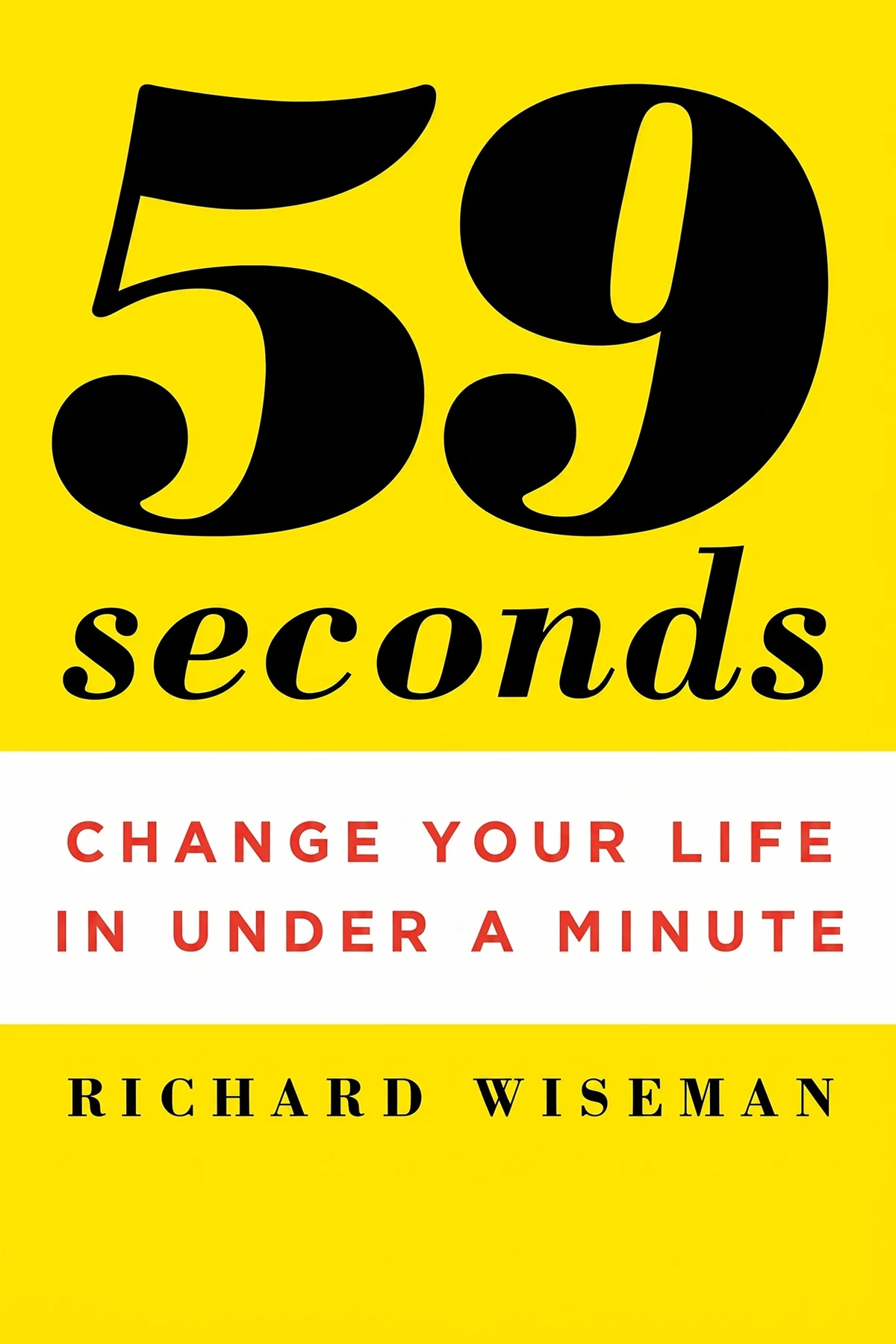
Richard Wiseman
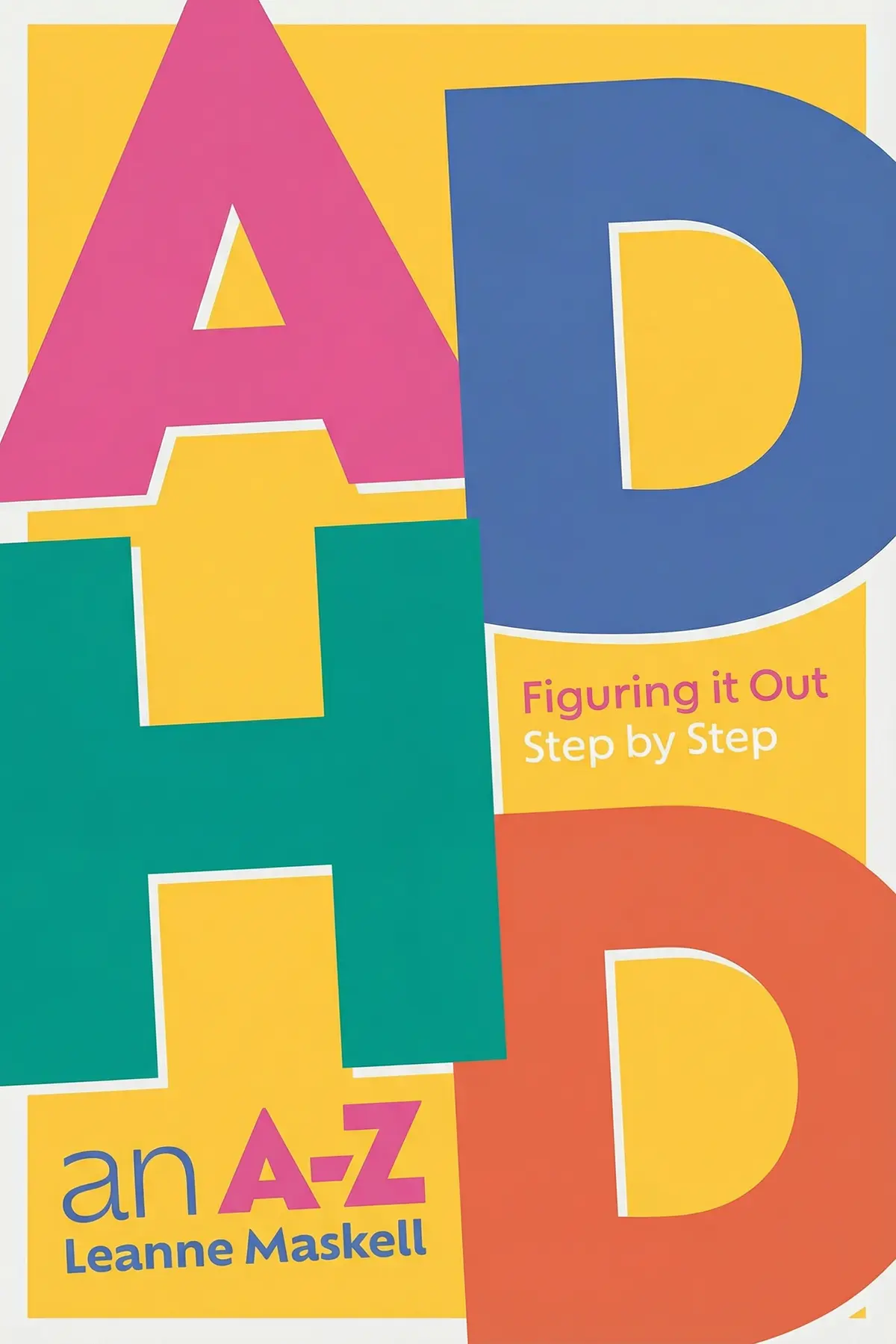
Leanne Maskell

AUDIO SUMMARY AVAILABLE
Get the key ideas from Don’t Believe Everything You Think by Joseph Nguyen, plus 5,000+ more titles in English and Thai.







