

17 min 10 sec
Don’t Sleep, There Are Snakes: Life and Language in the Amazonian Jungle
Daniel Everett explores the unique culture and language of the Pirahã people in the Amazon, challenging traditional linguistic theories and offering a profound look at how environment shapes human thought.
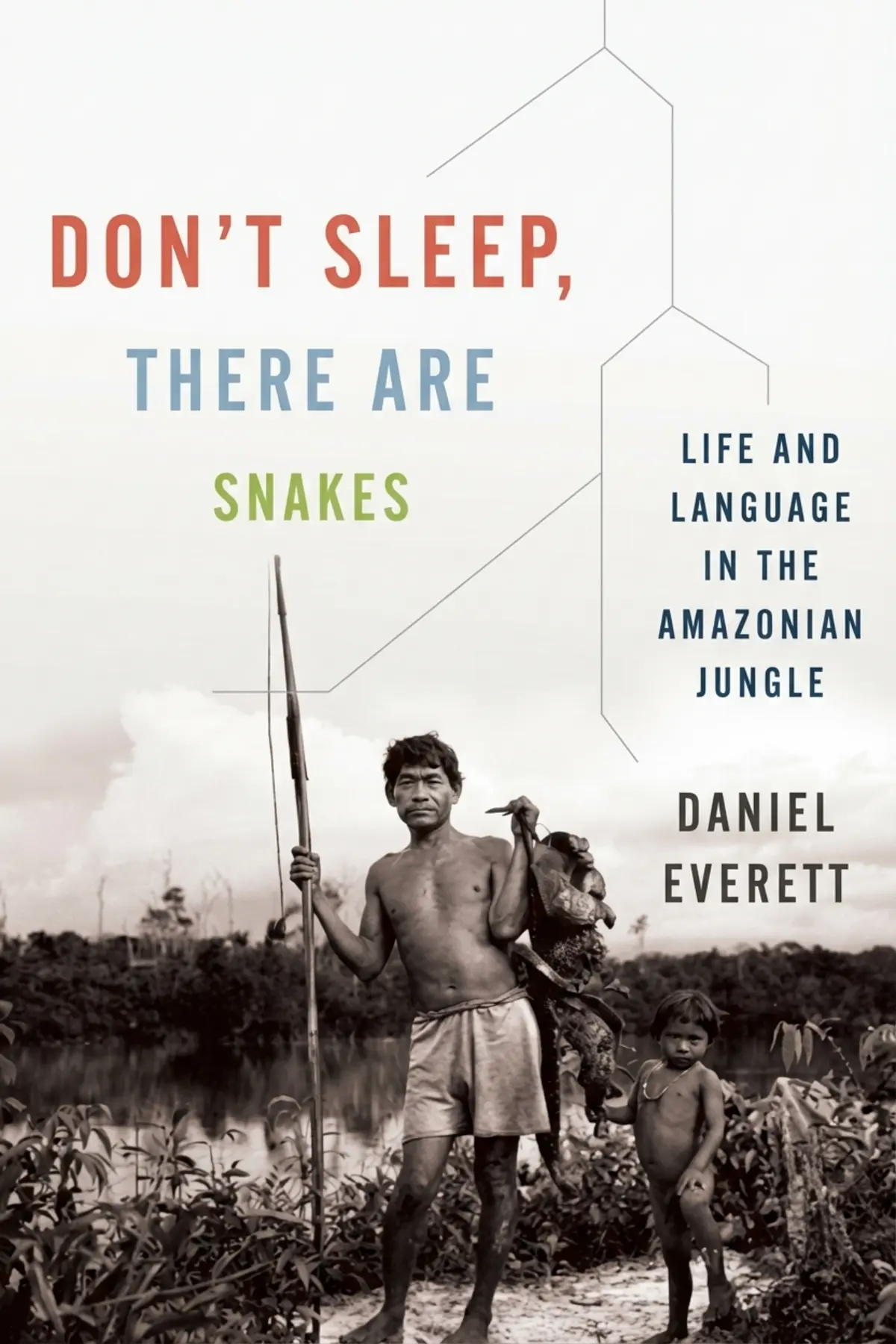
Table of Content
1. Introduction
1 min 28 sec
Imagine waking up in a world where the past and the future have very little weight, where there are no numbers to count your possessions, and where the colors of the sunset don’t have specific names. This isn’t a fictional utopia; it is the lived reality of the Pirahã people in the Brazilian Amazon. Daniel Everett, a linguist who originally entered the jungle as a missionary, found himself transformed by a group of people whose way of life challenges almost everything we think we know about language and human nature.
In this exploration of ‘Don’t Sleep, There Are Snakes,’ we dive into Everett’s decades-long immersion in a culture that values the ‘here and now’ above all else. This isn’t just an academic study of a remote tribe; it is a profound look at the relationship between the words we speak and the way we perceive reality. We will see how the Pirahã survive in one of the most demanding environments on Earth, why they are consistently ranked as some of the happiest people on the planet, and what their unique language tells us about the limits of universal human traits.
As we move through these ideas, you will discover that language is more than just a tool for communication—it is a mirror of a culture’s soul. By understanding the Pirahã, we gain a new lens through which to view our own habits, our own anxieties, and the linguistic structures we often take for granted. This is a story of adventure, intellectual discovery, and the urgent need to protect the diversity of the human experience.
2. The Principle of Immediate Experience
2 min 23 sec
Discover how a culture focused entirely on the present moment shapes a language without history, myths, or long-term worry.
3. A Language Built on Evidence
2 min 29 sec
Explore how the Pirahã use grammar to signify the source of their knowledge, ensuring every statement is backed by proof.
4. Perception Without Numbers or Colors
2 min 18 sec
What happens to the human mind when there are no words for ‘five’ or ‘red’? Discover the surprising way the Pirahã navigate their world.
5. Don’t Sleep, There Are Snakes
2 min 20 sec
Learn why the Pirahã’s unique bedtime greeting is more than just a warning—it’s a window into their philosophy of life and safety.
6. Environmental Mastery and Perception
2 min 17 sec
See how living in a dense jungle hones some senses to perfection while leaving others, like 2D recognition, completely undeveloped.
7. The Silent Death of Languages
2 min 14 sec
Understand the tragic loss when a language disappears and why the Pirahã’s unique dialect is a treasure worth protecting.
8. Conclusion
1 min 41 sec
The journey of Daniel Everett among the Pirahã is more than just a story of a linguist in the jungle; it is a profound challenge to our understanding of the human mind. Through the lens of the Pirahã, we see a people who have mastered the art of living in the present. They show us that happiness does not require the accumulation of possessions, the tracking of time, or the comfort of ancient myths. Instead, their joy comes from a deep, immediate connection to their environment and to one another.
We’ve learned that language is not a rigid, universal blueprint, but a living thing that adapts to the needs and values of its speakers. The Pirahã’s lack of numbers and color terms, their unique system of evidence, and their polyphasic sleep patterns are all reflections of a culture that prioritizes reality over abstraction. They remind us that our own way of seeing the world—filled with schedules, categories, and anxieties about the future—is a cultural construct, not an inevitable destiny.
As you move back into your own world, perhaps you can take a small piece of the Pirahã philosophy with you. The next time you feel overwhelmed by the ‘clocks’ of modern life or find yourself worrying about a future you cannot see, remember the phrase: ‘Don’t sleep, there are snakes.’ It is a reminder to stay present, to be mindful of the real dangers, but also to never stop laughing. The Pirahã offer us a gift—a window into a different way of being. In a world that is becoming increasingly homogenized, their unique voice is a treasure that reminds us of the beautiful, varied, and resilient nature of the human experience.
About this book
What is this book about?
This summary explores Daniel Everett’s fascinating journey into the heart of the Amazon to live with the Pirahã, an indigenous group with a worldview that defies many Western assumptions. Through his decades of immersion, Everett discovers a language that lacks numbers, color terms, and recursive structures, all driven by a cultural focus on immediate experience. The book serves as both a memoir and a linguistic study, promising to change the way you think about human nature. It details the daily survival, the infectious joy of the Pirahã people, and the ways in which their unique way of communicating reflects a deep connection to their environment. Ultimately, it is a call to recognize the value of linguistic diversity before these rare windows into the human mind are lost forever.
Book Information
About the Author
Daniel Everett
Daniel Everett is an American linguist and author who spent four decades living and working among the Pirahã. He is the Dean of Arts and Sciences at Bentley University in Massachusetts.
Ratings & Reviews
Ratings at a glance

What people think
Listeners find this work to be a highly compelling account that offers deep perspectives on cultural and spiritual life. The delivery is immersive, with one listener noting it is roughly 70% narrative, and the thorough exploration of linguistics serves as an accessible gateway to the field. Listeners value the author's transparency and the rich, multi-dimensional information shared, with one listener highlighting the intriguing accounts of Piraha culture.
Top reviews
Nutnicha
Picked this up on a whim after seeing Everett’s name in a linguistics article, and I was absolutely floored by the narrative depth here. The book is roughly seventy percent story, which makes the complex theories about recursion and Universal Grammar much easier to digest for a layperson. I found the Pirahã concept of 'immediacy of experience' to be a profound lens through which to view human culture. To be fair, seeing a dedicated SIL missionary slowly lose his faith because the tribe simply had no use for his 'American Jesus' was a gripping, albeit controversial, journey. Everett’s writing is engaging and transparent, even when he’s detailing his own failures or the terrifying bouts of malaria his family endured. It is a rare look at a people who live entirely in the present, forcing us to question our own obsession with the past and future. This is easily one of the most thought-provoking ethnographies I have encountered in years.
Show moreAnucha
After hearing so much about the controversy surrounding Everett's work, I finally dove in and found a deeply humanizing account of life in the Amazon. The book is an enthralling ethnography that captures the daily rhythms of a culture that exists without the 'cultural shackles' of Western history. I was particularly struck by the anecdote where the tribe members told Everett they didn't want to hear about Jesus anymore because he didn't fit their empirical world. It's a hilarious and humbling moment that highlights the arrogance of the missionary mindset. The truth is, Everett’s willingness to deconstruct his own beliefs in the face of new evidence is refreshing. His descriptions of the spirits the Pirahã claim to see in the jungle add a layer of existential spirituality that challenges our narrow definitions of 'religion.' This isn't just a book about grammar; it's a book about what it means to be human in a world without safety nets.
Show moreWoravit
Wow, what a wild ride through the jungle and the human mind! I loved how Everett blended personal memoir with radical scientific theory. The way he describes the Pirahã's laughter and their refusal to be 'gotten lost' before they could be 'saved' by his preaching was brilliant. It really turns the traditional missionary narrative on its head. The linguistic sections were actually my favorite part because they were explained so clearly that even someone like me, with no background in the field, could understand the stakes. Seeing the tribe's dispassionate reaction to death and illness was a stark contrast to our Western anxieties. This book expanded my mind and made me reconsider everything I thought I knew about the relationship between language and reality. It’s an accessible, engaging, and ultimately moving story about the limits of cross-cultural understanding. Don't skip the technical bits—they are the key to the whole argument!
Show moreKenji
As someone who has always been fascinated by how language shapes our reality, this book provided a refreshing and controversial perspective. Everett’s account of the Pirahã is both a celebration of a unique culture and a biting critique of Western intellectual arrogance. I found the descriptions of their empirical requirements for truth—where they only believe what they have seen or what someone they know has seen—to be a masterclass in logic. It’s no wonder they weren't interested in stories of a man from two thousand years ago! The narrative is roughly seventy percent story, which kept me turning the pages late into the night. Even the more technical discussions about recursion felt necessary to understand why the Pirahã are such a challenge to standard linguistics. It is an honest, gritty, and deeply insightful look at a people who are perfectly happy exactly as they are. This is essential reading for anyone interested in the intersection of culture and thought.
Show moreWissanu
The chapter on recursion might be a bit of a slog for readers without a background in syntax, but the payoff for sticking with it is immense. Everett presents a bold challenge to the prevailing paradigm of linguistics, arguing that culture shapes grammar far more than we realize. I appreciated his honesty regarding his transition from an evangelical missionary to a secular scientist. It’s a brave move to admit that the people you went to 'save' ended up being the ones who changed your entire worldview. The Pirahã’s rejection of anything they haven't personally witnessed is a powerful epistemological stance that makes proselytization nearly impossible. While some critics might find his tone a bit chatty or informal, I felt it added an air of authenticity to his experiences. It’s a compelling intro to the subject that doesn't shy away from the messy reality of fieldwork.
Show moreTariq
Frankly, the most striking part of this memoir isn't the linguistic theory, but the sheer resilience of the Pirahã people in the face of a harsh environment. Everett does a fantastic job of explaining how their language is tied to their survival, showing that their lack of past-tense or future-tense markers isn't a deficiency but a choice. It was eye-opening to read about his children growing up in the jungle and the casual way the tribe views mortality. Some of the linguistic sections are heavy, but they provide a necessary foundation for his critique of Universal Grammar. I did find some of his personal decisions, like moving his sick wife through the jungle, to be incredibly reckless. However, his transparency about those mistakes makes the narrative feel more authentic. It’s a rich, multi-leveled look at a culture that refuses to be changed by the outside world, and I highly recommend it to anyone interested in anthropology.
Show moreDimitri
This book offers a fascinating glimpse into a world that is almost entirely alien to our own, yet it feels deeply grounded in human experience. Everett is a gifted storyteller, and he manages to make the dry subject of linguistics feel like a high-stakes adventure. Gotta say, the way the Pirahã interacted with him—treating him as a friend but ignoring his religious message—was both funny and enlightening. The author doesn't hide the hardships of his life in the Amazon, from the threat of snakes to the social isolation of his family. While I think some of his linguistic conclusions might be a bit of a leap, the evidence he presents is compelling enough to make you stop and think. My only real complaint is that the structure can be a bit repetitive in the middle sections. Overall, it’s a profound look at how culture dictates the way we speak and perceive the world around us. A truly mind-expanding read for the curious soul.
Show moreSomporn
Ever wonder how a linguist manages to bridge the gap between hard science and a jungle memoir? This book tries to do exactly that, though the results are somewhat mixed in terms of structural flow. The author frequently interrupts fascinating anecdotes about Amazonian life with page after page of technical discourse on linguistic theory. Look, I found the Pirahã's lack of numbers and colors fascinating, but the transition between those observations and the critique of Noam Chomsky felt jarring at times. While the descriptions of the village are vivid, I struggled with how Everett characterized the tribe as 'peaceful' while simultaneously mentioning instances of violence in passing. It feels like a literary dog’s dinner where the ingredients are all high-quality but don't quite blend into a cohesive meal. I’m glad I read it for the cultural insights, but the disorganized execution left me wanting a more rigorous academic framework or a smoother narrative.
Show moreRoo
Finally got around to reading this, and while the subject matter is undeniably unique, the writing style felt a bit all over the place. One moment you are reading a heart-pounding survival story about malaria and river travel, and the next you are plunged into a dense academic debate about Chomsky. I wish there had been more balance. Personally, I found the author’s shift from missionary to atheist to be the most compelling arc, but it felt buried under the technical discourse at times. There are also some strange contradictions regarding the Pirahã’s lack of ritual versus the stories he tells about their spirit interactions. It’s definitely a thought-provoking read, but I’m not entirely sure I trust Everett as a completely neutral observer. He seems so intent on proving his linguistic theories that he might be filtering the culture through a very specific lens. A fascinating, if flawed, account of a remote tribe.
Show moreRania
Not what I expected at all, and frankly, I found the author’s tone somewhat grating and inconsistent throughout the text. Everett spends a great deal of time praising the Pirahã for their idyllic lifestyle, yet he glosses over disturbing events like the gang rape of a young woman by mentioning it in parentheses. How can a society be described as 'the happiest people' when such callous disregard for others is present? Furthermore, his linguistic arguments feel shaky because he relies so heavily on his own experiential superiority as the sole outsider who speaks the language. He claims they have no religion, yet describes their vivid interactions with spirits, which seems like a massive contradiction in terms. The writing is workmanlike at best, and the way he structures his conclusions long after the evidence is presented makes for a confusing read. I came away fascinated by the tribe but deeply skeptical of the narrator’s objectivity.
Show moreFeatured in
Readers also enjoyed

A Promised Land
Barack Obama


A River in Darkness: One Man’s Escape from North Korea
Masaji Ishikawa

A Spy Among Friends: Philby and the Great Betrayal
Ben Macintyre



A Year in the Life of William Shakespeare: 1599
James Shapiro
AUDIO SUMMARY AVAILABLE
Listen to Don’t Sleep, There Are Snakes in 15 minutes
Get the key ideas from Don’t Sleep, There Are Snakes by Daniel Everett, plus 5,000+ more titles in English and Thai.
- 5,000+ titles
- Listen as much as you want
- 7-day free trial
- Cancel anytime







