
23 min 24 sec
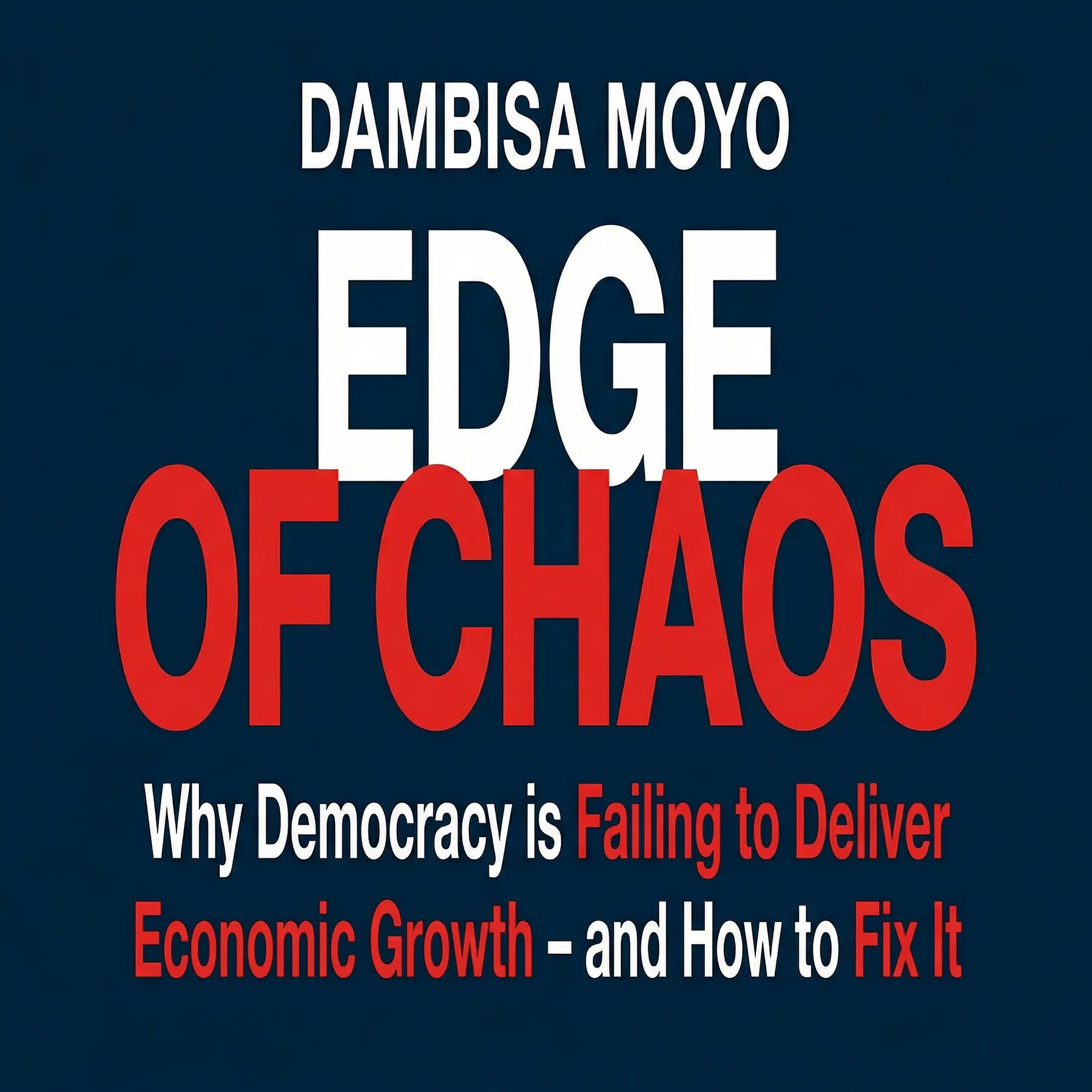
Edge of Chaos: Why Democracy is Failing to Deliver Economic Growth – and How to Fix It
By Dambisa Moyo
Economist Dambisa Moyo analyzes the threats facing global growth and democracy, offering structural reforms to move beyond short-termism and protectionism for a more stable and prosperous future.
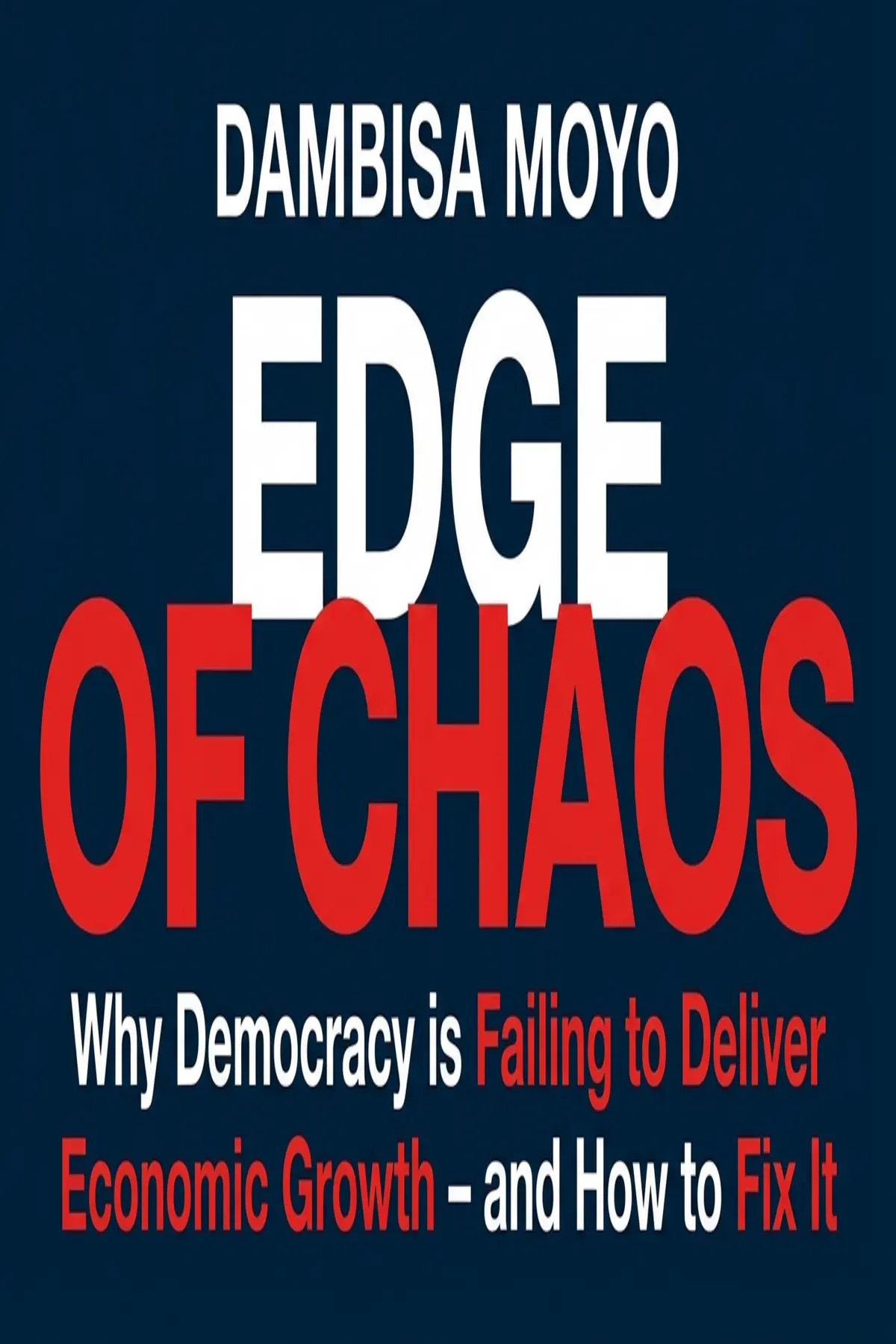
Table of Content
1. Introduction
1 min 54 sec
We live in an era where the ground beneath our feet feels increasingly unstable. The headlines are filled with talk of trade wars, crumbling alliances, and economic uncertainty that seems to persist regardless of who is in power. It’s a moment that can leave even the most informed citizen feeling a sense of dread about the future of the global order. But to understand how to fix a system, we first have to understand exactly where the cracks are forming and why the old tools are no longer working.
In the following minutes, we are going to look at the global landscape through the lens of one of the world’s most respected economists, Dambisa Moyo. She suggests that we are standing at a critical juncture—an “edge of chaos” where the old ways of doing business and politics are colliding with a new, complex reality. This isn’t just a dry academic exercise in numbers and charts. It is a high-stakes investigation into how our societies can survive and thrive in a world that is rapidly changing.
Our journey will take us from the bustling markets of China to the historical challenges of South America, and into the heart of Western democracies like the United States and the United Kingdom. We will explore the fundamental link between economic growth and human dignity, and we will uncover the hidden forces—like aging populations and the march of the robots—that are putting immense pressure on our current way of life.
Most importantly, we won’t just look at the problems. We will explore a series of provocative and practical reforms designed to pull us back from the brink. From changing how we pay our leaders to rethinking the very act of voting, these ideas challenge the status quo and ask us to imagine a more stable, long-term vision for the world. Let’s begin by looking at why growth is the heartbeat of a healthy society, and what happens when that heartbeat begins to fade.
2. The Essential Link Between Economic Expansion and Human Progress
2 min 59 sec
Explore why economic growth is more than just a metric; it is the fundamental driver of rising living standards and social stability across the globe.
3. The Weight of Debt and the Struggle for Scarce Resources
3 min 00 sec
Discover how national debt can either propel a nation forward or act as a crushing weight, and why our planet’s finite resources are under unprecedented pressure.
4. Demographic Declines and the Rise of the Machines
2 min 49 sec
Uncover the dual threat of an aging global workforce and the rapid advancement of automation, both of which threaten to widen the gap between the rich and the poor.
5. The High Cost of the Retreat from Globalization
2 min 42 sec
Analyze the recent surge in protectionist policies and learn why turning inward often results in lower living standards and global instability.
6. The Temptation and the Trap of State-Led Economies
2 min 49 sec
Examine the allure of the Chinese economic model and understand the long-term dangers when a government interferes too deeply in the financial markets.
7. Structural Fixes for a Short-Sighted Political System
2 min 44 sec
Learn why Western democracies must reform their internal structures—from campaign finance to public sector pay—to ensure long-term stability.
8. Empowering the People and Professionalizing the Politician
2 min 41 sec
Explore the case for mandatory voting and the importance of ensuring our representatives have significant experience outside of the political bubble.
9. Conclusion
1 min 46 sec
As we have seen, the path we are currently on is leading us toward a period of prolonged stagnation and social unrest. The “edge of chaos” is not a place we want to remain for long. We’ve explored how the lifeblood of our societies—economic growth—is being threatened by a combination of aging workforces, the rapid rise of automation, and a dangerous retreat into protectionism. We’ve also seen how the short-term incentives of our political systems are preventing us from making the big, structural changes we need to survive.
But the message here isn’t one of despair. It is a call to action. We have the tools to pull ourselves back. By demanding longer terms for our leaders, limiting the influence of big money in our elections, and ensuring that our representatives have actual experience in the world they govern, we can begin to build a system that values the future over the next news cycle. We can choose to prioritize long-term investment in education and infrastructure rather than short-term political wins.
The throughline of our exploration is that the health of our democracy and the health of our economy are inextricably linked. You cannot have one without the other. If we want to maintain our standard of living and ensure a stable world for the next generation, we must be willing to engage in radical reform. It starts with a shift in mindset: moving away from the narrow, immediate concerns of today and looking toward the horizon. By making our voices heard and participating in the democratic process, we can move away from the edge and toward a more prosperous, stable future for everyone. The choice is ours, and the time to act is now.
About this book
What is this book about?
This exploration of modern political economy argues that the global order is currently standing on a precarious edge. With economic growth stagnating and political systems fracturing under the weight of populism, author Dambisa Moyo suggests that our current approach to governance and finance is fundamentally broken. The book serves as a diagnosis of the most pressing threats to our collective future—including demographic shifts, the rise of automation, and the scarcity of natural resources—while providing a roadmap for radical reform. The promise of this work is a clearer understanding of how to restore stability. By examining the successes and failures of various national models, from the rapid rise of China to the historical struggles of Argentina, Moyo outlines specific, actionable changes. These range from restructuring how we vote and how long politicians serve, to rethinking the role of the state in market interventions. It is a call to move away from the short-sighted policies that win elections but lose the future, aiming instead for a resilient system that can support global prosperity.
Book Information
About the Author
Dambisa Moyo
Dambisa Moyo is an internationally renowned economist and author whose career has included posts at the World Bank and Goldman Sachs. Her macroeconomic analyses have landed her on the New York Times best-selling books list four times. Her books include Dead Aid (2009), How the West Was Lost (2011) and Winner Take All (2012). In 2009, she was recognized as a World Economic Forum Young Global Leader, listed in TIME’s 100 most influential people in the world and named as one of 20 remarkable visionaries by Oprah Winfrey.
Ratings & Reviews
Ratings at a glance
What people think
Listeners find the book highly perceptive, as one listener draws attention to its deeply researched look at global affairs and a different one remarks on its scrutiny of long-standing democratic principles. The writing receives praise for being easy to digest, with one listener describing the work as a must-read for those in leadership.
Top reviews
Rungrat
Bold, provocative, and deeply necessary, this book challenges everything we think we know about the relationship between voting and wealth. Moyo argues that economic growth is a prerequisite for democracy, not the other way around, and she backs it up with a terrifying look at the 'headwinds' we face. I loved the appendix where she ranks countries based on her criteria; seeing Germany at the bottom and Mexico at the top will definitely spark some heated debates! It’s a rare book that manages to be this data-heavy while remaining accessible to a general audience. Not gonna lie, some of the proposals made me uncomfortable, but that’s exactly why people need to read it. It forces you to defend your assumptions about how the world works.
Show moreJeeranan
After hearing about the controversy surrounding this book, I had to see for myself what Moyo was suggesting, and I’m glad I did. This is mandatory reading for anyone who cares about the future of our institutions. She isn't just complaining about the state of the world; she is actually offering a concrete, ten-point plan to fix the engine of growth. Her analysis of how the US and other advanced economies are losing their edge is both chilling and insightful. The writing is punchy, and the chapters are organized in a way that builds a very logical case for reform. Even if you only agree with half of what she says, the book will change the way you look at every election. Truly a masterpiece of modern economic thought.
Show moreTalia
Finally got around to reading this, and it’s arguably one of the most important books for policymakers in the current decade. Moyo has this incredible ability to take complex global events and weave them into a narrative that feels urgent and personal. She pokes holes in democratic dogmas that we’ve taken for granted for decades. Is 'one person, one vote' working if it leads to the total collapse of the economic future? It’s a dangerous question, but she asks it with such intellectual honesty that you have to listen. The research is top-notch, and the tone is perfectly balanced between academic rigor and a call to action. If you want to understand why the world feels like it's on the edge of chaos, start right here.
Show moreJune
Moyo offers a sharp perception of the reality check needed for anyone who thinks our current political system is sustainable. She identifies seven 'headwinds'—like aging populations and protectionism—that are actively dragging down global growth. To be fair, some of her suggestions, like weighted voting or civics tests, are incredibly controversial and likely impossible to implement in today's polarized climate. However, the way she connects economic stagnation to the short-term nature of election cycles is brilliant. The book is remarkably readable for a work on macroeconomics. I found the analysis of 'state-directed' capitalism versus liberal democracy to be a necessary poke in the eye for complacent Western thinkers. It’s not a perfect blueprint, but it’s a meticulously sourced warning that we shouldn’t ignore.
Show moreNook
As someone who works in finance, I found Moyo’s breakdown of how we reached this tipping point to be quite compelling. She doesn't shy away from the hard truths about how protectionism and the rise of illiberal models are challenging the West. The book is well-researched, drawing on a vast array of statistics to show that liberal democratic capitalism is in a period of unprecedented fragility. While I don't agree with every one of her ten reforms—especially the bit about weighted voting—I think her heart is in the right place. We need structural change, not just more 'band-aid' policies. This should be an essential primer for anyone interested in how the global order is shifting toward a more fragmented future. It’s a wake-up call that is both sober and necessary.
Show moreDao
Ever wonder why the economy feels like it’s stalling despite all the technological leaps we make? Moyo tries to answer this by looking at the 'edge of chaos' where political instability meets economic decline. I appreciated the chapter on the 'Blueprint for a New Democracy,' though many of the ten points felt like recycled ideas. Mandatory voting and capping campaign spend are common suggestions, but her take on increasing politician salaries to match the private sector was a bit much. Personally, I think she overestimates how much 'talent' would be drawn into politics just for the paycheck. The book is an okay overview if you’re new to these concepts, but seasoned political junkies might find the analysis a bit superficial in places. It’s a fast read, at least.
Show moreKofi
To be fair, the author raises some incredibly urgent questions about the short-termism plaguing Western democracies. We are definitely stuck in a cycle of 'political myopia' where leaders only care about the next election. However, Moyo often contradicts herself. She praises competitive elections as essential in one chapter, then complains that they force officials into making populist, short-term decisions in the next. She wants a more 'professional' voter base but doesn't account for how easily civics tests could be used to disenfranchise marginalized groups. It is a thought-provoking read, but it leaves you with more questions than answers. The data points are interesting, though some of her conclusions about infrastructure and debt feel a bit alarmist compared to historical trends.
Show morePrinya
Picked this up because I’ve followed Moyo’s work for years, but this one really missed the mark for me. She lists ten recommendations to save democracy, yet provides almost zero empirical evidence to support her claims. For instance, she argues that longer terms in office lead to better long-term thinking. Where is the data? Does a senator with a six-year term actually plan better than a representative with two? She doesn't say. Frankly, the writing feels like a collection of assertions rather than a rigorous economic study. The book aims for a 'golden mean' in governance but fails to provide a map on how to actually get there. It’s frustrating because the problems she identifies are real, but her solutions feel like they were brainstormed in a vacuum.
Show moreSavannah
Look, I appreciate the ambition, but most of these proposals feel like they were written in a vacuum far removed from political reality. Moyo suggests we should increase politician pay and give them bonuses for 'long-term' successes. In what world is the tax-paying public going to vote for that? The gap between her academic theories and the actual populist anger on the ground is massive. She spends so much time talking about 'voter quality' that she ignores the fact that people are often reacting to a system that has genuinely failed them. It’s a very technocratic view of the world. While the stats on global debt and declining productivity are useful, the solutions are just too detached from how humans actually behave in a social contract.
Show moreNattapong
The premise here is fundamentally flawed because it prioritizes abstract economic growth over actual human representation. Moyo suggests that we should weight votes based on a person’s education or professional status. That isn't fixing democracy; that is dismantling it in favor of a technocratic elite. Truth is, I have seen plenty of 'highly educated' people make disastrous, biased decisions while 'unqualified' voters have a much better pulse on local needs. Her obsession with 'growth' as the only metric of success is also incredibly dated. She never even stops to define what she means by the term. Is it wealth? Is it jobs? Is it sustainability? This book feels like it was written by someone who views the world from 30,000 feet and has never actually spoken to the people affected by the policies she proposes.
Show moreReaders also enjoyed
Abolish Rent: How Tenants Can End the Housing Crisis
Tracy Rosenthal
Abortion: Our Bodies, Their Lies, and the Truths We Use to
Jessica Valenti
21 Lessons for the 21st Century
Yuval Noah Harari
Age of Anger: A History of the Present
Pankaj Mishra
A Different Kind of Power: A Memoir
Jacinda Ardern
Age of Propaganda: The Everyday Use and Abuse of Persuasion
Anthony Pratkanis
1929: Inside the Greatest Crash in Wall Street History--and How It
Andrew Ross Sorkin
AUDIO SUMMARY AVAILABLE
Listen to Edge of Chaos in 15 minutes
Get the key ideas from Edge of Chaos by Dambisa Moyo, plus 5,000+ more titles in English and Thai.
- 5,000+ titles
- Listen as much as you want
- 7-day free trial
- Cancel anytime







