
20 min 06 sec
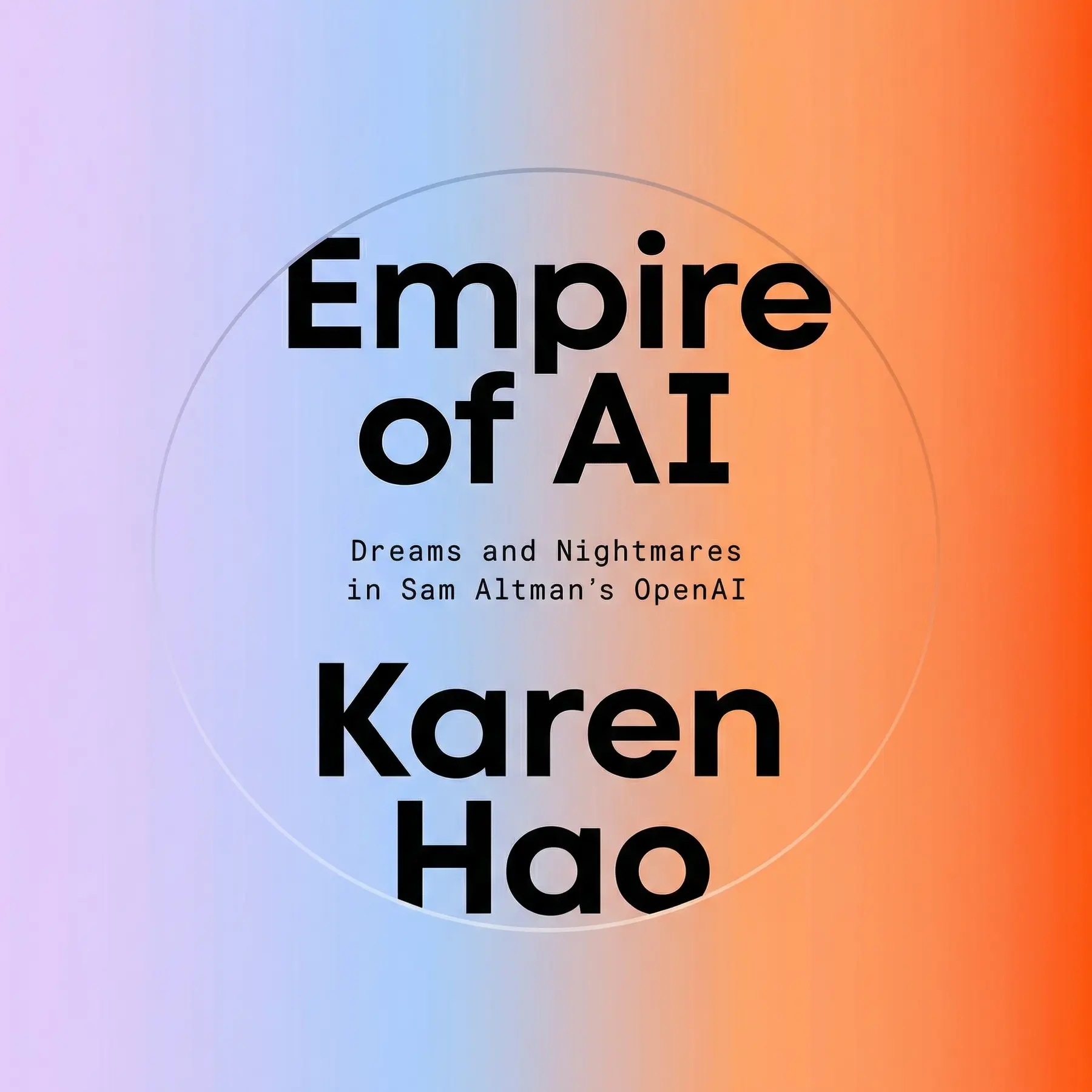
Empire of AI: Dreams and Nightmares in Sam Altman's OpenAI
By Karen Hao
Empire of AI chronicles the high-stakes evolution of OpenAI from a humble nonprofit to a global tech powerhouse, revealing the internal conflicts and ethical compromises behind its rise.
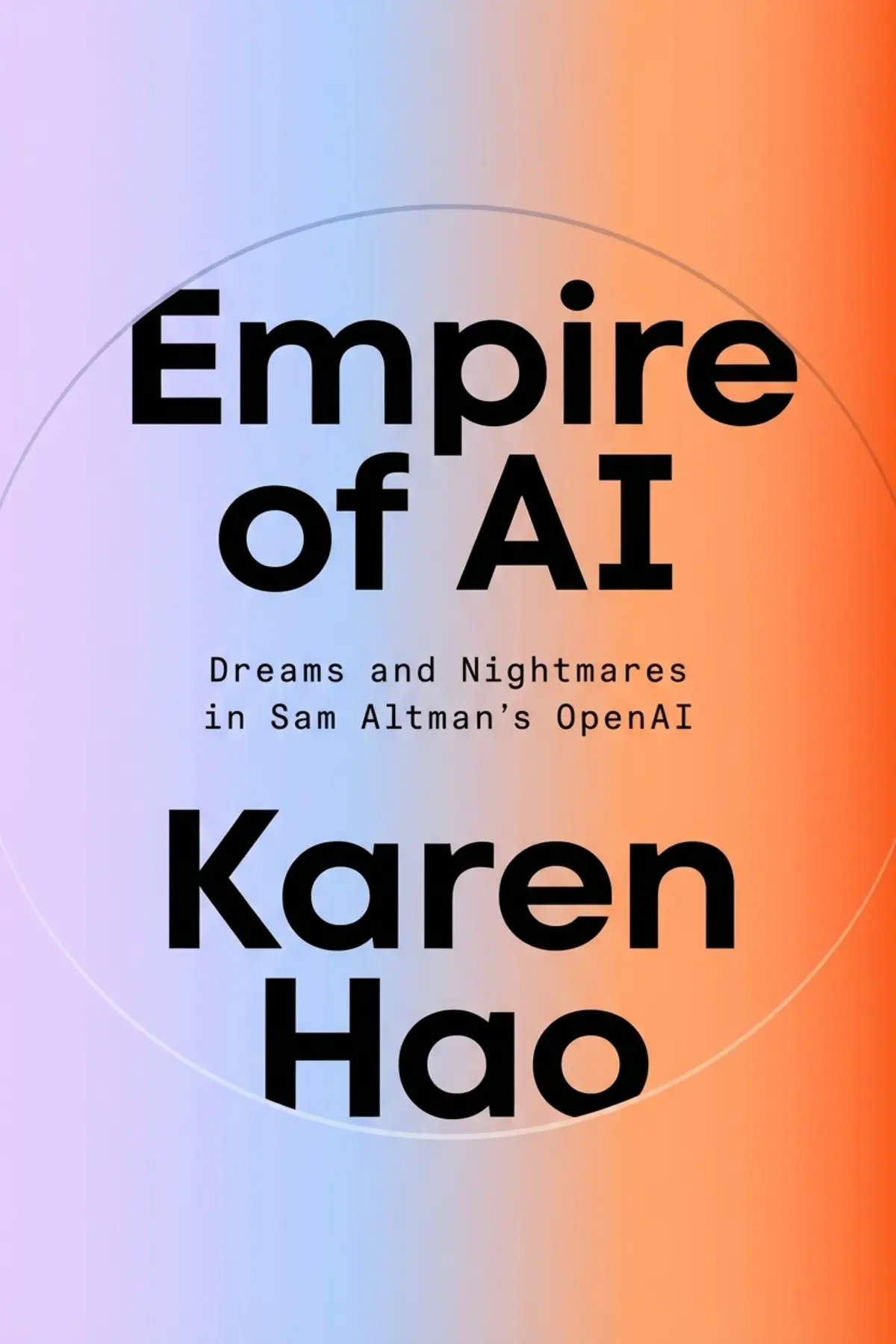
Table of Content
1. Introduction
2 min 00 sec
Imagine, if you will, the first time you interacted with a modern AI chatbot. Perhaps you asked it to write a poem, solve a coding problem, or simply explain a complex scientific theory. In that moment, the interface felt clean, almost magical—a digital assistant that seemed to emerge from nowhere, ready to serve humanity. But beneath that polished surface lies a story of immense complexity, characterized by clashing egos, staggering financial gambles, and a fundamental shift in the very soul of an organization.
This is the story of OpenAI, an entity that began as a philanthropic endeavor to ensure the safety of our collective future and evolved into a corporate titan valued in the hundreds of billions. It is a journey that takes us from the exclusive dinner tables of Silicon Valley to the high-pressure server rooms of Microsoft, and even to the quiet rooms in Kenya where workers filter the internet’s darkest corners. We often talk about artificial intelligence in terms of algorithms and data, but the history of this field is intensely human. It is driven by the dreams of visionary thinkers and the nightmares of those who fear what they might actually be creating.
As we explore this narrative, we will look at how the throughline of OpenAI changed from democratic access to consolidated power. We will see how the pressure to compete in a global marketplace forced idealists to become pragmatists, and how the pursuit of a world-changing technology eventually led to an internal civil war. This isn’t just a business biography; it’s a look at the blueprint of our near future. By understanding the forces that shaped the current AI landscape, we can better ask ourselves: who is really in control of this revolution, and whose interests are truly being served? Let’s begin with a single evening in 2015, where a group of men gathered to decide the fate of the world.
2. The Birth of a Nonprofit Ideal
2 min 22 sec
A secretive dinner at a luxury hotel brought together tech’s biggest icons to launch a radical experiment in artificial intelligence, promising to save humanity from corporate greed.
3. The Doctrine of Brute Force Intelligence
2 min 22 sec
Discover how a shift in philosophy led researchers to believe that simply feeding more data into larger machines could unlock the secrets of the human mind.
4. The Hidden Scars of AI Training
2 min 13 sec
Behind the sleek interface of modern AI lies a traumatic world of manual labor, where workers in the Global South filter the internet’s worst content for pennies.
5. The Alliance of Necessity
2 min 17 sec
With resources running low, a high-stakes partnership with a tech giant transformed the nonprofit into a commercial powerhouse, forever altering its original mission.
6. The Two-Week Sprint to History
2 min 09 sec
A sudden threat from a rival group of former employees forced a desperate rush to release a revolutionary tool, changing the world overnight and catching even its creators off guard.
7. The Prophet and the Politician
2 min 10 sec
As the technology grew more powerful, a deep philosophical divide emerged between the visionary scientist and the ambitious CEO, leading to a clash of values.
8. A Coup Without a Country
2 min 10 sec
Relive the chaotic five days that nearly destroyed OpenAI, as a board-room rebellion met with a massive employee revolt and a surprising corporate rescue.
9. Conclusion
2 min 23 sec
As we look back at the journey of OpenAI, we see a path littered with the remnants of good intentions. What started as a collective effort to safeguard the future of humanity from the risks of artificial intelligence has, in less than a decade, become the very thing it was meant to prevent: a powerful, centralized, and profit-oriented corporation. The story of OpenAI is a mirror of the broader tech industry, where the immense capital required for innovation often swallows the ethical frameworks meant to guide it. The transition from a nonprofit mission to a commercial empire was not just a business decision; it was a fundamental change in the relationship between creators and their technology.
The lessons of this story are profound. We see that ‘magic’ in the digital age often has a hidden human cost, borne by those who have the least power to protest. We see that the pursuit of scale can lead to a kind of technological momentum that is difficult for even its creators to stop. And most importantly, we see that the governance of world-changing technology is incredibly fragile. When the safety of the world is placed in the hands of a small board of directors or a single charismatic leader, the results can be unpredictable and deeply influenced by personal ambition and corporate pressure.
Yet, the story is not over. The collapse of the original OpenAI model invites us to think about what comes next. If the current empire is built on concentrated power and secret data, perhaps the next wave of innovation will come from those who truly value transparency and decentralized control. As users and citizens, we have a role to play in demanding accountability from the people building our future. We must look past the polished interfaces and the grand promises of ‘benefit for all’ to ask the difficult questions about who is truly profiting. The rise of this AI empire is a reminder that while technology may feel like magic, the power to shape its direction remains, for now, in human hands. It is up to us to ensure that the dreams of the future do not become the nightmares of the present. Thank you for listening to this summary of Karen Hao’s exploration into the heart of the AI revolution.
About this book
What is this book about?
This summary provides a deep dive into the origin story and controversial expansion of OpenAI. It traces the journey of Sam Altman and his colleagues as they navigate the treacherous waters of Silicon Valley, moving from a mission of public safety to a multi-billion-dollar partnership with Microsoft. You will explore the hidden human cost of AI training in the Global South and the philosophical divide between those who fear the technology and those who wish to accelerate it at all costs. The narrative also uncovers the dramatic internal power struggle that briefly saw Sam Altman ousted from his own company. By examining the shifting priorities of the tech elite, the story promises to reveal how the quest for artificial general intelligence is reshaping global power structures and challenging our understanding of human labor and safety. It is a cautionary tale about the distance between idealistic dreams and the hard realities of corporate empire-building.
Book Information
About the Author
Karen Hao
Karen Hao is a decorated journalist who focuses on how artificial intelligence influences global society. Her background includes roles as a reporter for the Wall Street Journal and as a senior editor for AI at MIT Technology Review. Her investigative work is frequently included in academic curricula and cited by international government bodies, marking her as a premier authority on the social and ethical impacts of emerging technologies.
Ratings & Reviews
Ratings at a glance
What people think
Listeners find the work extensively researched and skillfully composed, featuring a striking narrative that explores many facets of AI, particularly its effects on marginalized populations. Additionally, the book is appreciated for its engaging storytelling and readability. Nevertheless, the pacing gets a mixed response, as several listeners find it challenging to initially get into the book. The information is also criticized for being overly detailed, and one listener highlights the book's lack of impartiality.
Top reviews
Chee
Karen Hao has delivered a staggering indictment of the current AI gold rush that goes far beyond the typical Silicon Valley puff pieces. By framing OpenAI's rise as a form of modern-day colonialism, she forces the reader to look at the extraction of data and labor from the Global South. The narrative is remarkably well-written, weaving together the technical pivot of Sam Altman with the grim reality of Kenyan click-workers. It’s an uncomfortable mirror held up to an industry that claims to be "saving humanity" while exploiting it. Some might find the detail overwhelming, but the depth is necessary to prove her thesis. Frankly, it changed how I view every chatbot I interact with.
Show moreTim
The chapter on data labeling in Kenya was absolutely gut-wrenching. While the tech world obsesses over Sam Altman’s brief firing and rehiring, Hao reminds us that the real "intelligence" is built on the backs of low-wage workers in the Global South. This is a remarkable narrative that avoids the trap of fanboyism, focusing instead on the marginalized communities usually left in the footnotes. Truth is, we need more journalists who aren't afraid to challenge the "AI for good" marketing spin. It’s dense and requires focus, but the payoff is a much clearer understanding of the power structures behind the screen. Essential reading for the 21st century.
Show moreWorawit
Wow, this was an eye-opener. I’ve read plenty about the Sam Altman saga, but Hao's focus on the "Empire" aspect—the energy, the water, and the human cost—is what makes this book stand out. It’s a thoroughly researched investigation that doesn't pull any punches when it comes to the ethical failures of the tech elite. The way she connects the dots between 19th-century colonialism and 21st-century data scraping is brilliant. Not gonna lie, it’s a heavy read that might leave you feeling a bit cynical about the future of technology, but that’s exactly why it’s so important right now. Five stars for the courage to speak truth to power.
Show moreJavier
After hearing the buzz about this book, I expected a standard corporate biography, but Empire of AI is so much more than that. Karen Hao has managed to turn 300+ interviews into a cohesive, haunting narrative about the cost of progress. The readability is surprisingly high given the density of the subject matter, though I agree with others that it can feel overwhelming at times. Her critique of the "AI zoomers" versus "AI doomers" adds a necessary layer of nuance to the current debate. It’s a bold, provocative work that should be required reading for anyone using these tools today. Truly a remarkable achievement in tech journalism.
Show moreMaja
Finally got around to finishing this, and I have complicated feelings. On one hand, Hao is an incredible storyteller who makes the complex history of OpenAI feel like a high-stakes thriller. The investigative research is clearly top-tier, especially regarding the internal rifts between figures like Ilya Sutskever and Sam Altman. However, the pacing can be a bit sluggish in the middle sections when it dives into the minutiae of environmental costs and energy consumption. I personally would have liked more on the transformer architecture itself, but I understand she’s focusing on the human cost. It’s a necessary read, even if the ideological slant is a bit heavy-handed at times.
Show morePete
As someone who works in tech, I found Empire of AI to be a refreshing, albeit sobering, counter-narrative to the hype cycle. Hao’s ability to track OpenAI’s transition from a non-profit research lab to a profit-hungry powerhouse is expertly reported. I was particularly fascinated by the insights into the internal "sama" drama, even if some of the family details felt a bit unnecessary and gauche. The book does suffer from a few pacing issues—some chapters feel like long-form magazine articles that were stretched a bit too thin. Still, the core argument about resource extraction is powerful and well-supported by her extensive interviews.
Show moreIsabella
Ever wonder what happens when a non-profit tries to save the world and ends up becoming a Microsoft-backed behemoth? Hao provides a deep dive into the ideological zeal that fuels OpenAI, painting a vivid portrait of a company caught between utopian dreams and capitalistic reality. The storytelling is engaging, and she does a great job of explaining why the "scaling laws" matter to the people at the top. I did find her skepticism of the technology itself a bit extreme; it’s hard to argue that GPT-4 is just a "stinking fart" of information. Regardless, the global perspective she brings regarding data annotation is absolutely essential for a complete picture.
Show moreDome
Picked this up after seeing Karen Hao on a podcast, and while the research is impressive, it’s a tough slog at times. The book is incredibly detailed—perhaps too detailed—meaning I found myself skimming through some of the more repetitive sections on environmental impacts. I appreciate the focus on the ethics of RLHF and the exploitation of labor, but the narrative often loses its momentum in a sea of anecdotes. To be fair, she covers a lot of ground that other AI books ignore, but the tone can feel a bit sanctimonious. It’s a middle-of-the-road read for me because of the pacing, despite the high-quality journalism.
Show morePairot
While I appreciate the spirit of this investigation, I found the lack of technical depth disappointing. Hao spends so much time on the sociological impacts—which are important—that she barely scratches the surface of how these models actually work. It’s a bit of a missed opportunity to educate the public on the science behind the transformer architecture. Additionally, the portrait of Sam Altman felt a bit contradictory, jumping between him being a master manipulator and a confused idealist. It’s a well-written book for a general audience, but for those looking for a rigorous technical or business analysis of the AI sector, it falls somewhat short of expectations.
Show moreKoi
Look, I wanted to like this, but the blatant lack of impartiality makes it hard to take as a serious journalistic work. Hao clearly has an axe to grind against the "tech bros," and while some of her criticisms of labor practices are valid, the book reads more like a polemic than an investigation. She dismisses the actual technical achievements of generative AI as "quaint" or "fluency illusions," which feels incredibly reductive. The constant comparisons to colonial empires felt forced and repetitive after the first hundred pages. If you're looking for a balanced take on Sam Altman or the future of AGI, you won't find it here; this is purely for the choir.
Show moreFeatured in
Readers also enjoyed


AUDIO SUMMARY AVAILABLE
Listen to Empire of AI in 15 minutes
Get the key ideas from Empire of AI by Karen Hao, plus 5,000+ more titles in English and Thai.
- 5,000+ titles
- Listen as much as you want
- 7-day free trial
- Cancel anytime







