


A Planet of Viruses
Carl Zimmer
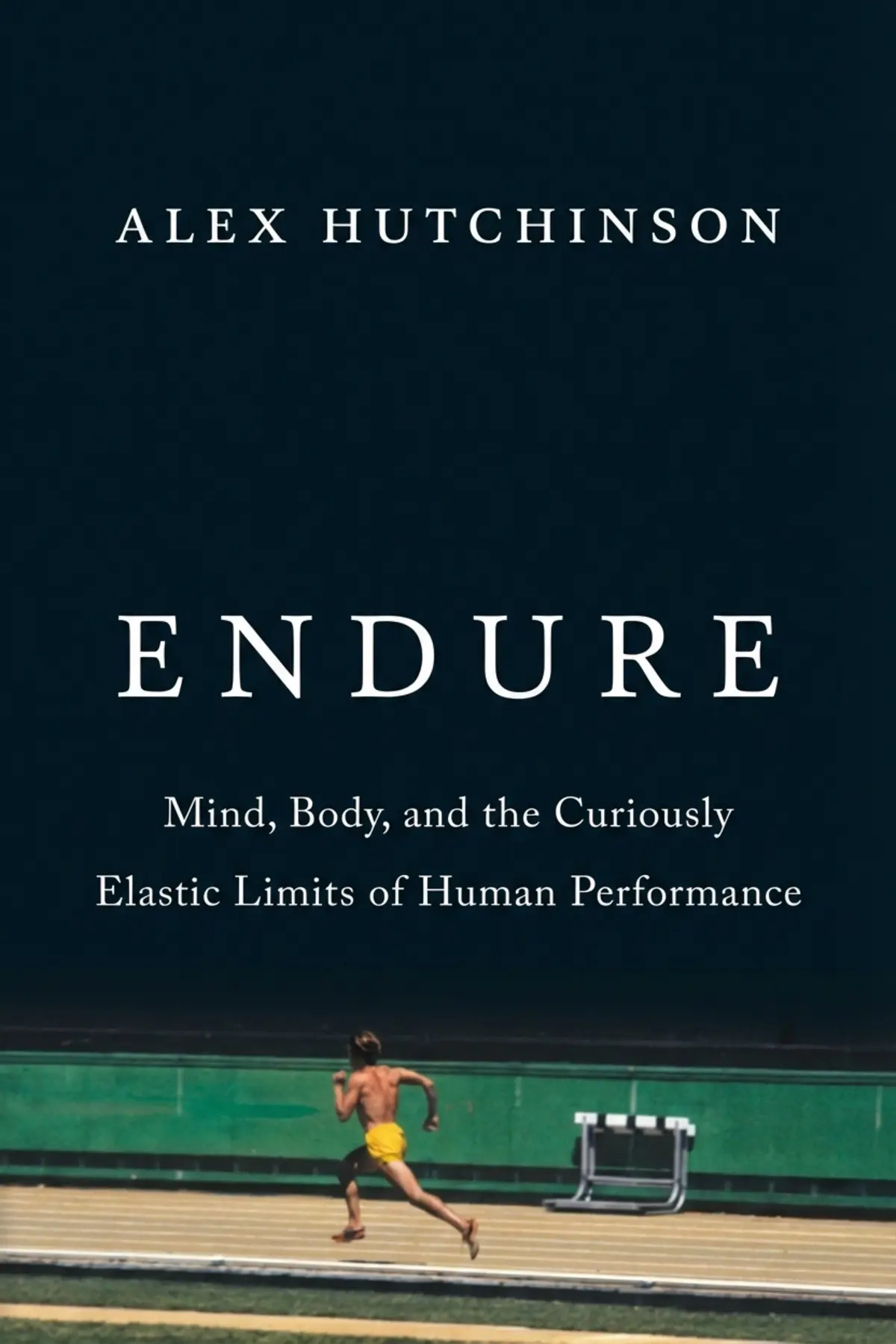
Endure explores the science behind human physical limits, revealing how the mind-body connection—not just muscle—dictates our performance. Discover how pacing, pain tolerance, and brain chemistry allow us to push beyond our perceived boundaries.
1 min 51 sec
Imagine for a moment a runner approaching the final stretch of a grueling marathon. Their face is a mask of agony, their gait is unsteady, and every fiber of their being seems to be screaming for them to stop. Yet, as the finish line comes into view, something incredible happens. That same runner, who looked ready to collapse just seconds ago, suddenly finds the strength to sprint. This sudden burst of energy raises a profound question that has fascinated athletes and scientists for generations: what truly defines the limits of human endurance?
Is it a physical wall built of lactic acid and depleted glycogen, or is it something more mysterious, located deep within the folds of the human brain? In the book Endure, author Alex Hutchinson takes us on a journey to the very edges of what the human body can achieve. As a former elite middle-distance runner for the Canadian national team and a Cambridge-educated physicist, Hutchinson is uniquely positioned to bridge the gap between the raw experience of physical suffering and the rigorous data of the laboratory.
He argues that our limits are far more elastic than we once believed. While we often think of our bodies as machines that simply run out of fuel or overheat, the reality is a complex, two-way conversation between our physical systems and our minds. This summary explores the evolution of endurance science, shifting from a purely mechanical view to one that places the brain at the center of the story. We will look at how we pace ourselves, how we process pain, and how our subconscious mind often holds us back to ensure our survival. By the end of this journey, you’ll understand that the barrier you hit during a difficult task isn’t necessarily a hard stop—it might just be the beginning of a negotiation with your own mind.
2 min 29 sec
Explore the tragic final journey of Henry Worsley, an explorer who pushed his body beyond the point of recovery, revealing the ethical and physical stakes of testing the true limits of endurance.
2 min 30 sec
Your body knows something your mind doesn’t: pacing isn’t willpower, it’s an ancient survival instinct still governing every race you run. Discover why that final kick at the finish line reveals your brain’s hidden governor.
2 min 29 sec
Your muscles aren’t quitting on you—your brain is. Discover why mental fatigue is the hidden ceiling on physical endurance, and how managing your mind can unlock performance your body already has.
2 min 25 sec
Your pain threshold is fixed, but your pain tolerance isn’t. Discover how elite athletes train their brains to redefine suffering as fuel—and how you can too.
2 min 27 sec
Your oxygen capacity is your engine’s size—but here’s the catch: altitude, environment, and efficiency determine whether you’ll break records or hit walls. Discover why the Dead Sea might be the ultimate performance laboratory.
2 min 22 sec
Your brain has a built-in shutdown switch set at 104 degrees—but athletes are learning to hack it. Discover how cooling tricks can push past this thermal barrier, and why playing with these limits is a dangerous game.
2 min 15 sec
Your brain’s panic button is wired to quit before your body truly fails. Learn how elite athletes rewire the insular cortex through mindfulness to observe suffering without surrendering to it.
2 min 50 sec
Your brain isn’t just tired—it’s actively shutting you down. Discover how scientists are rewiring the fatigue signal itself and why your real limit might be far more negotiable than you think.
2 min 08 sec
As we conclude our exploration of Endure, it’s clear that the story of human performance is far more than a simple calculation of muscle fibers and oxygen levels. We have seen that while the body has real, physical limits—like the critical internal temperature of 40 degrees Celsius or the absolute ceiling of our VO2 max—the brain is the ultimate arbiter of when we actually stop. It acts as a cautious guardian, holding us back to ensure our survival and preventing us from reaching the point of no return.
The throughline of Alex Hutchinson’s work is that these limits are curiously elastic. By understanding the role of perceived effort, the evolutionary patterns of pacing, and the way our brain processes pain and stress, we can begin to expand our own capabilities. Whether it’s through the mental training of mindfulness or simply by understanding that our ‘tired’ feeling is often a suggestion rather than a command, we have the power to nudge the boundaries of what is possible.
One of the most practical takeaways from this research is the power of belief. Sometimes, if a method feels like it works—even if science hasn’t fully explained why—it can be a valuable tool. Take the example of ice baths; while the physiological evidence for their effectiveness is mixed, if an athlete believes they help them recover, their perceived effort during the next workout will be lower, leading to better performance. In the world of endurance, the placebo effect isn’t ‘fake’—it’s a real change in the brain’s perception of its own limits.
Ultimately, endurance is a conversation between your mind and your body. The next time you find yourself wanting to quit, remember that your brain is likely trying to protect you by giving you an early warning. You have a reserve of energy that you haven’t even touched yet. By staying calm, managing your focus, and leaning into the discomfort, you might find that you can endure much longer than you ever thought possible. The wall isn’t always a dead end; sometimes, it’s just a door that requires a bit more mental pressure to open.
Endure by Alex Hutchinson investigates the ultimate question of human performance: what actually stops us? For decades, scientists believed physical limits were hard-wired into our physiology, dictated by lung capacity, muscle fatigue, or body temperature. However, Hutchinson reveals that the brain acts as a central governor, often holding us back long before our physical systems truly fail. Through a mix of gripping adventure stories and cutting-edge laboratory research, this summary explores the elastic nature of endurance. You will learn about the role of perceived effort, the evolutionary roots of pacing, and how elite athletes train their minds to tolerate discomfort. By understanding the intersection of the motor cortex and the body’s warning signals, you’ll gain a new perspective on what it means to reach the edge of human capability and how we might nudge that edge further than ever before.
Alex Hutchinson is an award-winning journalist and contributing editor to Outside magazine. His work has also been featured in the New Yorker, the New York Times, the Globe and Mail and Runner’s World. With a PhD in physics from the University of Cambridge, as well as a true passion for the outdoors and running, he is uniquely qualified to research the science behind fitness and endurance.
Listeners find this a vital resource for endurance athletes, particularly road runners and cyclists, highlighting its high-quality prose and reliance on scientific research. They appreciate the focus on both the psychological and physical components of performance, while one listener notes how it covers time spans from seconds to months. Filled with accounts of amazing feats of endurance, the work acts as an excellent foundational guide for endurance athletes of all abilities.
Ever wonder why you hit the wall at mile 20 of a marathon? Alex Hutchinson takes a deep dive into the 'Central Governor' theory, exploring how our brains act as a safety valve for physical exertion. It’s a masterful blend of gripping narrative—like the Nike Breaking2 project—and rigorous scientific analysis. I particularly enjoyed the chapters on thirst and heat; they completely changed how I think about hydration during long summer rides. The writing is sharp and accessible, even when he's explaining complex VO2max concepts or metabolic demands. Frankly, this is a must-read for any endurance athlete who wants to understand the 'why' behind the pain. It doesn't give you a training plan, but it provides something better: a new perspective on your own limits. The book covers everything from seconds to months of effort with incredible detail.
Show moreThis book is a total game-changer for anyone obsessed with the limits of human performance. Hutchinson manages to make things like 'transcranial magnetic stimulation' sound like a page-turning thriller. I was especially captivated by the stories of people doing the impossible, like the woman saving her son in the surf. It really makes you question where your own 'red line' actually sits during a race. The truth is, we are often our own worst enemies when it comes to fatigue and perceived effort. By understanding the 'Central Governor' theory, I've started approaching my interval sessions with a completely different mindset. The chapter on pain was particularly eye-opening, suggesting that suffering is as much a mental construct as a physical one. If you're a cyclist or runner, just buy it and read it twice.
Show moreAfter hearing so much buzz in my cycling club, I picked this up and couldn't put it down. The breadth of topics is incredible, covering everything from the psychological effects of heat to the way our muscles actually communicate with our brains. Hutchinson’s writing is lively and he has a knack for picking the perfect anecdotes to illustrate complex physiological points. I loved the section on how simply swishing carbs in your mouth can trick the brain into working harder. It’s these little tidbits that make the book so valuable for competitive athletes. The research feels current and the author’s skepticism keeps the crazier theories in check. It’s a deep dive that covers time spans from mere seconds to months of exploration. Absolutely essential reading for endurance junkies who want to push their boundaries.
Show moreWow. This is probably the most comprehensive book on the science of human endurance I have ever read. Hutchinson manages to synthesize decades of research into a narrative that feels both urgent and inspiring. The stories of explorers at the South Pole and elite Kenyan runners are expertly woven into the scientific discussion. It really helps you visualize what it means to push past the point where your body is screaming at you to stop. I've already started applying the lessons about mental stamina to my own marathon prep. The realization that our 'safety margins' are much wider than we think is incredibly liberating. Whether you're a pro or a weekend warrior, this book provides a vital toolkit for understanding your own potential. A masterclass in science writing that every athlete should own.
Show moreAs a casual road runner, I found this exploration of human limits both enlightening and a bit dense in places. Hutchinson is a fantastic storyteller when he’s recounting the history of the four-minute mile or South Pole expeditions. However, the middle sections can feel like a heavy dump of academic studies that occasionally drag on. To be fair, the science is fascinating, especially the parts about how the mind can override physical fatigue through belief or even just swishing Gatorade. The structure is logical, moving through different environmental and physiological stressors. It's a solid four stars, though I wish there were more concrete takeaways for my daily training routines. Still, it’s a brilliant primer on the intersection of psychology and sports performance that will stick with me for a long time.
Show moreFinally got around to reading this after hearing Malcolm Gladwell rave about it in the foreword. It’s a very well-researched piece of journalism that bridges the gap between the lab and the track effectively. Hutchinson’s background as a runner really shines through, as he understands the nuances of things like the lactic acid myth. While some chapters on fuel and oxygen felt a bit familiar, his exploration of the psychological side was fresh. The way he discusses how the brain anticipates 'catastrophe' to protect the body is genuinely thought-provoking. My only gripe is that it occasionally feels like a collection of magazine articles rather than a cohesive book. Still, the stories about the Blitzkrieg and Pervitin were wild. A very strong four-star read for any stats-heavy athlete looking for a deeper understanding.
Show moreThe chapter on oxygen alone is worth the price of admission here. Hutchinson does a great job debunking old-school ideas about VO2max being the sole arbiter of athletic success. He explains why the mind-body connection is the real frontier of human performance. Personally, I found the historical context of the sub-four-minute mile to be the most engaging part of the narrative. The book is dense, though, and requires some focus to get through the more technical sections on muscle fiber and metabolic demands. It’s not a light beach read, but it is deeply rewarding if you stick with it. Some sections felt a bit repetitive, especially toward the end, but the overall message is powerful. Our limits are far more elastic than we've been led to believe, which is a very inspiring thought.
Show morePicked this up on a whim and was pleasantly surprised by the depth of the research. Hutchinson is a talented writer who knows how to make data feel human. While it’s true that the book doesn’t offer a 'cheat code' for fitness, it provides a fascinating look at the factors that hold us back. The discussion on 'central governor' theory was particularly enlightening for me as a triathlete. I did find that the transition between chapters could be a bit jarring at times, with the author shifting gears very abruptly. However, the sheer amount of interesting facts—like the role of Tylenol or caffeine in performance—kept me turning the pages. It’s a solid, thoughtful exploration of what it means to endure. Definitely worth your time if you enjoy science and sports.
Show moreNot what I expected based on the title, to be honest. I was looking for a practical guide on how to increase my stamina, but this is more of a philosophical and scientific survey. Hutchinson spends a lot of time on the history of sports metrics and various theories that haven't always been replicated in the lab. The writing style is a bit circuitous, often building to a climax only to jump to a different clinical study. I appreciated the mention of the East African runners and the role of elevation, yet the book felt a little too long for the amount of actionable advice provided. It’s a decent read for science nerds, but athletes looking for a 'how-to' might feel slightly disappointed by the lack of a clear meta-narrative beyond 'mind matters.' It is definitely a well-written but ultimately frustrating journey.
Show moreLook, I really wanted to love this, but it just felt like a dry list of academic papers after the first fifty pages. The opening about the Breaking2 project was fantastic and had me hooked, but then it devolved into endless summaries of studies that often contradicted one another. Hutchinson will spend ten pages on a study only to conclude that the results were never replicated. It makes the reading experience feel quite pointless and frustrating at times. I found the tone a bit flat and the narrative lacked a strong through-line to keep me engaged. Maybe I'm just not the target audience for this kind of science-heavy dump. I stopped about halfway through because I realized I wasn't actually learning how to improve my own endurance. It felt like a wasted opportunity.
Show moreCarl Zimmer
Bill Bryson
Jeff Hawkins


Lisa Kaltenegger


AUDIO SUMMARY AVAILABLE
Get the key ideas from Endure by Alex Hutchinson, plus 5,000+ more titles in English and Thai.







