
Abundance: The Inner Path to Wealth
Deepak Chopra
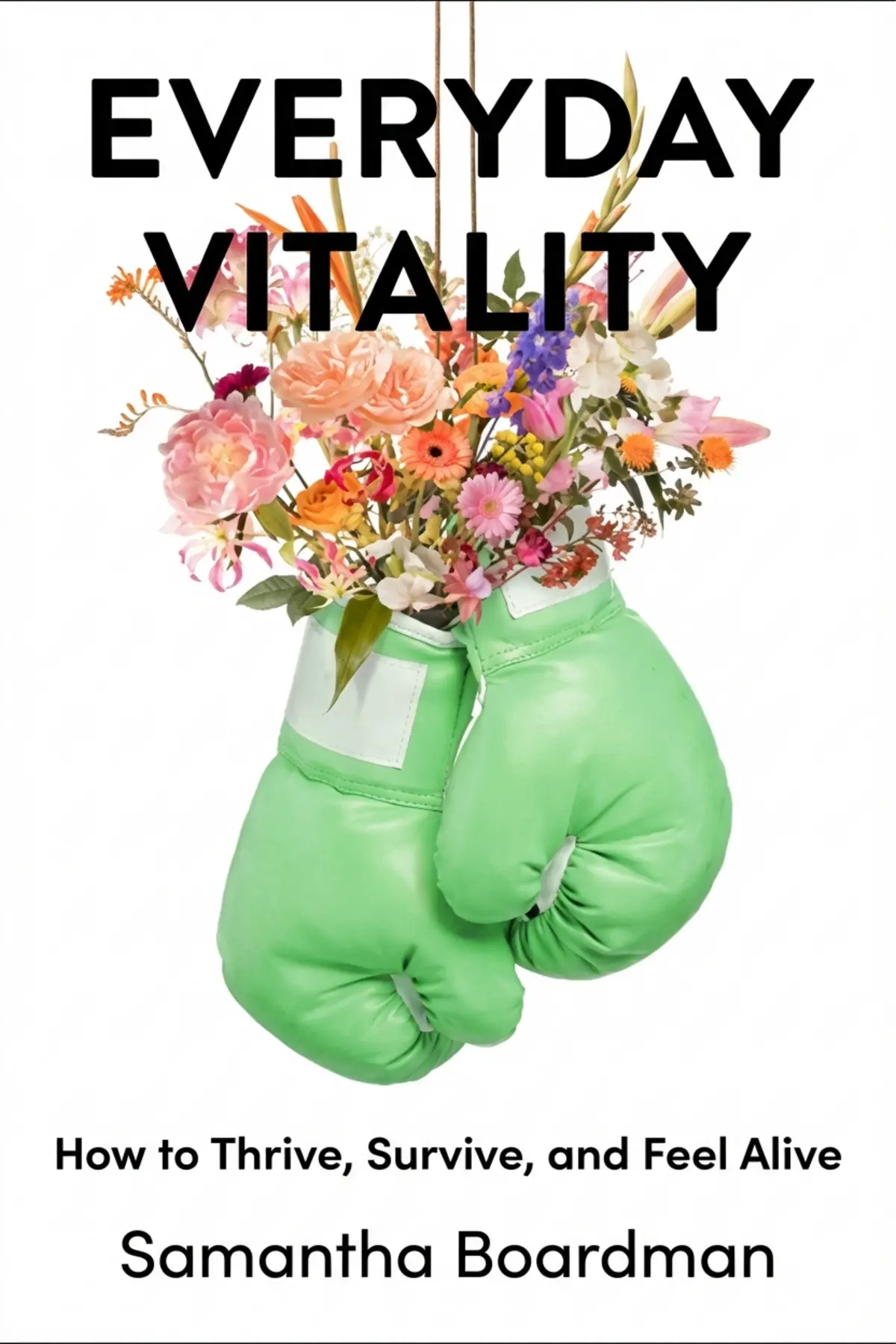
Everyday Vitality offers a science-backed framework for escaping the exhaustion of daily stress. Instead of seeking an impossible stress-free life, you will learn to build a resilient, meaningful existence through intentional action.
1 min 45 sec
Have you ever found yourself caught in a mental loop, just waiting for the weekend? Or perhaps you’re looking forward to that far-off day when the kids are grown, the mortgage is paid, or the work promotion finally settles into a predictable routine. We often treat our lives like a waiting room, convinced that genuine happiness can only begin once our stressors are removed. We tell ourselves that we’ll finally feel alive once things stop being so hard. But there is a fundamental flaw in this logic: the stress-free life is a myth. More importantly, even if we could achieve it, we might find it surprisingly unfulfilling.
True well-being isn’t about the absence of difficulty; it is about the presence of vitality. Vitality is that internal spark—the energy, spirit, and mental fortitude that allows us to engage with the world even when it’s messy. It’s what keeps us from collapsing when the car breaks down or when a meeting goes poorly. In this exploration of Everyday Vitality, we are going to look at how we can stop trying to escape our lives and start building the capacity to live them more fully.
We’ll see why some people seem to bounce back from setbacks while others get stuck in a rut of negativity. We will explore the surprising science behind why a little bit of struggle is actually good for us, and how we can use psychological tricks to navigate our most difficult moments. We’ll also look at the profound power of our social connections and how they act as a literal shield against pain and exhaustion. This journey isn’t about grand life overhauls; it’s about the small, intentional shifts we can make every single day to ensure we aren’t just surviving our schedules, but thriving within them. By the end, you’ll have a roadmap for turning daily challenges into sources of strength rather than drains on your soul.
2 min 44 sec
Why do some people handle bad news with grace while others spiral into despair? Discover the difference between ‘Velcro’ and ‘Teflon’ personalities and how to shift your mindset.
2 min 28 sec
Is a life of total ease actually the goal? Explore why working for your rewards—like a rat in a maze—is the secret to genuine satisfaction.
2 min 38 sec
Struggling to stay calm under pressure? Learn how adopting a different persona can help you break free from your own anxieties.
2 min 51 sec
Connection is more than just a social need—it’s a physical necessity. Discover how the presence of others can literally reduce the sensation of pain.
2 min 47 sec
Vitality isn’t just in your head—it’s in your body. Explore the essential habits of sleep, movement, and continuous learning.
1 min 54 sec
As we reach the end of our journey through the principles of Everyday Vitality, it’s worth reflecting on the core shift we’ve discussed. For a long time, the prevailing wisdom has suggested that we need to look inward to find happiness—that we need to ‘find ourselves’ or indulge in ‘self-care’ that often looks like retreating from the world. But as we’ve seen, the true path to vitality leads in the opposite direction. It leads outward, toward engagement, toward other people, and toward meaningful challenges.
Vitality is not a destination we reach once all our problems are solved. It is the fuel that allows us to travel through our problems with our heads held high. By choosing to be ‘Teflon’ rather than ‘Velcro,’ by embracing ‘desirable difficulties,’ by distancing ourselves from our immediate anxieties, and by nurturing our social and physical health, we transform our experience of daily life. We move from a state of fragile survival to a state of robust thriving.
One of the most actionable pieces of advice to take away is this: whenever you feel overwhelmed, stop asking ‘How do I feel?’ and start asking ‘What can I do?’ If you see someone else struggling, don’t just offer sympathy; ask them what they would advise a friend in their shoes. This simple shift helps everyone regain their sense of agency. Remember that your vitality is contagious. When you show up with energy and purpose, you give others permission to do the same. So, starting today, look for those small ‘uplifts.’ Choose a meaningful challenge. Reach out to a friend. These aren’t just items on a checklist; they are the building blocks of a life well-lived. You don’t need a perfect life to feel alive—you just need the vitality to engage with the life you have.
Many of us spend our lives waiting for the storm to pass, imagining a future where our responsibilities finally lighten and our stress disappears. We believe that happiness is found in the absence of pressure, yet we often find that when things are too easy, we feel empty. Everyday Vitality argues that true fulfillment doesn't come from eliminating stress, but from cultivating the strength to thrive within it. Drawing on her background in positive psychiatry, Samantha Boardman explains how to bridge the gap between just getting by and truly feeling alive. The book promises a practical shift in perspective: moving away from self-absorbed 'cotton candy' comforts and toward meaningful engagement with the world. You’ll discover how to leverage your relationships, your mindset, and even your physical health to create a sustainable sense of vigor that doesn't rely on perfect circumstances.
Samantha Boardman is a psychiatrist with training from both Harvard and Cornell. After years of clinical practice in New York City, she expanded her expertise by earning a Master’s degree in Applied Positive Psychology from the University of Pennsylvania. Her work in positive psychiatry has been featured in the Wall Street Journal, Psychology Today, and various professional journals, and she has shared her insights as a guest on the Today Show.
Listeners find the book’s guidance practical and simple to adopt, with one listener describing it as an excellent roadmap for living with greater energy. Furthermore, they appreciate how accessible and well-paced the writing is, with one review noting that it feels inspiring without resorting to cliches or pseudo-spiritual tropes. They also value the book’s emotional resonance, particularly its focus on finding vitality through social connection, and one listener highlights its emphasis on positive emotions.
Wow. This was exactly the kick in the pants I needed this month. I’ve been calling my small daily victories "wins," but I love her terminology of "uplifts." It shifts the focus from just surviving the day to actively cultivating moments of joy through interaction. The book is incredibly readable and fast-paced, avoiding that typical pseudo-spiritual tone that ruins so many health books. It feels more like a guide to being a better neighbor and friend than just a self-improvement manual. I finished it feeling genuinely motivated to step outside my comfort zone and engage with my community. If you want a book that is action-oriented rather than just theoretical, this is it.
Show moreAfter hearing Dr. Boardman on a podcast, I had high expectations for this book. Thankfully, it delivered. It's refreshing to read a psychiatrist who doesn't just focus on what's "wrong" but looks at how to build what's "right." The blend of science-based research and real patient anecdotes makes the advice feel much more credible than your average influencer's tips. I especially appreciated the distinction between "meaningful" and "easy." Vitality comes from doing things that are "hard, in a good way." It’s a motivating read that doesn't feel like it’s talking down to you. The science is presented clearly, and the pacing keeps you engaged from the first chapter to the last page.
Show morePersonally, I loved the emotional depth of this book. It doesn’t just give you a checklist; it asks you to rethink your relationship with the world around you. The focus on positive emotions and creating "micro-moments" of resilience is incredibly practical for anyone feeling overwhelmed by the news or daily life. It’s the kind of guide that feels easy to learn but offers deep rewards if you actually apply the "outward-oriented" mindset. I didn't find it cliché at all, mainly because the research feels very current and the author is honest about her own struggles. If you're looking for a way to find strength in stress, this is an excellent, intelligent starting point.
Show morePicked this up because I felt stuck in a repetitive, "meh" cycle. Boardman suggests that vitality isn't found through internal contemplation or bubble baths, but by turning your focus outward toward others. It’s a refreshing change from the self-indulgent narrative that dominates most modern wellness books. The chapter on "microstresses" really resonated with me; those tiny daily irritations drain our battery more than we realize. I appreciate how she mixes patient stories with clinical research, making the advice feel grounded and actionable. However, some of the suggestions, like parking further away to walk more, felt a bit recycled. Still, the core message about meaningful connection and "uplifts" is a solid perspective for anyone feeling drained.
Show moreAs a mother who feels like my to-do list is never-ending, I found the concept of "everyday vitality" very approachable. The author emphasizes that mental health isn't just the absence of illness, but the active presence of resilience. I specifically liked the "WOOP" goal strategy: Wish, Outcome, Obstacle, Plan. It’s a simple mental model that actually works for busy schedules. My only gripe is that the book leans heavily toward an extroverted worldview. For those of us who replenish energy in solitude, the constant push to "turn outward" might feel a bit exhausting if taken too literally. Regardless, the focus on positive psychology and meaningful connection is a powerful tool for a hectic life.
Show moreThis book offers a compelling argument for moving away from the "cult of self" that dominates modern wellness. Boardman makes a strong case that true vitality is cultivated through interaction and contributing to something bigger than yourself. Not gonna lie, I was skeptical about her background as a socialite, but her clinical experience shines through in the patient stories she shares. The idea that we devalue things offered on a silver platter because we didn't "earn" them was a real lightbulb moment for me. It’s a solid 4-star read that I’ll likely refer back to when I’m feeling particularly stuck. It's practical, science-backed, and focuses on health rather than just illness.
Show moreDr. Boardman makes a convincing case for "action-oriented" resilience. The book is full of steps to connect with those around us and challenge ourselves in positive ways. I found the section on "microstresses" particularly eye-opening because it explains why we feel drained even when nothing "big" is going wrong. While some of the advice is definitely geared toward a specific middle-class demographic, the underlying psychological principles of turning outward are universal. It’s an intelligent, well-written book that encourages you to stop staring at your phone and start engaging with the world again. It's a great guide for anyone who feels like they are just going through the motions and needs more vitality.
Show moreEver wonder why every wellness book tells you to do the exact same things? Everyday Vitality has some great moments, particularly when discussing positive psychology and meaningful actions, but much of it felt like common sense. Yes, we know exercise and healthy eating are good for us. To be fair, her focus on "other-oriented" behavior is a nice pivot from the usual self-immersion we see on social media. But the dismissal of stress-related systemic factors made it hard to fully engage with her perspective. It’s a decent primer if you’re new to the genre, but seasoned readers might find it a bit milquetoast. It’s fine, but I expected more from a clinical psychiatrist.
Show moreFinally got around to reading this, and I have mixed feelings. On one hand, the writing style is very engaging and the pacing is perfect for a quick weekend read. On the other hand, some of the author's opinions on "grit" felt a bit out of touch. Comparing modern stress to the supposed resilience of previous generations ignored a lot of our current reality. Also, as an introvert, the idea that the only way to heal is by "mingling" felt shortsighted. There is definitely value here, especially in the "uplifts" concept and the way she structures her patient stories, but you have to filter it through your own lifestyle. It’s not a one-size-fits-all solution.
Show moreThe truth is, I’m getting tired of self-help books written by people with massive safety nets. Dr. Boardman’s advice to "just go out and mingle" completely ignores that many of us are struggling with systemic issues like inflation, being underpaid, or total burnout. She brushes off phone use as a simple bad habit without looking at why people retreat into them for a sense of safety. While the WOOP goal framework was a helpful takeaway for planning, the rest felt like privileged platitudes. She even implies that modern people just don't know how to struggle like the boomer generation did. It felt incredibly dismissive of the very real, unique hardships people are facing in today's economy.
Show moreDeepak Chopra
Alcoholics Anonymous World Services
Steven C. Hayes
Richard Wiseman
AUDIO SUMMARY AVAILABLE
Get the key ideas from Everyday Vitality by Samantha Boardman, plus 5,000+ more titles in English and Thai.







