
7 Powers: The Foundations of Business Strategy
Hamilton Helmer
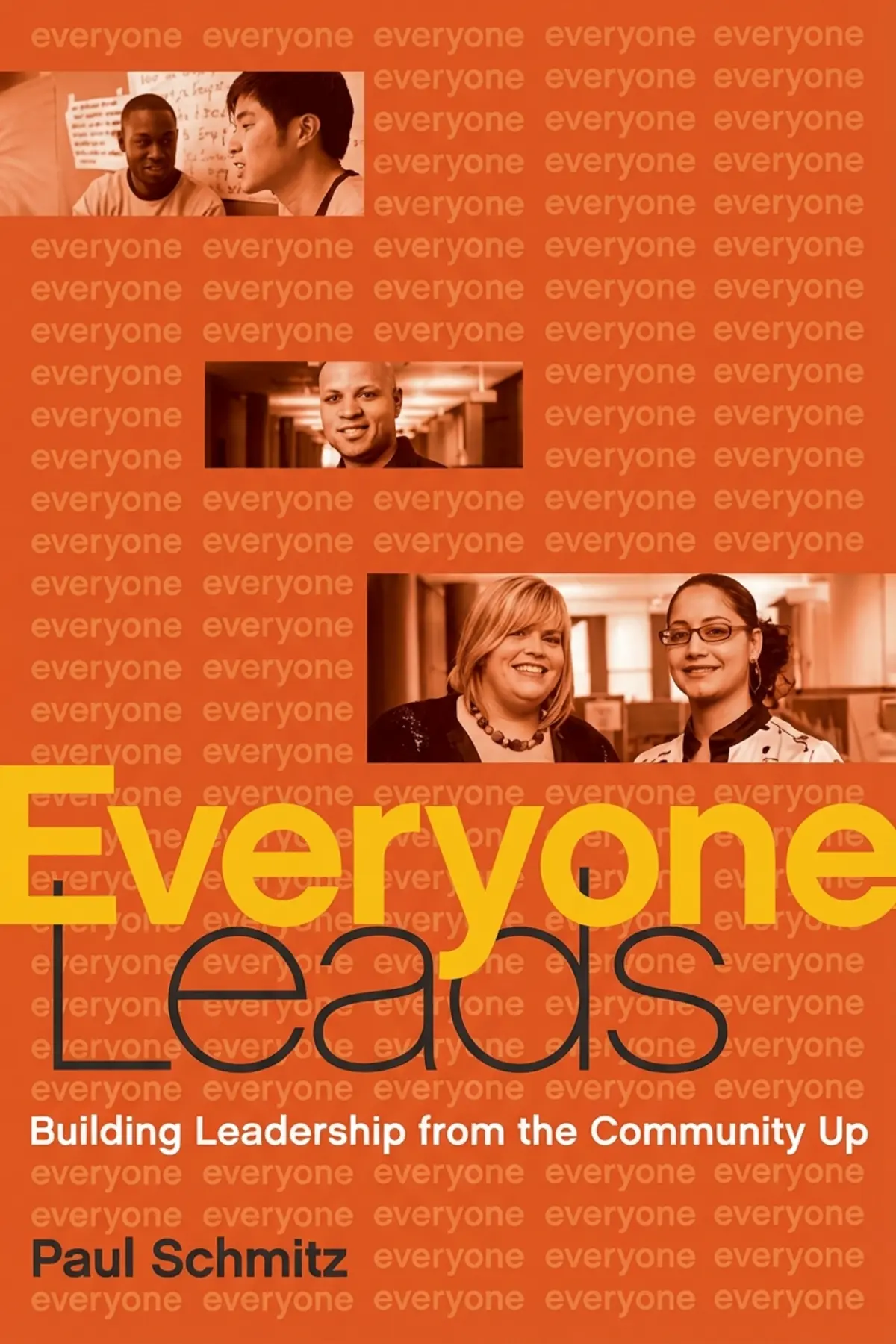
Everyone Leads explores how leadership is a shared responsibility rather than a title. Paul Schmitz demonstrates how grassroots action and community-focused mindsets empower everyday people to drive lasting social change.
1 min 19 sec
When you close your eyes and think of a leader, what do you see? For many of us, the image that comes to mind is someone standing on a podium, someone with a corner office, or someone with a long list of degrees trailing after their name. We have been conditioned to believe that leadership is a rare gift, a trait reserved for a chosen few who have reached the pinnacle of their careers. But what if that entire concept is actually holding our communities back?
What if leadership isn’t about the person at the top of the organizational chart, but about the person standing right next to you—or even the person you see in the mirror? This is the core throughline of Everyone Leads. Paul Schmitz argues that our most pressing social challenges won’t be solved by a single hero with a fancy title. Instead, they will be solved when we realize that leadership is a collective muscle we all possess.
In this exploration, we are going to look at how the traditional search for ‘ideal’ leaders often causes us to overlook the incredible talent hidden in plain sight. We will see how personal struggles can become the foundation for professional resilience, and how technology and diversity are changing the way we organize for change. By the time we finish, you’ll see that leading isn’t a privilege of the elite; it’s a responsibility and an opportunity for everyone. Let’s dive into how we can build leadership from the community up.
2 min 06 sec
Explore why the most effective leaders often lack the standard resume benchmarks and how looking at the margins can reveal untapped community potential.
1 min 56 sec
Discover how overcoming internal battles can prepare individuals for high-level leadership roles through the powerful lens of the author’s own life journey.
2 min 00 sec
Understand how historical movements and modern technology have transitioned leadership from a ‘great man’ theory to a more inclusive, collaborative model.
2 min 11 sec
Learn a revolutionary way to view community members by focusing on their strengths rather than their deficits, fostering a culture of mutual respect.
1 min 56 sec
See how acknowledging social privilege and embracing diverse perspectives can turn cultural differences into a community’s greatest strategic advantage.
1 min 11 sec
As we wrap up our look at Everyone Leads, the central message is clear: leadership is not a destination you reach, but a way of being in the world. We’ve seen that the traditional hallmarks of power are often less important than the resilience and creativity found at the grassroots level. Whether it’s through the personal redemption of someone like Paul Schmitz or the collaborative success of a city-wide educational partnership, the evidence is consistent: when more people lead, the whole community wins.
To apply these insights, start by looking at your own ‘half-full’ glass. What unique assets do you bring to your neighborhood or workplace? Then, look at those around you not for their flaws, but for their hidden strengths. Remember that leadership is about service, inclusivity, and the courage to address power dynamics head-on. You don’t need a title to start making a difference. You just need to recognize that you have the capacity to guide, to support, and to inspire. The hero we’ve been waiting for isn’t coming from the outside—they are already here, distributed among us all. It’s time to stop waiting and start leading from the ground up.
For generations, the concept of leadership has been tied to a specific image: the charismatic CEO, the high-ranking politician, or the prestigious academic. Everyone Leads shatters this outdated mold, offering a fresh perspective that identifies leadership as an action anyone can take, rather than a position one holds. The book promises to show how real, sustainable change does not trickle down from the top but rises from the ground up through the collective power of dedicated community members. Through a blend of personal narrative and organizational strategy, the book provides a roadmap for mobilizing hidden talents within neighborhoods and workplaces. It introduces frameworks like Asset-Based Community Development to help people look past deficits and focus on strengths. By the end, listeners will understand how to foster inclusivity, navigate complex power dynamics, and build collaborative environments where every individual feels empowered to contribute to the greater good. It is an invitation to stop waiting for a hero and to start recognizing the potential for greatness within yourself and those around you.
Paul Schmitz is a prominent figure in the field of social innovation and community leadership. He serves as a senior advisor at The Collective Impact Forum and is the CEO of Leading Inside Out. Schmitz’s expertise has been recognized at the highest levels of government, including his appointment to the White House Council for Community Solutions. He was also the first Innovator in Residence at Georgetown University. Known for his tenure as the CEO of Public Allies, Schmitz has been named one of the most influential nonprofit leaders in the United States by The Nonprofit Times on three separate occasions.
Listeners find this a very readable guide and value its distinct take on developing leadership, as one listener points out its emphasis on driving sustainable change via teamwork and community. The work earns praise for its instructional approach, with one listener specifically noting that the training exercises are quite effective.
Ever wonder why we keep looking at the same Ivy League graduates for solutions to problems they’ve never actually experienced? Paul Schmitz flips the script entirely by arguing that leadership is a choice and an action, not some fancy title you inherit through status. I was particularly moved by the 'Privilege Walk' discussion, which forces you to confront the power dynamics we usually ignore in professional settings. The book isn’t just a feel-good manifesto; it’s a practical guide for mobilizing community assets that already exist. While the first few chapters get a little bogged down in the history of Public Allies, the core philosophy is indispensable for anyone working in the nonprofit sector today. Truth is, we need more books that prioritize the potential of 'everyday' people over elite credentials.
Show morePicked this up after a recommendation from a mentor and I was immediately struck by the author’s honesty regarding his own rocky youth. Seeing a CEO talk so openly about drug use and depression makes the 'everyone leads' message feel authentic rather than just a platitude. The book serves as a powerful reminder that our best leaders are often found at the margins, hidden by a lack of traditional credentials or polished resumes. I love how Schmitz integrates Asset-Based Community Development into the narrative, showing that every community has the tools it needs to heal itself. Look, the book might feel a bit long-winded in the middle sections, but the emotional payoff and the practical strategies for inclusive leadership are top-tier. Highly recommended for anyone who feels stuck in a top-down hierarchy.
Show moreAs someone who has worked in community organizing for a decade, I found the Asset-Based Community Development (ABCD) sections incredibly refreshing. Schmitz does a great job of explaining how to build from the bottom up rather than imposing solutions from above. The vignettes about various Allies—ranging from teen mothers to college grads—provide a necessary human element to the more academic theories. It’s not a perfect read, as the writing can be a bit dry and repetitive when he’s describing organizational structures. However, the message about 'working with' people instead of 'for' them is a crucial distinction that most managers still fail to grasp. Not gonna lie, I skimmed some of the Public Allies history, but the leadership exercises toward the end make it a worthy addition to your shelf.
Show moreFinally got around to reading this for my nonprofit book club and I’m glad I did. The idea that leadership is an action rather than a status is something we talk about often, but Schmitz provides a real framework for making that happen. I especially liked the focus on technology as a tool for accelerating community connection and the emphasis on learning from your 'pack' as you lead. Some parts are definitely repetitive, and you could probably skip the first two chapters without missing the meat of the argument. Still, the underlying values-driven approach is exactly what’s needed in today’s fragmented social landscape. It challenges the 'us versus them' mentality that so often paralyzes community progress.
Show moreAfter hearing so much about the Public Allies model, it was great to finally get the full story from the CEO himself. The book does a fantastic job of illustrating how diversity and a recognition of privilege are not just 'HR requirements' but are central to effective leadership. I found the discussion on the 'realm of responsibility' to be one of the most useful frameworks for my own career development. My only real gripe is that the book can be incredibly dry during the historical sections about the AmeriCorps network. If you can push past the bureaucratic details, there is a wealth of wisdom regarding how to connect and inspire people toward a common goal. It’s an empowering read that definitely pushes you to reflect on your own biases.
Show moreLeadership isn't just for the elite, and this book proves it by showcasing the untapped potential within our own neighborhoods. Schmitz argues that technology and modern social movements have changed the game, allowing for a more collaborative, value-driven approach to solving problems. I appreciated the specific examples of the Strive Partnership and how community capacity can be nurtured through intentional engagement. Personally, I found the section on 'leading from below' to be a game-changer for my perspective on organizational change. The book is a bit repetitive in its messaging, but perhaps that’s necessary to deprogram our traditional views on power. It’s a readable, thoughtful guide that offers a unique perspective on sustainable change.
Show moreNot what I expected given the high praise I’d heard from colleagues. While the central thesis—that anyone can lead—is powerful and necessary, the execution felt a bit like a long-form marketing brochure for Public Allies. I appreciated Schmitz’s vulnerability in sharing his personal struggles with depression and substance abuse, but those moments were often followed by dozens of pages of repetitive philosophy. The book struggles to find its pace, oscillating between deeply personal storytelling and somewhat abstracted leadership models that feel a bit idealized. To be fair, the sections on addressing oppression and privilege are excellent and should be required reading for all community leaders. It’s a solid 3-star book that could have been a 5-star book with a much tighter edit.
Show moreThe chapter on power dynamics was the highlight for me, but the rest of the book felt a bit uneven. On one hand, you have these incredible stories from Public Ally cohorts that show the real-world impact of grassroots leadership. On the other hand, Schmitz frequently retreats into abstract theories that can feel a bit too 'nice' or idealized for the messy reality of community work. I wanted more grit and more details on how to handle the inevitable failures that come with this model. In my experience, building resources in difficult situations is never as smooth as it’s painted here. It’s a good survey of leadership philosophy, but it lacks the tactical depth I was looking for. If you’re new to the concept of ABCD, this is a great start.
Show moreWow, there's a lot of information packed into these pages, though I’m not sure all of it needed to be there. The book feels like two different works: a memoir about Schmitz’s personal transformation and a dense manual on the Public Allies leadership philosophy. I found the personal story much more engaging than the philosophical abstractions which tended to drag on in the middle chapters. Gotta say, the emphasis on recognizing community assets instead of just focusing on deficits is a message every politician needs to hear. However, the writing style is a bit inconsistent, and the pacing often grinds to a halt when he dives into the history of the AmeriCorps network. It’s an important book for the sector, but it requires some patience to get through the dry spells.
Show moreFrankly, this was a struggle to finish. I picked this up hoping for a radical new approach to grassroots organizing, but it felt more like a repetitive corporate training manual wrapped in social justice language. The author spends way too much time on the minutiae of the Public Allies program, which might be interesting to insiders but felt unnecessary for a general audience. Furthermore, the prose is quite dry and often erases the nuanced work of people of color by framing these concepts through a very specific institutional lens. I found the 'zero-to-hero' narrative a bit cliché and felt that several key moments of his own organizational growth were glossed over too quickly. It’s an okay primer for beginners, but for anyone already in the field, there’s not much new here.
Show moreHamilton Helmer

Margaret Heffernan

Joseph A. Maciariello

AUDIO SUMMARY AVAILABLE
Get the key ideas from Everyone Leads by Paul Schmitz, plus 5,000+ more titles in English and Thai.







