Fantasyland: How America Went Haywire
Kurt Andersen
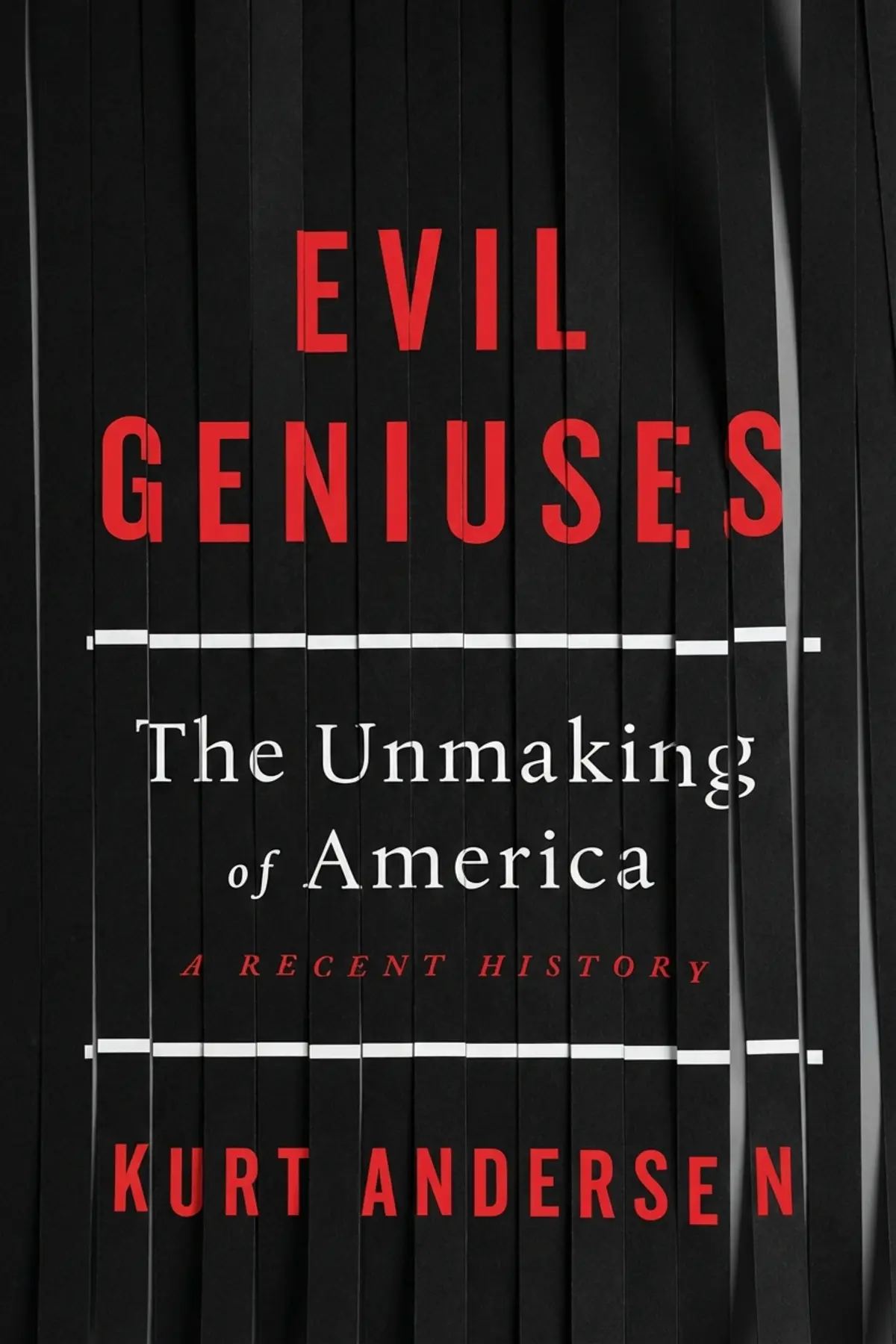
Evil Geniuses explores how a calculated, decades-long campaign by the wealthy elite reshaped America’s economy, law, and culture, trading a future of shared prosperity for a system that favors corporate dominance and stagnation.
1 min 40 sec
For generations, the United States stood as the world’s primary engine of the future. It was a place where the next invention, the next social movement, and the next economic breakthrough were always just over the horizon. But if you look at the landscape of modern America, that sense of forward momentum feels like a distant memory. Instead of a land of rising opportunity, we see a country grappling with massive inequality, a shrinking middle class, and a political system that often seems rigged in favor of a tiny, ultra-wealthy elite.
How did we get here? How did the country that built the New Deal and won the space race transform into a place where the average worker struggles just to stay afloat while corporate profits reach record highs? This isn’t a story of accidental drift or simple bad luck. As we will explore in the following discussion, it was a deliberate, calculated project.
In this overview of Evil Geniuses, we are going to pull back the curtain on a long-term campaign that began in the 1970s. We will look at how a group of intellectuals, business leaders, and politicians staged a slow-motion coup of the American economy. You’ll see how they used the power of nostalgia to distract the public, how they co-opted the language of personal freedom to serve corporate interests, and how they built a legal and political infrastructure that effectively made their changes permanent.
Through this journey, we’ll see why the culture seems to have stopped evolving, why the 1980s never really ended, and what it will take for America to stop looking backward and start building a future that works for everyone. This is a story about how the rules of the game were rewritten by those at the top, and what that means for the rest of us living in the world they created.
2 min 04 sec
At the dawn of our current era, a strange phenomenon took hold: a collective retreat into the past and a cooling of the fires of progress. Discover why the American drive for modernity suddenly stalled.
2 min 13 sec
Discover how the political right turned a national longing for the past into a powerful tool for radical economic change. It wasn’t just about policy; it was about a carefully crafted image.
2 min 11 sec
Behind the political stage, two men drafted the specific plans that would allow big business to seize control of the American narrative. Learn about the intellectual and strategic foundations of the right’s comeback.
2 min 13 sec
In a strange twist of history, the economic right adopted the language and tactics of the very hippies they claimed to despise. See how the ‘Me’ generation’s quest for freedom was rebranded as libertarianism.
2 min 12 sec
The success of the economic right wasn’t just due to their own cleverness; it was also made possible by the mistakes of their opponents. Explore how liberals accidentally helped the very movement they opposed.
2 min 00 sec
Many of the most profound changes in the American economy didn’t happen through big, public votes. They happened through a process of ‘quiet neglect’ and small, procedural shifts that favored the wealthy.
2 min 08 sec
The economic right knew they couldn’t always control the White House, so they looked for a more permanent way to protect their interests. Learn how they systematically took control of the American legal system.
2 min 20 sec
America was once a nation that took pride in making things. Discover how it transformed into a ‘giant casino’ where financial speculation is more important than actual production.
1 min 56 sec
As we look back at the history of the last fifty years, it becomes clear that the current state of America is not an accident. The ‘Great U-Turn’ away from shared prosperity and toward a winner-take-all system was the result of a deliberate, well-funded, and brilliantly executed campaign. By using culture as a distraction and nostalgia as a drug, a small group of economic radicals managed to rewrite the rules of the world’s most powerful nation.
But the throughline of this story isn’t just one of loss. It is also a reminder that the rules of an economy are not laws of nature. They are human creations, and what has been built can be rebuilt. The central lesson of the ‘evil geniuses’ is that the long game works. They succeeded because they invested in ideas, built institutions, and remained patient over several decades.
Today, we stand at a crossroads. As automation and artificial intelligence threaten to make even more jobs obsolete, we face two very different futures. We could continue down the path of the last forty years, leading to a dystopian world of extreme inequality where the benefits of technology are hoarded by a tiny elite. Or, we could choose a different path—one that uses our immense national wealth to provide security for everyone through programs like a universal basic income.
We’ve seen that such things are possible. The example of the Alaska Permanent Fund shows that when people are given a share of the common wealth, they don’t stop working; they live better, healthier, and more productive lives. Reclaiming the American future requires us to stop looking backward at a ‘golden age’ that never truly existed for everyone and start looking forward. It requires us to be as strategic, as bold, and as patient as the people who took the country in the wrong direction. The first step is understanding the history of how we got here, so we can finally start moving toward a tomorrow that belongs to all of us.
Evil Geniuses explores the deliberate transformation of the United States from a progressive, middle-class-centric society into a nation dominated by corporate interests and the ultra-wealthy. Kurt Andersen tracks this shift back to the 1970s, identifying a specific set of ideological and strategic choices that halted American progress. By examining the intersections of culture, economics, and law, the book promises to reveal the hidden history of the American right's long-term plan to dismantle the New Deal. It explains how nostalgia and complacency allowed a small group of thinkers and lobbyists to rewrite the rules of the economy, leading to the financialization of daily life and a widening gap of inequality. Ultimately, the book serves as both a diagnosis of a national malaise and a roadmap for how America might reclaim its future by embracing structural reform and technological potential. It is a vital read for anyone trying to understand why the American dream feels increasingly out of reach for so many and how the structures of power were systematically rebuilt to serve a tiny elite.
Kurt Andersen is a journalist, novelist, and radio host. He is the author of the New York Times best seller Fantasyland: How America Went Haywire: A 500-Year History. His critically acclaimed novels include True Believers, Heyday, and Turn of the Century.
Kurt Andersen
Listeners find the work exceptionally educational and meticulously documented, offering a comprehensive chronicle of the United States' modern era. They view it as essential reading for citizens, with one listener mentioning its precise depiction of the shifting political and financial landscapes across various eras. The prose is skillfully written, and listeners value the eye-opening material, with one review particularly pointing out its examination of wage suppression. Reactions to the tempo are varied; one listener characterized the work as a journey through decades.
This book provides a chillingly clear map of how the American economy was re-engineered over the last fifty years. Andersen avoids simple conspiracy theories and instead traces the deliberate, intellectual, and legal moves that shifted power to the mega-rich. I was particularly struck by the discussion on the political economy and how neoliberalism became the water we all swim in. It’s dense, yes, but the way he connects the 1971 Powell memo to modern-day wage suppression is nothing short of masterful. You start to see the "evil geniuses" not as cartoon villains, but as very real architects of our current stagnation. It’s an essential read for anyone trying to understand why the middle class feels so hollowed out today. Frankly, it changed how I view the Reagan era entirely.
Show morePicked this up after hearing it mentioned on a podcast and it’s easily the most informative history I’ve read this year. Andersen dives deep into the "evil geniuses" who dismantled the New Deal consensus to build a world where greed is the only virtue. The sections on wage suppression were particularly eye-opening for me as someone who has lived through that stagnation without fully understanding the mechanics behind it. He writes with a sharp, journalistic wit that keeps the economic theory from feeling too dry or academic. Truth is, it’s a terrifying read because it shows just how much we’ve lost in terms of communitarian responsibility. Every American voter should have this on their shelf to understand why the system feels rigged.
Show moreThe chapter on the 1970s Business Roundtable is worth the price of admission alone. Most people think our current inequality just "happened" because of technology or globalization, but Andersen proves it was a choice made by a small group of wealthy conservatives. This isn't some fringe conspiracy book; it’s a well-documented account of think tanks, lobbyists, and judicial appointments. The writing style is punchy and direct, which helps when you’re dealing with the minutiae of tax codes and antitrust law. I was surprised by how much I learned about the politics of nostalgia and how it’s used to keep us from demanding a better future. It’s a wake-up call that we are living in a Latin American-style oligarchy, whether we want to admit it or not.
Show moreAfter reading Fantasyland, I wasn't sure if Andersen could top himself, but Evil Geniuses is an even more important piece of the puzzle. While the first book dealt with why we believe lies, this one deals with who profits from those lies. He explains the political economy in a way that finally makes the last forty years of American life make sense. The shift from a nation that served people to a nation that serves markets is laid out with surgical precision. I was particularly moved by the discussion on how we’ve lost our sense of communitarian responsibility. It’s a frightening, brilliant, and ultimately empowering book because it identifies the tactics used against us. Don't skip this one.
Show moreEver wonder exactly when the American dream started feeling like a closed loop? Kurt Andersen argues it wasn’t an accident, but a calculated pivot starting in the early 70s. I found his analysis of nostalgia as a tool for control particularly insightful, even if he harps on it a bit too much in the middle chapters. The book is undeniably well-researched, laying out a timeline that makes our current political chaos feel like the logical conclusion of decades of deregulation. While the pacing can be a slog—this thing is long—the payoff of understanding how shareholder value replaced the social contract is worth it. It’s a sobering look at how the right-wing elite played the long game while everyone else was looking the other way.
Show moreAs someone who remembers the optimism of the pre-Reagan years, this book was a painful but necessary history lesson. Andersen meticulously documents the transition from a regulated, middle-class-focused economy to the winner-take-all system we have now. He manages to make complex topics like Milton Friedman’s "American gospel" of shareholder value accessible without dumbing them down. I appreciated the nuance he brought to the Clinton years, showing how even the Democrats were eventually pulled into the neoliberal orbit. The book does get a bit depressing, especially when you realize how long this plan has been in motion. My only real gripe is that it feels a bit light on solutions compared to the massive scale of the problems it identifies.
Show moreFinally got around to the audiobook version and I’m glad I did because Andersen’s own narration adds a layer of urgency to the text. He sounds like a man who has finally solved a decades-long puzzle and is desperate to share the answer. The way he traces the "evil geniuses" through the decades is fairly thorough, though I think he could have delved deeper into the Supreme Court’s role earlier on. Still, hearing the timeline of how we moved from a social contract to private enterprise was incredibly enlightening. It’s a comprehensive look at how the American temperament was hacked. If you prefer listening to non-fiction, this is one of the better-produced books out there, even if the content makes you want to scream.
Show moreLook, I’m not a huge fan of books that lean heavily into political bias, but Andersen’s assessments of our current environment are hard to argue with. He lays out a concise timeline of how deregulation and the dismantling of unions created the mess we’re in today. The 2020 context, particularly regarding the pandemic, adds a layer of tragic relevance that makes the historical sections hit harder. I found his theory on nostalgia preventing us from looking forward to be his most original contribution to the discourse. It’s a heavy book, and some might find his tone a bit condescending at times, but the facts are laid bare. It’s a serious work of history that explains the "why" behind our national frustration.
Show moreWow, this was a lot to digest, and I’m not entirely sure I enjoyed the journey. While the research is clearly top-notch and the premise is fascinating, the author tends to draw far too much attention to himself throughout the narrative. At over 400 pages, it feels like it could have used a much tighter edit to keep the focus on the actual history rather than the author’s personal grievances. I also found his constant focus on cultural stasis a bit repetitive after the first few mentions. To be fair, the connections he makes between big business and the religious right are brilliant, but the delivery is often bogged down by his own voice. It’s informative, but definitely prepare for a long, sometimes tedious trek through 20th-century policy.
Show moreIn my experience, these types of "grand unified theory" books usually suffer from being a bit too long-winded, and this one is no exception. Kurt Andersen is a great writer, but he spends far too much time harping on the 1960s as a cultural pivot point. I agree that the rise of right-wing capitalists has been disastrous for the working class, but the book feels repetitive after the halfway mark. Also, he focuses so much on the "evil geniuses" on the right that he almost glosses over the structural failures of the government itself. It’s not as effective as his previous work, Fantasyland, which felt more cohesive. It’s worth a skim for the economic parts, but you can probably skip the chapters on pop culture.
Show moreAUDIO SUMMARY AVAILABLE
Get the key ideas from Evil Geniuses by Kurt Andersen, plus 5,000+ more titles in English and Thai.