
19 min 17 sec
Fail Fast, Fail Often: How Losing Can Help You Win
Fail Fast, Fail Often explores how embracing mistakes and prioritizing enjoyment can accelerate professional and personal growth. By taking small, imperfect actions, anyone can overcome paralysis and build a more fulfilling life.
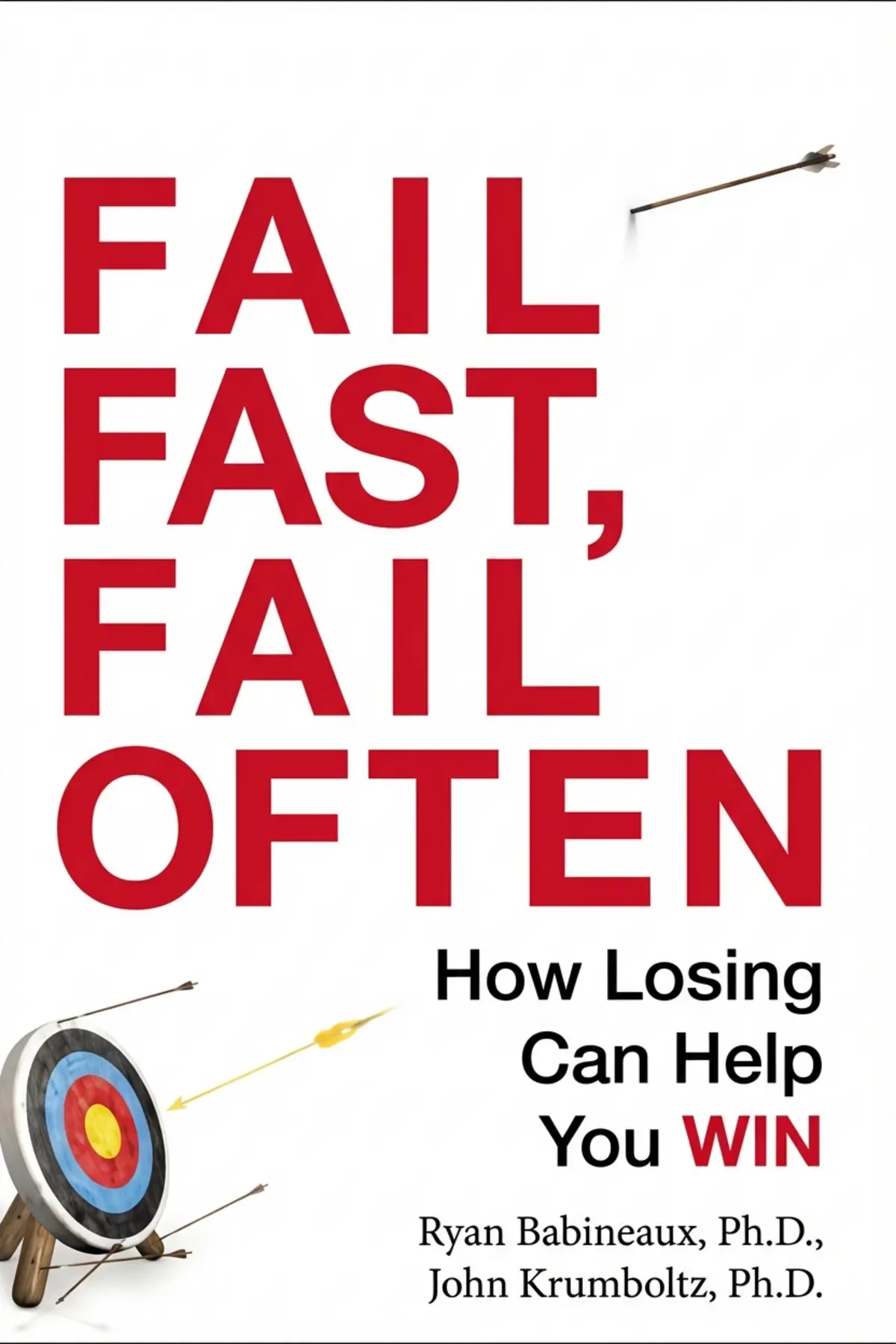
Table of Content
1. Introduction
1 min 40 sec
Have you ever found yourself caught in a cycle of waiting? Waiting for the perfect job to appear, waiting for the right moment to start a new hobby, or waiting until you feel completely prepared before making a significant life change? Many of us spend our lives in this holding pattern, believing that if we just plan a little more or wait a little longer, we can avoid the sting of failure. We tell ourselves that a flawless strategy is the only way to guarantee success. But as we will explore today, this quest for perfection is often the very thing keeping us stuck in a rut. Whether you are feeling uninspired at work or simply bored with your daily routine, the root cause is frequently the same: a deep-seated fear of making mistakes.
In this summary of the core principles behind the philosophy of taking quick, decisive action, we are going to look at why the most successful people are often those who fail the most. We will see that happiness and professional achievement do not come from a master plan designed in isolation. Instead, they come from getting your hands dirty, trying things out, and being willing to look a bit foolish in the beginning. We will delve into how leading a life centered on fun and curiosity can actually lead to better results than a life of strict discipline and worry.
By the end of this journey, you will understand how to break down massive goals into tiny, approachable steps and why your social circle is more important than your professional network. We are going to look at real-world examples, from the trial-and-error approach of world-class comedians to the experimental beginnings of global coffee empires. The throughline here is simple but transformative: the path to a great life is paved with small, fast, and frequent failures. So, let’s stop waiting for the future to happen and start making it happen right now.
2. Breaking the Not-Yet Cycle
2 min 08 sec
Are you waiting for the perfect moment to start your dream project? Discover why the desire for a flawless plan might be the biggest obstacle standing between you and your happiness.
3. The Strategic Value of Fun
1 min 55 sec
Is fun just a distraction from hard work, or is it the secret ingredient to a successful career? Learn how prioritizing your enjoyment can lead to unexpected breakthroughs.
4. Learning Through Volume and Failure
2 min 11 sec
What if the secret to quality was actually quantity? Explore a fascinating experiment that proves why making more mistakes is the fastest way to master any skill.
5. The Courage to Be a Beginner
1 min 54 sec
Fear of looking foolish often stops us from even trying. Learn how to overcome the social anxiety of being a novice and unlock your hidden potential.
6. Igniting Your Inner Curiosity
1 min 56 sec
As children, we were constantly asking ‘why,’ but adulthood often silences that instinct. Discover how to reclaim your curiosity and use it to fuel innovation.
7. The Power of Thinking Big and Acting Small
2 min 02 sec
Massive goals can be paralyzing. Learn why the key to achieving your biggest dreams is to focus on the smallest, most immediate actions possible.
8. Test-Driving Your Career
1 min 55 sec
Don’t commit your entire life to a job you’ve never actually tried. Explore how to use low-stakes experiments to find a career that truly fits you.
9. Cultivating a Community of Reciprocity
1 min 56 sec
Your social circle is more than just a group of friends; it’s an engine for success. Learn the difference between networking and building a true community.
10. Conclusion
1 min 40 sec
As we wrap up our exploration of the principles in this guide, it’s worth reflecting on how much of our lives are governed by the fear of being ‘wrong.’ We spend so much energy trying to avoid mistakes that we often avoid life itself. But as we have seen, the most vibrant, successful, and fulfilled people are those who have made peace with failure. They understand that every ‘wrong’ turn is actually a data point that helps them find the right direction. They don’t wait for a perfect plan; they take action, have fun, and learn as they go.
The throughline of this entire philosophy is that growth happens in the doing, not in the thinking. Whether it’s through the ‘quantity group’ in the pottery class or the ‘test-driving’ of a new career, the message is consistent: engage with the world directly and frequently. Don’t be afraid to be a beginner, and don’t be afraid to let your curiosity lead you down paths that don’t have a clear destination yet. Success isn’t a final point you reach; it’s a way of living that prioritizes experimentation over perfection.
If you want to start applying these ideas today, start small. Take that ‘fun map’ we discussed and identify one place you’ve been avoiding and one place you love. Make a conscious effort to change your scenery. Think of one thing you’ve been putting off because you’re ‘not ready’ and find the smallest possible version of that task you can do in the next ten minutes. By failing fast and failing often, you remove the power that fear has over you. You’ll find that ‘losing’ isn’t the end of the world—it’s actually the most reliable way to win.
About this book
What is this book about?
This book challenges the conventional wisdom that success requires a perfect, long-term plan. Instead, authors Ryan Babineaux and John Krumboltz argue that the most successful people are those who are willing to fail quickly and frequently. The core promise of the book is that by shifting your focus from perfection to action, you can unlock opportunities that you might otherwise miss out of fear. It teaches readers how to use trial and error as a powerful tool for learning, how to integrate more fun into their daily routines to boost creativity, and why the most daunting goals should be broken down into tiny, manageable steps. Through a series of practical exercises and real-world anecdotes—ranging from the origins of Starbucks to the creative process of famous comedians—the authors provide a roadmap for getting unstuck. You will learn how to stop waiting for the right time and start creating the life you want through experimentation, curiosity, and the cultivation of a supportive community. It is a guide for anyone who feels trapped by the high expectations of others or their own fear of looking like a beginner.
Book Information
About the Author
Ryan Babineaux
Ryan Babineaux is an expert in human development and psychology, having earned his M.Ed. from Harvard University and a Ph.D. from Stanford University. His work focuses on the intersection of educational psychology and personal achievement. Joining him is John Krumboltz, a professor of education at Stanford University. Krumboltz is a prolific author who has published more than 200 articles and books throughout his career. One of his most notable works is Luck Is No Accident: Making the Most of Happenstance in Your Life and Career, which explores how to capitalize on unplanned events. Together, they bring a wealth of academic research and practical psychological insights to the study of success and failure.
Ratings & Reviews
Ratings at a glance
What people think
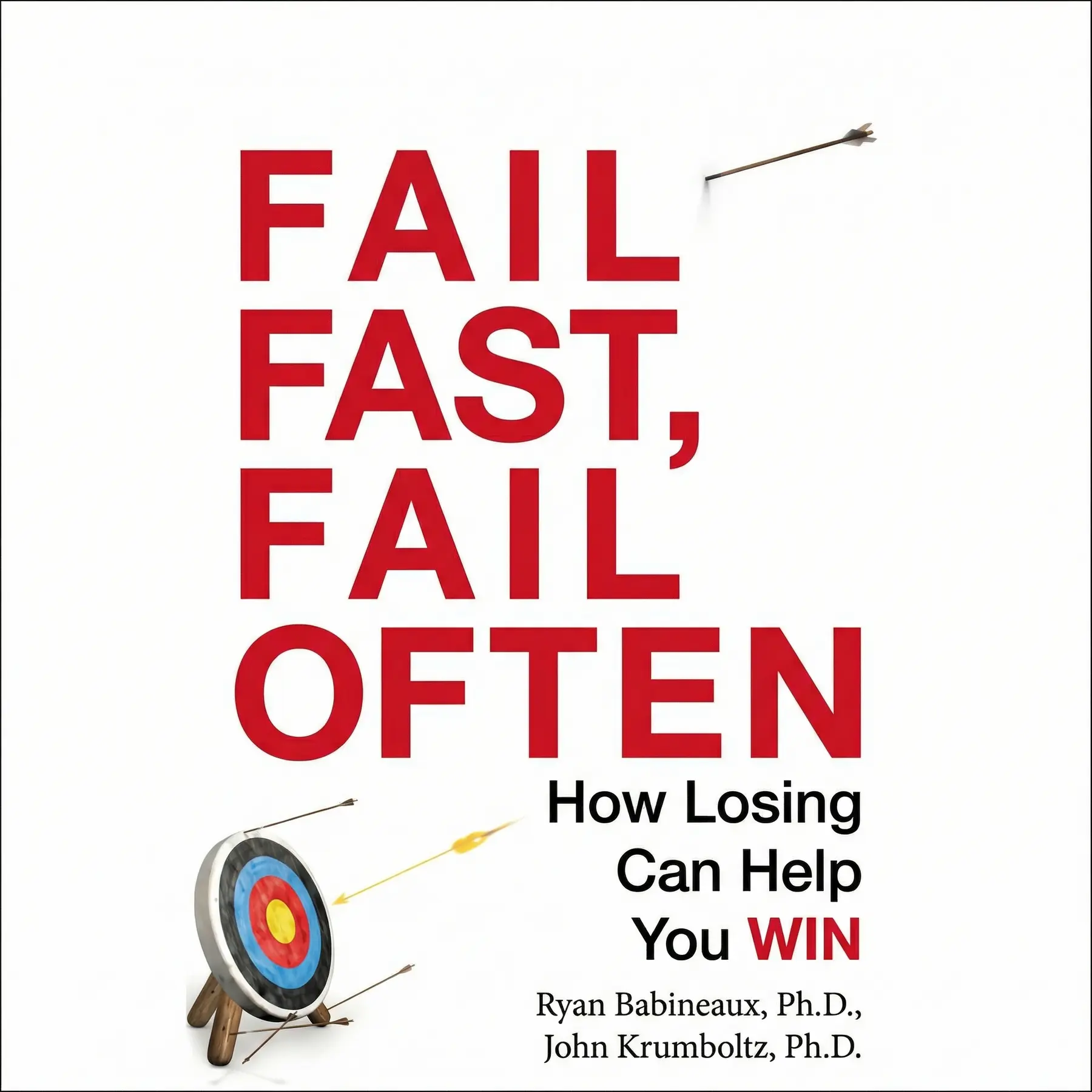
Listeners find this book perceptive and packed with excellent advice, making it an accessible and pleasant experience. Furthermore, the storytelling quality is highly regarded, with one listener specifically praising the compelling accounts of navigating obstacles.
Top reviews
Pop
Finally got around to reading this after a friend recommended it for my career pivot, and the timing couldn't have been better. The narrative quality is top-notch, featuring engaging stories about overcoming obstacles that make the advice feel grounded rather than preachy. I especially loved the section on how our interests change over time; it’s a relief to hear that choosing a career path at twenty isn't a life sentence. The authors write with a directness that cuts through the typical self-help fluff, focusing on how small actions trigger a sense of satisfaction. Truth is, I started applying the "go see for yourself" mantra immediately by shadowing a local professional instead of just Googling things. It’s insightful and full of great tips that are actually easy to implement in your daily routine. If you need a source of motivation to overcome procrastination, just buy it.
Show moreMattanee
Wow, what a refreshing perspective on why we get stuck in life's ruts. I’ve been paralyzed by the fear of making the "wrong" choice for years, but this book helped me realize that the biggest mistake is never making any mistakes at all. The quote about John Steinbeck writing one page at a time really stuck with me because it makes daunting projects feel manageable again. These authors aren't just selling a mystical formula; they are giving you permission to be messy and curious. Not gonna lie, the "go see for yourself" advice is something every career counselor should be shouting from the rooftops. It’s much more practical than taking those useless personality tests that try to put you in a box. I finished the book feeling energized and ready to sign up for a class I’ve been eyeing for months. It’s a wonderful resource for anyone who feels like they’re just going through the motions.
Show moreMeen
Ever wonder why kids are so much better at learning than adults? This book explains that it's because they aren't obsessed with the "benefit" of every single action; they just play and explore. Ryan Babineaux and John Krumboltz do a fantastic job of showing how we lose that curiosity as we age, replacing it with a paralyzing fear of looking stupid. Personally, I loved the debunking of career tests, which have always felt like nonsense to me anyway. Our interests change, and that’s okay! The narrative quality is great, with stories that feel authentic and tips that you can actually use to improve your life. It’s an incredibly inspiring read that reminds you that things don't ever have to be perfect for you to start. I've already recommended it to three people this week because the message is so vital for our "optimization-obsessed" culture. It’s practical, easy to understand, and truly helpful.
Show moreBenjamin
As a chronic over-thinker who gets paralyzed by the "perfect plan," this book was exactly the kick in the pants I needed to actually start moving. Babineaux and Krumboltz argue that waiting until you're "ready" is the quickest way to waste a decade of your life, and frankly, they’re right. The stories of people stumbling into careers—like the guy who found psychology through tennis—really hit home for me. It’s not about some mystical secret; it’s about making your tasks small enough that progress feels inevitable rather than impossible. My only gripe is that the title is a bit of a misnomer since it’s more about taking action than analyzing actual failure. Still, the pragmatic advice on how children learn through curiosity versus how adults over-analyze everything is worth the price of admission. It’s an easy, fast read that actually makes you want to get off the couch and try something new today.
Show moreMia
Pick this up if you're a meticulous planner who struggles to take the first step without a ten-year roadmap. The book’s core message is simple: dive in, see what happens, and adjust your course based on the results you actually get. I appreciated the straightforward manner in which the advice was presented, even if some of the stories felt a bit too "convenient" for my taste. It avoids the shame-heavy tone of many self-help books and instead offers a gentle, motivational push toward action. One of my favorite takeaways was the idea that progress itself triggers satisfaction, so breaking tasks into tiny pieces is essential for staying motivated. While I wish there was more emphasis on failing in slow-moving corporate cultures, the general tips for personal growth are excellent. It’s a fast, easy read that manages to be insightful without being overly dense or academic. Definitely a good addition to your shelf.
Show moreEarn
The authors, both counselors, bring a unique perspective to the table by focusing on action-oriented behavior rather than deep psychological analysis. While "Fail Fast, Fail Often" might have a catchy title that doesn't quite match the content, the actual advice regarding "planned happenstance" is incredibly valuable. They argue that most success comes from being in motion and being open to new experiences, rather than following a rigid plan. I found the stories of people overcoming obstacles through small, low-stakes experiments to be quite compelling and relatable. In my experience, the book works best as a motivational tool for those who are currently feeling stagnant or depressed in their current roles. It’s written in a very accessible style, making it a great gift for a recent graduate who is worried about finding their "one true passion." My only criticism is that it ignores some of the systemic issues that make failing much harder for people without financial safety nets.
Show moreKan
After hearing about this book on a podcast, I decided to see if it lived up to the hype for someone mid-career. It’s an insightful read with great stories of overcoming obstacles, even if it lacks the "I have been through this" grit of a memoir. The authors are clearly experienced counselors, and their perspective on "planned happenstance" is a useful mental model for anyone feeling stuck. Look, the book is incredibly helpful if you need a nudge to stop overthinking and start acting. I think it’s especially ideal for college students or those entering the workforce for the first time. It teaches you that progress triggers satisfaction and that waiting for perfection is a trap. While some advice feels a bit general, the overall push toward action is genuinely motivating. It’s a light, easy-to-digest book that provides some much-needed perspective on the value of simple curiosity.
Show moreMint
Does this offer groundbreaking science? Not really, but it serves as a solid reminder that perfectionism is the enemy of progress. Babineaux and Krumboltz present a pragmatic bent toward career counseling that I think would be particularly helpful for college students feeling lost. While the book mentions some interesting research on what drives innovation, much of the content feels like common sense dressed up in nice anecdotes. I personally found the advice to be a bit too general at times, especially when they gloss over the financial risks of "just diving in." However, the chapter on how children approach learning with pure curiosity was a highlight for me. It’s an enjoyable enough listen if you’re looking for a quick motivational boost, even if it lacks the deep theological reflection found in other works. It won't change your life overnight, but it might help you stop over-planning your next move for a few hours.
Show moreJib
Not what I expected based on the title. While I was looking for a deep dive into the mechanics of failure, this turned out to be more of a "start a hobby" guide. It’s very self-helpy, but to be fair, the writing is pithy and direct. The advice to "just do something" is fine, but it gets repetitive after a few chapters of similar anecdotes. Some of the stories, like the one about the pottery class, didn't really show failure at all, but rather a lucky break. If you are new to personal development, you might find this revolutionary. For those who've read a lot of psych books, it’s mostly a reminder of things you already know. Still, the narrative quality is decent and it’s an easy enough read for a weekend. It might give you the kick you need, just don't expect a technical manual on risk management.
Show moreSun
The title is a complete bait-and-switch, and if you’re looking for a deep dive into how to handle professional failure, you won’t find it here. Instead of exploring how to navigate the messy reality of mistakes, the authors provide a collection of anecdotes about programmers and entrepreneurs who "stumbled" into success. Look, I wanted to know how to fail in a corporate culture that moves like a glacier, not hear about a high school kid taking a pottery class. To be fair, the writing style is pithy and accessible, but the advice feels incredibly general and lacks the philosophical weight I expected from two researchers. It’s basically a motivational speech stretched into a book, filled with stories of people who already had the safety nets to take risks. If you’ve read any decent amount of psychology or self-help, you’ve heard all of this before. It’s not a terrible read, but it's definitely not the "manual on failure" it claims to be.
Show moreReaders also enjoyed
60 Seconds & You’re Hired!
Robin Ryan
59 Seconds: Change Your Life in Under a Minute
Richard Wiseman
A Guide to the Good Life: The Ancient Art of Stoic Joy
William B. Irvine
AUDIO SUMMARY AVAILABLE
Listen to Fail Fast, Fail Often in 15 minutes
Get the key ideas from Fail Fast, Fail Often by Ryan Babineaux, plus 5,000+ more titles in English and Thai.
- 5,000+ titles
- Listen as much as you want
- 7-day free trial
- Cancel anytime







