

18 min 44 sec
Fair Play: A Game-Changing Solution for When You Have Too Much to Do (and More Life to Live)
By Eve Rodsky
Fair Play offers a transformative system for couples to rebalance domestic life, eliminate the invisible mental load, and reclaim individual passions through a structured, game-based approach to household management.
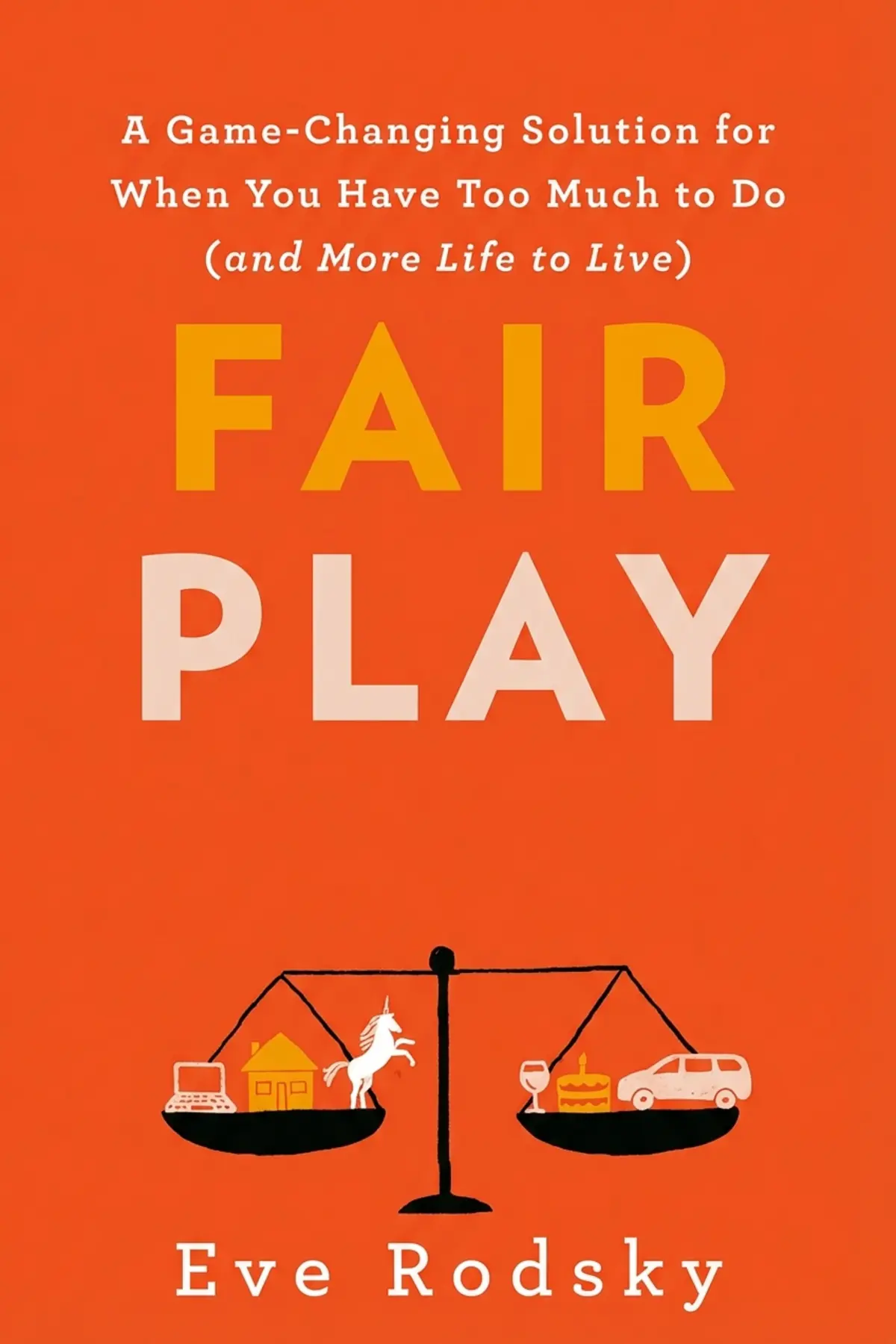
Table of Content
1. Introduction
1 min 36 sec
In many modern households, there is a silent tension brewing beneath the surface of daily routines. It starts with a forgotten grocery item or a missed school deadline and eventually snowballs into a mountain of resentment. If you are a mother, you might feel like the default manager of every tiny detail in your family’s life, from the location of your son’s gym bag to the exact brand of toothpaste in the guest bathroom. You aren’t just doing the work; you are carrying the entire mental map of the household. This imbalance is the primary hurdle many couples face, yet it remains largely invisible until it causes a total collapse in communication or well-being.
The throughline of our discussion today is that domestic equality is not just about who does the dishes; it is about how we value time and individual identity within a partnership. We are going to explore a game-changing solution that moves beyond the typical bickering over chores and toward a system built on mutual respect and shared ownership. We will look at how the ‘second shift’ impacts women’s mental health and careers, why we often mistakenly value one person’s time more than the other’s, and how you can use a structured card game to bring clarity and fairness back into your home. This is about more than just a clean house—it is about reclaiming your time and the version of yourself you might have lost along the way. By the end of this journey, you’ll understand how to stop being a martyr and start being a partner in a truly collaborative home.
2. The Hidden Weight of the Mental Load
2 min 16 sec
Domestic labor involves more than just physical chores; it encompasses a heavy mental burden that often falls disproportionately on one partner’s shoulders.
3. The True Cost of Domestic Inequality
2 min 19 sec
Unbalanced household responsibilities have far-reaching consequences, affecting marital satisfaction, individual health, and even a woman’s financial future.
4. Challenging the Value of Time
2 min 09 sec
To achieve a fair partnership, couples must stop viewing one partner’s time as more valuable than the other’s, regardless of income.
5. Reclaiming Identity Beyond Parenthood
2 min 10 sec
Maintaining personal passions and individual interests is not a luxury; it is an essential component of a healthy marriage and a fulfilling life.
6. Mapping the Household Ecosystem
2 min 14 sec
The ‘Fair Play’ system uses a deck of 100 cards across five categories to visualize and reallocate the entire scope of domestic responsibility.
7. The Rules of Intentional Task Allocation
2 min 12 sec
Task ownership should be based on personal values and deliberate choices rather than gender stereotypes or historical defaults.
8. Mastering Full Ownership with CPE
2 min 18 sec
True fairness requires each partner to take full responsibility for a task from start to finish: Conceiving, Planning, and Executing.
9. Conclusion
1 min 30 sec
The journey toward a fair household is not a one-time conversation; it is a shift in the very culture of your relationship. We have explored how the invisible mental load and the second shift can weigh down a partnership, and why it is essential to value time as a universal, finite resource. By using the ‘Fair Play’ system and the 100-card deck, you can move away from the frustration of ‘helping’ and toward the empowerment of true ownership.
Remember, the goal is not to win or to prove your partner wrong, but to build a home where both of you can thrive as individuals. This requires moving away from revenge and scorekeeping. When a card is dropped or a task isn’t done perfectly, resist the urge to strike back. Instead, come back to the table. Have an adult conversation about why the system failed and adjust the cards as needed. By implementing the CPE—Conceive, Plan, and Execute—framework, you ensure that responsibilities are handled fully and that the mental load is shared.
Your life is more than a series of chores, and your relationship is more than a management contract. By playing fair, you aren’t just cleaning your house or managing your schedule; you are reclaiming your identity and building a partnership based on mutual respect. Take that first step today: sit down with your partner, look at the work being done, and start dealing a new hand for a more balanced, fulfilling life together.
About this book
What is this book about?
For many couples, the arrival of children or the accumulation of household responsibilities leads to a lopsided dynamic where one partner—often the woman—shoulders the majority of the domestic labor. This book addresses the 'invisible work' and 'mental load' that often go unnoticed but lead to burnout, resentment, and a loss of personal identity. It isn't just a list of chores; it is a communication tool designed to help partners view their domestic ecosystem through a new lens. The book promises a practical, actionable solution to the age-old problem of household inequality. By introducing a card-based system, it provides a framework to divide responsibilities fairly, ensuring that both partners have equal ownership over tasks from start to finish. The ultimate goal is to move away from the toxic 'scorekeeping' mentality and toward a collaborative partnership that values each person’s time and interests equally, allowing both individuals to rediscover the passions that make them who they are.
Book Information
About the Author
Eve Rodsky
Eve Rodsky is an author, lawyer and graduate of Harvard Law School. Rodsky is also the founder of The Philanthropy Advisory Group, an organization that helps high net-worth individuals direct their funds to charitable causes. Her background in law and organizational management informs her systematic approach to solving domestic inequality.
Ratings & Reviews
Ratings at a glance
What people think
Listeners find the text highly accessible and view it as a vital resource for relationships, specifically for newlywed couples. They value the book’s informative nature, with one listener pointing out its practical tools, and appreciate the relationship guidance, with one review noting its help in achieving domestic balance. The work earns positive marks for its insights and utility in restructuring household responsibilities, and listeners see it as a thoughtful gift for those who are recently married. While many listeners consider the advice useful, some voice reservations about the gendered perspective, labeling the gender content as sexist.
Top reviews
Tun
As someone who felt like she was drowning in the mental load, this was the life raft I didn't know I needed. Rodsky's concept of the CPE—conception, planning, and execution—is a total revelation for anyone tired of being the household's "she-fault" manager. The truth is, I spent years asking my husband to "help" without realizing that the mere act of asking was adding to my own exhaustion. The cards might seem rigid to some, but having a visual representation of who owns what actually stopped the constant nagging. I finally feel like I have permission to reclaim my "Unicorn Space" and pursue interests outside of just being a mom. While the book is definitely tailored toward a specific demographic, the core advice on domestic equity is universal for any couple struggling with invisible work. It’s an essential gift for newlyweds before they fall into the trap of gendered expectations.
Show moreHassan
This book was a total game-changer for our marriage. Before reading, I felt like I was constantly nagging, but now I realize I was just the "default" for every single household decision. Look, a lot of people criticize this for being common sense, but common sense isn't always common practice in the heat of a busy week. Reading this was like a light bulb finally getting fixed and turning on after years of darkness. It provided us with a vocabulary to talk about "invisible work" without it turning into a screaming match about the dishes. My husband finally understands what "owning" a task means—no more "where's the butter?" questions when he's supposed to be making dinner. We aren't just splitting chores; we are reclaiming our time and building a more equitable life together. It’s easily a must-read for any couple transitioning into parenthood who wants to stay sane.
Show morePun
The best gift I received for my wedding, hands down. Fair Play gives you the practical tools to negotiate domestic life before the resentment even has a chance to start. Most relationship books are all about "feelings," but this one is about the actual logistics of living together. I love how it breaks down "invisible work" into something tangible you can actually see and hold. My partner and I sat down and "dealt the cards" last night, and it sparked such an honest conversation about our expectations. It’s easy to read and doesn't feel like a chore itself. Not gonna lie, I wish there was a version for people without kids, but most of the logic still applies to our dog and our house. If you are newly married, skip the fancy blender and buy this book instead. It’ll save you hundreds of hours of future arguments.
Show moreYothaka
Finally got around to reading this after seeing it everywhere, and I have to say the core system is brilliant. Rodsky identifies the "Where's the Butter?" husband perfectly—the well-meaning partner who is essentially blind to the work happening right in front of him. In my experience, the shift from "helping" to "owning" a task is the only way to actually reduce the mental burden on women. However, I’ll be fair: this book is stuffed with a lot of unnecessary filler and repetitive anecdotes that could have been summarized in a pamphlet. You have to wade through dozens of stories about other couples to get to the actual "game" mechanics. Despite the fluff, the framework for minimum standards of care is a game-changer for avoiding petty arguments. It’s a solid resource for couples willing to put in the work, even if the writing style is a bit high-strung at times.
Show moreGai
Is this book useful? Yes, but only if you fit a very specific demographic. Fair Play is clearly written for middle-class, two-parent households where both partners are physically present but the labor is lopsided. It doesn't really address the realities of workaholic spouses or lower-income families where shift work makes this "game" impossible to play. One thing I appreciated was the discussion on "husband standards" and how mothers often take on extra tasks that aren't actually important to the family. Sometimes we create our own misery by insisting on "crafting for every holiday" when nobody else cares. The value here is in the initial conversation about shared values and cutting out the fluff. If you can get past the somewhat elitist tone, there are some decent nuggets of wisdom regarding the "she-fault" status. It’s a decent read for newlyweds, but take the rigid rules with a grain of salt.
Show moreViroj
Ever wonder why women are still expected to act like 1950s housewives even when they are the primary breadwinners? Rodsky dives deep into the "weaponized incompetence" and "blissful ignorance" that keeps domestic labor so incredibly lopsided. I loved the research-backed approach, even if the tone is a bit punchy. The idea that we need to define a "minimum standard of care" is something every couple should do. It stops the resentment that builds when a task is done poorly on purpose to avoid doing it again. My only gripe is that the physical cards aren't as detailed as the website, which feels like a bit of a cash grab. Still, the message of equity over equality is powerful. It’s a revolutionary way to look at the "second shift" and how to dismantle the patriarchy starting right in your own living room.
Show moreYaowares
After hearing so much buzz about the 'Unicorn Space,' I decided to give this a shot. I'll be honest, the first half is quite a slog because it feels like a never-ending list of chores and domestic grievances. However, once you get into the actual mechanics of the Fair Play game, things start to click. The concept of "Conception, Planning, and Execution" is something every couple should adopt to stop the "she-fault" dynamic. It’s a bit rigid, and I don't think we will follow every single rule, but it definitely opened my husband's eyes to the invisible work I do. My only major complaint is that it’s very geared towards a certain type of high-income household. If you can ignore the fluff and the slightly elitist tone, there are some very effective tools here for renegotiating your domestic life. It’s a solid four stars for the practical application alone.
Show moreSofia
The premise of this book is intriguing, but the execution felt incredibly antagonistic toward men. I found it hard to get past how the author trivialized her husband's contributions while inflating her own daily tasks with endless sub-points. She gives herself a massive list for "pet care" but then lumps "managing finances" into a single, throwaway bullet point. Does she actually understand the stress and time required to manage a household’s long-term financial health? Personally, I felt she was coming from a place of deep-seated resentment that made the advice hard to swallow. While I agree that chores should be divided fairly, this approach feels more like a war than a partnership. If you want a system that turns your marriage into a rigid corporate structure where you're constantly "re-dealing" cards, then go for it. For me, it was just too much man-hating rhetoric to be truly helpful or balanced.
Show moreGiulia
Picked this up on a recommendation, but it might just be a generational gap thing. As someone who has been married for thirty years, I found the constant list of complaints in the first half quite annoying to get through. I’m all for fairness, but this approach seems way too high-strung and calculated for a loving relationship. Frankly, if my spouse presented me with a rigid "system" of cards and "CPE" protocols, I would probably rebel. It feels like it takes the heart out of a home and replaces it with a corporate HR manual. To be fair, the section on agreeing on values before assigning tasks is very smart. Most arguments happen because we have different expectations, so that part was actually helpful. It’s just the "game" itself that feels a bit much for my taste.
Show morePhu
Wow, I really tried to finish this, but I tapped out at the 50% mark. This whole "system" seems excessively aggressive and "fight-y" for a healthy relationship. I'm all for equalizing housework, but turning your domestic life into a rigid card game feels like a recipe for a divorce. To be fair, the author’s tone is incredibly high-strung, and her laundry list of complaints made me feel exhausted just reading it. It’s less about partnership and more about winning a power struggle through "CPE" and "re-dealing." I can’t imagine presenting a deck of cards to my spouse without it causing a massive argument. Maybe this works for some corporate-minded people, but for me, it felt way too antagonistic and rigid. It’s a pass from me; I'd rather just talk to my husband like a human being instead of a project manager.
Show moreReaders also enjoyed

All About Love: New Visions
bell hooks

Bad Therapy: Why the Kids Aren't Growing Up
Abigail Shrier

Battle Hymn of the Tiger Mother
Amy Chua



AUDIO SUMMARY AVAILABLE
Listen to Fair Play in 15 minutes
Get the key ideas from Fair Play by Eve Rodsky, plus 5,000+ more titles in English and Thai.
- 5,000+ titles
- Listen as much as you want
- 7-day free trial
- Cancel anytime







