

19 min 02 sec
Falling into Grace: Insights on the End of Suffering
By Adyashanti
Discover how to transcend human suffering by dismantling the egoic self-image. Adyashanti guides listeners toward inner peace by letting go of control and embracing the mystery of direct, unmediated experience.
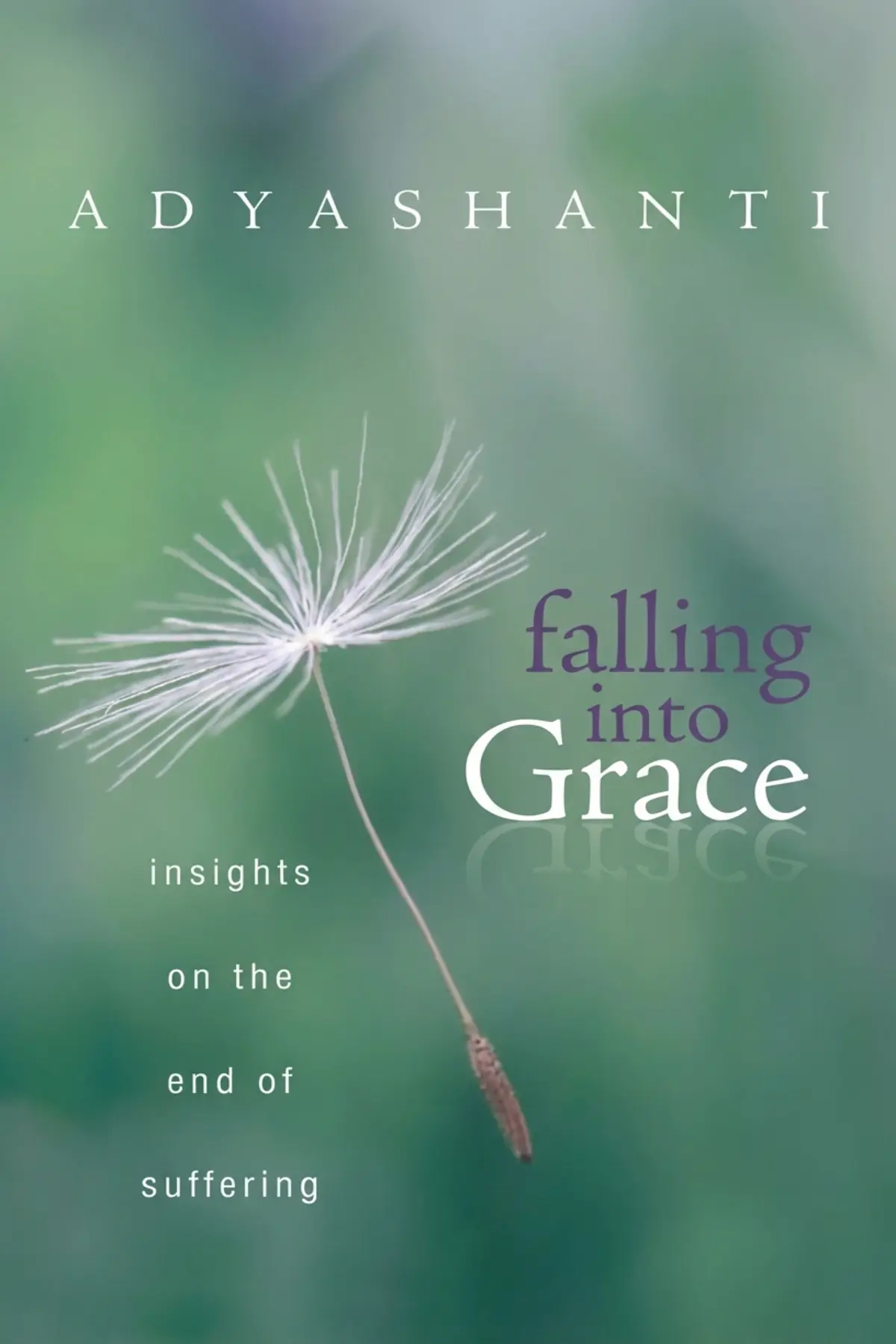
Table of Content
1. Introduction
1 min 46 sec
Have you ever felt like you were moving through your days with a persistent, nagging sense that something is missing? It is a common human experience to feel that even when things are going well on the outside, there is an underlying lack of fulfillment on the inside. We often try to fix this by changing our external world—getting a new job, finding a new relationship, or seeking out new experiences. Yet, the mystery of our inner dissatisfaction remains. In Falling into Grace, spiritual teacher Adyashanti suggests that the root of our suffering isn’t found in what is happening to us, but in how we perceive ourselves and the world around us.
This journey is about understanding the mechanics of the human mind and the egoic structures that keep us in a state of constant struggle. We will explore how our self-image, formed in early childhood, becomes a cage that limits our joy and creates a sense of separation from the rest of life. We will look at why we feel the need to control everything and how that desire for control actually breeds the very anxiety we are trying to avoid.
Over the course of this summary, we will dive into the idea that many of our most deeply held beliefs and even our clearest memories are mere constructions—narratives that don’t actually reflect the truth of who we are. By the end, you’ll see that finding peace isn’t about adding something new to your life, but about unlearning the habits and illusions that cloud your natural state. It is about stopping the fight and finally allowing yourself to fall into a state of grace. Let’s begin by looking at the very first way we start to lose touch with our true nature: the birth of the self-image.
2. The Roots of the Egoic Self-Image
2 min 24 sec
Discover how the simple act of recognizing yourself in a mirror marks the beginning of a lifelong struggle to maintain a conceptual identity.
3. The Illusion of Being Separate
2 min 21 sec
Explore why the feeling of being an isolated individual is actually a shared cultural trance that prevents us from experiencing true reality.
4. Surrendering the Myth of Control
2 min 05 sec
Learn why our desperate attempt to manage life’s outcomes is the primary source of our anxiety and how to find freedom in powerlessness.
5. The Fallacy of Believing Your Thoughts
2 min 13 sec
Discover how our minds distort the past and why arguing with what has already happened is a guaranteed recipe for misery.
6. The Process of Unlearning and Awakening
1 min 59 sec
What if the key to happiness wasn’t gaining more knowledge, but having the courage to let go of everything you think you know?
7. Finding Stillness in the Heart of Emotion
2 min 12 sec
Learn from a poignant personal story how the total acceptance of grief can lead to an unexpected and profound sense of peace.
8. The Backward Step Toward Direct Experience
2 min 11 sec
Instead of seeking fulfillment in the future, discover the ‘backward step’ that reveals the peace already present in your current senses.
9. Conclusion
1 min 51 sec
As we conclude our look at Falling into Grace, the overarching message is clear: suffering is an internal event born from our attachment to a false sense of self. We have seen how the ego develops from a simple mirror reflection into a complex web of self-image, control, and unreliable narratives. We’ve explored the idea that our sense of being separate individuals is a collective illusion that keeps us from the richness of real life. Most importantly, we have learned that the path to peace is not found by running toward a future goal, but by taking a backward step into our own direct experience.
The transition from suffering to grace happens when we stop trying to manage our thoughts and start observing them as passing events. It happens when we stop fighting our emotions and instead allow them to move through us without resistance. The ‘grace’ Adyashanti describes isn’t something we have to earn; it is the natural state of things that reveals itself the moment we stop the inner war. It is a profound shift from being the ‘author’ of a stressful life story to being the ‘witness’ of a vibrant, unfolding mystery.
As you move back into your day, try to apply this by simply observing the structure of your thoughts. When a difficult emotion or a stressful thought arises, don’t try to fix it or believe it. Instead, notice the space that exists around that thought. Ask yourself, ‘What am I before this thought began?’ By practicing this subtle shift in perspective, you can begin to distance yourself from the ego’s noise. Remember that the peace you seek isn’t at the end of a long journey; it is the ground you are already standing on. All you have to do is stop the struggle and allow yourself to fall.
About this book
What is this book about?
Falling into Grace explores the profound question of why humans suffer and how we can find a lasting sense of fulfillment. At its core, the book suggests that our pain is not usually caused by our circumstances, but by the mental constructs we build around ourselves. We spend our lives defending an identity that is essentially an imaginary reflection, distancing us from the reality of the present moment. Through a series of spiritual insights, the text explains how our need for control and our attachment to unreliable memories keep us trapped in a cycle of dissatisfaction. By learning to observe our thoughts without believing them and by fully experiencing our emotions rather than resisting them, we can break the egoic trance. The promise is a shift from a life of constant striving to one of 'falling into grace'—a state of natural ease and peace that is always accessible when we stop fighting with life as it is.
Book Information
About the Author
Adyashanti
Adyashanti is an American-born spiritual teacher. His books include Emptiness Dancing, The End of Your World, True Meditation, The Way of Liberation, and Falling into Grace.
Ratings & Reviews
Ratings at a glance
What people think
Listeners find this spiritual work both insightful and accessible, offering deep clarity on how to navigate life's toughest challenges. The writing is skillfully composed, and listeners appreciate the way it leaves them feeling more peaceful and emotionally lighter. The book is straightforward to digest, with one listener remarking that it functions as a practical manual for living, while another describes the content as a more approachable version of Adyashanti’s core teachings.
Top reviews
Sam
This book acts as a profound study guide for anyone navigating the complexities of human existence. Adyashanti has a way of crafting words that make even the most difficult emotional hurdles feel manageable. Personally, I found the chapters on the nature of suffering to be life-altering in their simplicity. Instead of getting lost in dense metaphysical jargon, the author keeps things grounded and accessible for the everyday reader. I felt a sense of lightness and peace wash over me by the time I reached the final page. It’s not just a collection of spiritual ideas; it’s an invitation to stop the internal war we all wage against reality and find a more authentic way of being. Truly a beautiful experience.
Show morePakinee
Adyashanti’s focus on the 'brick wall' of our own making is a brilliant metaphor for the ego's resistance to what is. I’ve spent years trying to figure out the Universe, but this book reminded me that sometimes we just need to question the questions themselves. The distinction he makes between the cramped room of the mind and the vast openness of our true nature is incredibly insightful. Truth is, I started breathing more deeply just reading his descriptions of silence and letting go. It doesn't matter if you've read a hundred spiritual books; the way he illustrates the journey into the unknown is uniquely inspiring and deeply felt. It helped me feel lighter almost immediately.
Show moreArm
Not what I expected at all, in the best possible way. This isn't a book of instructions; it's more like a long, soothing conversation with a wise friend who knows exactly where you're hurting. I love how he redefines grace as a state of profound surrender rather than some religious miracle. The sentence structures are rhythmic and poetic, making the reading process itself feel like a form of meditation. I found myself slowing down, taking deeper breaths, and really feeling the openness he describes. It’s a gift to find a writer who can point so accurately to the space within us that remains untouched by the chaos of the world. Simply beautiful.
Show moreMethinee
After hearing his voice on various podcasts, reading his written words felt like a natural extension of his peaceful presence. He has this unique way of making you realize that the boundaries we perceive in life are mostly self-imposed by a cramped mind. The book teaches you to trust the higher guidance that arises when you finally decide to stop struggling with reality. It’s insightful, easy to read, and provides a great understanding of the mental blocks we all face when trying to overcome personal difficulties. I finished the book feeling significantly lighter and more prepared to face the world with an open heart. This is definitely one of my new favorites for daily reflection.
Show moreJoy
Have you ever felt like you're banging your head against a brick wall trying to find enlightenment? Adyashanti uses that exact image to describe our struggle, and it really resonated with my current state of mind. While this feels like a lighter version of his more intense work like 'Emptiness Dancing,' it serves as a perfect entry point for those new to his satsangs. The writing is elegant yet straightforward, stripping away the mystery of grace to show it’s actually our natural state. Frankly, some sections felt a little redundant if you've followed him on YouTube for years, but the core message remains powerful. It’s a gentle, well-crafted reminder to just be.
Show moreTun
Wow, I didn't expect such a light book to carry such heavy wisdom about the way we inhabit our bodies and minds. The central theme of stopping the struggle with 'what is' sounds simple, but Adya breaks it down into actionable insights that are easy to follow. It’s well-crafted and avoids the flowery language that usually turns me off from the spiritual genre. Look, the book isn't going to do the work for you, but it provides a very clear map of where you’re currently stuck. I especially appreciated the sections on how our attachments create unnecessary friction in our daily lives. This is a very peaceful reading experience from start to finish.
Show morePat
As someone who is constantly overwhelmed by the pace of modern life, this book was exactly the medicine I needed this month. Adyashanti explores the idea that grace isn't something we earn through effort, but something we fall into when we finally stop trying to control everything. The text is simple to follow and serves as a wonderful study guide for anyone looking to deepen their meditation practice. In my experience, most spiritual authors make things too complicated, but Adya keeps it incredibly grounded. The way he discusses Jesus and Buddha as pointers to the same truth was a nice touch toward the end. Highly recommended for finding some much-needed inner quiet.
Show moreSeksan
The chapter on the anatomy of suffering is worth the price of the book alone, even if some other parts feel a bit like filler. Adyashanti is clearly a master of his craft, and his ability to illustrate his own journey in spirituality makes the concepts feel very relatable and human. It’s a relatively light version of his philosophy, which makes it a great reset book when you feel yourself getting too caught up in spiritual doing rather than being. Truth be told, I did find myself wanting more of the rigor found in his earlier works, but this serves its purpose as an accessible guide to peace. A very solid, insightful four-star read.
Show moreRosa
Picked this up hoping for deep revelations but found it was mostly stuff I’d already encountered in basic Buddhist texts. To be fair, Adya is a great communicator and his downtoearth-ness makes him very likable as an author. He explains that while pain is an inevitable part of being alive, suffering is entirely optional based on how we resist our circumstances. It’s a solid book for beginners, though seasoned practitioners might find themselves skimming through the repetitive parts. I think I prefer his live talks where his humor and presence really shine through more clearly than on the printed page. Still, it’s a decent, quick read for a weekend if you need a reminder to let go.
Show moreAlejandra
Finally got around to reading this after hearing so much praise, but I have to admit I was a bit disappointed by the depth. Compared to the piercing impact of his live satsangs in Copenhagen, the text here felt a bit diluted and overly simplified for my taste. It’s a very safe version of his teachings that seems aimed at a much broader, perhaps less experienced, audience. Not gonna lie, I missed the specific energy and laughter that comes through in his videos; it just didn't translate well to paper for me. If you are brand new to the idea of non-duality, this is probably a great resource, but for long-time students, it feels like a bit of a retread.
Show moreFeatured in
Readers also enjoyed
Aflame: Learning from Silence
Pico Iyer
A Force for Good: The Dalai Lama's Vision for Our World
Daniel Goleman

A Return to Love: Reflections on the Principles of a Course in Miracles
Marianne Williamson
Abundance: The Inner Path to Wealth
Deepak Chopra

Alcoholics Anonymous
Alcoholics Anonymous World Services
A New Earth: Awakening to Your Life’s Purpose
Eckhart Tolle
AUDIO SUMMARY AVAILABLE
Listen to Falling into Grace in 15 minutes
Get the key ideas from Falling into Grace by Adyashanti, plus 5,000+ more titles in English and Thai.
- 5,000+ titles
- Listen as much as you want
- 7-day free trial
- Cancel anytime







