
27 min 21 sec
Fascism: A Warning
A profound exploration of the resurgence of authoritarianism. Former Secretary of State Madeleine Albright analyzes history and current events to identify the warning signs of fascism and how to protect democratic values.
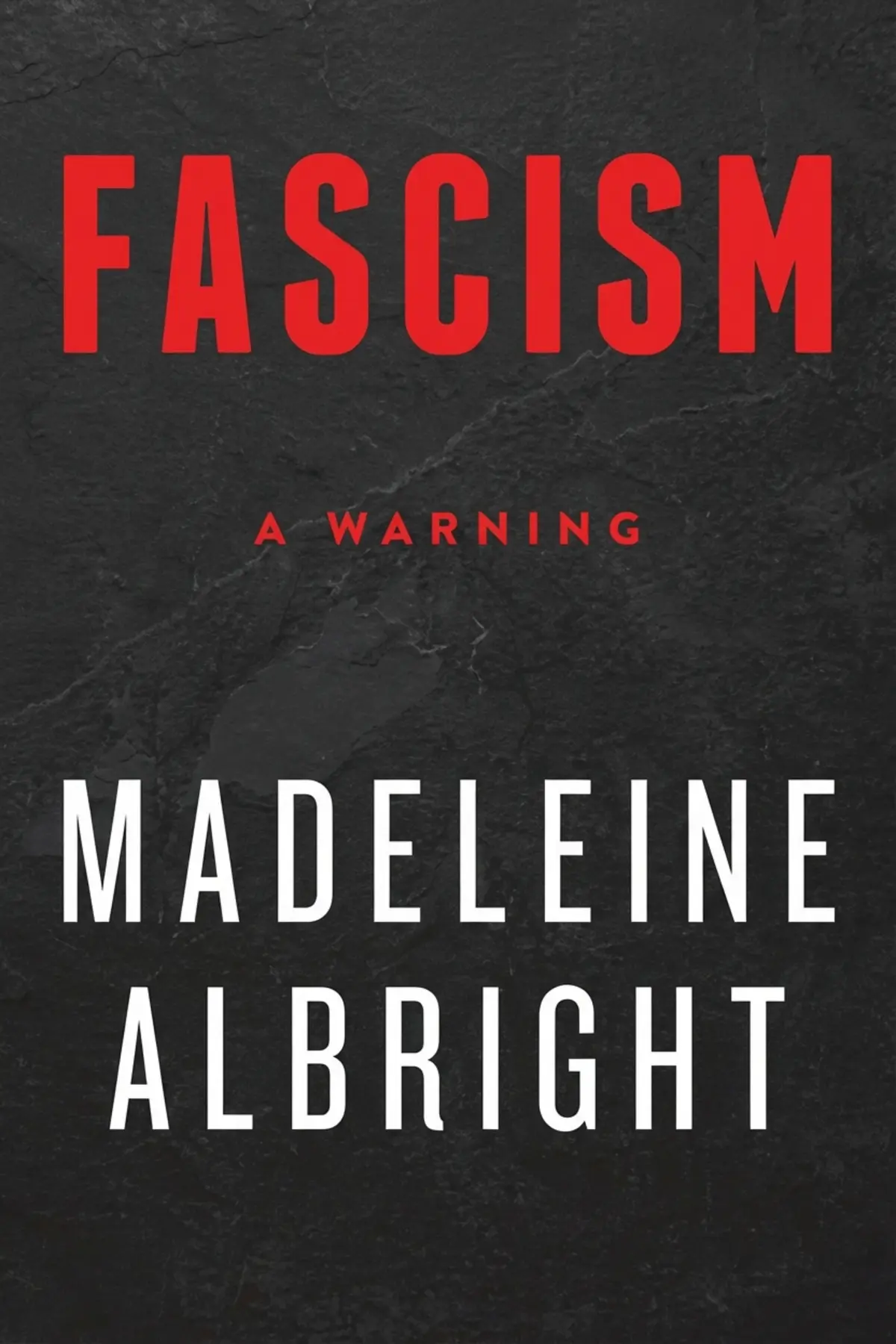
Table of Content
1. Introduction
1 min 50 sec
When we hear the word fascism, our minds often drift to the mid-twentieth century. We think of grainy, black-and-white newsreels, the thud of boots on cobblestone, and the shadows of dictators who have long since passed into history. It feels like a closed chapter—a relic of a time when the world was less connected and democratic structures were still in their infancy. However, we are living in a moment where that sense of security is being tested. Across the globe, from the heart of Europe to the reaches of South America, governments are showing signs that the spirit of authoritarianism is far from dead.
In this exploration of political fragility, we are going to look at the mechanisms that allow democracy to crumble. This isn’t just a history lesson; it’s a manual for recognizing the patterns of the present. We will delve into how modern leaders are utilizing the very tools of democracy to dismantle it from the within, and we will examine the unsettling parallels between the rhetoric of the past and the political discourse of today. Through the eyes of a diplomat who has seen the rise and fall of regimes first-hand, we will seek to understand why fascism is a persistent threat that requires constant vigilance.
The central throughline here is that fascism isn’t a single event, but a process. It doesn’t usually arrive with a bang; it arrives through a series of small, calculated shifts that can be hard to notice until the transformation is nearly complete. By looking at cases from Italy and Germany to Venezuela and Turkey, we will see how anger and division are weaponized by charismatic figures. We will also ask the uncomfortable question of whether the United States is as immune to these forces as many people assume. This is a journey through the mechanics of power, the psychology of the crowd, and the urgent necessity of defending the freedoms that define a modern, open society.
2. Defining Fascism as a Method of Power
2 min 59 sec
Fascism is often used as a vague insult, but its true nature is found in how a leader seizes and maintains control rather than in a specific political platform.
3. The Incremental Erosion of Democracy
2 min 41 sec
The transition from democracy to autocracy is rarely sudden; it is a gradual process that uses legal means to dismantle legal protections.
4. The Psychology of Fear and National Humiliation
2 min 36 sec
Fascist leaders are master orators who turn public anxiety into a weapon by offering simple, emotional solutions to complex problems.
5. A Universal Temptation Across Borders
2 min 42 sec
Fascism is not a unique pathology of a few countries, but a recurring theme that has appeared in diverse nations throughout history.
6. The Modern Mask of Authoritarianism
2 min 42 sec
Contemporary leaders in Venezuela and Hungary demonstrate how the line between popular democracy and fascism is becoming increasingly blurred.
7. The Fragility of the Democratic Consensus
2 min 34 sec
Economic anxiety and technological disruption are eroding public trust in democracy, creating a fertile environment for fascist ideas.
8. The Global Impact of Authoritarian Rhetoric
2 min 27 sec
When established democracies begin to praise strongmen and attack their own institutions, it gives license to autocrats around the world to do the same.
9. The Danger of Nationalistic Slogans
2 min 38 sec
The phrase ‘America First’ has a dark historical legacy that signals a retreat from moral leadership and a validation of authoritarian aggression.
10. Guarding Against the Complacency of Freedom
2 min 37 sec
Fascism could emerge in the United States precisely because many citizens believe it is impossible, leading them to ignore the slow erosion of institutional norms.
11. Conclusion
1 min 35 sec
As we look back over the landscape of history and the challenges of our current moment, the message is clear: fascism is not a ghost of the past, but a recurring threat that lives within the frustrations and divisions of any society. It is a method of power that thrives when people feel unheard, when institutions seem stuck, and when fear is more powerful than hope. We have seen how it uses the very mechanisms of democracy to slowly dismantle freedom, relying on our complacency and our willingness to look the other way while the foundations of our society are weakened.
However, understanding these patterns is the first step in breaking them. By recognizing the rhetoric of grievance, the manipulation of information, and the slow erosion of legal norms, we can begin to build a defense. Protecting democracy isn’t just the job of politicians or diplomats; it’s a responsibility that falls on every citizen. It requires us to step out of our media bubbles, to demand accountability and truth from our leaders, and to remember that the things that unite us are far more important than the divisions that authoritarian figures seek to exploit.
The warnings we’ve explored serve as a reminder that the price of liberty is, as it has always been, eternal vigilance. Democracy is fragile, but it is also resilient if we are willing to stand up for it. We must refuse to be the ‘chicken’ that is plucked clean one feather at a time. Instead, we must be the active participants in a society that values the rule of law, the freedom of the press, and the inherent dignity of every individual. The future of our democratic world depends on our ability to heed these warnings today.
About this book
What is this book about?
Fascism: A Warning is a timely and urgent analysis of the threats facing modern democracy. Drawing on her personal history as a refugee and her distinguished career as a high-level diplomat, Madeleine Albright offers a nuanced definition of fascism. She argues that it is not a fixed political ideology, but rather a dangerous method for seizing and maintaining power by exploiting public grievances and undermining the institutions that provide checks and balances. The book moves between historical accounts of 20th-century dictators like Mussolini and Hitler and contemporary examples in countries such as Turkey, Hungary, and Venezuela. Albright examines how leaders in these nations use democratic processes to slowly dismantle the foundations of freedom. She also turns her attention to the United States, discussing how political polarization, the rise of social media disinformation, and the rhetoric of victimhood create a fertile ground for authoritarianism to take root. Ultimately, the work serves as a call to action, urging citizens to remain vigilant and defend the democratic norms that are often taken for granted.
Book Information
About the Author
Madeleine Albright
Madeleine Albright was a refugee from Czechoslovakia who moved to the United States and rose to become a world-renowned diplomat. She achieved a historic milestone during the presidency of Bill Clinton when she was appointed as the first female Secretary of State in American history. Prior to that, she represented the United States as the Ambassador to the United Nations. After her career in government, she continued to influence global political thought as a lecturer in diplomacy at Georgetown University.
Ratings & Reviews
Ratings at a glance
What people think
Listeners consider this work exceptionally accessible and thoroughly researched, with one mentioning it is written in everyday language. The text delivers a comprehensive history of fascist leadership and offers a significant critique of the current political landscape. Listeners describe the experience as stimulating and revelatory, while one review emphasizes that it forces an evaluation of historical perspectives. Although listeners find the subject matter alarming, they value its significance to the modern world.
Top reviews
Somboon
As a student of history who grew up hearing vague definitions of autocracy, I found Albright’s perspective incredibly grounding. She doesn’t just lecture from a podium; she shares harrowing family stories about fleeing Prague that make the political theory feel deeply personal. The way she draws parallels between Mussolini’s "draining the swamp" rhetoric and modern populist movements is genuinely eye-opening, if not a bit terrifying. Her writing style is remarkably accessible for someone with such an intimidating resume, avoiding the dense jargon you’d expect from a former Secretary of State. While the book was written during the Trump era, its warnings about the "herd mentality" of global leaders feel even more relevant today. It’s a sobering reminder that democracy is fragile and requires constant, active defense from every citizen.
Show moreIce
Have you ever wondered why we throw the word ‘fascist’ around so loosely these days? Madeleine Albright takes that question to her graduate students and uses their insights to build a terrifyingly clear picture of what the term actually means. The chapter on Kim Jong-Un is particularly chilling because she describes meeting his father and seeing the cult of personality firsthand. Frankly, it’s rare to find a book that manages to be both a rigorous history lesson and a pulse-pounding warning about our current trajectory. She captures the "us against them" mentality that fuels these movements with surgical precision. It’s not just about the big dictators; it’s about the small, incremental steps that lead a society toward the brink. If you care about the future of global stability, you need to read this immediately.
Show moreMarasri
After hearing Albright speak in an interview, I decided to grab the audiobook, and hearing her voice deliver these warnings made the experience much more powerful. She has this way of speaking—and writing—that makes you feel like you’re sitting in one of her Georgetown seminars. The history of the Arrow Cross in Hungary and the rise of Milosevic in the Balkans provided context I was sorely lacking. Not gonna lie, some sections regarding the Holocaust and the murder of her family members are incredibly difficult to get through, but they are necessary. She effectively argues that fascism isn’t a fixed ideology but a method for seizing and holding power through fear. The book is a masterful blend of memoir and political science that should be required reading.
Show moreVarinee
The chapter comparing McCarthyism to current political tactics was worth the price of the book alone. Albright draws on her decades of experience in the State Department to show that the US isn't immune to the same "bully" tactics that destroyed European democracies. Truth is, her personal connection to the material—as someone whose family was twice driven from their home—gives the book an emotional weight that a standard history book lacks. She vividly describes the "little measures" that citizens often fail to notice until it’s too late for the constitution to save them. While she is clearly critical of Trump, she also looks at the systemic issues, like globalization and automation, that create the "economic stress" fascists exploit. It’s a comprehensive, frightening, and deeply patriotic book that asks us to be better citizens.
Show moreNook
This wasn’t exactly the light reading I was looking for, but it’s easily one of the most important books I’ve picked up this year. Albright uses everyday language to dismantle complex historical shifts, making the rise of the Third Reich feel less like a distant memory and more like a repeatable pattern. To be fair, she is quite open about her bias against the previous administration, which might alienate some readers looking for a strictly neutral historical text. However, her analysis of "strongman" psychology—from Turkey’s Erdogan to Russia’s Putin—is masterfully done and supported by her own diplomatic encounters. It’s frightening to see how easily democratic safeguards can be eroded when a leader prioritizes ego over institutions. I did feel that her definition of fascism remained a little bit vague toward the end, but the overall message is impossible to ignore.
Show moreJun
Wow, this was a heavy hitter. Albright’s metaphor of fascism being a wound that we keep picking at really stuck with me throughout the entire read. She writes with a level of urgency that is infectious, likely because she has seen the worst of humanity during her childhood in Czechoslovakia and her time at the UN. I appreciated how she didn't just focus on the 1930s but looked at modern-day Poland, Hungary, and Venezuela to show that this isn't a dead ideology. Look, the comparisons to Donald Trump are frequent and pointed, so if you’re a fan of his, you’ll probably hate this. But for everyone else, her observation that he acts as a "bully" who mimics the tactics of historic autocrats is well-researched and hard to dismiss. It's a thought-provoking look at how easily we can lose our way.
Show moreJeeranan
The most striking thing about this book is how Albright balances her optimism with genuine dread. She calls herself an "optimist who worries a lot," and that tone permeates every chapter. Her firsthand accounts of negotiating with Vladimir Putin were the highlight for me, offering a glimpse into the mind of a leader who uses democratic tools to undermine democracy itself. I did find her treatment of socialism a bit "muddy," as she doesn't always distinguish between different left-wing movements clearly enough for my taste. However, her core argument about the "macho" posturing of modern leaders is spot on. It’s an eye-opening survey of how the world has shifted toward authoritarianism while we were busy being complacent. The prose is lean and punchy, making it a very quick but intellectually taxing read.
Show moreLincoln
Finally got around to reading this prescient work, and it’s amazing how much of what she predicted in 2018 has come to pass. Albright writes in a very accessible, everyday style that makes the complex history of European conflict easy to digest for a general audience. I particularly enjoyed the "Foxworthy-style" list of fascist traits she developed with her students—it was a clever way to illustrate a very dark subject. My only minor gripe is that she occasionally goes easy on the foreign policy failures of the US that might have contributed to global instability. Still, her point that a leader's instincts matter more than their specific party platform is a crucial takeaway. It’s a well-researched call to action that reminds us that "it can happen here" if we aren't vigilant.
Show moreWit
Actually quite surprised by how much I enjoyed this, despite the depressing subject matter. Albright’s writing is surprisingly conversational, which helps when you’re wading through the atrocities of Hitler and Stalin. She makes a compelling case that we are living through a period where "solidarity" has become a dirty word, which only helps autocrats gain a foothold. Personally, I would have liked more focus on China’s rising influence, as they seem to fit her criteria for authoritarianism perfectly. But the sections on Erdogan and Duterte provide a necessary global perspective that we often miss in the US-centric news cycle. It made me nostalgic for a time when the US was more respected on the world stage for its commitment to human rights. It's a solid, thought-provoking read.
Show moreA
Picked this up because of the author’s reputation, but I ended up feeling a bit underwhelmed by the actual analysis. While I respect Albright’s incredible career and her family’s history, the book felt more like a collection of anecdotes than a cohesive political warning. She spends a lot of time being nostalgic for the Clinton era, which sometimes distracted from the historical comparisons she was trying to make. The truth is, I wanted a more rigid, academic definition of fascism rather than the "I know it when I see it" approach she takes here. It’s definitely readable and contains some interesting tidbits about Franco and the Balkans, but it didn't quite provide the "solid warning" the title promised. It’s a decent primer for those who don’t know much about 20th-century history, but seasoned political junkies might find it a bit surface-level.
Show moreReaders also enjoyed
A Promised Land
Barack Obama
A River in Darkness: One Man’s Escape from North Korea
Masaji Ishikawa
A Splendid Exchange: How Trade Shaped the World
William J. Bernstein
A Theory of Justice
John Rawls
A Spy Among Friends: Philby and the Great Betrayal
Ben Macintyre
AUDIO SUMMARY AVAILABLE
Listen to Fascism in 15 minutes
Get the key ideas from Fascism by Madeleine Albright, plus 5,000+ more titles in English and Thai.
- 5,000+ titles
- Listen as much as you want
- 7-day free trial
- Cancel anytime







