
16 min 30 sec
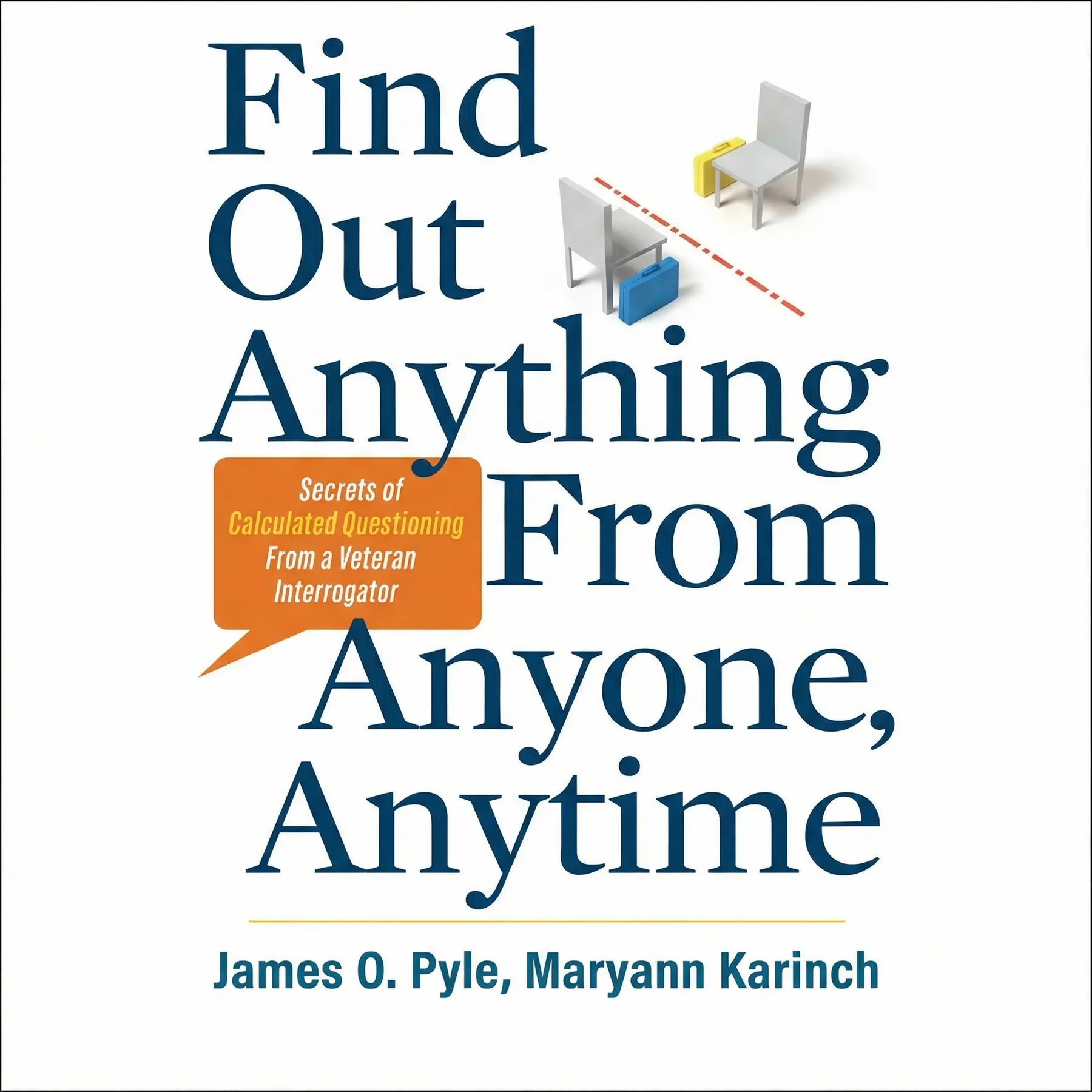
Find Out Anything From Anyone, Anytime: Secrets of Calculated Questioning From a Veteran Interrogator
Master the art of strategic questioning with techniques from a veteran interrogator. Learn how to use open-ended prompts and active listening to uncover the truth in any professional or personal situation.
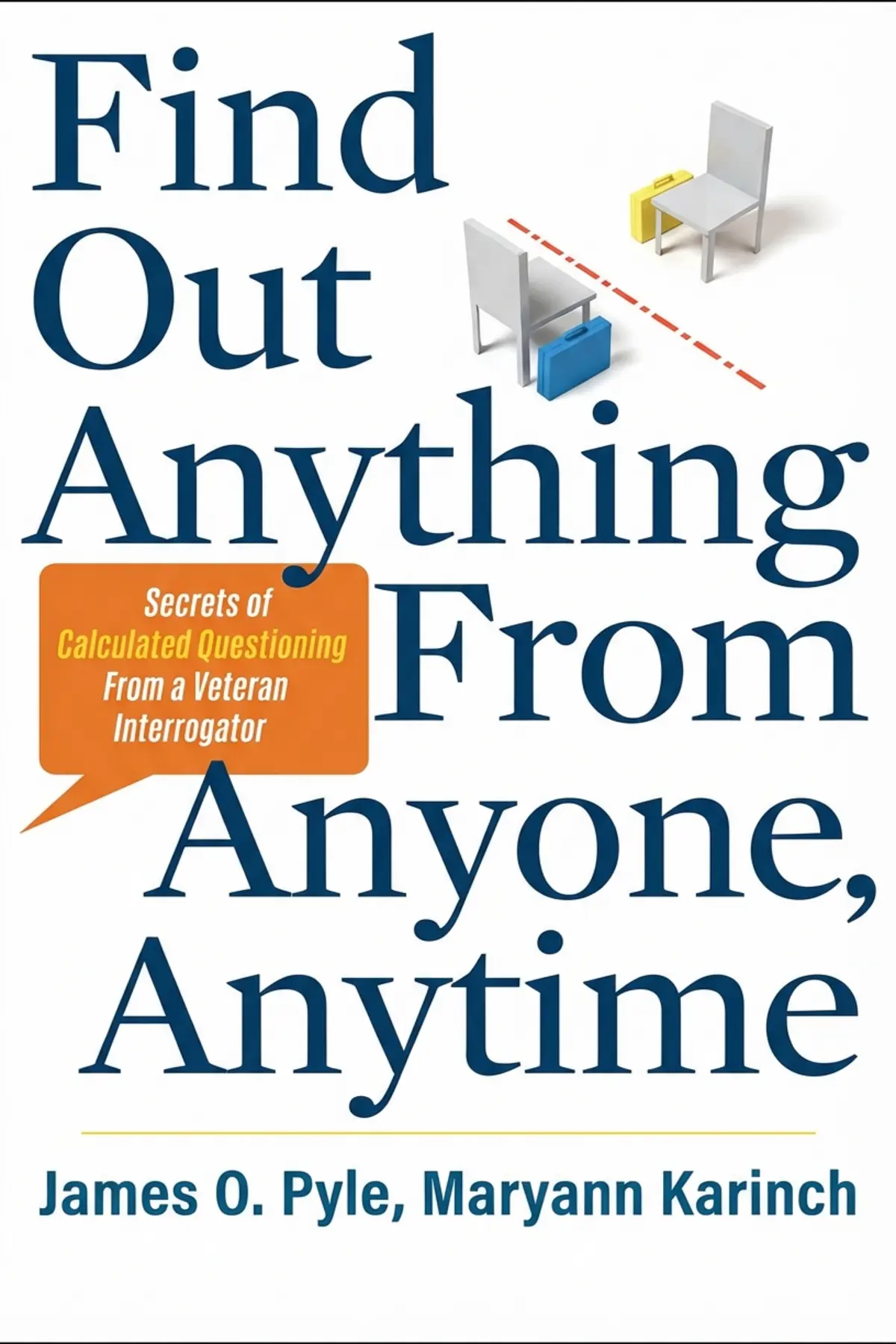
Table of Content
1. Introduction
1 min 34 sec
In our daily lives, we are constantly in pursuit of information. Whether you are a manager trying to figure out why a project fell behind schedule, a parent attempting to understand a teenager’s sudden change in mood, or a friend trying to get to the bottom of some juicy news, the quality of the information you receive depends entirely on the quality of the questions you ask. Most of us go through life asking questions instinctively, but we rarely stop to consider the mechanics of how we solicit information. We often find ourselves frustrated by one-word answers or evasive maneuvers, not realizing that our own phrasing is what created the roadblock.
This is where the expertise of a professional interrogator becomes invaluable. Intelligence gathering isn’t just about harsh lights and high-pressure rooms; it is a refined art form based on psychology, linguistics, and strategic patience. By adopting the mindset of a veteran investigator, you can transform your everyday interactions into productive exchanges that yield real results. The goal isn’t to manipulate others, but to clear away the clutter of poor communication so that the truth can emerge naturally.
Throughout this summary, we will explore a systematic approach to questioning. We will look at why certain words act as keys to unlock a person’s memory, while others act as walls that shut down a conversation. We will examine the specific habits that sabotage our inquiries and learn how to use a simple, repetitive prompt to unearth details that even the speaker didn’t realize they were holding. By the end, you will have a toolkit for navigating any conversation with the precision of a seasoned pro, ensuring you can find out exactly what you need to know, from anyone, at any time.
2. The Power of Open-Ended Questioning
1 min 56 sec
Discover why the way you start a sentence determines the depth of the answer you receive and how to avoid the trap of yes-or-no responses.
3. Identifying and Avoiding Faulty Question Types
2 min 06 sec
Learn to spot the four most common questioning errors that confuse respondents and lead to incomplete or inaccurate information.
4. The Golden Question: What Else?
1 min 59 sec
Uncover the most powerful tool in the interrogator’s arsenal—a simple phrase that digs beneath the surface to reveal hidden facts.
5. Strategic Reframing and Repetition
1 min 54 sec
Master the art of asking for the same information in different ways to verify the truth and gain a multi-dimensional perspective.
6. Understanding the Respondent’s Psychological Framework
1 min 50 sec
Examine how a person’s motives, fears, and personality traits influence the information they are willing to share.
7. The Influence of Professional Lenses on Inquiries
1 min 43 sec
See how different vocations, from teaching to medicine, use specialized questioning structures to achieve specific goals.
8. Using Chronology and Fact-Finding as a Foundation
1 min 49 sec
Learn why focusing on ‘what’ and ‘where’ before ‘why’ creates a more accurate and less biased account of any situation.
9. Conclusion
1 min 39 sec
The ability to gather information effectively is one of the most transformative skills you can develop. It is the difference between being a passive observer of your life and being an active investigator of your world. As we have explored, this process begins with the fundamental building blocks of language—the W-words—which invite others to open up and share their reality. It continues with the discipline to avoid common pitfalls like leading or compound questions, and the persistence to use tools like “What else?” to uncover the details that lie beneath the surface.
Beyond the mechanics of the questions themselves, we have seen that successful questioning requires a deep understanding of human psychology and a commitment to objective fact-finding. By considering the motives of the person you are speaking with and prioritizing a chronological understanding of events, you can navigate even the most difficult conversations with clarity and confidence. The ultimate goal is to move away from assumptions and toward a state of genuine understanding.
To put these ideas into practice, start keeping a “question journal.” After an important meeting or a significant conversation, take a moment to write down the questions you asked and the answers you received. Notice which inquiries led to productive, detailed responses and which ones resulted in dead ends. Over time, you will begin to see patterns in your own communication style. You will learn which W-words you favor and where you might be accidentally leading your respondents. By bringing this level of awareness to your daily interactions, you will find that you can indeed find out anything from anyone, at any time, turning every conversation into an opportunity for growth and discovery.
About this book
What is this book about?
This guide explores the sophisticated methodology of gathering information through calculated questioning. Written by a veteran interrogator and a body language expert, it bridges the gap between high-stakes intelligence gathering and everyday communication. The core promise is that by changing how you frame your inquiries, you can unlock details that people often overlook or intentionally withhold. The book breaks down the mechanics of conversation, identifying the specific words that trigger detailed responses and the common mistakes that lead to conversational dead ends. It moves beyond simple interrogation tactics to offer a holistic approach to understanding human motives, interpreting personality types, and using professional frameworks to structure inquiries. Whether you are a parent trying to connect with a child, a manager diagnosing a workplace issue, or a journalist seeking a scoop, these strategies provide a roadmap for navigating any dialogue with precision and purpose. You will learn not just what to ask, but how to listen for what is being left unsaid.
Book Information
About the Author
James O. Pyle
James O. Pyle is a highly experienced interrogator and an instructor in intelligence training. Throughout his career, he has applied his expertise in high-level environments, including working for the Pentagon and the Defense Language Institute. Maryann Karinch is a renowned expert in body language and a prolific author. She has written nineteen previous books, including well-known titles such as The Body Language Handbook and Get People To Do What You Want.
Ratings & Reviews
Ratings at a glance
What people think
Listeners find the book offers practical knowledge that is quickly put into practice within personal and work environments, and they enjoy the clear, accessible structure. They give high marks to the questioning strategies and the instructional method, with one listener mentioning that the author includes helpful examples to explain his ideas. The production is praised for its audio quality and cost-effectiveness, although some feel the title is somewhat deceptive.
Top reviews
Aroon
As someone who manages a large team, I found the breakdown of 'good' vs 'bad' questions incredibly eye-opening. We often think we are asking great questions when we are actually leading people to the answers we want to hear. The authors do a fantastic job of explaining why negative or compound questions fail so miserably in professional settings. I’ve started applying the 'What else?' technique during my one-on-ones, and the depth of information I’m getting now is significantly better than before. The book is structured in an easy-to-read format that allows you to jump between sections based on your current needs. Personally, I think the value for money here is exceptional given how immediately applicable the strategies are. If you attend meetings on a regular basis, this should be mandatory reading for your professional development.
Show moreRod
Pyle and Karinch have created a practical manual that I’ve already started using in my daily meetings with great success. The core philosophy of using open-ended questions to reveal information is explained with such clarity that anyone can pick this up and improve their communication skills instantly. I found the section on how to handle technical personnel especially insightful, even if some techniques require a bit more finesse to avoid looking like a spy. The 'What else?' mantra is now taped to my monitor as a constant reminder to keep digging before moving on. Simply put, the book pays for itself in the first few chapters alone. It’s rare to find a guide that is this easy to read while still providing such high-level professional value. Highly recommended for anyone in sales or management roles.
Show moreChan
Finally got around to reading this one after seeing it recommended for business communication. The authors really drive home the importance of the 'What else?' follow-up, which has been a total game-changer for my client discovery calls. Instead of rushing to the next topic, I've learned to linger and peel back the layers of a single response. It’s a quick read with a very practical approach to extracting narrative information without making the other person feel like they're under a bright lamp. To be fair, some of the interrogation-style framing feels slightly aggressive for casual networking, but the core mechanics are sound. I appreciated the focus on avoiding compound questions, which I didn’t realize I was doing so often. It’s a solid manual for anyone looking to refine their listening skills and get more than just a 'yes' or 'no' out of people.
Show morePakinee
This book basically functions as Questioning 101 for adults who have forgotten how to listen effectively. It isn’t just about the questions you ask, but about the quality of the attention you give to the answers you receive. I loved the clear distinctions between vague questions and those that actually produce results. The authors provide great examples to illustrate their points, which makes the theory much easier to digest and put into practice. Not gonna lie, I was skeptical about how much I could learn about asking questions, but the emphasis on delving deeper into a single thread was a revelation. It’s an easy read that focuses on critical thinking and active listening as much as it does on the verbal delivery of the inquiry. Definitely a great book for an overview of the discovery process.
Show morePim
Look, if you're expecting to become Sherlock Holmes overnight, you'll be disappointed, but the techniques here are solid for everyday use. The book excels at showing how simple, direct questions followed by active listening can break down walls you didn't even know existed. I especially appreciated the warnings against compound questions, as I realized I was often confusing people by asking two things at once. The narrative response approach is much more effective than the standard 'interrogative' style most of us default to when we want answers. Truth be told, while the title might be a tad hyperbolic, the content is grounded in real-world experience and psychological principles. It’s a great review for anyone who needs to gather information efficiently, whether for work or personal projects. Definitely worth picking up if you want to sharpen your conversational edge.
Show moreGai
The title is a bit of a stretch, as it sounds like a magic trick for mind reading, but the reality is much more clinical. Pyle focuses heavily on his background in interrogation, which makes for interesting anecdotes but doesn't always translate perfectly to a coffee shop chat. I found the section on 'who, what, where, and when' to be extremely helpful as a refresher on basic information gathering. However, there were definitely parts that I had to push through because the writing got a bit repetitive regarding specific questioning structures. Truth is, you could probably get the gist of this from a long-form article, though the specific examples of leading vs. neutral questions provided some much-needed clarity. It’s decent for what it is, even if it feels a bit dated in its approach to human interaction.
Show moreTod
Ever wonder why people give you one-word answers even when you think you're being engaging? This book attempts to solve that by teaching you how to craft questions that encourage narrative responses rather than simple closures. I particularly liked the advice on sticking to one topic at a time; I realized I often text my friends three things at once and only ever get an answer to the last one. The authors explain the mechanics of 'why' and 'how' in a way that makes sense, but the tone can be a bit dry at times. In my experience, the interrogation-style examples were a bit of a double-edged sword because they were fascinating to read but hard to replicate in a normal office environment. It’s a worthy review of questioning techniques if you have the patience for it.
Show moreAmelia
Frankly, some of this felt like common sense, but having it structured so clearly made it worth the time for a quick weekend read. If you’ve read books about interviewing for articles or legal discovery, you’ll find a lot of familiar ground here. It covers the basics of who, what, where, and why while cautioning against the zinging, critical questions you often hear in political debates. While the information is solid, I found the writing style a bit uneven—some chapters flew by while others felt like a chore to finish. I think it serves as a great review of ways to ask questions, but it might not offer anything revolutionary if you’re already a skilled communicator. It’s a good addition to a professional library, just don’t expect a life-changing epiphany on every single page.
Show moreOoi
After hearing about this on a podcast, I was eager to see if it could help with my investigative work, but the results were mixed. On one hand, the advice on avoiding leading and negative questions is top-tier and very helpful for keeping interviews objective. On the other hand, the focus on interrogation techniques felt a bit narrow and didn't always account for the nuances of building rapport in a friendly setting. Let's be real, the book has some good information in it, and the examples are interesting enough to keep you turning the pages. However, I found myself wishing for more diverse scenarios that didn't feel so much like a police station interview. It’s a decent resource for foundational skills, but you’ll need to do some work to adapt it to your specific life situation.
Show moreRafael
Not what I expected based on the cover at all. While there is some useful information tucked away in the middle, most of the book feels like it was designed for a high-stakes investigation rather than daily life. I tried using the 'What next?' approach with a colleague, and they immediately set up a wall, thinking I was probing way too much into their personal workflow. It felt awkward and forced rather than natural. Gotta say, the title feels quite misleading because 'anytime' doesn't really apply if the other person is tech-savvy or works in a high-security environment where they are trained to spot these tactics. I was looking for something to help with social anxiety and small talk, but this was far too analytical and rigid for my tastes. I’ll stick to more conversational guides in the future.
Show moreReaders also enjoyed
AUDIO SUMMARY AVAILABLE
Listen to Find Out Anything From Anyone, Anytime in 15 minutes
Get the key ideas from Find Out Anything From Anyone, Anytime by James O. Pyle, plus 5,000+ more titles in English and Thai.
- 5,000+ titles
- Listen as much as you want
- 7-day free trial
- Cancel anytime







