
Agent Sonya: The Spy Next Door
Ben Macintyre
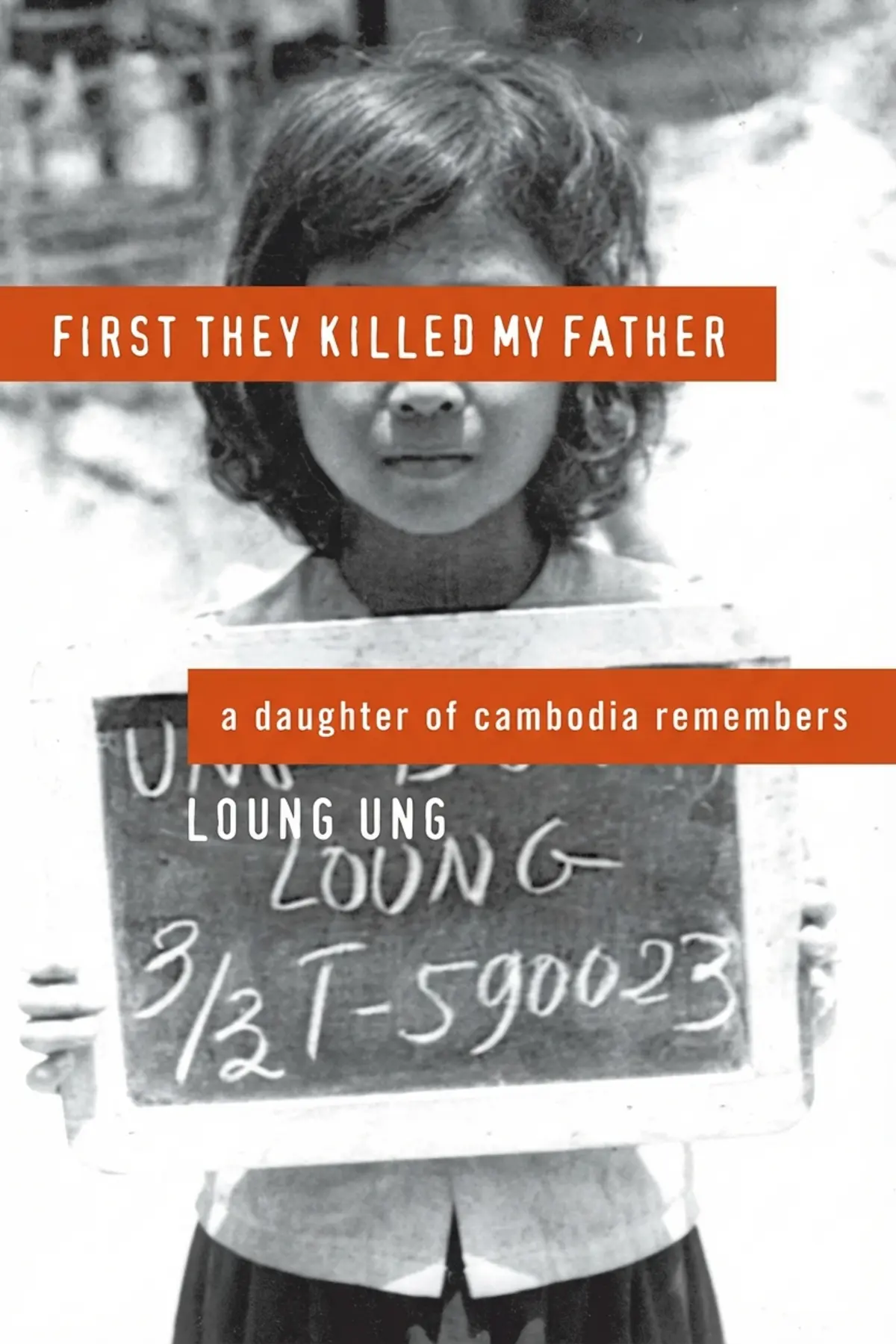
A harrowing yet resilient memoir of survival during the Khmer Rouge's reign in Cambodia, told through the eyes of a young girl forced to endure loss, labor, and displacement.
2 min 00 sec
History is often recorded in broad strokes—statistics, dates, and maps that outline the rise and fall of regimes. But the true weight of a historical tragedy is rarely found in numbers; it is found in the lived experiences of those who survived it. Between 1975 and 1979, the nation of Cambodia was consumed by a darkness so profound that the world still struggles to grasp its full scale. This was the era of the Khmer Rouge, a period of genocide and social engineering that sought to dismantle every pillar of modern society. To understand this time, we look not to a textbook, but to the eyes of a child who saw her world vanish in a single afternoon.
In this summary, we are following the story of Loung Ung. At just five years old, Loung was forced to trade her toys and her family’s comfortable apartment for the grueling life of a forced laborer. Her story, while unique in its details, echoes the experiences of millions who were caught in the crosshairs of a radical communist revolution. It is a narrative that moves from the bustling streets of Phnom Penh to the silent, starving fields of the countryside. It is a story about the terror of being hunted for your identity, the physical pain of extreme hunger, and the psychological toll of watching your family members disappear one by one.
Yet, through the shadow of these events, a throughline of resilience emerges. We see how the bonds of family, though tested by distance and death, remain the ultimate source of strength. We see the desperate, often heartbreaking choices parents make to give their children a sliver of a chance at a future. As we walk through Loung’s memories, we aren’t just looking at a survivor’s record; we are exploring the very limits of human endurance and the light that remains even when a regime tries to extinguish it.
2 min 24 sec
A vibrant life in Cambodia’s capital is instantly traded for a desperate exodus when a radical rebel army marches into the city.
2 min 14 sec
In a world where past status is a death sentence, one family must lie about who they are to escape immediate execution.
2 min 22 sec
The dream of a peasant utopia quickly turns into a nightmare of exhaustion, hunger, and a brutal new social hierarchy.
1 min 54 sec
As the regime tightens its grip, the family’s unity is shattered by the forced removal and tragic death of a sister.
2 min 23 sec
When secrets are exposed, the family faces its darkest hour, leading to a heartbreaking decision to scatter to survive.
2 min 19 sec
After years of horror and the loss of her remaining family, a young survivor finds an unexpected path to a new life.
1 min 42 sec
The story of Loung Ung is a stark reminder of the depths of human cruelty, but it is also a powerful evidence of the resilience of the human heart. The Khmer Rouge attempted to build a utopia on a foundation of bones, seeking to replace the complexity of human emotion and family loyalty with a cold, singular devotion to the state. They failed. They could destroy buildings, they could steal lives, and they could scatter families across the countryside, but they could not dissolve the invisible threads of love and duty that bound Loung and her siblings together.
As we reflect on these events, the throughline is clear: survival is often a collective effort. It was the father’s quick thinking, the brother’s endurance of physical abuse for food, and the mother’s agonizing decision to send her children away that ultimately allowed Loung to stand on the other side of the tragedy. Her life today as an activist and a voice for the victims of war is the ultimate victory over the regime that tried to silence her. She carries the memory of her parents, Keav, and Geak not as a burden of grief, but as a mandate to ensure that the world does not forget what happened in the fields of Cambodia.
The lesson of Loung’s journey is that even in the face of systematic extermination, the individual remains significant. One girl’s story can illuminate the history of an entire nation. It encourages us to cherish the stability of our own lives and to recognize the incredible strength found in family bonds. Most importantly, it serves as a call to remember. By bearing witness to the darkness of the past, we honor those who were lost and find the inspiration to protect the humanity that binds us all.
This summary explores Loung Ung's journey from a comfortable childhood in Phnom Penh to the desperate struggle for survival in rural labor camps. It chronicles the brutal social engineering of the Khmer Rouge, a regime that sought to erase the past and reset society to 'Year Zero.' Through the perspective of a five-year-old girl, we witness the devastating loss of family, the crushing weight of forced labor, and the constant threat of execution. The narrative follows the Ung family as they go into hiding, concealing their middle-class identities to escape certain death. It details the harsh class systems imposed by the regime, the famine that claimed countless lives, and the ultimate sacrifice of a mother who chose to scatter her children to save them. This is a story of profound tragedy, but it is also a testament to the enduring strength of familial bonds and the human spirit's ability to persevere through unimaginable darkness.
Loung Ung is a lecturer and activist. She has written extensively on Cambodia and her and her family’s experiences under the Khmer Rouge. She is the national spokesperson for the Campaign for a Landmine-Free World.
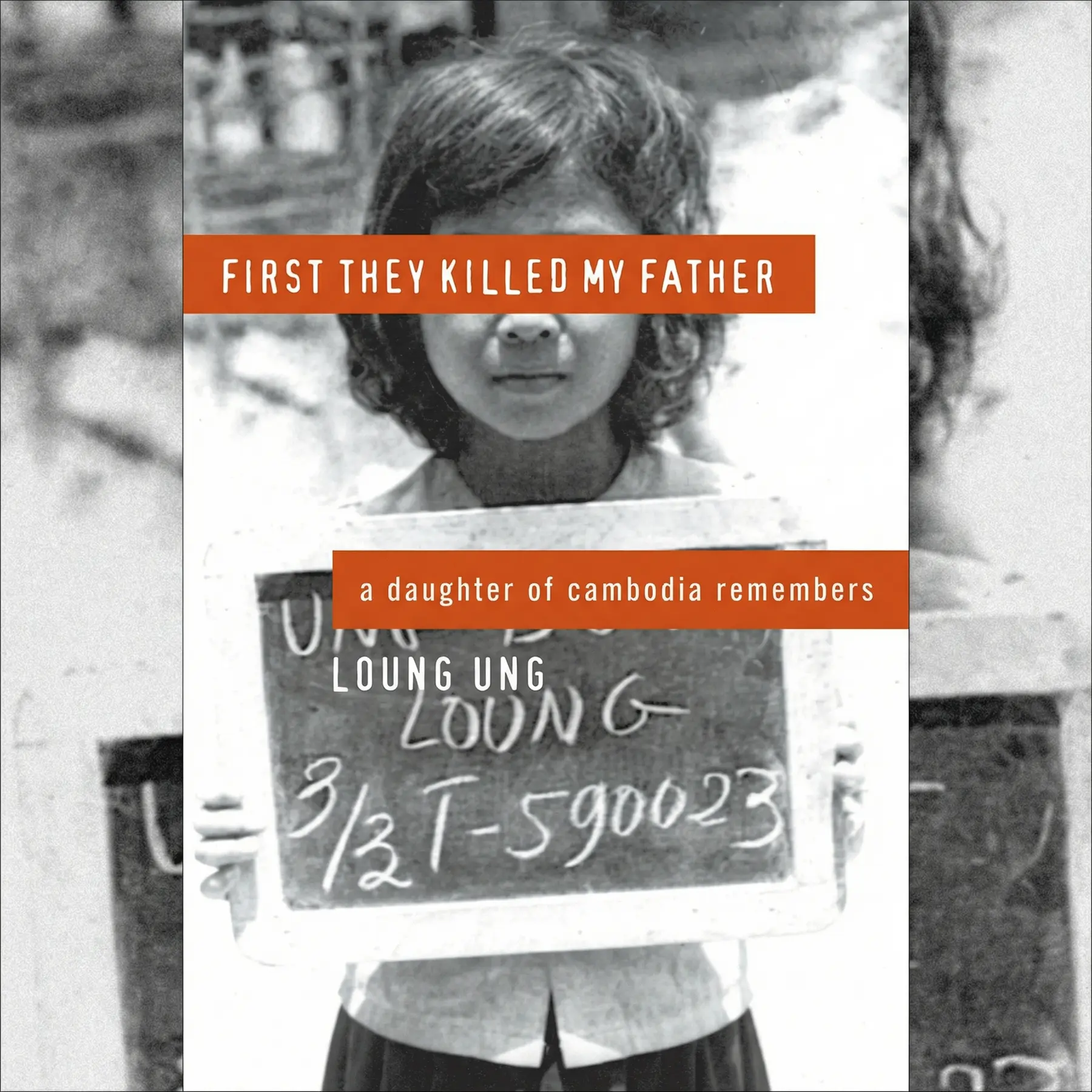
Listeners find this memoir deeply engaging and expertly written, specifically highlighting its perspective through a child's eyes and its rich, detailed imagery. The work offers a powerful look into Cambodian history and life, with listeners describing it as a poignant tale of survival that can become quite harrowing. Listeners also admire the bravery the author demonstrates in sharing her personal journey.
Wow. This is hands down one of the most grueling accounts of survival I have ever encountered. Loung Ung takes us directly into the heart of the Cambodian genocide, beginning with the terrifying day the Khmer Rouge marched into Phnom Penh in April 1975. The descriptions of starvation and the eventual training of a five-year-old as a child soldier are vivid enough to make your stomach churn. It’s hard to talk about 'enjoying' a book this heavy, but the author’s courage in sharing such trauma is remarkable. I found myself racing through the chapters just to ensure she and her siblings survived the labor camps. The writing is simple, yet that simplicity mirrors the confusion and terror of a child who doesn't understand why her world is ending. It’s a necessary, albeit harrowing, read for anyone wanting to understand the human cost of political extremism.
Show moreAs someone who knew very little about the Pol Pot regime, this memoir was an absolute wake-up call to the horrors of the 1970s. The story follows Loung as she is forced from her home, separated from her family, and pushed into a life of unimaginable labor and fear. What struck me most was the sheer randomness of the cruelty; one day you are a child in a happy home, and the next you are being brainwashed to hate your own parents. The prose isn't always elegant, but how do you write about mass murder with elegance? Frankly, the bluntness of the language fits the setting perfectly. This book reminds us why we must pay attention to world events before they spiral into such catastrophic genocides. It’s a difficult journey to take as a reader, but a vital one for understanding our global history.
Show moreThe chapter where Loung’s father is taken away still haunts me days after finishing the final page. There is a specific kind of pain in reading about a child watching her hero walk toward his death while being forced to remain silent and stoic. This book doesn't shy away from the darkest parts of the human experience, including the bitterness and hatred that survival requires. I was particularly moved by the resilience of the Ung family, even as they were scattered across different camps. Not gonna lie, I had to take several breaks because the descriptions of hunger and disease were so visceral. It is a powerful testament to the strength of a girl who refused to be broken by a regime that tried to strip away her humanity. Five stars for the bravery it took to put these memories onto paper.
Show morePicked this up for a book club and was stunned by the sheer resilience displayed by this young girl and her family. We often talk about the 'Killing Fields' in abstract terms, but this memoir puts a face to the statistics. Loung’s transformation into a child soldier is particularly disturbing to read about because it highlights how easily innocence can be weaponized. I found myself constantly questioning how I would have fared in her shoes, only to realize I likely wouldn't have survived a week. The narrative captures the confusion of a child who is told that 'Angkar' is the only family she needs. While the writing style is straightforward and lacks flourish, it serves the purpose of conveying a story that is already dramatic enough on its own. This is a profound, heart-wrenching piece of non-fiction that demands to be heard.
Show moreAfter hearing so much about the movie, I decided the original text was a necessary read to truly understand the depth of the Khmer Rouge atrocities. The book offers so much more internal monologue than a film ever could, especially regarding Loung's internal struggle with her own rage. It’s a harrowing survival story that begins in the bustling streets of Phnom Penh and ends in the quiet suburbs of Vermont. The contrast between her two lives is staggering and makes you appreciate the 'golden blessings' of a safe life. I’ve read a lot of memoirs, but few have managed to capture the specific psychological toll of genocide on a child’s mind quite like this one. It’s an exhausting read, emotionally speaking, but the perspective it provides on the Cambodian experience is invaluable. I cannot recommend this highly enough for those who have the stomach for it.
Show moreFinally got around to reading this after visiting Cambodia, and it truly provides a haunting context to the Killing Fields. Reading about the Khmer Rouge in a history book is one thing, but experiencing it through the eyes of a young girl is a different beast entirely. Ung writes in the present tense, which can be a bit jarring at first, but it eventually creates an intense sense of immediacy that pulls you into the starvation and the fear. Personally, I think the transition from her privileged childhood to the misery of the work camps was handled with such raw detail that you feel every loss alongside her. Some of the dialogue feels a bit too 'adult' for a five-year-old’s memory, yet the emotional truth of the story remains unshakable. It's a gut-wrenching look at how quickly a civilized society can crumble into absolute chaos.
Show moreTo be fair, the prose isn't always polished, but the raw honesty of the narrative more than makes up for any technical shortcomings. This isn't a book you read for the metaphors; you read it to bear witness to the suffering of millions of Cambodians under a regime that thrived on paranoia. Loung’s journey from a high-ranking official's daughter to an orphan fighting for a bowl of rice is narrated with a chilling lack of sentimentality. I appreciated how she didn't try to make herself look like a perfect victim, showing her own anger and the hard choices she had to make. My only minor gripe is that the ending felt a bit rushed compared to the painstaking detail of the middle sections. Regardless, this is an essential read for anyone interested in human rights or Southeast Asian history. It will stay with you long after you close the cover.
Show moreIs it possible for a book to be both beautiful and completely terrifying at the exact same time? Ung’s account of her childhood in Cambodia is a relentless cycle of trauma, yet the love she feels for her family provides a flickering light in the darkness. The way she describes the sensory details—the smell of the dirt, the sound of the soldiers' boots, the taste of stolen food—makes the experience incredibly immersive. I did find some of the timeline a bit confusing in the middle chapters as she moved between different work camps. However, the emotional weight of her story is so heavy that these minor issues barely mattered in the end. It's a sobering reminder of the comforts we take for granted every day. Every student should read this to understand the fragility of peace and the terrifying power of government-sanctioned hate.
Show moreNot what I expected in terms of pacing, yet I couldn't stop reading until I knew Loung had made it to safety. The story is a series of traumatic events that never seems to let up, which I suppose is an accurate reflection of what life was like for Cambodians in the late 70s. In my experience, the most impactful parts were the small moments of stolen humanity—a secret look between siblings or a shared bit of food. To be honest, I think some parts of the story felt a little fictionalized to fill in the gaps of her memory, but it doesn't diminish the overall impact. It’s a brutal, honest, and necessary book that sheds light on a dark chapter of history that often gets overlooked in Western education. While the writing can be clunky in spots, the spirit of the author shines through every page.
Show moreLook, the subject matter is undeniably important, but I struggled with how the author framed her memories. Trying to write from the perspective of a five-to-eight-year-old is a massive challenge, and I often felt that the narrative voice fluctuated too much between a child’s simple observations and a retrospective adult’s analysis. This made the pacing feel uneven, and I occasionally felt lost regarding the broader political picture of Cambodia during the late 70s. Truth is, I expected to be more emotionally devastated, but the writing style kept me at a bit of a distance. While her survival is an incredible testament to the human spirit, the repetition of certain phrases and some clunky sentence structures in the latter half hindered my enjoyment. It's an important historical document, no doubt, but as a literary memoir, it felt slightly unpolished compared to other survivor accounts I’ve explored.
Show moreBen Macintyre
Michael Axworthy
Tom Standage
Jacinda Ardern

Ron Chernow
James Comey
Philip Freeman
AUDIO SUMMARY AVAILABLE
Get the key ideas from First They Killed My Father by Loung Ung, plus 5,000+ more titles in English and Thai.







