
A Year with Peter Drucker: 52 Weeks of Coaching for Leadership Effectiveness
Joseph A. Maciariello
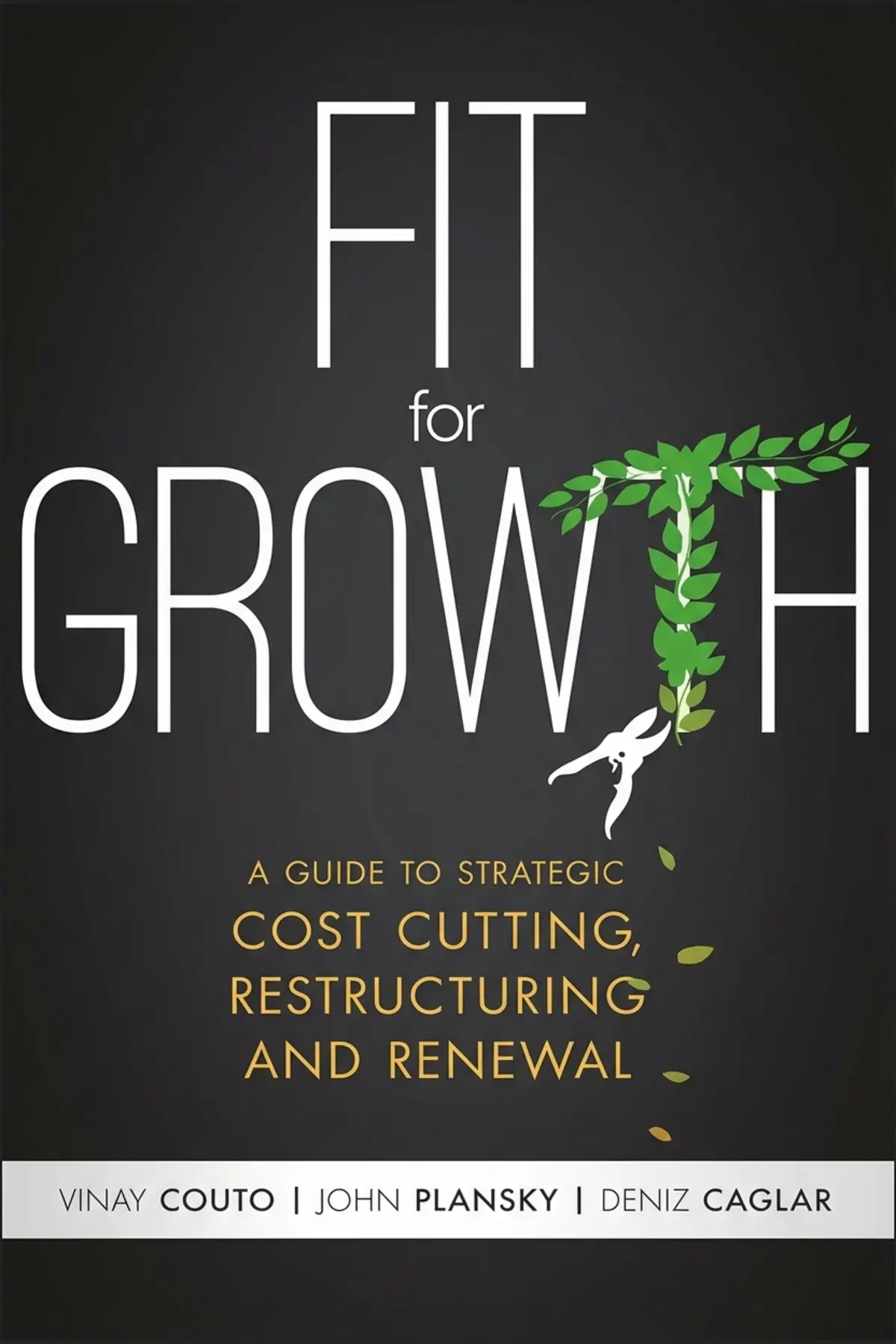
Fit for Growth provides a strategic framework for turning cost-cutting into a catalyst for expansion. It explains how to align expenses with your company's unique strengths to ensure long-term, sustainable success.
1 min 41 sec
Think about the last time you heard about a company undergoing a major cost-cutting initiative. Usually, it sounds like a disaster movie. There is a sense of panic, thousands of layoffs are announced overnight, and every department is told to slash their budget by ten or fifteen percent. It is the corporate equivalent of a crash diet—a desperate attempt to lose weight fast because a health crisis has finally arrived. But as anyone who has tried a fad diet knows, these measures are rarely sustainable. They leave the body weak, and as soon as the immediate pressure is off, the old habits return, often bringing more weight back with them.
In the business world, this cycle is just as destructive. When leaders starve every department equally, they end up hurting the very areas that drive their success. They might save money in the short term, but they lose their competitive edge. The book Fit for Growth offers a fundamentally different approach. Instead of treating cost management as a one-time emergency procedure, it presents it as a way of life—a state of ‘fitness’ that allows a company to be lean, agile, and ready to grow at any moment.
This throughline of corporate fitness is what we will explore today. We are going to look at how successful companies distinguish between ‘good’ costs and ‘bad’ costs. We will see why the best time to cut is when things are going well, not when they are falling apart. Most importantly, we will discuss how to restructure an entire organization so that every dollar spent is an investment in what makes the company unique. This is not just about survival; it is about building a foundation for renewal and long-term prosperity. Let’s dive into how you can make your organization truly fit for growth.
2 min 06 sec
Discover why being ‘best in class’ in every department is actually a strategic failure and how to identify the specific strengths that truly drive your success.
2 min 01 sec
Learn why waiting for an economic downturn to trim expenses is a recipe for disaster and how regular ‘exercise’ keeps a company resilient.
1 min 58 sec
Explore how flatter hierarchies and wider spans of control can eliminate bureaucracy and accelerate decision-making across your business.
2 min 07 sec
Understand why leadership must focus on a compelling vision rather than getting bogged down in the minutiae of a cost-cutting plan.
1 min 58 sec
Learn the difference between offshoring and outsourcing, and how to use external expertise to gain a competitive advantage.
1 min 51 sec
Discover how a strategic relocation can cut costs by 20%, provided you look beyond just low wages to find the right infrastructure.
1 min 56 sec
Understand the unique challenges middle managers face during transitions and how to keep a workforce engaged through periods of uncertainty.
1 min 56 sec
Learn how to move beyond one-off savings to create a mindset where cost-consciousness is part of every employee’s daily work.
1 min 46 sec
As we reach the end of this exploration of Fit for Growth, the central lesson is clear: cost management is not a sign of weakness, but a source of power. In a world where markets are volatile and competition is fierce, the companies that thrive are those that have the discipline to look inward and ask, ‘What is truly essential?’ We have seen that the path to sustainable growth isn’t paved with across-the-board cuts, but with strategic choices. It is about identifying those unique capabilities that set you apart and having the courage to starve everything else so those core strengths can flourish.
Being fit for growth means moving away from the panic of the ‘crash diet’ and into the steady rhythm of a healthy lifestyle. It requires CEOs to lead with vision, middle managers to lead with empathy, and the entire organization to embrace a culture of efficiency. We have looked at how to flatter your hierarchy, optimize your global footprint, and use outsourcing as a tool for specialization rather than just cheap labor. Each of these steps is a piece of a larger puzzle that, when put together, creates an organization that is lean, agile, and ready for renewal.
So, as you think about your own business or department, start by asking yourself which of your activities are truly ‘differentiating.’ Where could you be ‘good enough’ so that you have the resources to be ‘the best’ where it counts? The journey toward fitness starts with these honest questions. By treating cost-cutting as an opportunity for reinvestment rather than a painful necessity, you turn the ‘backbone’ of growth into your greatest competitive advantage. This is how you build a company that doesn’t just survive the next crisis, but uses it as a springboard to a more prosperous and focused future.
Many organizations approach cost-cutting as a desperate response to a crisis, often resulting in across-the-board budget reductions that starve the most vital parts of the business. Fit for Growth challenges this reactive mindset, proposing instead that cost management should be a continuous, strategic exercise that enables renewal. The book provides a roadmap for business leaders to identify their most important capabilities and funnel resources toward them while aggressively eliminating waste elsewhere. By following this guide, leaders can restructure their organizational models, optimize their global footprints, and leverage outsourcing effectively. The promise of the book is a leaner, more agile organization that doesn't just survive economic shifts but thrives by being intentionally designed for growth. It moves beyond the simple 'doing more with less' mantra to focus on 'doing more of what matters most,' providing the tools necessary to build a resilient and high-performing enterprise.
Vinay Couto, John Plansky, and Deniz Caglar are all principles at the prestigious professional services firm PricewaterhouseCoopers. They have a combined 70 years of strategy-consulting experience with businesses across a wide range of industries.
Listeners find this to be an essential asset for business executives, offering functional advice on tactical cost reduction and company-wide restructuring. The guide is simple to digest, and one listener points out that the strategies can be put into practice right away. They value its integration with the broader organizational framework, and one review notes its success in facilitating both minor and major transformations. Listeners appreciate the concrete lessons provided and see it as a mandatory read for both current and aspiring leaders.
Wow, a business book that actually gives you the 'how' instead of just the 'why' of sustainable growth. The core philosophy of cutting costs to reinvest in a company’s unique strengths is a refreshing departure from mindless slashing. I found the practical guidance on footprint optimization and digitization to be immediately applicable to my current project. It’s an invaluable resource that links cost control directly to the overall organization model, making the stressful undertaking of restructuring feel manageable. Personally, the nine strategies provided the perfect amount of context to prove these theories work in the real world. This is a must-read for any leader looking to secure their organization's future prosperity through deliberate, strategic transformation.
Show moreLook, trimming the fat is never a fun process for any leadership team. However, this book manages to make the bitter pill of cost-cutting much easier to swallow by providing a clear, actionable framework. The focus isn't just on shrinking, but on becoming 'fit' by aligning your operating model with your business's USP. I appreciated the deep dives into strategic supply management and management spans, though some sections did feel a bit repetitive and dry. Despite the clinical tone, the logic is sound and the takeaways are robust for both large and small-scale shifts. It’s a solid manual for anyone needing to execute a turnaround without destroying company morale or future potential. A very informative and practical guide.
Show moreThis book provides a roadmap for what many executives fear most: massive cost restructuring. Instead of just slashing budgets, the authors argue for a more surgical approach where you cut to grow. The framework for reinvesting in your company’s unique strengths is quite robust and offers a clear path toward sustainable growth. I found the specific strategies on strategic supply management and footprint optimization to be the most practical sections of the text. However, you should be prepared for a very clinical tone throughout the chapters. Some parts definitely read like a technical manual rather than a leadership guide, which might bore a casual reader. In my experience, the actionable takeaways here outweigh the dry prose, especially for those in middle management.
Show moreFinally got around to finishing this, and the practical takeaways are surprisingly robust for a business text. The authors provide an invaluable resource for leaders who need to navigate the stressful undertaking of organizational transformation. I particularly liked how they linked cost-cutting measures directly to the overall organization model. It’s not just about saving money; it’s about securing future prosperity by being intentional with your resources. Not gonna lie, some of the case studies felt a bit repetitive after a while. Still, the nine strategies for management and cost reduction provide a very clear framework for execution. If you can get past the somewhat boring reading experience, the actual content is incredibly useful for large-scale transformations.
Show moreAs someone who manages a mid-sized operation, I found the section on footprint optimization particularly enlightening and relevant. The book offers a logical approach to identifying which areas of an organization represent its unique strengths. By focusing on those areas and aggressively cutting elsewhere, a company can truly become fit for growth. The authors do a great job of explaining the 'how' of execution, which is often missing in these types of leadership books. Personally, I think the chapter on digitization was a bit thin compared to the others. Despite that, the framework is easy to follow and the principles can be applied almost immediately. It’s an informative read that provides a much-needed perspective on sustainable business practices.
Show moreThe chapter on zero-basing alone makes this worth the cover price if you're struggling with bloated overhead. This isn't just a book for cost control; it's a guide for total organizational realignment. The logic is sound, and the authors present a very compelling case for why cutting is the best way to secure a company’s future. Look, the reading can be a bit dense at times, and the tone is definitely analytical. But the clear framework for what to cut and how to execute it is invaluable. I’ve read a few of these 'business transformation' books, and this one stands out for its actionable advice. It has definitely influenced some of my new reflections on how to handle our upcoming restructuring.
Show moreAfter hearing about 'Fit for Growth' in a strategy meeting, I was skeptical about another cost-cutting manual. However, the authors managed to change my mind by emphasizing the importance of reinvesting in what makes a business unique. The framework they provide is incredibly thorough, covering everything from process excellence to strategic supply management. It isn't just about shrinking; it's about becoming strong enough to compete in a crowded market. Truth is, the prose is a bit heavy and some sections read like a list of instructions. Even so, the insights into aligning the operating model are worth the effort. It’s a solid, logical resource for anyone tasked with leading a company through a difficult transition period.
Show moreEver wonder why some companies thrive after layoffs while others just spiral into oblivion? This book attempts to answer that, though the execution is a bit of a mixed bag. To be fair, the ideas presented about business portfolio rationalization and zero-basing are thorough and spot on. The problem lies in the delivery, which often feels like reading an endless list of food ingredient labels. There is a lot of talk about nameless companies and unsupported numbers that make it hard to stay engaged. I appreciate the logic behind aligning the operating model with a business's USP, but the writing style is exceptionally dry. It is a decent resource for cost control, but it didn't present a compelling case that this is the absolute best option available.
Show moreTo be fair, the authors present a very logical argument for restructuring management spans and layers in a modern company. The core message of focusing on your USP while trimming the fat is something every leader needs to hear. However, I found the lack of specific, named company data to be a significant drawback. It’s hard to fully buy into the case studies when the details feel so sanitized and anonymous. The strategies, while informative, often feel like ideas you have heard before in other management seminars. It’s a practical guide, but it lacks the spark needed to make it a truly memorable business classic. It serves its purpose as a manual for cost reduction, but don't expect to be entertained.
Show moreNot what I expected given the hype around strategic transformation in my MBA program. While the book contains some nice ideas of what could be attempted during a transition, it mostly feels like rehashed concepts. The authors rely heavily on anecdotes about nameless companies, which makes the advice feel less credible and more like a collection of generic consulting slides. Frankly, it was a struggle to get through the sections on restructuring management spans because the writing is so uninspired. It presents a clear framework, but it doesn't offer enough new reflections to justify the time investment for an experienced leader. If you have read any other major business book on efficiency, you have already seen these ideas elsewhere.
Show moreJoseph A. Maciariello



Deborah Gruenfeld
Mike Michalowicz
Hamilton Helmer

Margaret Heffernan
AUDIO SUMMARY AVAILABLE
Get the key ideas from Fit for Growth by Vinay Couto, plus 5,000+ more titles in English and Thai.







