
14 min 24 sec
Future Skills: The 20 Skills and Competencies Everyone Needs to Succeed in a Digital World
By Bernard Marr
Future Skills examines the essential human-centric competencies required to thrive in a rapidly digitizing economy, highlighting how empathy, critical thinking, and digital literacy can help professionals stay relevant as technology evolves.
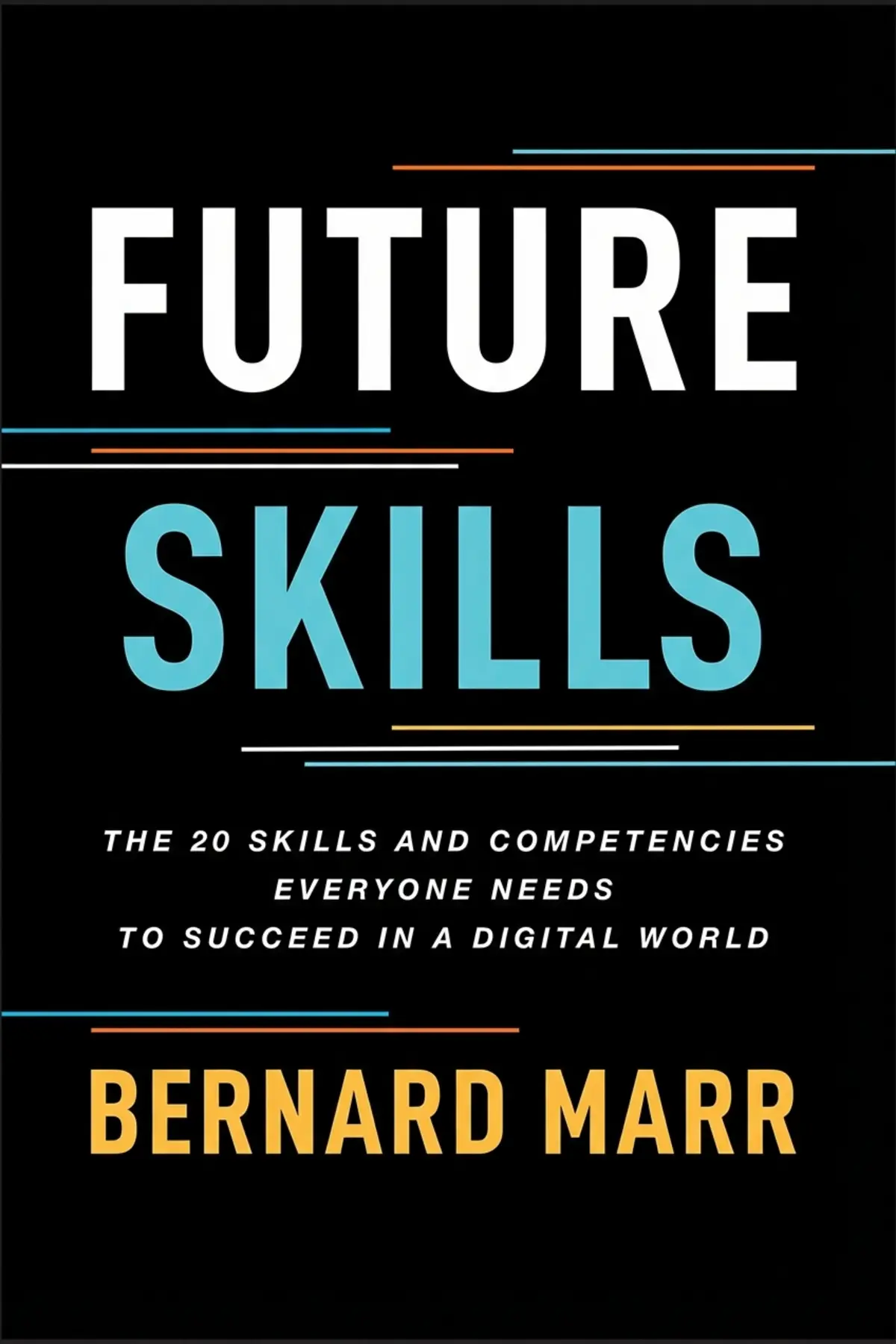
Table of Content
1. Introduction
1 min 31 sec
The pace of change in our modern world is nothing short of breathtaking. If you look back at how we worked just ten years ago, the tools and platforms we rely on today would have seemed like science fiction. Yet, this is only the beginning. Experts suggest that nearly eighty-five percent of the professional roles we will see by the year 2030 are currently entirely nonexistent. This creates a natural sense of anxiety: how do we prepare for a future that hasn’t even been built yet?
In this exploration of Bernard Marr’s insights, we find a hopeful answer. The upcoming technological revolution doesn’t have to be a story of human obsolescence. Instead, it can be a story of human augmentation. As intelligent machines handle the repetitive, data-heavy, and mundane parts of our jobs, we are being handed a golden opportunity to double down on the qualities that make us uniquely human. This is a shift toward creativity, empathy, and deep intellectual inquiry.
To succeed in this new landscape, we must rethink our educational foundations and professional priorities. It’s no longer enough to rely solely on traditional academic subjects. The most valuable currencies in the future job market will be soft skills—the ability to connect, to think critically, and to adapt. By focusing on these innate human talents, we can approach the digital age not with a sense of dread, but with a firm belief that our most productive and fulfilling days are still to come. Let’s look at the specific competencies that will define the leaders of tomorrow.
2. Mastering the Language of Technology and Data
2 min 24 sec
Discover why understanding the digital landscape is no longer optional and how data literacy serves as the essential foundation for human-AI collaboration in every modern industry.
3. Sharpening the Tool of Critical Thinking
2 min 06 sec
In a world flooded with misinformation and digital echo chambers, the ability to analyze information objectively is becoming a vital survival skill for the modern professional.
4. The Indispensable Power of Emotional Intelligence
2 min 19 sec
While machines are learning to detect human feelings, they cannot replicate true empathy. Learn why EQ is the ultimate differentiator in leadership and customer service.
5. Communicating with Impact and Nuance
2 min 21 sec
Communication is about more than just words. Explore how mastering nonverbal cues and adapting your style can bridge the gap in an increasingly remote workforce.
6. The Strength of Cultural Intelligence and Inclusivity
2 min 16 sec
Success in a globalized economy depends on your ability to work across differences. Discover how CQ helps turn diversity into a powerful engine for innovation.
7. Conclusion
1 min 27 sec
As we look toward the horizon of the 2030s, the message is clear: the future belongs to those who can harmonize the power of technology with the depth of the human spirit. We have explored how digital and data literacy provide the necessary foundation for this new world, and how critical thinking protects us from the noise of the information age. We’ve seen that emotional intelligence and nuanced communication are the keys to building the relationships that drive business forward, and that cultural intelligence allows us to harness the full power of a diverse, global workforce.
These twenty skills and competencies are not just abstract concepts; they are actionable areas for growth. The throughline connecting them all is the need for a growth mindset. The digital revolution is not a single event that we must survive, but a continuous process of evolution. To stay relevant, you must remain a perpetual student, always looking for ways to refine your human talents.
The most important step you can take today is to move from awareness to action. Choose one of these areas—perhaps it’s improving your data literacy or practicing more active empathy—and make it a priority. As the world becomes more automated, the value of what makes you uniquely human will only continue to rise. By investing in these future skills now, you aren’t just preparing for a new job market; you are ensuring that you can lead and thrive in a world of limitless technological potential. Your best days are indeed ahead.
About this book
What is this book about?
The world of work is undergoing a seismic shift. As artificial intelligence and automation take over routine tasks, the professional landscape is being fundamentally reshaped. This book provides a roadmap for navigating this Fourth Industrial Revolution by identifying the core competencies that will remain uniquely human and increasingly valuable. It moves beyond technical know-how to explore how soft skills serve as the ultimate career insurance. Readers will learn about the critical intersection of technology and humanity. The promise is simple: by cultivating a specific set of future-ready skills—ranging from data literacy to cultural intelligence—you can ensure your career remains robust and meaningful. Whether you are a student preparing for the workforce or a seasoned professional looking to pivot, these insights provide the tools to embrace technological change with confidence rather than fear.
Book Information
About the Author
Bernard Marr
Bernard Marr is a best-selling author of more than 20 books, an active keynote speaker, and a consultant on topics ranging from AI and Big Data to KPIs and analytics for organizations around the globe.
Ratings & Reviews
Ratings at a glance
What people think
Listeners value the book’s thorough and practical look at the skills required to succeed in the age of AI, although some feel the material acts more as a high-level overview than a detailed exploration. The practical tips are highlighted as especially useful, with one listener pointing out that every chapter ends with distinct "to-do lists" designed for both staff and leadership. Furthermore, they like how the author presents technological progress as a chance to enhance specific human traits such as critical thinking and emotional intelligence. They also observe that the writing is straightforward and avoids jargon, making intricate subjects like data literacy easy to understand for anyone aiming to protect their professional future.
Top reviews
Isaiah
Bernard Marr has a knack for taking intimidating technological shifts and making them feel like massive opportunities rather than threats. This book is a masterclass in accessibility, breaking down twenty essential competencies into digestible chapters that never feel like "fluff." I was especially struck by the focus on cultural intelligence and ethics, areas that are often sidelined in tech-heavy discussions. The distinction between what can be automated and what requires a human touch—like complex judgment and creativity—is handled with real nuance. Instead of fearing the coming wave, Marr encourages us to lean into our humanity to augment the tools we use. The dual-perspective advice for employees and managers ensures that the book remains relevant regardless of where you sit on the corporate ladder. It's an optimistic, realistic guide for anyone feeling anxious about the 2030 job market.
Show moreGioia
It’s rare to find a business book that manages to be this comprehensive without drowning the reader in corporate jargon. Marr tackles the looming shadow of AI by highlighting how it can actually augment our humanity rather than replace it. The focus on data literacy as a foundational skill—not just for data scientists but for everyone—is spot on. I appreciated the realistic tone; there's no magic pill here, just a lot of hard work and continuous learning. My only real criticism is that the "Looking After Yourself" chapter felt a bit tacked on at the end, even if the advice was sound. Overall, it’s a very solid roadmap for anyone feeling a bit lost in the digital revolution. It provides enough structure to start making changes today without being overwhelming.
Show moreDarius
Picked this up hoping for a roadmap through the AI hype, and it delivered a very solid framework. The structure is incredibly practical, especially the way Marr concludes each chapter with actionable "to-do lists" for both individual contributors and leadership. It’s not just about learning to code; it’s about refining the "soft" skills like empathy and critical thinking that machines still struggle to replicate. While some of the 20 skills feel like common sense, the way they are framed within the digital economy makes them feel urgent and new. I particularly appreciated the section on digital threat awareness, which often gets overlooked in these kinds of career guides. It’s a fast, jargon-free read that focuses more on the human element than the technology itself. Definitely a worthy addition to your professional development shelf if you want to stay relevant.
Show moreLillian
The chapter on EQ and empathy really changed how I view my daily interactions at my remote job. Marr argues convincingly that as we move further into a digital-first world, these "human" traits become our greatest competitive advantages against AI. I loved that the book doesn't just preach about technological literacy but balances it with the need for self-care and adaptability. The writing style is punchy and direct, avoiding the dense academic language that usually plagues books about the future. One minor gripe is that the "Brand of You" chapter felt a bit dated, echoing advice from the early 2010s social media boom. Still, the overall message about continuous learning is one that every professional needs to hear right now. It’s a grounded, realistic look at how to navigate a world that won't stop changing.
Show moreEmily
Finally got around to reading this and I must say the pragmatic approach is refreshing. Most books about the future of work are either overly dystopian or way too "Silicon Valley" for the average person to relate to. Marr strikes a perfect balance by focusing on skills that are actually attainable, like critical thinking and ethical awareness. The emphasis on diversity as a driver for innovation was particularly well-handled and felt integrated rather than just a checkbox. I found the "to-do lists" at the end of each section to be the book's strongest feature, providing a clear path forward. It’s not a revolutionary text, but it’s a very competent guide for anyone trying to future-proof their career without getting a PhD in computer science. Clear, concise, and mostly very helpful.
Show moreWitthaya
Frankly, I didn't expect to enjoy this as much as I did given how many business books I've slogged through lately. The 20 chapters are short, which makes the book feel fast-paced and prevents it from becoming a boring lecture. Marr is very clear that technical skills aren't enough; you need the cultural intelligence to work in global teams and the flexibility to jump into the gig economy. Some people might say it's too basic, but in my experience, most workers actually lack a formal framework for these soft skills. I really liked how it addresses the competition with AI by showing us how to use data as a tool rather than seeing it as a threat. It is a very realistic manual for the modern worker who wants to stay competitive without losing their mind. Highly recommended for a quick but effective career tune-up.
Show moreRoo
After hearing Marr on a podcast, I wanted to see if his written work held the same level of insight. The book is definitely an excellent overview of the landscape we are all heading toward, regardless of our industry. What sets it apart is that it isn't just aimed at the individual; it acknowledges that management needs to foster a culture where these skills can actually flourish. You can't ask employees to be creative and adaptable if the company culture is rigid and punishes failure. The discussion on Cultural Intelligence was particularly timely given how globalized even small businesses have become through remote work. It’s an easy read that manages to cover a lot of ground without feeling rushed. A few chapters felt like fillers, but the core message is vital for the modern era.
Show moreChatchai
Not what I expected given the hype around Marr’s other work. To be fair, the book serves as a decent high-level introduction to the future of work, but seasoned professionals might find it a bit elementary. It feels like it’s written for someone who hasn’t been paying attention to tech trends for the last decade. Many of the concepts, like interpersonal communication and time management, are perennial favorites that don't offer much new insight here. However, the chapter on data literacy was a highlight, explaining complex ideas in a way that anyone can understand without feeling overwhelmed. It’s a quick read, but I wish it went deeper into the "how" rather than just listing the "what." Good for a weekend skim, but don’t expect a deep dive into advanced strategy.
Show moreManika
As someone who works in tech, I found this to be a bit of a mixed bag. On one hand, the categorization of 20 distinct skills is useful for auditing your own professional gaps. On the other hand, I felt like the book was missing a more rigorous discussion on systems thinking or how these skills intersect in complex environments. Marr is a great writer and explains things like data interpretation and digital literacy with incredible clarity, making it perfect for non-technical readers. But for those looking for advanced tactics on how to leverage AI, you might find this a bit too introductory. It’s a solid enough list with executable recommendations, but it lacks the "bite" I was looking for. I’d recommend it to a junior employee or someone re-entering the workforce, rather than a senior leader.
Show moreLayla
Ever wonder why so many business books feel like they could have been a series of blog posts? This title unfortunately falls into that category for me. While the list of twenty skills is comprehensive on paper, the execution is quite thin and lacks the granular detail needed to actually master them. I found the tone a bit patronizing at times, as if the author assumes the reader has never heard of curiosity or working in teams before. Look, the intent is noble, but the insights are surface-level at best and don't offer much for those already working in digital spaces. It might be helpful for someone completely transitioning careers from a non-tech background, but for the rest of us, it’s mostly stuff we’ve heard a thousand times. I wanted more data and fewer generalizations about the Fourth Industrial Revolution.
Show moreFeatured in
Readers also enjoyed
AUDIO SUMMARY AVAILABLE
Listen to Future Skills in 15 minutes
Get the key ideas from Future Skills by Bernard Marr, plus 5,000+ more titles in English and Thai.
- 5,000+ titles
- Listen as much as you want
- 7-day free trial
- Cancel anytime







