
15 min 56 sec
Future Tense: Why Anxiety Is Good for You (Even Though It Feels Bad)
Future Tense explores how to transform anxiety from a source of suffering into a powerful tool for preparation, creativity, and personal growth by shifting our fundamental perspective on this misunderstood emotion.
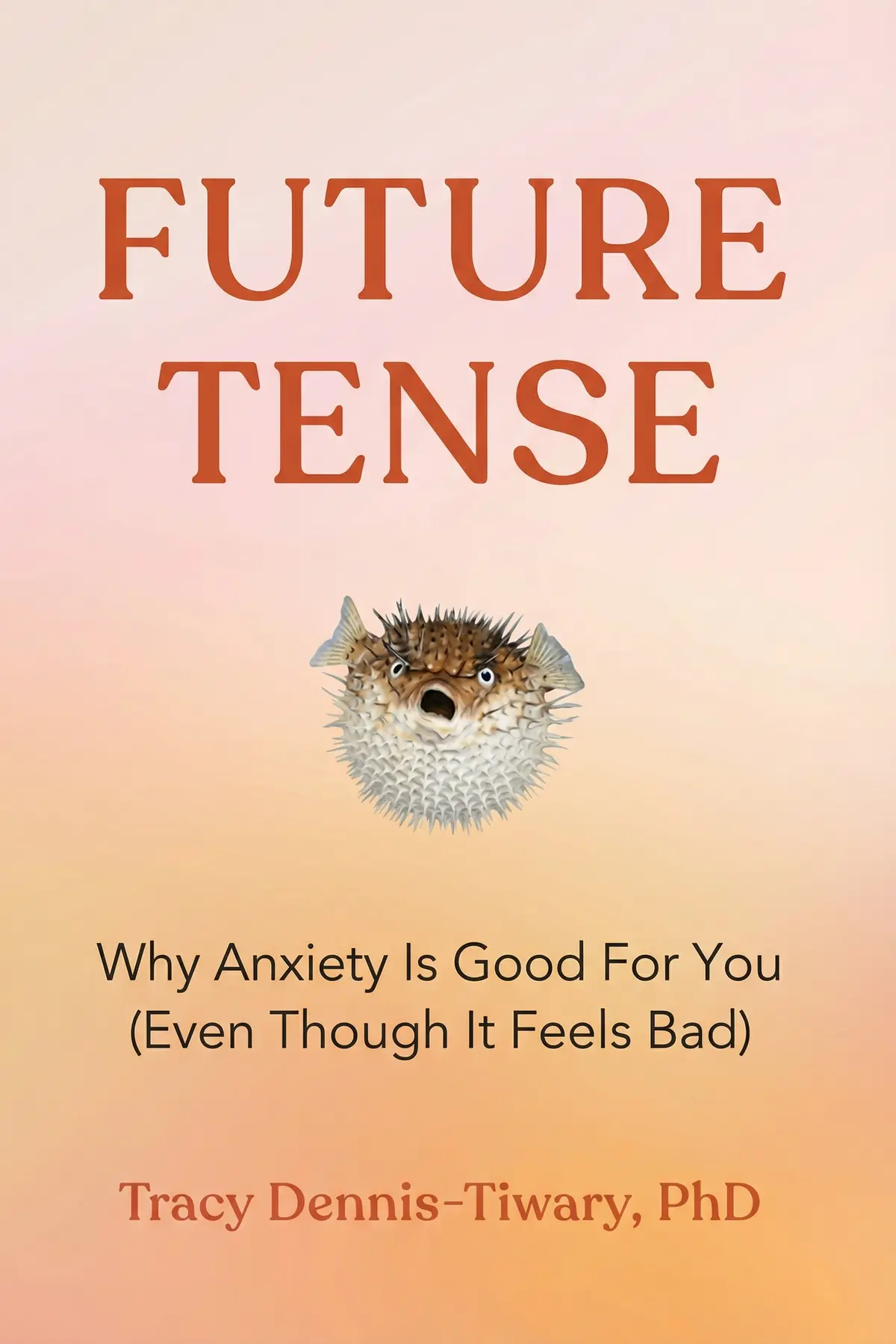
Table of Content
1. Introduction
1 min 35 sec
Almost everyone knows the feeling of a tightening chest, a racing pulse, or the sudden, persistent hum of worry that keeps us awake at night. In our modern world, we have been conditioned to view these experiences as symptoms of a problem—evidence that something is wrong with our mental health or that we are failing to keep it together. We often treat anxiety as an enemy to be defeated or a disease to be cured. But what if we have it all wrong? What if the very feeling we try so hard to escape is actually one of our greatest evolutionary strengths?
In Future Tense, we explore a revolutionary perspective on unease. The core idea is that anxiety is not a bug in the human operating system; it is a feature. It is a unique, future-oriented emotion that allows us to imagine what hasn’t happened yet and prepare for it. While it certainly feels uncomfortable, that discomfort is a signal designed to pull us toward a better outcome.
Throughout this summary, we will look at how our attempts to avoid anxiety actually make it more powerful and how shifting our mindset can literally change the way our bodies react to stress. We will examine the difference between useful signals and useless loops, and why protecting ourselves—and our children—from every form of distress might be doing more harm than good. By the end, you’ll see that the goal isn’t to live a life free of anxiety, but to live a life where anxiety serves as a guide, pointing you toward your purpose and helping you navigate the uncertainties of the future with courage and clarity. Let’s dive into how we can stop running from our feelings and start using them to build a more resilient life.
2. Redefining the Relationship with Anxiety
2 min 23 sec
Uncover how our modern attempts to escape discomfort often transform natural emotions into debilitating disorders by creating a cycle of avoidance that amplifies our fears.
3. Belief as a Biological Catalyst
2 min 25 sec
Learn how your cognitive interpretation of stress can physically alter your body’s cardiovascular response, turning a potential threat into a source of productive energy.
4. The Strategic Difference Between Fear and Anxiety
2 min 30 sec
Explore the crucial distinction between immediate danger and future uncertainty, and discover how to handle anxiety when it provides no actionable path forward.
5. Cultivating Resilience Through Exposure
2 min 31 sec
Examine why the modern impulse to shield ourselves and our children from all forms of distress may be weakening our collective ability to handle life’s inevitable challenges.
6. Channeling Unease into Purposeful Action
2 min 47 sec
Discover how the brain’s reward systems are linked to anxiety, and learn a specific technique to transform your worries into a meaningful pursuit of your core values.
7. Conclusion
1 min 45 sec
As we wrap up our look into the lessons of Future Tense, the most vital takeaway is a shift in perspective: anxiety is not your enemy. It is an evolutionary gift designed to help you navigate a world that is inherently uncertain. While the modern world often tells us that a healthy life is one free of stress and discomfort, the reality is that such a life would be devoid of growth, preparation, and deep meaning.
By understanding that anxiety is a future-oriented signal, we can learn to stop the cycle of avoidance that leads to clinical disorders. We can embrace the fact that our beliefs about our bodies change our actual biology, turning a racing heart into a source of oxygenated power. We can learn to distinguish between the times when we need to act on our worries and the times when we simply need to return to the present moment to find our balance.
One final thought to carry with you is the concept of ‘excellencism’ versus perfectionism. Perfectionism is a form of anxiety that demands an impossible future, leading to paralysis and self-criticism. Excellencism, however, uses the same drive to set high standards but allows for the reality of human error. It views mistakes as essential data points for the next attempt.
Don’t wait for your anxiety to go away before you start living your life or pursuing your goals. Instead, invite it along. Let it be the ‘good friend’ who alerts you to what matters and prepares you for the challenges ahead. When you stop fighting the feeling and start listening to the message, you’ll find that you are more capable, more resilient, and more ready for the future than you ever imagined. Thank you for listening to this BookBits summary of Future Tense by Tracy Dennis-Tiwary.
About this book
What is this book about?
Future Tense challenges the modern narrative that anxiety is a dangerous disease to be eradicated. Instead, it argues that anxiety is an essential, future-oriented emotion that evolved to help humans navigate uncertainty and prepare for challenges. By viewing anxiety as a signal rather than a symptom, we can learn to harness its energy to improve our mental well-being and productivity. The book provides a roadmap for distinguishing between healthy anxiety and debilitating disorders. It examines the pitfalls of common coping mechanisms like avoidance and overprotection, particularly in parenting and education. Through scientific evidence and practical exercises, it demonstrates how shifting our mindset can change our physiological response to stress. Ultimately, the promise of the book is that by leaning into our discomfort, we can unlock greater resilience, purpose, and excellence in an increasingly unpredictable world.
Book Information
About the Author
Tracy Dennis-Tiwary
Dr. Tracy Dennis-Tiwary is a professor of psychology and neuroscience at Hunter College – CUNY, where she directs the Emotion Regulation Lab and the Center for Health Technology. She also cofounded the digital therapeutics company Wise Therapeutics. Her scientific articles have been published in over a hundred peer-reviewed journals, and her work has appeared in the New York Times, the Washington Post, and many other publications.
Ratings & Reviews
Ratings at a glance
What people think
Listeners find that while perspectives differ on whether the tips are actionable for individuals with extreme clinical anxiety, many value the author’s perspective that anxiety is a useful signal rather than a condition that needs to be silenced. Furthermore, they note the scientific research offers a strong basis for grasping why humans evolved to experience stress and worry. Listeners also appreciate the emphasis on shifting one’s perspective, with one listener highlighting how the work "puts to rest a huge and socially pervasive myth" that being anxious is naturally harmful. They point to the author’s lucid prose, while another listener felt the explanations regarding the survival advantages of anxiety were especially beneficial.
Top reviews
James
Finally, a psychologist has the guts to say that we’ve been looking at our internal discomfort all wrong for decades! This book is a masterclass in reframing, showing that the physical sensations we hate—the pounding heart and the racing thoughts—are actually our bodies preparing us for excellence. I loved the concept of 'excellencism' versus perfectionism, as it gave me permission to be ambitious without the soul-crushing self-criticism. Even though some of the scientific descriptions got a bit dense in the middle, the overall message is so vital for our over-medicated, avoidance-heavy culture. It’s not about being fearless; it’s about using that fear as fuel to prepare for what's coming next. Truly a breath of fresh air for anyone who feels like they're constantly failing at being 'calm' in a chaotic world.
Show moreSuthida
This research-heavy volume successfully deconstructs the socially pervasive myth that a pounding heart or racing thoughts must be suppressed immediately. As someone who has always felt 'broken' because of my high-strung nature, reading about the survival benefits of vigilance was incredibly validating. Dr. Dennis-Tiwary explains complex neuroscience in a way that is accessible without being patronizing, which is a rare feat in this genre. I appreciated the nuance she brought to the discussion of social anxiety, even if I didn't agree with every single one of her takes on safe spaces. The book is less a manual and more a manifesto for a new way of living with our emotions. It’s about engagement rather than avoidance, and that is a message our current society desperately needs to hear and internalize.
Show morePloy
Ever wonder why we evolved to feel so much dread about things that haven't even happened yet? This book answers that question with brilliant clarity, positioning anxiety not as a glitch in our system, but as a feature. I loved the way the author connects anxiety to our capacity for hope and creativity, as both require us to imagine a future that isn't here yet. It’s a dense read at times, but the payoff is a completely new way of existing in the world without being terrified of your own feelings. While it might not be a 'quick fix' book, it offers something much more valuable: a long-term strategy for emotional resilience. If you've ever felt like your anxiety was a cage, this book might just show you that you've had the key all along.
Show moreEarn
After hearing an interview with the author on the radio, I felt compelled to explore this new perspective on my own nervous habits. Dennis-Tiwary argues convincingly that anxiety is actually a survival tool meant to help us navigate an uncertain future. This mindset shift is incredibly empowering because it moves the focus away from 'fixing' an illness toward listening to what our bodies are trying to tell us. I particularly appreciated the distinction between useful and useless anxiety, which helped me identify when to take action and when to just let go. My only gripe is that the book leans heavily on studies involving children and parents, which didn't always feel applicable to my life as a single professional. Still, the core message about reframing our internal discomfort as vital information is a game-changer for anyone tired of fighting their own brain.
Show moreVarinee
In my experience, most self-help books try to 'fix' you, but Dennis-Tiwary argues that the feeling itself isn't the problem at all. She writes with a clear, academic authority that makes the research feel grounded and trustworthy rather than just another influencer’s opinion. I was particularly struck by the idea that anxiety and hope are two sides of the same coin because they both require us to look toward the future. It changed how I view my Sunday night dread; now I see it as my brain trying to help me plan for the week ahead. I did find the chapters a bit repetitive toward the end, and she could have probably made her point in about fifty fewer pages. However, the paradigm shift she proposes is important enough that I’d still recommend it to anyone who feels burdened by their own stress.
Show moreStella
The core argument of this book is fascinating, yet the execution left me wanting much more in terms of tangible, daily steps. Frankly, the author spends the vast majority of the chapters deconstructing why our current psychiatric models are wrong. While I enjoy a good intellectual challenge to the status quo, I picked this up hoping for a roadmap to manage my stress. Instead, I got a very detailed history of evolutionary biology and some vague advice about taking nature walks or listening to music to break a worry cycle. It feels a bit like being told how an engine works when you actually just need to know how to drive the car. It’s a smart, well-written book for sure, but it is definitely more of a theoretical treatise than a practical self-help guide for those in the thick of a crisis.
Show moreNim
Picked this up because the title caught my eye at the bookstore, and while I found the science solid, it felt heavily geared toward a specific demographic. There is a massive amount of content dedicated to parenting and how children develop anxiety, which is great for moms and dads, but less so for the rest of us. The truth is, I enjoyed the parts about the evolutionary purpose of worry, but I found the author’s tone a bit black-and-white regarding modern therapy techniques. She makes it sound like we’re all doing it wrong by trying to cope, when sometimes coping is the only way to get through a workday. It’s a light read that offers some interesting insights into survival instincts, but don't expect it to replace your therapist or provide a step-by-step recovery plan.
Show morePannipa
To be fair, the central argument here is revolutionary, but I expected more practical worksheets or exercises given the author's background. The book is very intellectual, which I appreciated for the first half, but eventually, I started wondering when the 'how-to' part would start. There is a lot of talk about how our current strategies are 'terrible' or 'wrong,' which can feel a bit discouraging if those strategies are what you’re currently using to stay afloat. I also felt the section on medication was a bit one-sided, suggesting that almost all pharmaceutical intervention leads to a numbing of the human experience. It’s an interesting read for people with mild stress who want to rethink their relationship with worry, but it might be a bit too academic and hands-off for those looking for immediate relief.
Show moreKanokporn
As someone who has relied on medication to manage chronic anxiety for years, the author's tone toward prescriptions felt a bit reductive and biased. She focuses heavily on the dangers of addiction and 'numbing out,' which ignores the reality for many of us who use meds just to reach a functional baseline. That being said, the evolutionary perspective on why we worry was genuinely enlightening and helped me stop judging myself so harshly for being hyper-aware of potential problems. The writing is polished and the stories are engaging, even if the advice to 'let it go' feels a bit simplistic at times. It’s worth a read for the scientific foundation alone, but take the clinical advice with a grain of salt if your situation is more severe than 'everyday' stress.
Show moreHana
Look, if you are struggling with severe clinical panic or a paralyzing disorder, telling you to simply 'listen to the information' your anxiety provides feels almost insulting. The author’s stance on medication comes across as incredibly biased, as she focuses almost entirely on the addictive nature of certain drugs without acknowledging how life-saving they are for some. Not all of us are just 'worried' about a work presentation; some of us have brains that physically cannot regulate these signals without chemical help. The suggestion to just go for a walk in nature to 'let it go' is the kind of advice that makes people with chronic depression roll their eyes. I understand the goal is to reduce the stigma of being anxious, but in doing so, she inadvertently shames those of us who need more than just a mindset shift to survive the day.
Show moreReaders also enjoyed
59 Seconds: Change Your Life in Under a Minute
Richard Wiseman
ADHD an A-Z: Figuring It Out Step by Step
Leanne Maskell
AUDIO SUMMARY AVAILABLE
Listen to Future Tense in 15 minutes
Get the key ideas from Future Tense by Tracy Dennis-Tiwary, plus 5,000+ more titles in English and Thai.
- 5,000+ titles
- Listen as much as you want
- 7-day free trial
- Cancel anytime







