
Chaos: Making a New Science
James Gleick
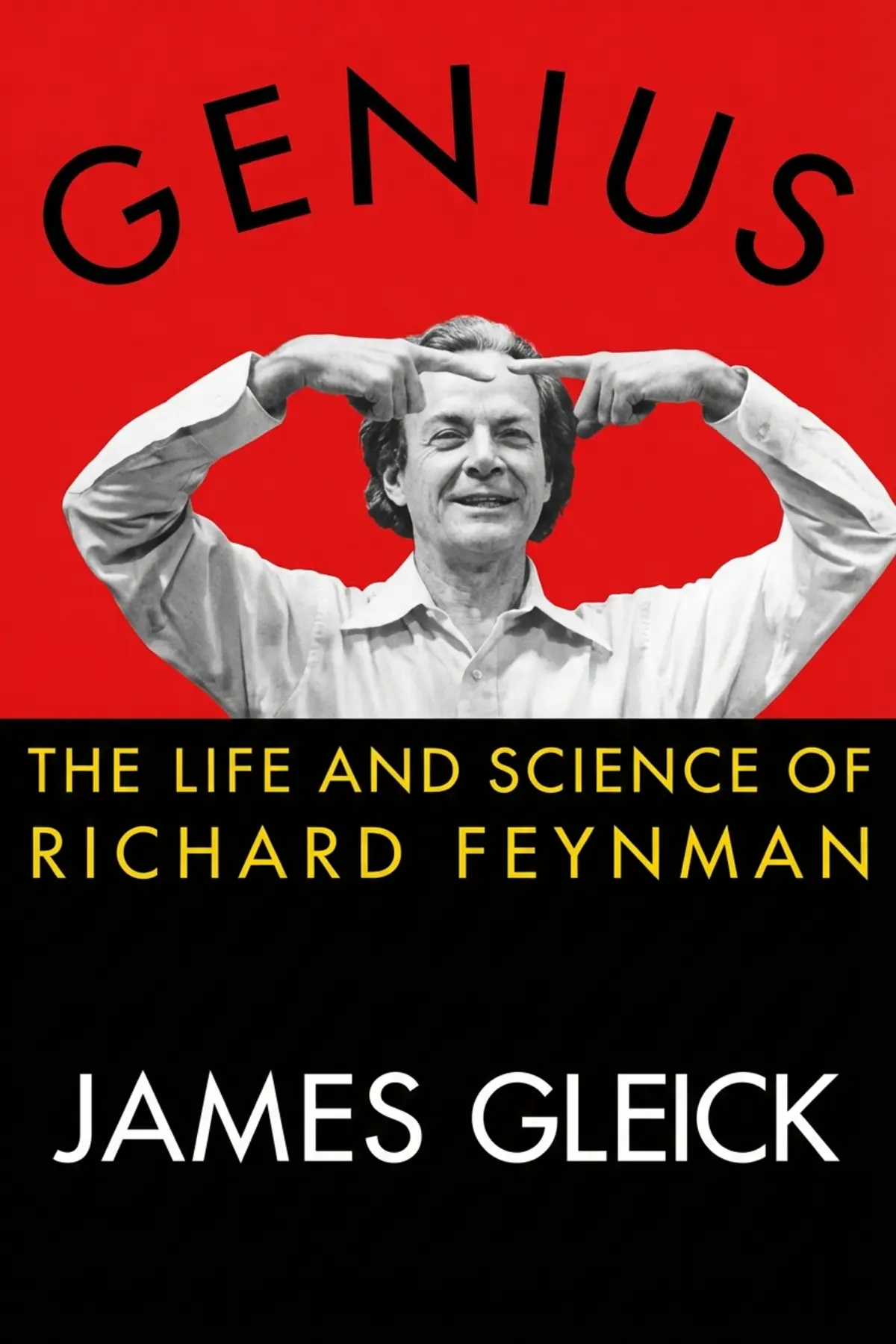
A deep dive into the extraordinary life of Richard Feynman, showing how unique childhood training and a refusal to follow conventional thinking led to revolutionary breakthroughs in physics and the atomic age.
1 min 43 sec
When we think of the giants who built our modern understanding of the universe, names like Einstein or Newton usually come to mind first. Yet, within the tight-knit world of theoretical physics, there is another name that commands just as much, if not more, reverence: Richard Feynman. He was a man who didn’t just solve problems; he reimagined the very language of science. Born in 1918, Feynman’s life spanned some of the most tumultuous and transformative years in human history, and his fingerprints are all over the breakthroughs that defined the era.
From the top-secret laboratories of Los Alamos to the hallowed halls of Caltech, Feynman was a figure of boundless energy and almost terrifying intellectual clarity. He was a pioneer in quantum physics and the study of how fluids behave at extreme temperatures, but he was also a man who played the bongos and loved a good prank. This summary explores the life of this unconventional genius, looking specifically at how his unique perspective was formed and why his methods still dominate the way physicists work today.
As we journey through his life, we will see that Feynman’s brilliance wasn’t just a bolt of lightning from the blue. It was the result of a specific philosophy of learning—one that prioritized deep, physical understanding over the mere memorization of labels and names. We’ll see how his father’s early guidance set the stage for a Nobel Prize-winning career and how his refusal to take the easy path led him to the forefront of the nuclear age. By the end, you’ll see why Richard Feynman is remembered not just for the theories he created, but for the infectious, original spirit he brought to the search for truth.
2 min 54 sec
Richard Feynman’s journey into the world of science began long before his first classroom experience. Discover how a father’s unconventional methods shaped a future Nobel Prize winner’s way of perceiving the fundamental nature of reality.
2 min 31 sec
Mathematics is often seen as a series of rigid rules and formulas, but for Feynman, it was a playground for the imagination. Learn how his unique ability to visualize problems gave him a competitive edge.
2 min 46 sec
Feynman’s arrival at the university level marked a turning point where his love for physics grew into an all-consuming passion. However, this brilliance came with a deep disdain for everything else.
2 min 44 sec
At just twenty-five years old, Feynman was recruited to work on the most significant scientific project of the century. Explore his role in the creation of the first atomic bomb.
2 min 36 sec
Feynman’s greatest contribution to physics was a tool that allowed scientists to visualize the impossible. Learn how his diagrams revolutionized the field and led him to the Nobel Prize.
2 min 24 sec
Feynman believed that if you couldn’t explain something simply, you didn’t really understand it. Explore the legacy of his legendary lectures and how they reshaped science education.
2 min 31 sec
In a world where everyone is influenced by the ideas of others, Richard Feynman fought to remain a truly original thinker. Discover the eccentric habits and the rigorous honesty that defined his character.
1 min 49 sec
In the end, Richard Feynman’s life serves as a powerful reminder that genius is not merely a high IQ score or a collection of fancy degrees. It is a way of engaging with the world. Through the lens of James Gleick’s biography, we see a man who was built into a genius through a combination of a father’s foresight, a relentless curiosity, and a refusal to accept the easy, labeled versions of reality. Feynman was a man who needed to see the gears turning, who needed to feel the push and pull of the universe with his own mental hands.
His legacy is twofold. On one hand, he gave us the practical tools—the diagrams and the analytical methods—that define modern physics and quantum mechanics. He helped us harness the power of the atom and understand the behavior of light. But on a deeper level, his legacy is one of intellectual honesty. He taught us that it is okay to say ‘I don’t know,’ provided that we follow it up with a passionate, original attempt to find out. He showed us that science is not a dry list of facts to be memorized, but a grand, improvisational adventure.
As you move forward, think about Feynman’s bird on the mountain. Are you just learning the names of things, or are you looking at what they actually do? The takeaway from Feynman’s life is that real innovation happens when we strip away the jargon and the expectations of others to look at a problem with fresh eyes. Whether you are a scientist, an artist, or just a curious observer of life, the spirit of Richard Feynman invites you to stay skeptical, stay curious, and above all, to think for yourself. That, perhaps, is the truest form of genius.
Genius provides a thorough exploration of Richard Feynman’s life, from his early years in New York to his pivotal role in the Manhattan Project and his eventually winning the Nobel Prize. Rather than presenting genius as an innate, unexplainable gift, the narrative suggests that Feynman’s brilliance was a result of specific mental habits, an unorthodox upbringing, and a relentless drive to understand the 'how' behind the 'what.' The book promises to reveal the human side of a scientific icon, detailing his struggles with formal education, his disdain for non-scientific disciplines, and his legendary ability to visualize complex quantum interactions. By examining his work at Caltech and his contributions to the development of the atomic bomb, the text shows how Feynman reshaped the landscape of twentieth-century physics. It’s an account of an original thinker who prioritized first-hand discovery over established wisdom, offering listeners a window into the mind of a man who changed how we measure the universe.
James Gleick is a distinguished historian and a bestselling writer who focuses on the intricate ties between human society and technological evolution. His body of work features acclaimed titles such as a biography of Isaac Newton and The Information: A History, a Theory, a Flood, which earned significant praise for its depth and clarity.
James Gleick
James Gleick
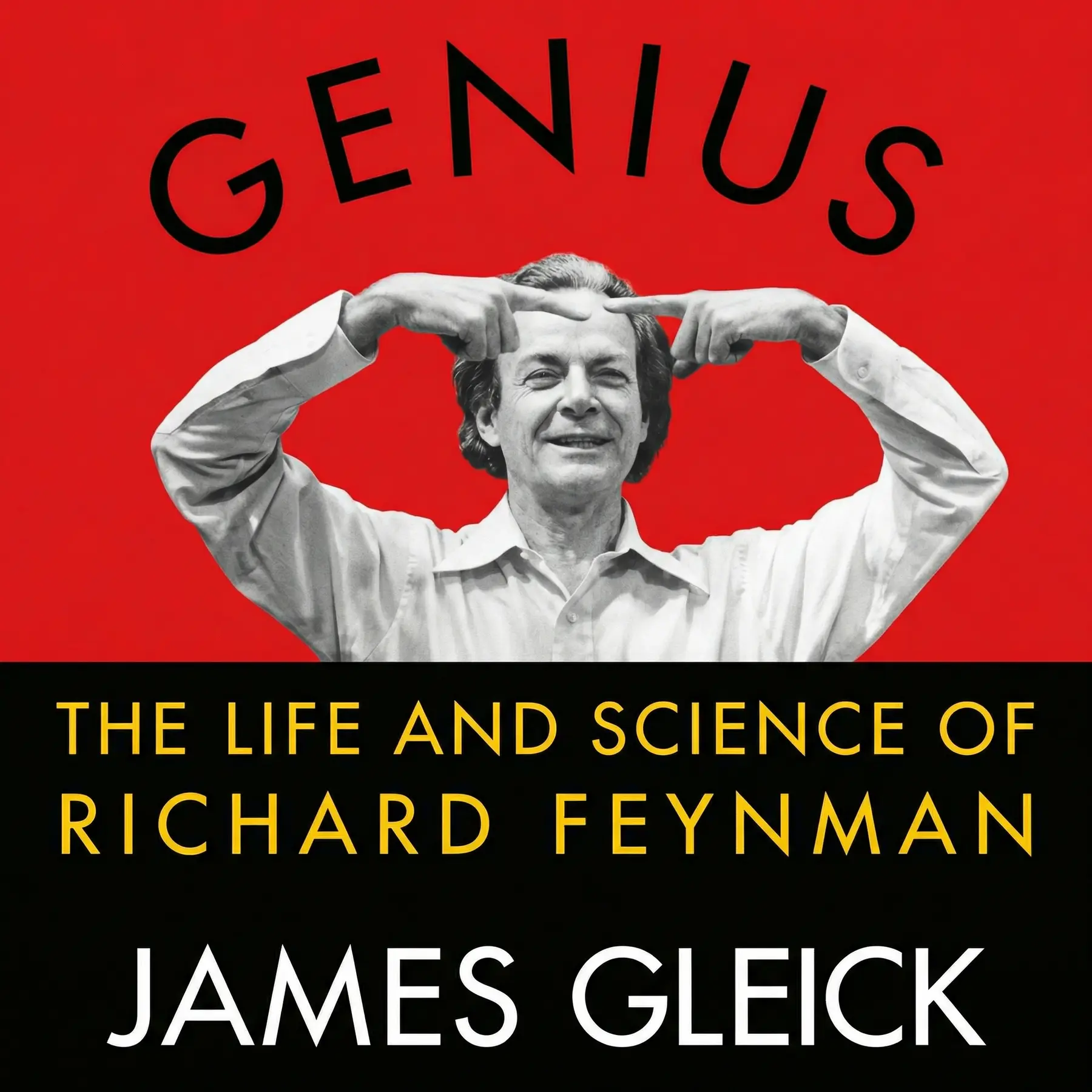
Listeners find this biography compelling and expertly crafted, featuring accessible descriptions of intricate scientific theories. This volume delivers an absorbing perspective on Feynman's journey, with one listener highlighting how it merges his life story with his professional achievements. They admire the author's study of brilliance and the individualistic nature of the physicist.
This biography is a masterful blend of personality and hard science. Gleick doesn't just list achievements; he weaves the development of quantum electrodynamics into the very fabric of Feynman's eccentric character. Frankly, it’s rare to find a science writer who can explain path integrals and the Challenger disaster without losing the human element. The prose is sharp, reflecting the subject's own high standards for clarity and truth. While some parts of the physics might be dense for a casual reader, the narrative momentum never falters. You walk away with a profound sense of what it means to be a "genius" in a world of mere smart people.
Show moreWow, what an incredible journey through the life of a man who refused to fool himself. The way Gleick synthesizes the technical brilliance of the Feynman diagrams with the raw grief of losing Arline is nothing short of poetic. This isn't just a dry list of dates and discoveries; it's a vibrant portrait of a human being who valued honesty above all else. Personally, I found the section on the Challenger investigation to be the most compelling part of the entire narrative. Seeing Feynman use a simple C-clamp and ice water to dismantle a bureaucratic disaster was the perfect illustration of his genius. It’s a thick book, but every page feels essential to understanding the man's legacy.
Show moreFinally got around to reading this classic, and I’m struck by how modern Feynman’s ideas still feel. He was thinking about nanotechnology and quantum computing decades before they became buzzwords. Gleick does a fantastic job of capturing the "boy who fixed radios by thinking" and turning that childhood curiosity into a grand scientific narrative. Not gonna lie, some of the math-heavy sections went over my head, but the overall message about curiosity and integrity resonated deeply. He was a hazardous role model, sure, but his sweeping skepticism is something we need more of today. This is easily one of the best biographies I’ve ever encountered.
Show moreJust finished Gleick’s biography and I’m still buzzing from the sheer intellectual energy of it. It’s a brilliant exploration of how one man’s refusal to succumb to "emeritus disease" kept his mind agile until the very end. The book captures his anti-pretension perfectly, showing a Nobelist who would rather solve a puzzle than attend a fancy gala. While I agree with some critics that he could be insufferable at parties, his honest search for truth is genuinely inspiring. This is a must-read for anyone interested in the limits of human intelligence and the joy of discovery. Truly a masterclass in biographical writing.
Show moreEver wonder why Richard Feynman is still the ultimate poster boy for physics? Gleick explores this beautifully, balancing the iconoclastic bongo player with the man who helped build the atomic bomb. Truth be told, I was more captivated by the chapters on Los Alamos and his heartbreaking relationship with Arline than the actual Nobel-winning QED work. The book illustrates how his "disregard for what others are doing" was both his greatest strength and his most hazardous trait. Sometimes the author gets a bit too technical, but he usually pulls back just in time to show us the man. It’s an engrossing look at a mind that truly operated on a different frequency.
Show moreAs someone who usually finds physics intimidating, I was pleasantly surprised by how accessible Gleick makes the "un-visualizable" world of quantum mechanics. He treats Feynman not just as a person, but as a specific phenomenon of the 20th century. Look, the guy was clearly an arrogant jerk at times, and Gleick doesn't entirely hide the "pickup-artistry" or the scientism that can be so grating. But the book successfully argues that his anti-authoritarianism was a necessary catalyst for the breakthroughs he made. It’s a fascinating study of how a single mind can reframe an entire field of knowledge. I particularly loved the detail about his perfect physics GRE score vs. his mediocre grades in everything else.
Show moreThe chapter on the "War of the Magicians" at Los Alamos is worth the price of admission alone. Gleick provides a stunningly detailed look at how the pressures of WWII shaped the future of physics. It’s fascinating to see how Feynman navigated a world filled with other giants like Oppenheimer and Bethe, yet still stood out. I gotta say, the explanation of how he visualized electrons going backward in time as positrons was a lightbulb moment for me. The biography is balanced, though it leans heavily into the idea that Feynman was "different" from other first-rank minds. If you want to understand the 20th century's scientific evolution, this is the book to read.
Show moreAfter hearing Feynman speak at conferences years ago, I wanted to see if a biographer could capture his manic energy on the page. James Gleick succeeds by treating the science as a character in its own right. The narrative moves through the history of physics with a grace that is rare for such a complex subject. Personally, I think the book's greatest achievement is showing how Feynman’s "applied epistemology" allowed him to bypass the rigidity of his peers. He wasn't just solving equations; he was reinventing how we perceive reality. Even the bits about his "self-spun legend" felt authentic to the man I remember seeing on stage.
Show morePicked this up hoping for a light collection of anecdotes, but it turned out to be a much deeper, more rigorous examination. To be fair, Gleick falls into a bit of hagiography at times, occasionally glazing over Feynman’s more questionable social behaviors in favor of his scientific brilliance. The writing style is dense but incredibly rewarding if you’re willing to sit with the concepts of particle physics. I appreciated how the book tackled the "emeritus disease" and Feynman’s refusal to stop being an active, curious scientist. However, the pacing slows significantly in the middle sections concerning academic politics. It’s a solid 3-star read for me—highly informative but a bit of a slog in places.
Show moreNot what I expected after hearing all the "fun" stories about the bongo-playing genius. After finishing this, I've come to realize that Feynman was basically the original "douchebag" who used his high IQ to justify treating people like subhumans. Gleick tries to paint his "cheeky scientism" in a positive light, but the truth is that his behavior toward women and his disregard for his colleagues’ work is just icky. To be honest, the book made me lose a lot of respect for him as a person. While the writing itself is decent, I couldn't get past the subject's arrogance and his habit of not publishing important work. It’s a frustrating read that proves you can get away with anything if you're smart enough.
Show more
Masaji Ishikawa

Ben Macintyre


James Shapiro

AUDIO SUMMARY AVAILABLE
Get the key ideas from Genius by James Gleick, plus 5,000+ more titles in English and Thai.







