
A Long Way Gone: Memoirs of a Boy Soldier
Ishmael Beah
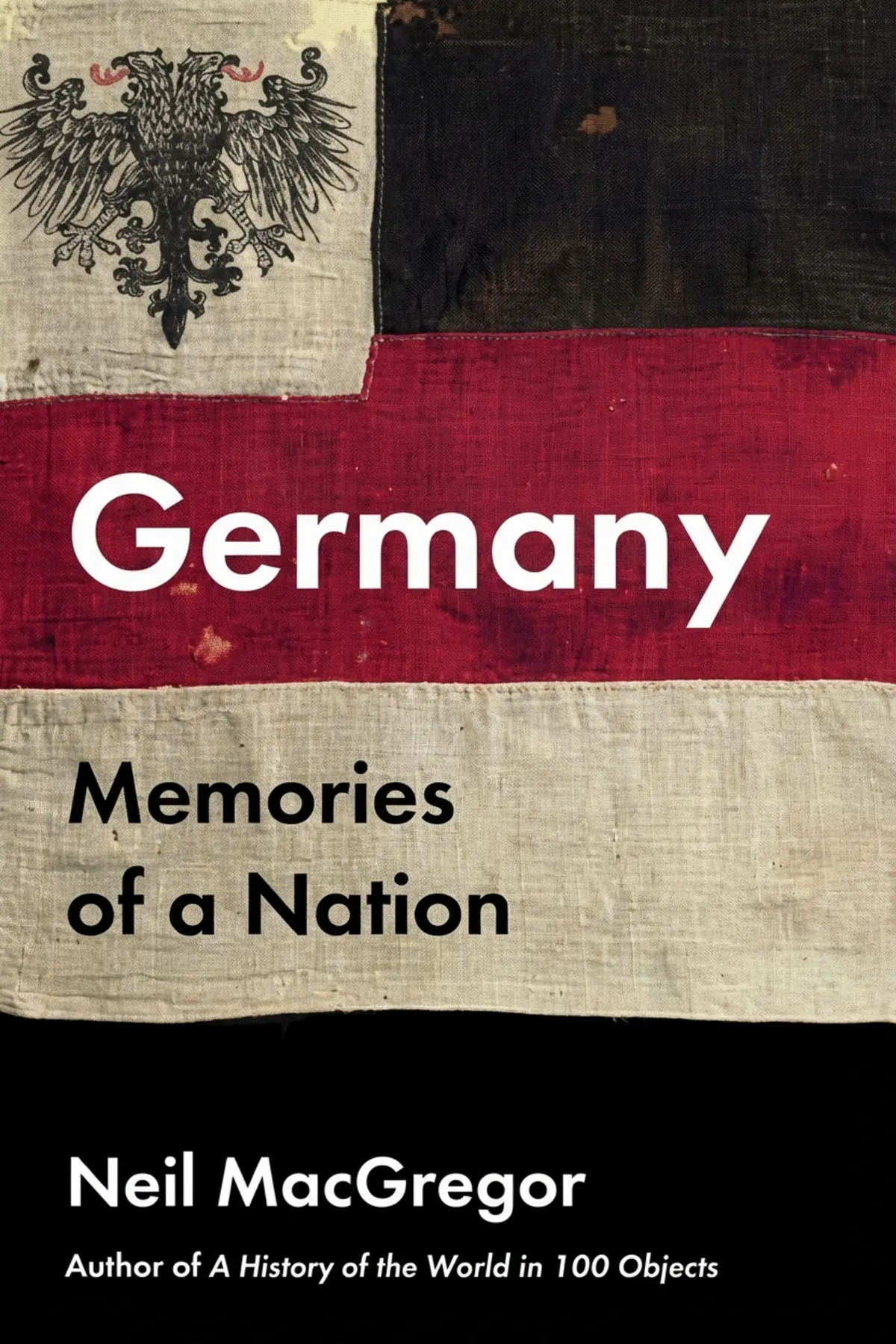
Explore the multifaceted history of Germany through its cultural landmarks, linguistic roots, and social traditions. This summary goes beyond the twentieth century to reveal the enduring spirit and complex memory of a nation.
1 min 51 sec
When we look at a map of modern Europe, the borders of Germany seem fixed and certain, but the history of the people within those borders is anything but simple. For many of us, our understanding of this nation is filtered through the lens of the twentieth century. We see the grainy footage of political rallies, the jagged remains of bombed-out cathedrals, and the tragic images of liberated camps. These are vital, inescapable memories. However, to truly understand the German spirit, one must look further back and deeper into the cultural bedrock that supported the nation long before it was ever a single, unified state.
Germany’s story is unique because, for much of its existence, it wasn’t a ‘country’ in the way we typically define one. It was a collection of kingdoms, duchies, and city-states, often at odds with one another. What, then, makes someone ‘German’? Is it the ground they stand on, the words they speak, or the traditions they keep? In this exploration, we are going to look at the fragments of memory that piece together this national identity. We will move beyond the common headlines to see how architecture, literature, trade, and even the way people decorated their bodies contributed to a sense of belonging.
Over the course of this journey, we will examine the symbolic power of Berlin’s most famous landmarks and the invisible threads of language that held a fragmented people together. We’ll look at the economic might of medieval merchants and the surprising cultural weight of a glass of beer. By looking at these diverse elements, we can start to see a more complete picture of a nation that is constantly negotiating with its own history. This isn’t just a list of dates and kings; it is a look at the soul of a nation as told through its memories and its monuments. Let’s begin by looking at a gate that has seen the very best and the very worst of the German experience.
2 min 29 sec
Discover how a monument designed for peace became a symbol of national struggle and eventual triumph, standing at the heart of Berlin’s most transformative moments.
2 min 32 sec
Reflect on the sudden division of a city and the lasting ideological scars left by the concrete barrier that once separated East from West.
2 min 27 sec
Explore how Germany’s identity often transcends its political boundaries, using the Rhine River and a French cathedral as unexpected anchors of German culture.
2 min 18 sec
Learn how a single man’s translation of the Bible created a linguistic foundation that unified a fragmented people across a dozen different kingdoms.
2 min 37 sec
Trace the ancient roots of Germany’s most famous beverage and see how it evolved from a tribal ‘performance enhancer’ to a symbol of purity and celebration.
2 min 14 sec
Uncover the history of a medieval merchant network that dominated European trade and established a legacy of German commercial success that persists today.
2 min 31 sec
Explore why the Prussian elite rejected gold and jewels in favor of iron, turning a common metal into a symbol of sacrifice and national duty.
2 min 30 sec
Examine the heart-wrenching work of Käthe Kollwitz to understand the personal and national toll of Germany’s most turbulent years.
1 min 52 sec
As we come to the end of our journey through the memories of Germany, we can see that the nation is far more than the sum of its political boundaries. It is a living entity shaped by a series of powerful cultural touchstones. We have seen how the Brandenburg Gate stands as a silent witness to both the humiliation of conquest and the euphoria of a World Cup win. We have felt the sudden, chilling divide of the Berlin Wall and the slow, steady unification provided by Martin Luther’s German Bible. We have traced the flow of the Rhine through the poems of Heine and the operas of Wagner, and we have heard the echoes of medieval trade in the names of London’s streets.
What this reveals is a nation that has constantly had to define itself in the face of fragmentation and change. Whether it was the merchants of the Hansa building an economic network or the Prussian elite choosing iron over gold, the German people have sought ways to find commonality and purpose. Even the darker moments, captured so movingly in the art of Käthe Kollwitz, are an essential part of this identity. Germany is a country that remembers. It keeps the cobblestones where the wall once stood; it honors the purity of its ancient laws; and it continues to speak the language that Luther standardized centuries ago.
The throughline of this history is a search for home—not just a physical place, but a cultural and linguistic space where a diverse people can belong. Today, Germany stands as a leader in Europe, its modern success built on the foundations of its past commercial might and its lessons learned from history’s hardest trials. To truly understand Germany is to realize that the past is never really behind them; it is present in their architecture, their traditions, and their very way of thinking. The most important takeaway is that national identity is not something that is finished; it is a continuous conversation with memory, a process of deciding which fragments of the past will light the way toward the future.
When most people think of German history, their minds often jump immediately to the mid-twentieth century—the devastation of world wars and the horrors of the Nazi regime. While these events are essential to understanding the nation, they are only one part of a much older and more intricate story. Germany is a nation built on memories that stretch back through centuries of fragmentation, intellectual revolution, and artistic brilliance. This summary explores how the German identity was forged not by clear geographic borders, but through shared language, cultural symbols, and economic networks. From the neoclassical majesty of the Brandenburg Gate to the linguistic unification sparked by Martin Luther, and from the trade power of the Hanseatic League to the somber iron jewelry of the Prussian court, we look at the objects and ideas that define the German experience. You will discover how a country once composed of dozens of small principalities found common ground in its traditions, its industry, and even its beer. Ultimately, this is a journey through the collective consciousness of a people who have continuously reinvented themselves while honoring the ghosts of their past.
Neil MacGregor is a distinguished historian and museum professional who served as the director of several prestigious British institutions between 1987 and 2015, most notably the National Gallery and the British Museum. His deep engagement with German culture is reflected in his work for BBC Radio 4 and various major exhibitions. He is widely acclaimed for his ability to tell history through objects, as seen in his popular books A History of the World in 100 Objects and Shakespeare’s Restless World: An Unexpected History in Twenty Objects.
Listeners find that this work offers a profoundly intriguing perspective on German history, delivering perceptive glimpses into different societal levels while addressing numerous distinctive subjects. The prose is expertly written, and one listener points out the author’s ability to concisely summarize each era, resulting in a very educational experience for anyone wanting to grasp the nation’s past. They value the wonderful imagery, captivating storytelling, and inventive narrative style, while one listener emphasizes how it explores key social and artistic themes.
This book is a masterclass in how to condense a sprawling, chaotic history into something tangible and deeply moving. MacGregor uses thirty specific objects to navigate the complex German identity, moving away from the typical obsession with the Third Reich to explore the Reformation, the Bauhaus, and the Holy Roman Empire. The narrative style is incredibly accessible, likely owing to its origins as a BBC radio series, though the physical book is essential for its lush illustrations. I was particularly struck by the discussion on Martin Luther’s influence on the language, which shaped the soul of the nation long before it was a unified state. While some might find the thematic jumps a bit jarring, I think the 'patchwork quilt' approach is the only way to truly capture such a fragmented history. It’s an essential read for anyone who wants to understand why modern Germany looks and thinks the way it does today.
Show morePicked this up after visiting the British Museum and I was completely blown away by the depth of insight provided through simple objects. The way the author connects the Bauhaus movement to the modern ubiquity of Ikea was a total lightbulb moment for me. MacGregor has this gift for taking a piece of porcelain or a printing press and spinning a narrative that explains centuries of social change. The chapter on the Brothers Grimm was another highlight, showing how fairytales were used to forge a national identity against Napoleon’s influence. Look, the book doesn't try to be a comprehensive history, and that is exactly why it succeeds so well. It feels personal and curious. Every page is filled with high-quality images that make the objects come alive. It is a beautiful volume that deserves a spot on any history lover's coffee table.
Show moreAs someone who has always been intimidated by the sheer complexity of the Holy Roman Empire, I found MacGregor’s explanation to be a revelation. He manages to illustrate how the political fragmentation of the past actually fostered a unique kind of local freedom that allowed figures like Gutenberg and Luther to thrive. The storytelling is engaging and avoids the dry, academic tone that plagues so many history books of this scope. I especially appreciated the inclusion of the 'Stolpersteine' and the focus on how Germany remembers its darker moments without flinching. It’s a very honest look at a nation that is constantly re-evaluating its own past to build a better future. The transition from the Iron Cross to the modern Reichstag dome felt like a perfectly executed arc. This is historical writing at its most thoughtful and provocative. Highly recommended for travelers and scholars alike.
Show moreThe chapter on Käthe Kollwitz alone makes this entire volume worth its shelf space for the emotional weight it carries. Her sculptures of grieving parents are described with such sensitivity that it genuinely brought a tear to my eye. MacGregor doesn't just give us facts; he gives us the emotional resonance of the objects he chooses to highlight. From the intricate lime wood carvings of the Renaissance to the subversive motto on the gates of Buchenwald, the book is a haunting journey through the German soul. The writing style is punchy and direct, with a great mix of short, impactful sentences and more lyrical descriptions. It’s a rare book that can be both an art history lesson and a political biography at the same time. This is easily one of the best books I’ve read on European culture in years.
Show moreWow. Not what I expected at all, but I mean that in the best possible way. I thought this would be another dusty chronological history, but instead, it’s a vibrant museum tour in book form. The focus on the shifting borders of Germany—cities like Prague and Strasbourg being ‘German’ at different times—really helped me visualize the fluidity of the nation. MacGregor’s tone is that of a friendly, incredibly knowledgeable guide who wants you to see the connections between Dürer’s rhinoceros and the industrial might of the Ruhr valley. The production value of the book itself is stellar, with the images perfectly complementing the text. It’s the kind of book that makes you want to book a flight to Berlin immediately. Truly a fascinating cross-section of society that manages to be both intellectual and immensely entertaining.
Show moreNot many authors could make a chapter about the history of German coinage feel like a gripping narrative, but Neil MacGregor pulls it off with ease. This book is a celebration of German ingenuity, from the precision of their clocks to the mass-market success of the Volkswagen. It’s a refreshing change from the 'Hitler-centric' documentaries we usually see on TV. The book manages to acknowledge the horrors of the 20th century while placing them within a much broader context of five centuries of cultural achievement. Personally, I found the discussion of the 'Handcart of the Refugee' to be one of the most poignant symbols of the modern German experience. The writing is elegant, the research is accessible, and the overall effect is one of deep respect for a complex nation. It’s a wonderful, informative read that I will likely revisit many times.
Show moreEver wonder how a collection of over 200 principalities and free cities eventually became the economic powerhouse of Europe? MacGregor’s inquiry into German cultural history provides a fascinating, albeit idiosyncratic, look at that very journey. I loved the short, digestible chapters that focus on things like the VW Beetle or the intricacies of Nuremberg metalwork. It makes the history feel lived-in rather than just a series of dates and battles. However, to be fair, the book does feel a bit like a ‘Reader’s Digest’ of culture at times because it skims over giants like Beethoven or Kant to focus on coins and handcarts. The writing is witty and lucid, making it easy to breeze through in a weekend. If you want a deep academic dive, look elsewhere, but for a vivid cultural overview, this is top-notch. It’s a brilliant starting point for further exploration.
Show moreGotta say, I was skeptical about a history book that spends so much time discussing beer and sausages, but MacGregor makes it work brilliantly. He uses these everyday cultural touchstones to explain the concept of 'Physical Germany' and how shared habits can define a nation as much as borders do. The chapters are short enough to read during a commute, yet they often leave you with a profound sense of the German 'Geist.' I did feel that the treatment of East Germany was a little light on the darker realities of the Stasi, focusing more on the quirky design of the era. Regardless, the book is incredibly informative and filled with facts that even a seasoned history buff might not know. It’s a vivid, colorful, and highly readable account of a nation that is too often reduced to its 1933-1945 period in the English-speaking world.
Show moreFinally got around to reading this and I’m impressed by how much ground MacGregor covers without ever feeling rushed. The thematic approach is a clever way to handle a history that is inherently non-linear. I particularly enjoyed the section on 'The Forest,' which explored how the German landscape has been romanticized and politicized over the centuries. To be fair, the book is quite idiosyncratic; the author clearly chose objects he had access to at the British Museum, which leaves some gaps in the story. However, the insights into Bismarck and the 'blood and iron' unification were sharp and concise. The prose is well-crafted, and the author has a knack for summarizing an entire era in a single, pithy sentence. It’s not a perfect history, but it is a deeply engaging one that offers a fresh perspective on a well-trodden subject.
Show moreFrankly, I found this to be a bit of a mixed bag, despite the high praise it usually receives. While the prose is elegant and the illustrations are undeniably gorgeous, the structure felt a bit too much like a series of disjointed radio scripts. Each chapter is exactly fifteen minutes of reading time, which often means complex topics like the 1848 revolutions are wrapped up with trite conclusions. I also noticed that the bibliography is almost entirely Anglophone, which makes me wonder if we are only getting a very specific British perspective on German identity. The focus on visual arts is great, but the total absence of German music and philosophy leaves a massive hole in the narrative. It’s a charming book to dip in and out of, but it lacks the cohesive framework I was hoping for. It’s a bit too messy for my taste.
Show moreIshmael Beah
William J. Bernstein
Ben Macintyre

Charles C. Mann
James Shapiro
AUDIO SUMMARY AVAILABLE
Get the key ideas from Germany by Neil MacGregor, plus 5,000+ more titles in English and Thai.







