
16 min 57 sec
Get It Done: Surprising Lessons from the Science of Motivation
Get It Done explores the science of self-motivation, offering a practical framework to set better goals, maintain momentum through the difficult middle, and leverage social influences to achieve lasting personal growth.
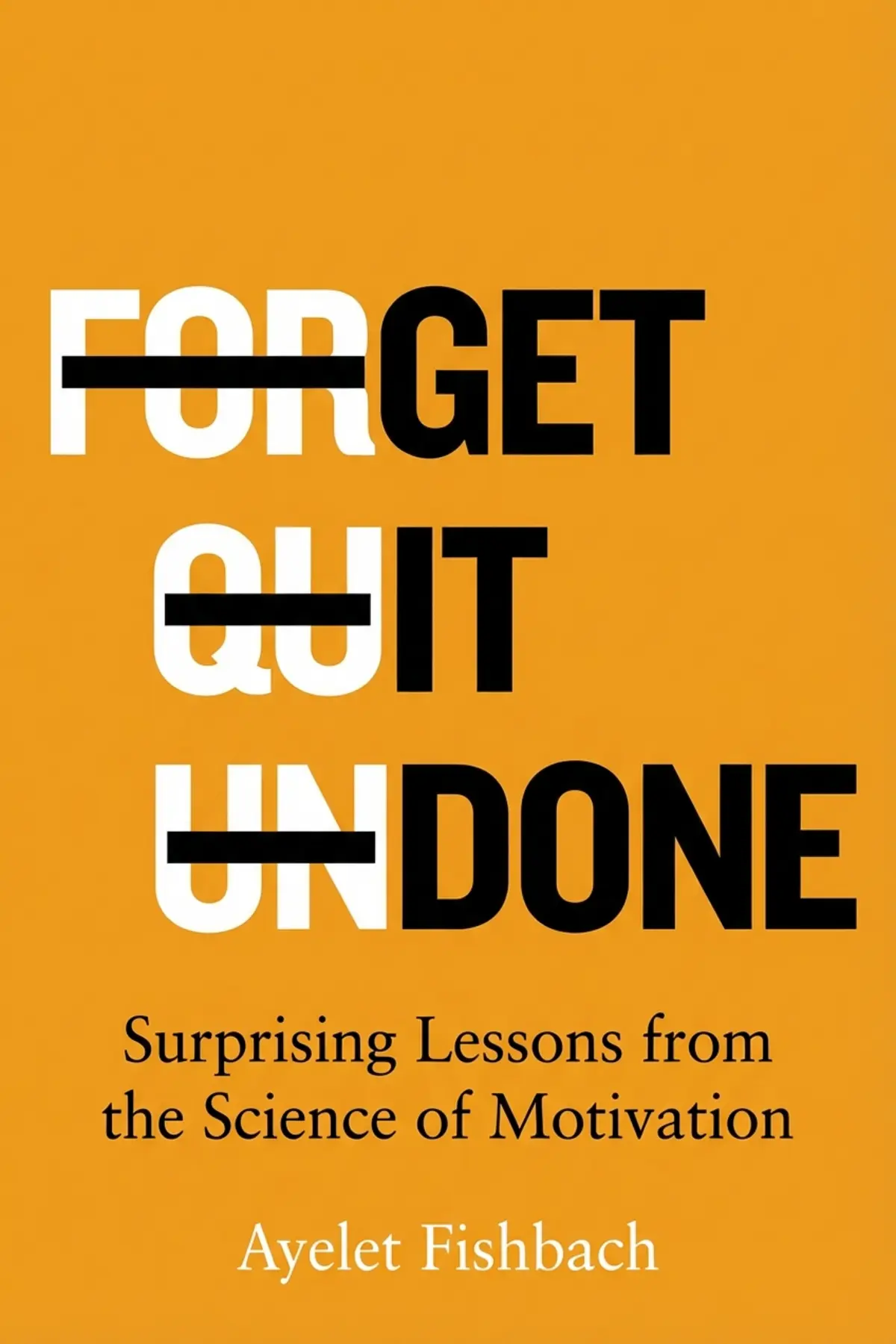
Table of Content
1. Introduction
2 min 10 sec
Think for a moment about a project you’ve been meaning to start. Perhaps it’s a creative endeavor, a fitness milestone, or even just the mountain of paperwork sitting on your desk. Why is it that some tasks feel like a heavy weight we have to drag uphill, while others seem to pull us forward with an almost magnetic force? Most of us have been taught that the secret to success is simply a matter of ‘trying harder’ or possessing a more disciplined character. We treat willpower like a muscle that we either have or we don’t. But what if that perspective is fundamentally backward? What if the secret to getting things done isn’t about pushing yourself harder, but about designing your life so that your goals naturally pull you toward them?
This is the central question we are exploring today. We often find ourselves in a bit of a paradox, much like the legendary Baron Munchhausen. In one of his famous tall tales, the Baron finds himself and his horse sinking deep into a swamp. Instead of succumbing to the bog, he reaches up, grabs his own hair, and pulls himself—and his horse—straight out of the mud. Now, while we know that defies every law of physics, the metaphor is incredibly powerful when it comes to the human mind. We are the only creatures capable of pulling ourselves out of the ‘muck’ of procrastination and stagnation through the power of self-motivation. We are both the person stuck in the mud and the hand doing the pulling.
In this exploration of the science of motivation, we are going to look at the practical, research-backed strategies that can turn you into your own source of momentum. We’ll look at why your goals might be failing you before you even start, how to navigate the treacherous ‘middle’ of any long-term project, and how the people around you act as a silent engine for your success. Whether you’re a lifelong procrastinator or a high-achiever looking for that extra edge, the goal today is to move past the myths of willpower and into the reality of motivational science. We aren’t just talking about productivity tips; we are talking about a fundamental shift in how you view your time and your potential. So, let’s stop sinking in the bog and start learning how to pull ourselves out.
2. The Art of Defining Pulling Goals
3 min 44 sec
Discover why the way you word your goals determines your success and how to turn a boring chore into an exciting, abstract mission.
3. Harnessing the Power of Incentives and Joy
3 min 14 sec
Learn to avoid the ‘Cobra Effect’ by rewarding the right actions and discover the secret of temptation bundling to make hard tasks fun.
4. Navigating the Middle and the Science of Progress
3 min 11 sec
Understand why we lose steam halfway through a project and how to use the ‘small-area principle’ to keep your momentum high.
5. The Social Architecture of Success
2 min 39 sec
See how your social circle acts as a silent engine for your motivation and how ‘anti-role models’ can be just as useful as mentors.
6. Conclusion
1 min 59 sec
As we come to the end of our exploration into the science of motivation, it’s worth taking a step back to look at the big picture. We’ve learned that getting things done isn’t about having a ‘better’ personality or more ‘grit.’ It’s about being an architect of your own circumstances. Success begins with the way you frame your goals—shifting from ‘chores’ to ‘aspirations,’ from ‘avoidance’ to ‘approach,’ and from ‘vague’ to ‘measurable.’ It continues with the way you manage your journey—using incentives wisely, finding the intrinsic joy in the process, and shortening the ‘middle’ so you never lose that vital momentum. And finally, it is sustained by the people you choose to have in your corner, the role models who push you, and the environments that keep you focused.
If there is one ‘golden rule’ to take away from this, it’s that your environment is often stronger than your willpower. If you find yourself stuck, don’t just beat yourself up; change the scenery. Change the way you talk about your goal. Change the ‘bundle’ of tasks you’re working on. You have the power to engineer your own motivation.
To put this into practice immediately, try utilizing the ‘fresh start effect.’ Research shows that we are much more motivated to work hard after a ‘temporal landmark’—a day that feels like a new beginning. This could be a Monday, a birthday, the first of the month, or even just a Tuesday that you decide to label as ‘The First Day of My New Routine.’ By framing today as a fresh start, you can bypass the ‘middle problem’ and tap into that high-energy ‘starting’ state.
Remember, you are the one holding the ponytail, and you are the one in the bog. But now, you have a manual for how to pull. The tools are in your hands, the science is on your side, and the next step is yours to take. It’s time to stop planning and start doing. It’s time to get it done.
About this book
What is this book about?
Have you ever wondered why some goals feel effortless while others remain permanently stuck on your to-do list? Get It Done dives into the psychological mechanisms that drive human action. It argues that motivation isn't a fixed personality trait but a skill that can be engineered by changing how we frame our objectives and manage our surroundings. The book provides a four-part framework for mastery: setting the right targets, monitoring progress effectively, managing multiple goals without losing focus, and utilizing social support. By understanding concepts like the 'middle problem' and 'intrinsic motivation,' you can stop relying on fleeting willpower and start building a system that pulls you toward success. It promises a roadmap for anyone looking to bridge the gap between their current self and their ideal future.
Book Information
About the Author
Ayelet Fishbach
Ayelet Fishbach, PhD, is a distinguished psychologist at the University of Chicago Booth School of Business. As a former president of the Society for the Study of Motivation, she has dedicated her career to understanding human behavior. Her extensive research, which has earned the Fulbright Educational Foundation Award, has been published in over one hundred scientific articles and featured in prominent outlets such as the New York Times and NPR.
Ratings & Reviews
Ratings at a glance
What people think
Listeners find the book both useful and captivating, with one listener mentioning how it integrates theoretical concepts with practical application. They value the high level of readability, calling the experience truly enjoyable. The work earns praise for its high-quality research, with one listener pointing out how it combines academic findings with real-world examples.
Top reviews
Pornthip
Finally, a book that explains the psychology behind our procrastination without just telling us to 'work harder.' Ayelet Fishbach’s personal story is inspirational, and her expertise as a professor shines through every page. I’ve read dozens of productivity books, but this is the one that actually helped me understand why I lose steam in the middle of projects. The "Ulysses Pact" concept—where you pre-commit to a goal by removing distractions—is something I’ve already started implementing with great success. This is genuinely fun to read and incredibly helpful. If you only read one self-help book this year, make it this one. It’s a masterpiece of behavioral science that avoids the usual fluff.
Show moreChan
Wow, I didn't expect a book written by a University of Chicago professor to be this genuinely fun to read. Fishbach has this amazing ability to take complex psychological studies and turn them into actionable, everyday advice. The way she covers "the middle problem"—that slump we all get into halfway through a goal—was eye-opening and deeply relatable. The book is well-qualified and sophisticated, yet it never feels like a dry lecture. It weaves together theory and practice seamlessly. I’ve already bought copies for a few friends who are trying to launch their own businesses. This is truly an excellent resource for any motivated person looking for an edge.
Show moreAdam
In my experience, most business-adjacent books lack the scientific rigor to make their advice stick, but Fishbach is the exception. This book is a deep dive into how self-motivation actually works. It's not just about "grinding." It's about understanding the mechanisms of the human mind. The chapter on negative feedback was particularly powerful for me. We often sabotage ourselves by tuning out critics, but this book shows you how to use that information to fuel growth. It’s an honest, high-quality, and deeply researched guide. If you’re serious about changing your habits and actually finishing what you start, you need to read this book. It is highly recommended for anyone looking for real answers.
Show moreYuki
Fishbach brings a much-needed scientific lens to the self-help genre, moving away from the typical business-bro advice. What I appreciated most was the focus on intrinsic motivation rather than just external rewards. The book does a fantastic job of weaving together theory and practice, making it feel applicable to real-life struggles rather than just an academic exercise. I particularly enjoyed the section on negative feedback and how to process it correctly when reality forces a course correction. It’s a bit dense at times, and some of the examples feel a little bit Western-centric, but the overall framework is solid. It’s a high-quality read for anyone who is serious about understanding the mechanics of goal-setting.
Show moreVilaiporn
Maybe I’ve just read too many books on goal-setting, but I found this one to be surprisingly refreshing in its depth. It’s readable. It’s engaging. Most importantly, it’s backed by actual data. As someone who often feels overwhelmed by having too many balls in the air, her advice on juggling multiple goals and creating a hierarchy of priorities was exactly what I needed. She blends research with real-world examples in a way that feels organic rather than forced. My only minor complaint is that some of the "hacks" feel a bit like common sense disguised as revolutionary science, but the presentation makes them worth revisiting. It's a very solid four-star resource.
Show moreMingkwan
As someone who struggles with juggling multiple projects, the framework for a hierarchy of goals was a total game-changer for me. Truth is, I’ve always tried to do everything at once, which just leads to burnout. Fishbach’s explanation of how to prioritize and find compromises between competing objectives was incredibly enlightening. The book is a good review of the science behind motivation and offers an honest look at the difficulties we face when life gets in the way. It’s not a magic wand, but it’s a very sturdy toolbox. I’d recommend it to anyone who feels like they’re constantly busy but never actually finishing their most important tasks.
Show moreKob
Picked this up after seeing it on a 'best of' list, and it's a bit of a mixed bag. The core concepts, like the "small area principle" and the "Ulysses Pact," are genuinely interesting and offer a more scientific approach than your average "hustle culture" blog post. However, the pacing is a bit off. It just went on and on about some things that could have been summarized in a single paragraph. Look, the research quality is high, but the book could have been significantly shorter without losing its impact. I’m glad I read the chapter on "the middle problem," but I’m not sure how much of the rest I will actually retain after a few weeks.
Show moreHazel
To be fair, the author's constant use of the word "we" became unbearable about fifty pages in. She writes as though everyone shares the same drive for "optimal economic utility," which is far from reality. I call this the Zucchini Test: if you say "we love zucchini" just because most people do, you’re ignoring the group that hates it. I’m not part of her "we." Fishbach often assumes all people act like the educated elite, ignoring cultural nuances entirely. While the science on intrinsic motivation is actually quite useful, the tone can feel slightly smug and exclusionary. It’s a narrow, academic view of human existence that doesn't always translate to the real world.
Show moreRung
Ever wonder why every productivity book feels like a remix of the same three studies? I’ve been reading a lot of Adam Grant lately, and unfortunately, a large portion of "Get It Done" felt like information I had already saturated myself with. While Fishbach is clearly a brilliant researcher, the case studies she uses often feel recycled from other major bestsellers in the behavioral science space. To be fair, if you are completely new to the genre, you might find some value here. However, for those of us who have a shelf full of these guides, there isn't enough fresh material to justify the time. It was an okay read, but I struggled to stay engaged until the end.
Show moreAraya
I really wanted to like this, but I ended up as a DNF after the first few chapters. Frankly, I felt a little sick after the author described behavioral experiments where researchers lied to children just to see how their motivation to draw would change. What if one of those kids was the next Charles Schulz and had their love of art destroyed for a study? The author seems blind to the potential long-term damage of these "intellectual dances" in academia. It’s hard to take advice on productivity from someone who views people like quarks in a lab. Beyond the ethical issues, the book feels like a long, puritanical lecture on maximizing "utility" at the expense of curiosity and joy. I simply couldn't finish it.
Show moreReaders also enjoyed

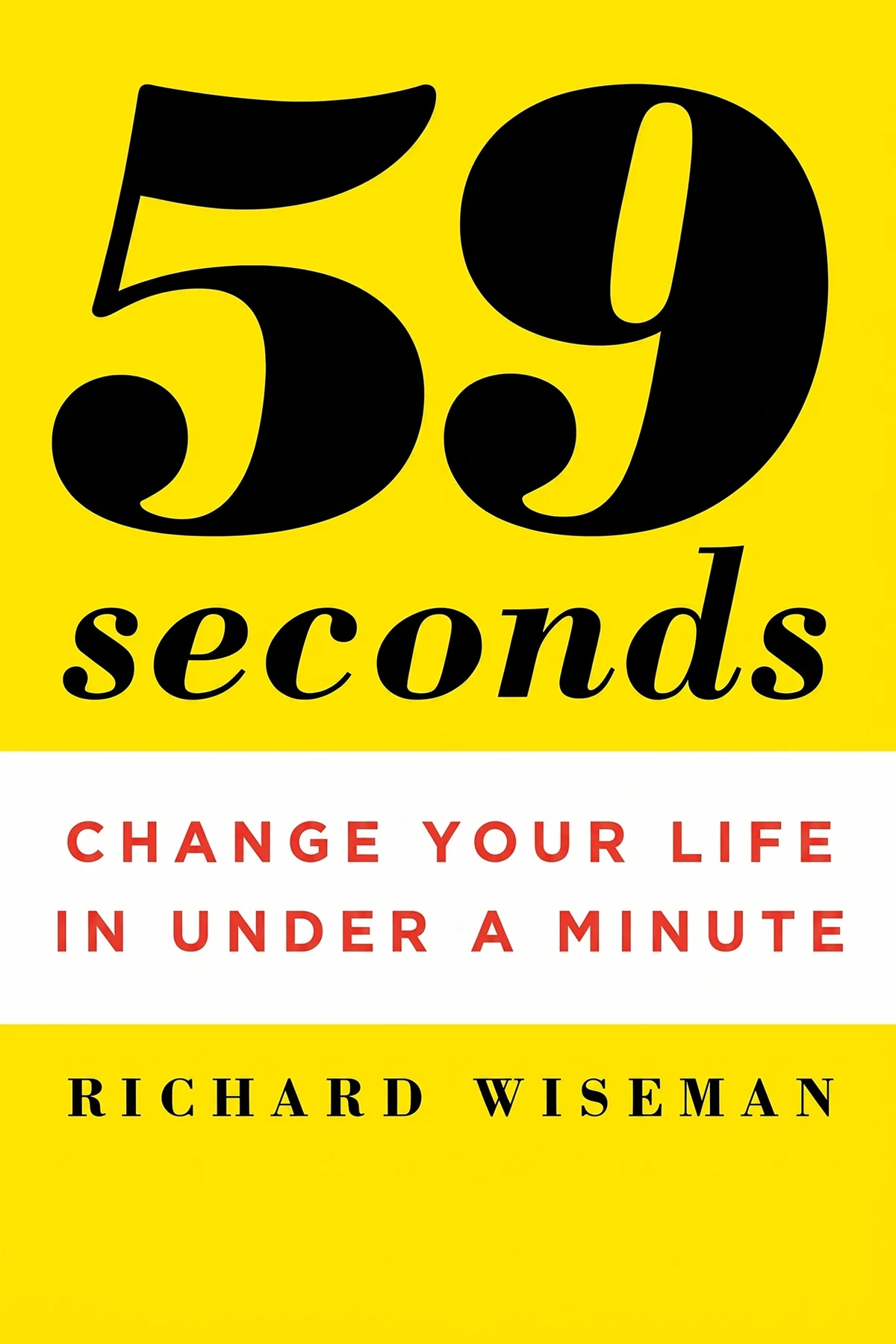
59 Seconds: Change Your Life in Under a Minute
Richard Wiseman
A Liberated Mind: How to Pivot Toward What Matters
Steven C. Hayes
Acting with Power: Why We Are More Powerful Than We Believe
Deborah Gruenfeld
AUDIO SUMMARY AVAILABLE
Listen to Get It Done in 15 minutes
Get the key ideas from Get It Done by Ayelet Fishbach, plus 5,000+ more titles in English and Thai.
- 5,000+ titles
- Listen as much as you want
- 7-day free trial
- Cancel anytime







