
13 min 27 sec
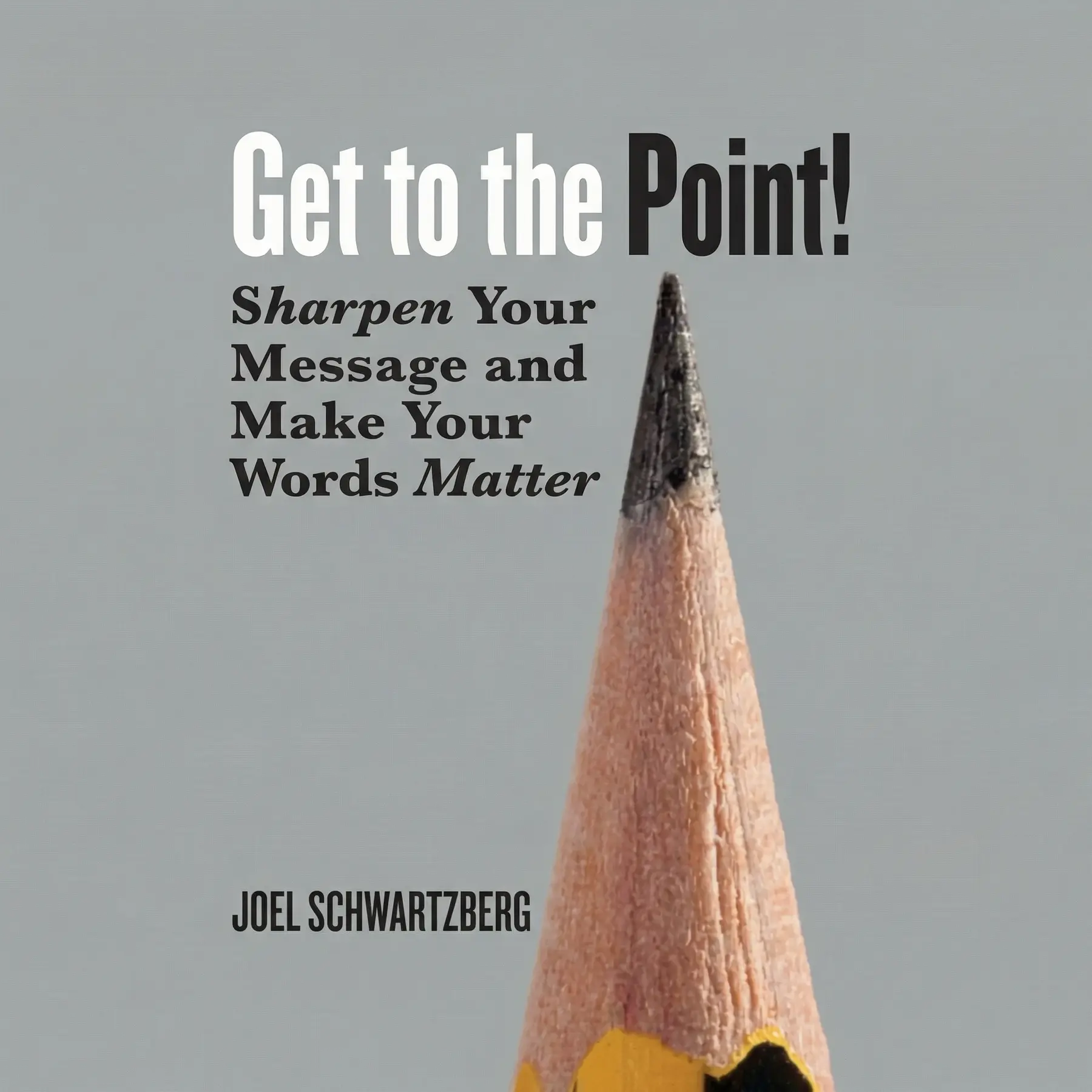
Get to the Point!: Sharpen Your Message and Make Your Words Matter
Learn how to transform scattered thoughts into persuasive arguments. This guide reveals techniques for sharpening your core message, engaging any audience, and ensuring your most important ideas are truly heard and remembered.
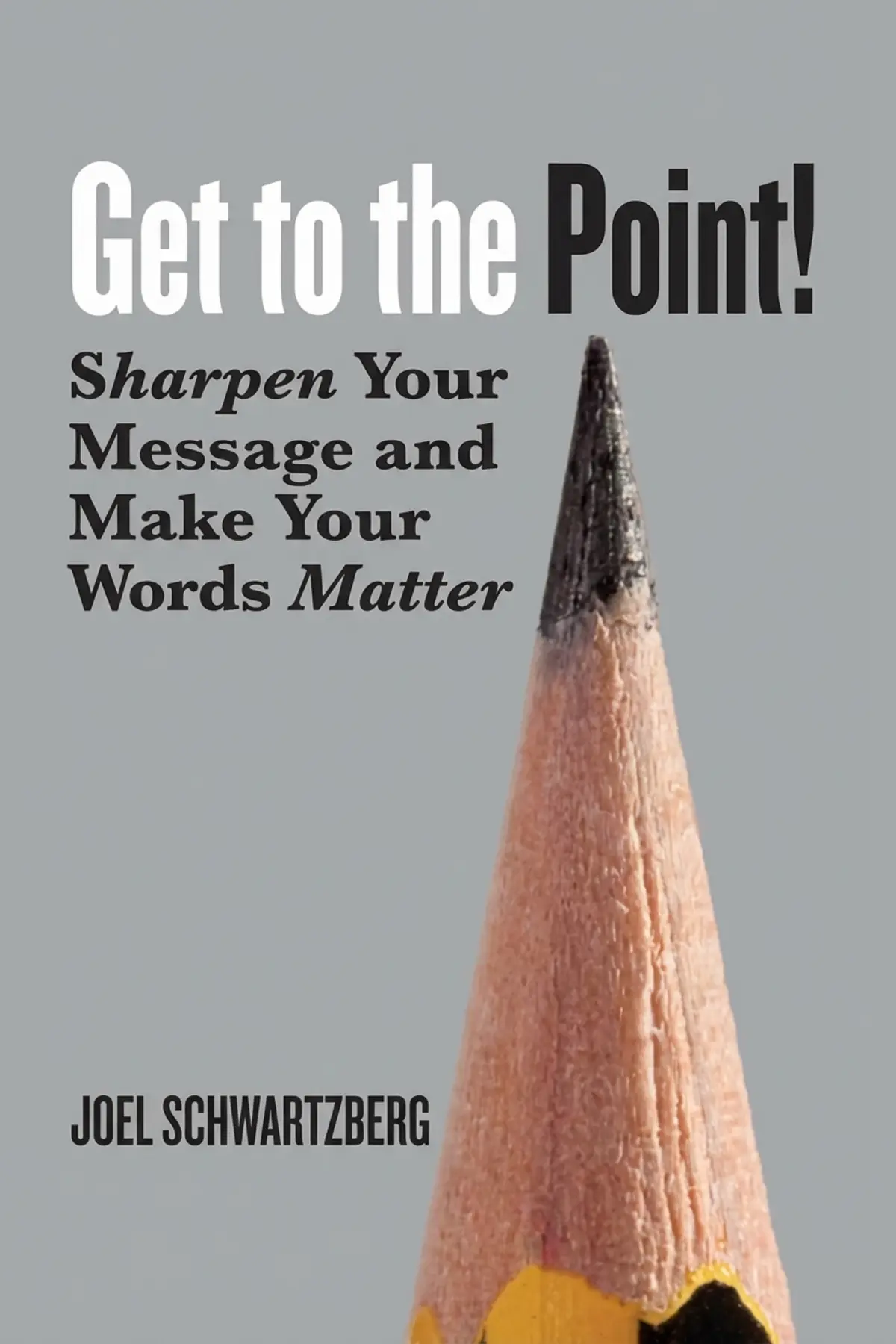
Table of Content
1. Introduction
1 min 19 sec
We live in an age of constant distraction where every word we speak competes with a thousand other notifications, thoughts, and obligations. Because of this, the cost of being misunderstood has never been higher. You might have the most brilliant innovation or the most urgent community proposal, but if your message is buried under layers of anecdotes, filler words, and vague descriptions, it effectively doesn’t exist. Many of us have experienced that sinking feeling when an audience’s eyes glaze over, not because our ideas are bad, but because we haven’t given them a clear path to follow.
The throughline of this exploration is the distinction between providing information and making a point. While information is passive, a point is active; it is a claim that demands attention and invites a response. By mastering the art of the ‘point,’ you transform your communication from a mere exchange of data into a powerful tool for influence. We will look at how to strip away the non-essential parts of your speech, how to ‘sell’ your message so it sticks in the listener’s mind, and how to use your physical and vocal presence to reinforce your authority. Ultimately, these techniques are designed to ensure that when you speak, people don’t just hear you—they understand you, remember you, and are moved to act on what you’ve said.
2. Defining a True Point
2 min 30 sec
Discover the essential difference between a mere topic and a powerful, defendable claim that can withstand scrutiny and capture an audience’s attention.
3. The Art of Selling Your Message
2 min 38 sec
Learn why simply stating the facts is never enough and how you must actively transfer your ideas into the minds of your listeners.
4. Physical and Vocal Authority
2 min 45 sec
Explore the subtle shifts in tone and body language that can either undermine your credibility or project ultimate confidence.
5. Staying Focused and Finishing Strong
2 min 37 sec
Master the art of staying on track during distractions and learn how to end your presentation with a definitive, memorable impact.
6. Conclusion
1 min 38 sec
The journey toward becoming a master communicator doesn’t require a radical personality shift or an expensive theatrical education. Instead, it requires a commitment to a single, simple principle: always have a point. As we have explored, a point is much more than a topic; it is a defendable claim that gives your words purpose and direction. When you subject your ideas to the ‘I believe’ test and the ‘So what?’ challenge, you ensure that you aren’t just talking, but actually contributing something of value to the conversation.
Remember that communication is a two-way street, and your ultimate goal is the successful transfer of your idea. By prioritizing your first thirty seconds, eliminating vocal fillers, and using pauses to highlight your most important claims, you make it easy for your audience to follow you. Whether you are leading a large team, pitching a new project, or simply trying to make your voice heard in a busy world, the ability to get to the point is your greatest asset. It builds your confidence, establishes your authority, and ensures that your best ideas get the attention they deserve.
As you move forward, try to apply these lessons to your very next interaction. Before you enter a meeting or pick up the phone, ask yourself: ‘What is my point?’ If you can answer that clearly, you are already ahead of most speakers. Stop viewing your speeches as a collection of facts and start seeing them as a focused mission to deliver a single, powerful message. When you do that, you’ll find that people don’t just listen—they get the point. And once they get it, they are far more likely to join you in whatever you are trying to achieve.
About this book
What is this book about?
Have you ever left a meeting or finished a presentation feeling like your main message didn't quite land? Many communicators mistake sharing information for making a point. This summary explores how to bridge that gap by identifying the core of your message and delivering it with unwavering focus. By following these strategies, you will learn to distinguish between a simple topic and a defendable claim. The promise here is clarity: the ability to cut through the noise of a distracted world and ensure your audience understands exactly what you believe and why they should care. From the first thirty seconds of a speech to the final closing remark, you will discover how to refine your vocal delivery, manage distractions, and stick your landing every time you speak.
Book Information
About the Author
Joel Schwartzberg
Joel Schwartzberg is a communications and public speaking coach who helps teams communicate their messages effectively. He leads workshops on message clarity and delivery for organizations ranging from American Express to Animal Care Centers of NYC, and has contributed articles on effective communication to the New York Times, New York Post, and Newsweek.
Ratings & Reviews
Ratings at a glance
What people think
Listeners find this guide educational and straightforward to grasp. They value the way it enhances their ability to communicate, with one listener noting its effectiveness in refining speeches and directions.
Top reviews
Bella
This book is a masterclass in brevity, ironically practicing exactly what it preaches. Joel Schwartzberg provides a surgical approach to communication that is desperately needed in today’s world of endless meetings and rambling emails. I found the 'I believe that...' test to be an absolute game-changer for my internal memos. It forces you to move past vague observations and actually commit to a defensible argument. Frankly, it’s refreshing to read a business book that doesn't feel the need to pad its page count with repetitive anecdotes. Each chapter hits hard and moves on. If you’re tired of people asking 'what was the takeaway?' after you speak, you need this on your desk. It’s practical, sharp, and remarkably easy to implement immediately. I’ve already started using the 'So what?' challenge to trim the fat from my project proposals, and the difference in how my team responds is palpable.
Show moreRania
Ever wonder why some people command a room while others just blend into the background noise? Schwartzberg argues it’s all about the strength of your central argument, and he’s right. I loved the distinction between 'sellers' and 'tellers.' It changed how I view my role during client pitches; I’m not just presenting data, I’m actively advocating for a specific action. The physical closeness tips were also interesting, reminding me to step away from the podium and engage directly with the audience. Personally, I found the advice on ending with the point to be the most impactful. Instead of a weak 'that’s all I’ve got,' he teaches you how to stick the landing like a gymnast. This is an essential tool for anyone who wants their ideas to actually land and stick with their listeners long after the conversation ends.
Show moreJirapat
The chapter on the 'So what?' test is probably the most useful thing I’ve read all year. It forces you to strip away the fluff and find the core value of what you’re saying. I’ve started applying this to every email I send, and I’m noticing much faster response times from my colleagues. Schwartzberg’s writing style is punchy and direct, which is exactly what you’d hope for given the topic. I appreciate that he doesn't advocate for rigid scripts but rather for preserving the essence of the argument. This allows for a more natural, engaging delivery that doesn't feel forced. Not gonna lie, I was skeptical about how much a book this short could teach me, but the focus on identifying what the audience specifically needs from you was a great reminder. It’s about them, not you. Highly recommended for anyone in a leadership or sales position.
Show moreSakura
Truth is, most business books are 300 pages of fluff surrounding a single good idea, but Schwartzberg trims all that away to give you pure strategy. The 'I believe that...' exercise is so simple yet so incredibly effective at uncovering whether you actually have a point or just a collection of thoughts. I also found the advice on repeating your point to be very validating; we often fear being repetitive, but people need that reinforcement to truly remember the message. This book teaches you how to sell your ideas with conviction rather than just reciting a script. The focus on what the audience values is key. It’s a quick, high-impact read that will definitely change how I approach my next board meeting. If you value your time and the time of others, read this book and start getting to the point.
Show moreElise
After hearing about this book in a writing workshop, I had to see if it lived up to the hype, and it absolutely does. It’s practical, actionable, and as sharp as the title suggests. As a communicator, you realize very quickly that your concept isn't the problem—it’s how you’re conveying it. Schwartzberg’s methods for distilling a message into one powerful statement are brilliant. I especially appreciated the tip about removing physical barriers like podiums to enhance engagement. It’s those small details that separate a good speaker from a great one. The 'gymnast landing' analogy for endings has stuck with me, and I’ve stopped ending my presentations with a whimper. Whether you’re a seasoned pro or just starting out, this book offers essential strategies to help you command attention. It’s a must-read for basically everyone, because at the end of the day, we’re all in the business of communication.
Show moreNina
Picked this up specifically to fix my rambling during team syncs, and the results were almost instant. The 3-step model for crafting a point is worth the price of admission alone. Schwartzberg focuses heavily on the first 30 seconds of a presentation, which really resonated with me because that’s usually where I lose my momentum with filler words like 'so' or 'well.' My only minor gripe is that some sections feel a bit like expanded blog posts rather than a cohesive narrative, but that actually makes it easier to reference later. I particularly liked the 'Why?' questions to sharpen a point—it helps eliminate those hollow adjectives that don't actually mean anything. To be fair, this is more for professional settings than creative writing, but the core philosophy of 'selling' your idea rather than just 'telling' it is universal. It's a quick read that packs a punch.
Show morePun
As someone who manages a remote team, the digital equivalent of 'removing barriers' mentioned in this book was a great takeaway. We often forget that communication isn't just about the words we choose, but how we project confidence through the screen. Schwartzberg’s focus on avoiding upward inflections really struck a chord with me, as I’ve noticed how much it undermines my younger staff. The book is incredibly actionable and focuses on making words matter. I do wish there were more examples of how to apply these techniques to long-form writing, as it feels very speech-centric. In my experience, the 'Did you get my point?' test is the ultimate reality check for any communicator. It’s a bit humbling to realize how often the answer is 'no,' but this book gives you the tools to fix that. Definitely a valuable addition to any professional's library.
Show moreRod
Finally got around to finishing this during my commute, and I've already applied the 'test of a point' to my latest project proposal. It’s amazing how much we hide behind hollow adjectives and vague comments when we aren't sure of our own argument. Schwartzberg pushes you to be bold and defendable. I liked the section on using 'Why?' questions to sharpen your focus; it’s like a workout for your brain. My only complaint is that I wanted even more examples of 'before and after' points to really see the transition. Still, the advice on avoiding filler words in the first 30 seconds is something I’ll be practicing for a long time. It’s a concise guide that helps you streamline your thoughts and communicate with way more intent. If you want to be heard, you have to be clear.
Show moreCooper
Not what I expected in terms of depth, though I suppose the title warned me it would be brief. The advice is undeniably sound, especially the bit about avoiding 'uptalk' to maintain authority, but I found the content a little thin for a full book. It feels very geared toward corporate presentations and public speaking rather than everyday communication. Look, the 3 steps + 2 enhancements method is definitely helpful and I've jotted it down on a sticky note for my next call, but I finished the whole thing in under two hours. If you want a deep dive into the psychology of persuasion, look elsewhere. However, if you just need a quick kick in the pants to stop wasting people's time with muddled messages, this does the job. It’s a solid, functional guide that identifies common slip-ups without overcomplicating the solution.
Show moreDarius
Frankly, while the core philosophy is solid, I struggled with how much this applies to normal, day-to-day writing versus high-stakes presentations. The book is very focused on 'the point,' which is great for a keynote speech, but felt a little aggressive for casual workplace collaboration. I also found the repetition of some concepts a bit much, even in a book this short. On the plus side, the 3-step process is very easy to memorize and implement. It certainly helps you refine your messaging and eliminate distractions. To be fair, the author’s background in public speaking shines through, and for that specific niche, it’s a 5-star resource. For the average person just looking to improve their general conversation skills, it might be a bit too specialized. It’s a good book, just maybe not as universal as the marketing suggests.
Show moreFeatured in
Readers also enjoyed

AUDIO SUMMARY AVAILABLE
Listen to Get to the Point! in 15 minutes
Get the key ideas from Get to the Point! by Joel Schwartzberg, plus 5,000+ more titles in English and Thai.
- 5,000+ titles
- Listen as much as you want
- 7-day free trial
- Cancel anytime







