
7 min 47 sec
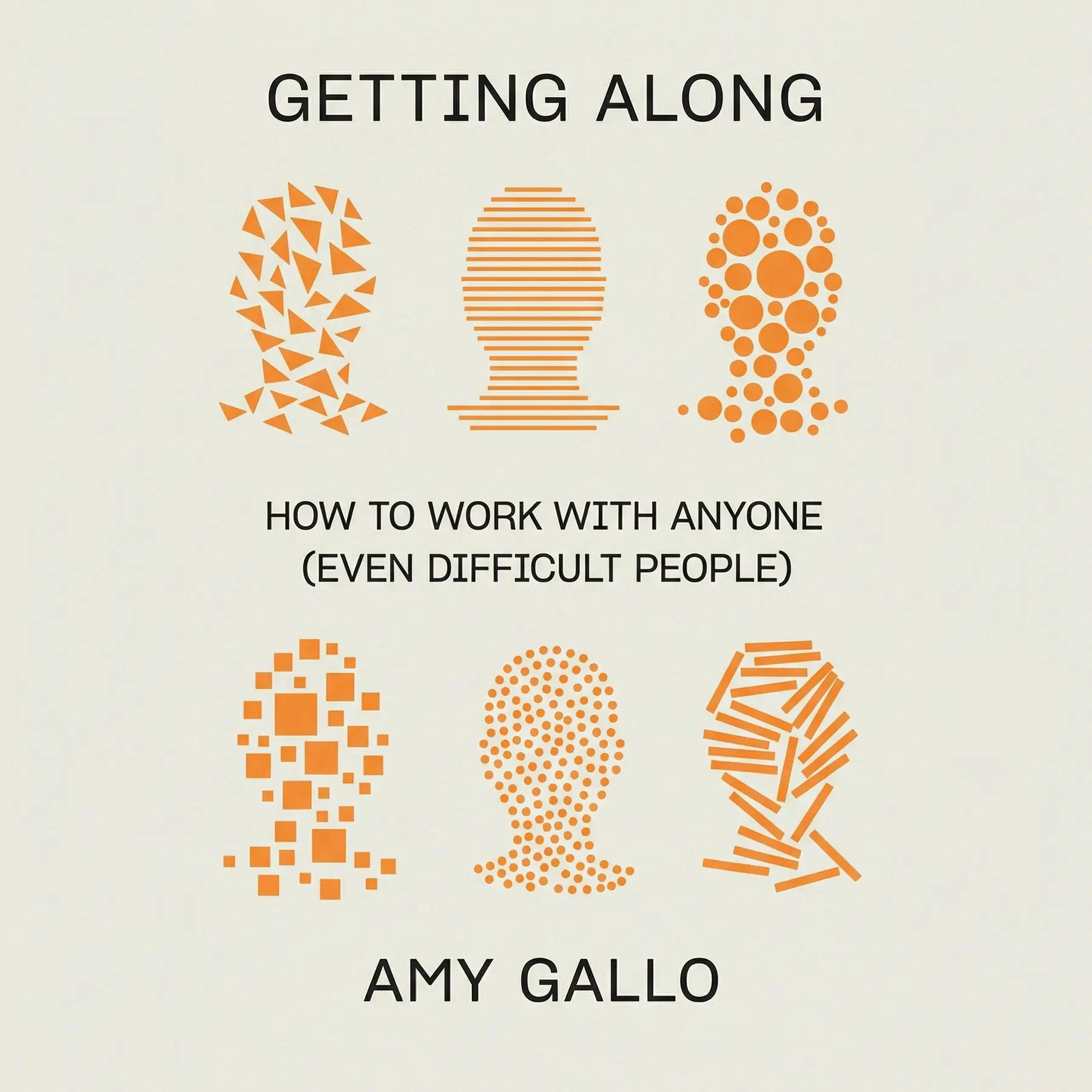
Getting Along: How to Work with Anyone (Even Difficult People)
By Amy Gallo
Getting Along provides a practical framework for navigating difficult workplace dynamics. Amy Gallo explains why interpersonal connections are the foundation of career success and offers strategies to handle friction without compromising your well-being.
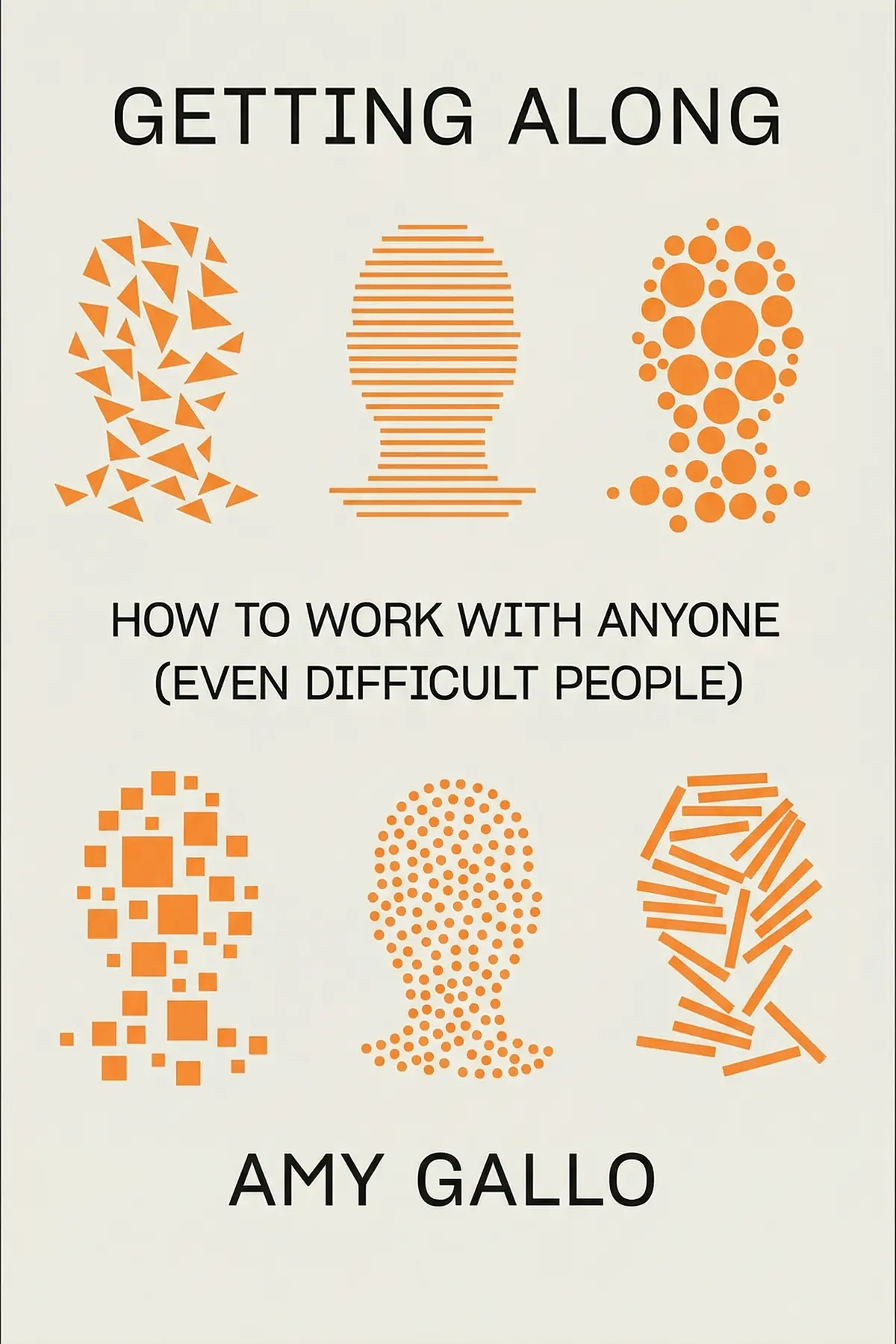
Table of Content
1. Introduction
1 min 04 sec
Imagine your favorite colleague for a moment. This might be the person who knows exactly how you take your coffee or the person you trust with your most confidential office venting. These relationships are often the invisible glue that holds a career together. They turn a standard workday into something that feels rewarding, motivating, and even fun. Most of us spend more of our waking hours with our coworkers than with our families, which means these bonds aren’t just a side effect of the job—they are the core of the experience.
However, we also know the flip side. A single toxic relationship at work can cast a long shadow over everything else. It doesn’t matter how much you love the actual work you do; if you are constantly bracing for a confrontation with a passive-aggressive manager or a negative teammate, your performance and your happiness will eventually suffer. In this summary of Getting Along by Amy Gallo, we are going to explore why these connections are so vital and how you can navigate the inevitable friction that comes with working alongside other humans. We will look at the science of why conflict hurts so much and practical steps you can take to manage even the most difficult people in your office.
2. The Weight of Social Connection
2 min 07 sec
Discover why the quality of your work life is dictated more by your coworkers than your job title or your salary.
3. Choosing Your Response in the Gap
1 min 42 sec
Learn how to use emotional reappraisal to stop reacting and start responding to workplace stress.
4. Tactical Management and Microcultures
1 min 55 sec
How to handle unavoidable interactions and build a supportive environment even in a toxic office.
5. Conclusion
59 sec
Navigating the complexities of human relationships at work is perhaps the most challenging part of any career, but it is also the most rewarding. As we have seen, the people we work with have a direct impact on our health, our perspective on challenges, and our overall career trajectory. While you cannot force a difficult colleague to change their personality, you have immense power over how you respond to them and who you choose to surround yourself with.
If you find yourself in a situation where you’ve tried every strategy—distancing, documenting, and reappraising—and you still feel oppressed, it may be time to move on. But remember the key lesson: don’t just run away from a bad situation. Instead, run toward a better one. Use the insights you’ve gained to seek out a team where connection and mutual support are the standard, not the exception. By prioritizing your social well-being as much as your technical skills, you set the stage for a career that isn’t just successful on paper, but deeply fulfilling in practice.
About this book
What is this book about?
Workplace happiness is rarely about the tasks we perform; instead, it is almost entirely dictated by the people we work with. In Getting Along, author Amy Gallo explores the profound impact of professional relationships on our productivity, mental health, and even our physical recovery. When we face a difficult boss or a hostile colleague, our brains treat the situation as a literal physical threat, triggering a stress response that can derail our focus and damage our long-term career prospects. This guide promises to help you reclaim control over your professional life by mastering the art of conflict resolution and emotional regulation. By understanding the psychological drivers behind negative interactions—such as the negativity bias or the biological fight-or-flight response—you can learn to pause before reacting. Gallo provides a toolkit for managing impossible personalities, from setting healthy boundaries and documenting interactions to building a supportive microculture of trusted peers. Ultimately, the book offers a path toward a more resilient work life, showing you how to turn professional friction into an opportunity for personal growth and clearer communication.
Book Information
About the Author
Amy Gallo
Amy Gallo is a contributing editor for Harvard Business Review and cohost of the popular podcast Women at Work. In her professional work, she writes extensively about interpersonal dynamics, gender, and effective communication.
Ratings & Reviews
Ratings at a glance
What people think
Listeners find the book’s suggestions to be both enduring and useful, while one listener points out the clear scenarios of challenging workplace personalities. The material is easy to relate to because of the anecdotes provided, and listeners value the way it clarifies complicated subjects. Furthermore, the work provides a beneficial influence, with one listener even calling it transformative.
Top reviews
Elise
Finally, a guide that doesn't just tell you to 'be professional' but actually shows you how to navigate toxic dynamics with your dignity intact. Amy Gallo’s approach is incredibly grounded in humility and science. I found the stories she shared to be highly relatable; I could see my own coworkers (and myself!) in every chapter. The focus on the three entities—you, your colleague, and the dynamic—completely changed how I view conflict. Frankly, it’s one of the most practical business books I’ve read in years. It’s not just about 'getting along' for the sake of it, but about being effective and less stressed. The bulleted summaries at the end of each chapter are perfect for quick referencing when a situation arises. If you work with other humans, you need this book. It’s a transformative tool that turns workplace friction into something manageable and even productive.
Show moreThanakorn
As someone who has spent two decades in HR, I found Gallo’s archetypes to be incredibly spot-on. She identifies the 'Insecure Boss' and the 'Pessimist' with such precision that I felt like she’d been sitting in my office during my 1:1s. This is an excellent book that provides timeless and practical advice for anyone navigating the complexities of modern work life. The content is easy to understand, yet it doesn’t shy away from the difficult parts of human interaction. I particularly appreciated the research-based approach to the 'Tormentor' archetype. It helped me realize that a lot of what we perceive as malice is often just a person’s own internal struggle. The phrases to use with different kinds of people are worth the price of the book alone. This has officially become my go-to recommendation for managers dealing with conflict. It is a brilliant, necessary read for the modern professional.
Show moreSaranya
Wow, I didn't realize how much my own 'inner narrative' was making my work life harder until I read this. Gallo’s writing is clear and the stories are so relatable that I finished the whole thing in two sittings. It feels more like a supportive mentor talking to you than a dry textbook. The way she breaks down the 'Victim' and 'Political Operator' types gave me so much clarity on my current office situation. Truth is, I was ready to quit my job, but these tactics have given me the confidence to stay and manage the dynamics better. The book is transformative because it empowers you to change the interaction even if the other person refuses to change. I highly recommend this to everyone who works with others. It’s an essential handbook for maintaining your mental health in a high-pressure environment. Gallo really nailed the balance between empathy and action.
Show moreFrida
Picked this up during a particularly stressful week at the office where I felt like I was drowning in passive-aggressive emails. Gallo has a way of humanizing difficult coworkers that I found truly refreshing. By looking at the 'dynamic' between two people rather than just blaming the other person, you gain a lot more agency in the situation. The specific examples provided are relatable and easy to understand, making the complex psychological concepts feel accessible. To be fair, there is a bit of corporate jargon to wade through, but the 'Political Operator' and 'Tormentor' chapters were spot on. I’ve already started using some of the suggested phrases to set boundaries with my boss. It’s not a magic wand, but it’s a very practical guide for anyone returning to an office environment. This book is a great resource for maintaining your sanity while staying professional.
Show moreAstrid
The chapter on the 'Political Operator' alone made this worth the purchase price for me. Amy Gallo provides a research-based, practical guide that feels incredibly relevant in our post-COVID work world. We all know those 'foot-draggers' and 'nay-sayers' who make meetings unbearable, and this book gives you a specific tactical map for each one. Personally, I found the collaborative visualizations much more effective than the combative approach I used to take. The book acts like a handbook for those of us who just want to get projects done without the constant drama. My only gripe is that it can feel a bit repetitive by the time you hit the sixth archetype. Regardless, the advice is timeless and grounded in actual human behavior. It’s a great addition to any manager's bookshelf, especially those dealing with diverse teams and varying levels of insecurity among staff.
Show moreChan
Not what I expected from a standard business book, as it actually dives deep into the psychological underpinnings of office drama. I’ve been struggling with a 'Passive-Aggressive Peer' for months, and Gallo’s analysis of why people act this way was eye-opening. The book is full of specific examples that make the archetypes come to life. Gotta say, the section on 'Biased Co-workers' was handled with a lot more grace and research than I expected. It’s a compassionate look at workplace dynamics that encourages engagement rather than just avoidance. While the writing style is very much in the HBR vein—which can be a bit formal—the advice itself is transformative if you actually apply it. I especially liked the appendix of scripts. Having the right words ready to go takes a lot of the anxiety out of difficult conversations. Definitely worth a read for anyone in a corporate role.
Show moreSukit
Ever wonder why your coworker acts like a total 'Know-It-All' every single Monday morning? Gallo’s book tries to answer that by breaking down eight specific archetypes of difficult people we all encounter. Some of the psychological insights are actually quite sharp, and I appreciated the bulleted chapter summaries that make the content easy to digest. However, the writing style feels very 'Harvard Business Review'—which is to say, it can be a bit dry and corporate. In my experience, real workplace dynamics are much grayer and more complex than these neat little buckets suggest. While the advice is practical, the book could have been cut in half without losing much substance. It works well as a handbook you might pull off the shelf during a specific crisis, but it isn't a life-changing cover-to-cover read for me. It is just okay.
Show moreLaor
After hearing several people recommend this at my last networking event, I finally dove in. The book is definitely grounded in science, which makes it miles better than some of the more populist success sagas out there. I particularly liked the section on checking your inner narrative; it’s a good reminder to increase the space between an input and our reaction. Still, I have mixed feelings because the focus isn't strictly on 'difficult' people, but just general personality quirks. Not gonna lie, some of the advice felt like it was written for a very specific type of corporate environment that doesn't always reflect the reality of smaller startups. It’s a useful first-aid kit for the office, but it lacks the nuance I was hoping for when dealing with truly toxic individuals. It's a solid 3-star effort that provides some decent phrases to use in a pinch.
Show moreAnucha
I really wanted to gain some useful tools here, but the tone felt entirely off for a professional development book. Look, the core idea of categorizing difficult personalities like the 'Insecure Boss' or the 'Political Operator' is helpful in theory, but the execution is lacking. At times, it felt like I was being instructed to revert to an 'appeaser' role, which is something I refuse to do in a modern office environment. Your ego is not my job, and I don't need a book telling me to jump at conflict like a buffet. While Gallo offers some practical advice in the first and last thirds, the middle section is filled with imprecise fluff and repetitive stories. Truth is, a lot of the tactics felt slightly manipulative rather than collaborative. I would recommend just reading a summary article online rather than slogging through the jargon-heavy chapters of the full text.
Show morePiyanart
This book was a major disappointment for me. Frankly, Amy Gallo does not come across as a strong writer, and the inclusion of her personal experiences actually made me doubt her professional credibility. She spends far too much time judging others rather than providing objective analysis. To be fair, some people might enjoy the anecdotal style, but when she started lecturing about social privilege and applying DEI labels to workplace dynamics, she lost me completely. It felt like she was promoting a victimhood mentality rather than actual professional responsibility. Instead of offering timeless wisdom, the text is bogged down by corporate HR jargon that feels anemic and hollow. I was hoping for a guide on how to be more effective, but this felt like a handbook for virtue signaling. If you want to actually get ahead, look for a resource that focuses on merit and results rather than these divisive social theories.
Show moreFeatured in
Readers also enjoyed


AUDIO SUMMARY AVAILABLE
Listen to Getting Along in 15 minutes
Get the key ideas from Getting Along by Amy Gallo, plus 5,000+ more titles in English and Thai.
- 5,000+ titles
- Listen as much as you want
- 7-day free trial
- Cancel anytime







