

18 min 05 sec
Getting It Done When You’re Depressed: 50 Strategies for Keeping Your Life on Track
Overcome the paralysis of depression with fifty practical, action-oriented techniques designed to bypass low motivation, rebuild consistent daily routines, and restore a sense of productivity and personal agency.
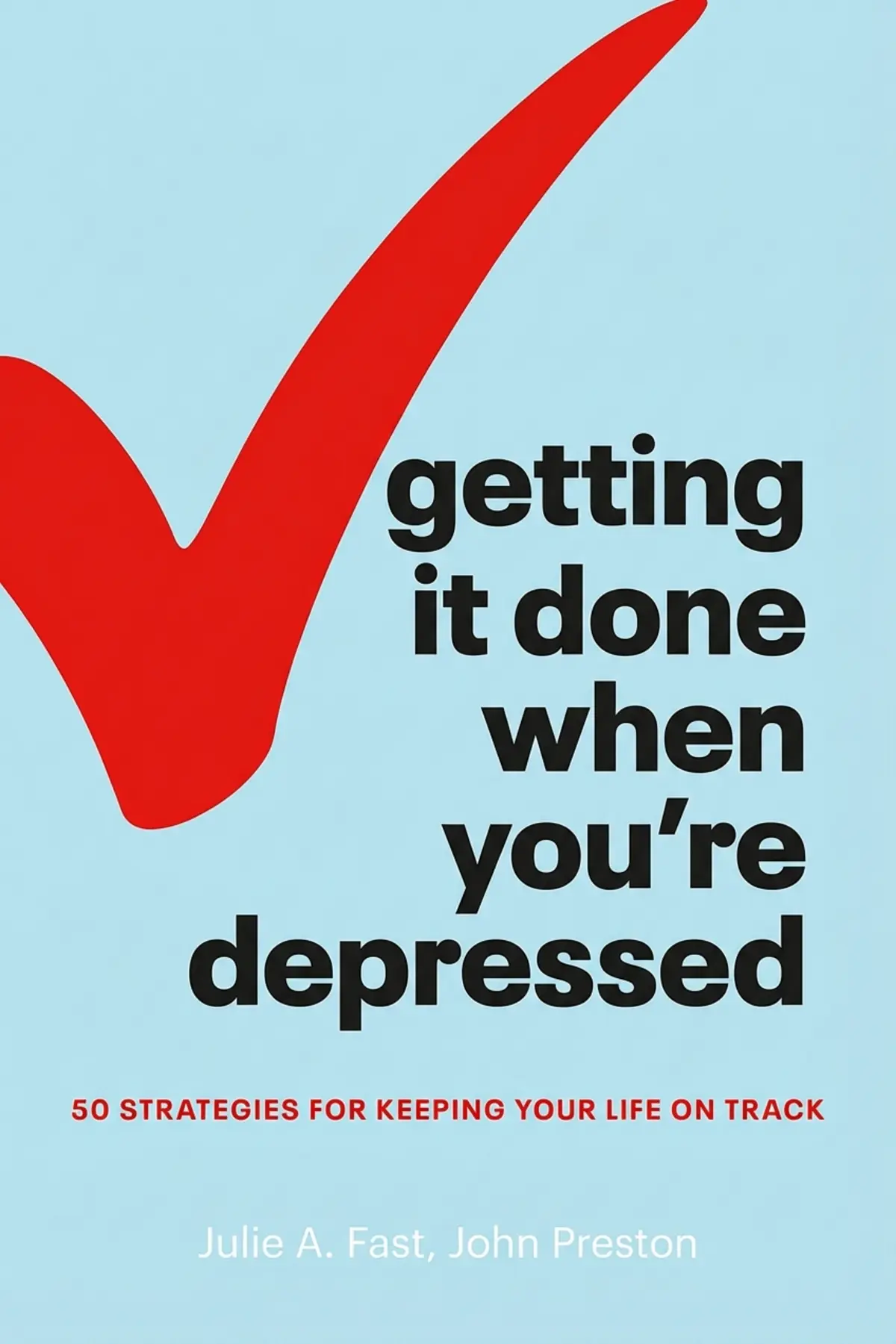
Table of Content
1. Introduction
1 min 23 sec
Depression is rarely just a feeling of sadness; it is more often a thief of time and energy. It settles over a person’s life like a heavy, invisible weight, making the most basic responsibilities feel like climbing a mountain without a map. When you are in the thick of it, the common advice to just stay positive or wait until you feel better can feel not only unhelpful but deeply alienating. The reality of depression is that it saps your will to act, and yet, the lack of action often makes the depression grow stronger. This creates a painful loop where you feel you cannot move because you are depressed, and you are depressed because you feel stagnant.
In this BookBits summary, we are going to explore a different way forward. The core throughline here is the idea that action is a tool you can use even when you don’t feel like it. We will look at how to bypass the need for motivation entirely and focus on the mechanics of getting things done. By learning to work with your depression instead of waiting for it to leave, you can start to rebuild your life one small step at a time. This isn’t about ignoring the pain; it’s about finding ways to function through it, using structure, connection, and a specific kind of internal discipline to keep your life on track. We will break down how to manage your workspace, your social interactions, and your own internal dialogue to create an environment where progress becomes possible again.
2. The Fallacy of Motivation and the Power of Initiation
2 min 47 sec
Discover why waiting for the right mood is a trap and how taking action first can actually generate the energy you’ve been missing.
3. Utilizing Internal Command and External Structure
2 min 34 sec
Learn how to use a firm internal voice and a rigid daily schedule to push through the paralysis of low-energy days.
4. Leveraging Connection and Accountability
2 min 20 sec
Explore the profound impact that other people can have on your productivity and how to invite support without feeling like a burden.
5. Optimizing Your Environment and Physical Self
2 min 36 sec
Discover how small changes to your workspace and physical habits can reduce the friction of daily life and boost your mental energy.
6. Combating Distortions and Physiological Triggers
2 min 28 sec
Learn to identify the lies your brain tells you and how to manage the dietary and verbal habits that can worsen your symptoms.
7. Sustainability Through Patience and Small Wins
2 min 27 sec
Understand why long-term success depends on self-compassion and the recognition that progress is rarely a straight line.
8. Conclusion
1 min 30 sec
In conclusion, the path to getting things done when you’re depressed is built on the understanding that action and mood are not as tightly linked as we often think. As we have explored through the insights of Julie A. Fast and Dr. John D. Preston, you do not have to wait for the fog to lift before you start moving. By utilizing the power of internal commands, rigid daily structures, and the accountability of others, you can create a framework for your life that persists even when your energy is at its lowest.
We have seen how important it is to optimize your environment, manage your physical health, and challenge the distorted thoughts that depression uses to keep you stagnant. These fifty strategies are not about achieving perfection; they are about maintaining a sense of agency. They remind us that while we may not have full control over how we feel, we have a significant amount of control over what we do.
As you move forward, remember to be patient with yourself. Progress will come in waves, and some days will be harder than others. But by focusing on small, sustainable wins and keeping your gaze on the long-term horizon, you can break the cycle of inertia. You have the tools to rebuild your momentum, reconnect with the people around you, and prove to yourself that your productivity and your worth are not dictated by your depression. Start with one small task today, and let that be the first step in reclaiming your life.
About this book
What is this book about?
Living with depression often feels like being trapped in a thick fog where even the simplest tasks, like answering an email or getting dressed, require a monumental amount of energy. Getting It Done When You're Depressed tackles this specific challenge by offering a specialized toolkit for functional recovery. Rather than focusing solely on mood improvement, this guide emphasizes the power of action as a catalyst for change. It explores the counterintuitive truth that doing can often precede feeling better, rather than the other way around. The promise of this work is grounded in realism. It provides fifty distinct strategies to help individuals navigate the crushing weight of inertia, from managing self-critical thoughts to restructuring one’s environment and social circle. By following these practical steps, readers can learn how to work alongside their symptoms rather than waiting for them to disappear. It is a roadmap for maintaining professional and personal responsibilities during the darkest times, helping individuals regain control over their schedules, their workspaces, and their lives through small, manageable victories.
Book Information
About the Author
Julie A. Fast
Julie A. Fast is a renowned mental health expert with specialized knowledge in bipolar disorder, depression, and anxiety. Having lived with bipolar disorder herself, she provides a unique perspective that blends clinical research with deep personal empathy. She is a bestselling author of several guides focused on managing mental health within relationships and daily life. Dr. John D. Preston is a board-certified neuropsychologist and a professor emeritus. With over twenty books to his name, he is a leading voice in psychopharmacology and neurobiology, bridging the gap between medical science and practical psychotherapy.
Ratings & Reviews
Ratings at a glance
What people think
Listeners find this book beneficial, with one listener noting it offers effective techniques for managing depression. The guide receives high marks for being easy to read, as one listener particularly highlights it as a superb manual for maintaining productivity while depressed. However, the authenticity of the material draws varied responses from listeners.
Top reviews
Thongchai
This manual is exactly what I needed during a period where even standing up felt like a Herculean labor. While some self-help gurus try to fix your brain, Julie Fast focuses on the reality of your hands and feet. The concept that action must come before you feel motivated is a total game-changer for someone stuck in a loop of inertia. Frankly, I appreciated the frankness regarding her own bipolar struggles because it made the advice feel grounded in lived experience rather than academic theory. The bite-sized strategies are easy to digest even when your focus is shot to pieces. I found the sections on social media distractions particularly relevant to my current daily habits. It’s a readable guide that actually respects how hard it is to function.
Show moreTum
Wow, the central premise that action must precede motivation really flipped a switch for me. I spent months waiting for the 'spark' to return so I could start my projects, not realizing that the work itself creates the spark. This book provides a roadmap for moving through the world when your brain is telling you to stay in bed forever. The writing style is incredibly accessible and doesn't use the overly clinical jargon that usually makes my eyes glaze over. I especially liked the 'Helpful Hints' sections at the end of the chapters. It feels like having a compassionate, no-nonsense friend whispering in your ear. It gave me the tools to handle my house and my job without waiting for a miracle.
Show moreArthit
After years of therapists telling me to just 'feel my feelings,' it was refreshing to have a book tell me how to actually wash my dishes. This is the most practical guide I’ve ever found for the day-to-day grind of living with a mood disorder. The strategies are bite-sized, which is crucial because my brain cannot handle complex instructions when I'm in a downward spiral. Not gonna lie, I skipped the social media stuff, but the tips on workspace organization and sleep hygiene were solid. It made me feel less alone to know that someone as successful as Fast still struggles with these basic things. It’s an excellent guide for anyone who needs to keep their job while their brain is on strike.
Show moreKrisada
As someone who has struggled with chronic low moods for a decade, I found the 50 strategies here surprisingly actionable. The book doesn't waste time on 'why' you are sad and instead leans into 'how' you can survive the workday regardless. I really appreciated Dr. John Preston’s scientific interjections because they gave the strategies a layer of clinical legitimacy that kept me engaged. Some might find the tone a bit too 'tough love,' but when you’re drowning in a sea of your own thoughts, a firm hand is sometimes necessary. The layout is excellent for people with low attention spans. You can just flip to a random page and find a tip that helps you get through the next twenty minutes.
Show moreLuckana
Finally picked this up after seeing it recommended in a mental health forum for creatives. It’s an excellent guide for those days when the brain fog is so thick you can’t remember how to prioritize your basic chores. I love the 'do it anyway' philosophy because it removes the pressure of needing to feel happy before being productive. It’s not about being a corporate robot; it’s about reclaiming your sense of self-worth through small, tangible accomplishments. The strategies regarding social media usage and isolation were particularly biting. My only real gripe is that it conforms a bit too much to the idea that our value is tied to our output. Still, it’s a very practical resource for those of us in the trenches.
Show moreFatima
Truth is, I didn't expect much from a self-help book with such a literal title, but the strategies are surprisingly robust. The focus on 'externalizing' the depression—treating it as a lying voice rather than your true self—is a powerful cognitive tool. I particularly enjoyed the inclusion of Dr. Preston’s insights on the biological effects of caffeine and alcohol on a depressed system. While the book can be painfully repetitive at times, that repetition might actually be helpful for someone with the cognitive impairment that often accompanies depression. It isn't a perfect book, and some of the 'do it anyway' advice feels a bit dismissive of severe symptoms. However, as a set of productivity tactics, it really delivers on its promise.
Show moreCee
Why does this book feel like it's repeating the same three ideas fifty different ways? I appreciate the intent, and the author clearly knows the dark places of the mind, but the organization is a mess. It's a hybrid between a workbook and a memoir, and neither side quite wins the battle for the reader's attention. One moment you're getting a great tip about breaking tasks into tiny pieces, and the next you're reading a distracting anecdote about the author's personal life. Personally, I found the scripts for explaining my depression to friends to be the highlight. The rest felt like common sense that has been padded out to meet a page count. It’s a decent guide, but definitely not a revolution.
Show moreNongnuch
Look, this isn't going to cure your clinical depression, and to their credit, the authors never claim it will. It’s strictly a toolkit for getting through the day without your life falling apart around you. I found the anecdotes about the author’s own bipolar disorder to be a double-edged sword; they provide community but sometimes feel like they're veering into a memoir. The advice on 'paying people to do things' is great if you have the money, but feels a bit out of touch for the average reader. Overall, I think it’s a helpful read for people with mild to moderate depression. If you’re in a deep crisis, though, this might feel a bit too simplistic. It’s all about managing the symptoms of the slump.
Show moreFilm
I'm sorry, but some of the advice in here feels like it could push a vulnerable person into a deeper hole of self-loathing. The authors suggest 'fighting' your negative thoughts, which runs counter to almost everything I’ve learned in modern Acceptance and Commitment Therapy. If you try to wage war on your own brain and lose, you just end up feeling like a failure on top of being depressed. Also, the comments about weight and exercise were unnecessarily blunt and felt a bit like fat-shaming under the guise of health. To be fair, the scripts for talking to loved ones are actually quite useful for those of us who lose our words during a crash. However, the repetitive 'just do it' tone became grating after the fifth chapter.
Show moreOmar
The chapter on exercise really rubbed me the wrong way with its reductive comments on weight and mood. Julie Fast writes about her own struggles with a lot of vulnerability, but that doesn't excuse advice that feels outdated or scientifically questionable. Telling a depressed person to just 'stop whining' or to 'fight' their thoughts is a recipe for a breakdown. Truth is, I wanted to love this because the premise is so vital. We need more books on productivity for the mentally ill. But the repetitive nature of the 'strategies' made it a chore to finish. If you can filter out the more harmful suggestions, there are some nuggets of wisdom, but you have to dig through a lot of fluff to find them.
Show moreReaders also enjoyed

ADHD an A-Z: Figuring It Out Step by Step
Leanne Maskell



Alcoholics Anonymous
Alcoholics Anonymous World Services
168 Hours: You Have More Time Than You Think
Laura Vanderkam
AUDIO SUMMARY AVAILABLE
Listen to Getting It Done When You’re Depressed in 15 minutes
Get the key ideas from Getting It Done When You’re Depressed by Julie A. Fast, plus 5,000+ more titles in English and Thai.
- 5,000+ titles
- Listen as much as you want
- 7-day free trial
- Cancel anytime







