
34 min 13 sec
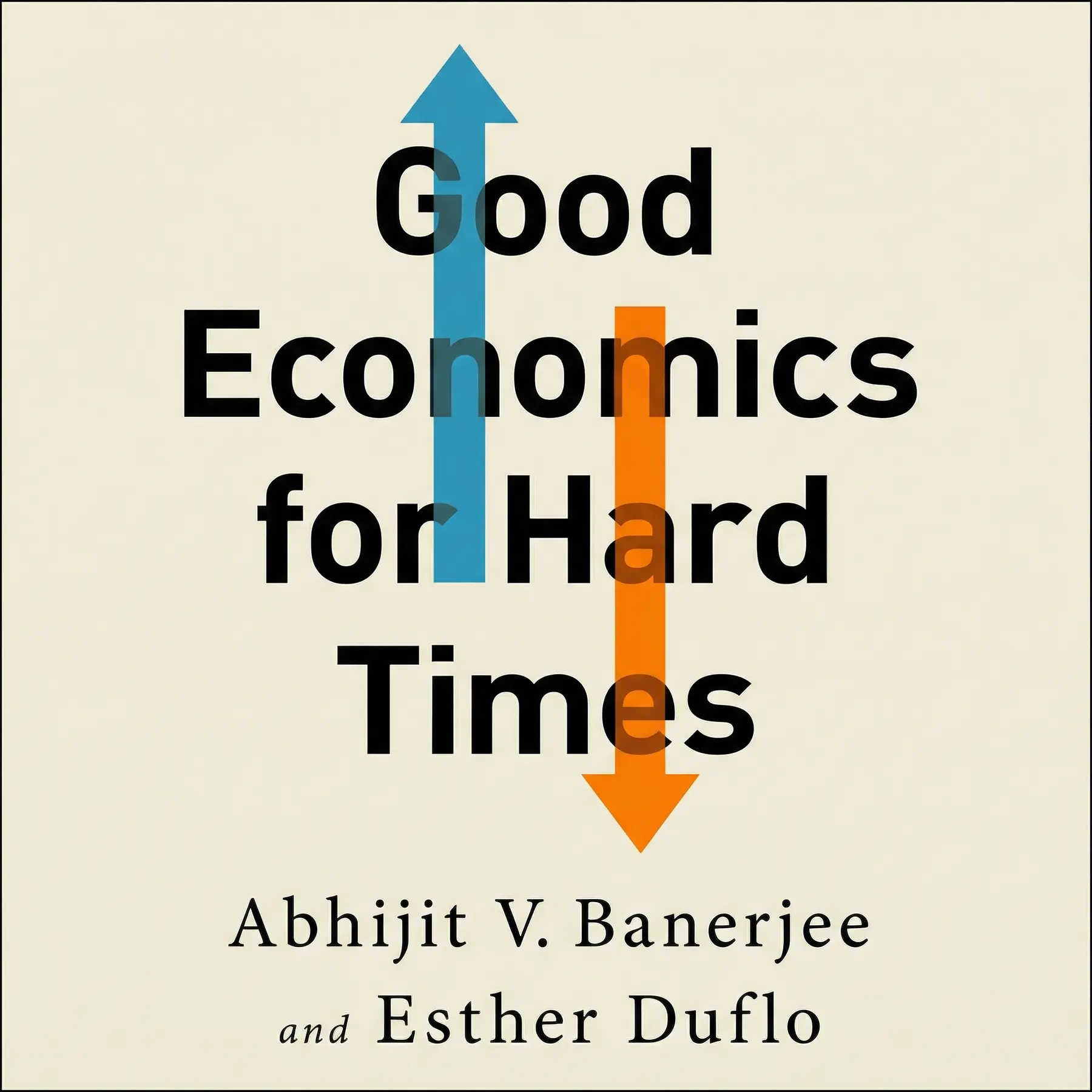
Good Economics for Hard Times
Nobel laureates Abhijit V. Banerjee and Esther Duflo challenge common economic myths to provide evidence-based solutions for global challenges, from immigration and trade to climate change and rising social inequality.
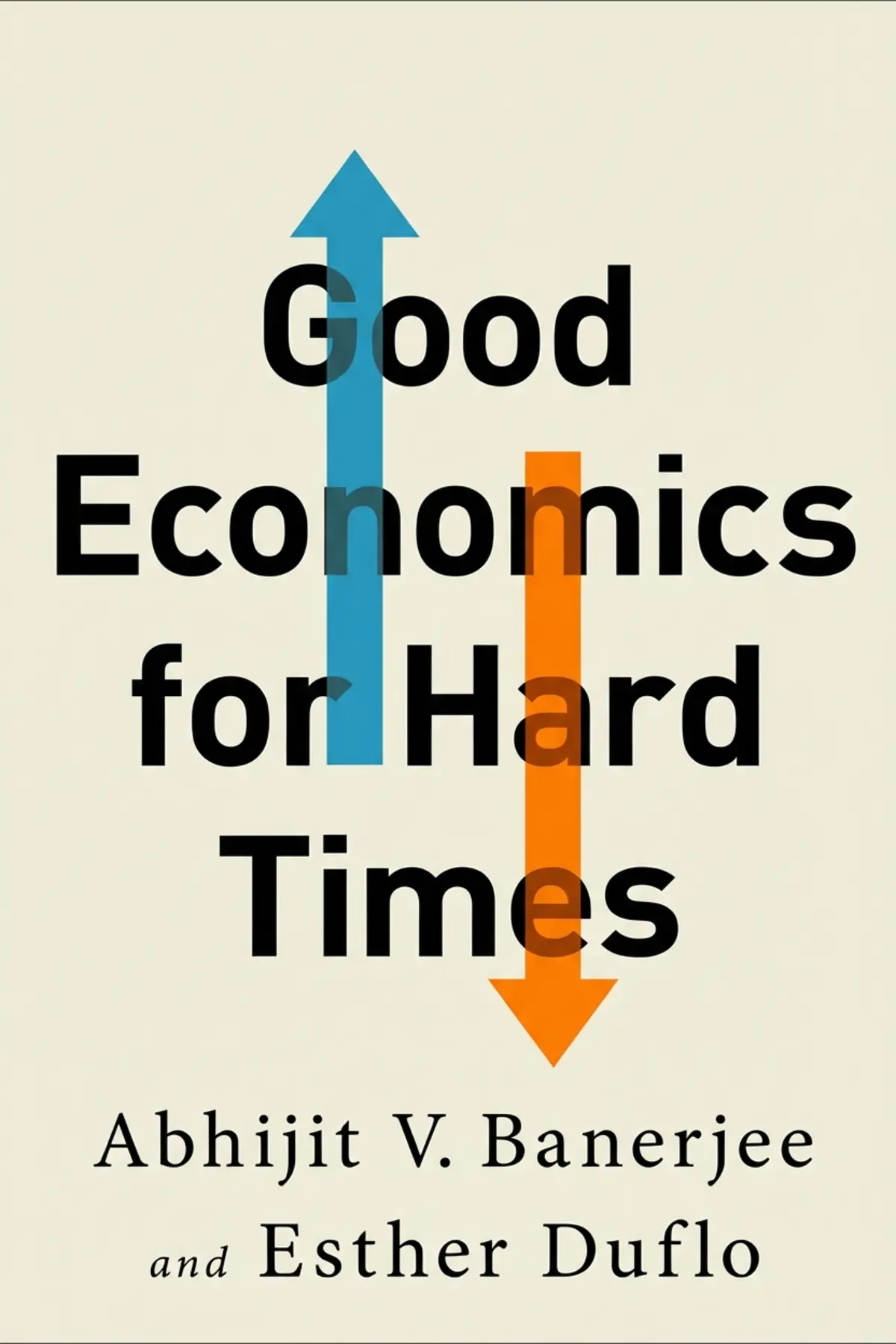
Table of Content
1. Introduction
2 min 30 sec
In the modern era, it often feels like we are living through a perpetual state of crisis. When we turn on the news or scroll through social media, we are bombarded with warnings of impending disaster. We hear that immigration is an unmanageable tide that will wash away local jobs and cultures. We are told that trade wars are the only way to protect domestic industries, yet those same trade wars seem to drive up prices and hurt farmers. We are warned that saving the planet from climate change will inevitably destroy the economy, but failing to do so will end civilization as we know it.
This constant stream of alarming narratives leaves many of us feeling paralyzed. To make matters worse, the experts who should be helping us navigate these complexities—economists—often seem just as divided as the politicians. They appear on television making contradictory predictions, often sounding more like ideological cheerleaders than objective scientists. It is no wonder that public trust in economic expertise has reached an all-time low. We find ourselves in a world where facts are contested, and the loudest voices usually win the argument, regardless of the evidence they provide.
However, there is a different way to look at these problems. In this summary, we will explore the insights of two Nobel Prize-winning economists who believe that economics, when done correctly, can be a powerful force for good. They argue that many of the economic theories currently driving political decisions are based on a misunderstanding of how human beings actually behave. By moving away from abstract models and looking at how people live, work, and make choices in the real world, we can find better answers to our biggest problems.
As we move through these ideas, we will challenge the conventional wisdom regarding the movement of people and goods. We will examine why the fear of immigrants taking jobs is largely unsupported by data and why the flexibility of the global market is more of a myth than a reality. We will also look at how we can address inequality, the threat of artificial intelligence, and the urgent need to combat climate change without abandoning the most vulnerable members of society. The goal is to move past the shouting matches and rediscover a version of economics that puts human dignity and evidence at the very center of the conversation. Let’s begin by looking at why the reputation of economists has suffered and how they can start to earn back the public’s confidence.
2. Restoring Public Confidence in Economics
2 min 42 sec
While we rely on medical experts for health, we often view economic specialists with skepticism. Discover why the profession’s reputation has faltered and how transparency could solve pressing social crises.
3. The Misunderstood Motivations of Migration
2 min 37 sec
Politicians often claim that immigrants are driven solely by financial gain, but reality is far more complex. Explore why most people are surprisingly reluctant to leave their homes, even for better pay.
4. Why Immigrants Are an Asset to Local Economies
2 min 40 sec
Common fears suggest that new arrivals drive down wages for everyone, but the data tells a different story. See how immigration actually creates jobs and helps local workers move up the ladder.
5. The Reality of Friction in Global Trade
2 min 42 sec
Traditional trade theory assumes that workers and industries can easily adapt to market changes. Learn why this ‘flexibility’ is a myth and how it leads to long-term economic pain.
6. The Hidden Costs of Trade Wars and Protectionism
2 min 46 sec
Protectionist policies like tariffs are often sold as a shield for domestic workers. Explore why these tactics often backfire, hurting more people than they help, and what we should do instead.
7. Bridging the Gap Between Climate and Equality
2 min 29 sec
Is environmental protection a luxury that only the wealthy can afford? Learn how the fight against climate change is inextricably linked to the struggle for global economic justice.
8. Navigating the Uncertain Future of Work and AI
2 min 34 sec
As robots and algorithms take on increasingly complex roles, the job market is shifting beneath our feet. Discover why the real threat of AI isn’t just about losing jobs, but about widening the wealth gap.
9. The Roots of Inequality: Policies over Technology
2 min 44 sec
Is the growing gap between the rich and poor an inevitable result of progress? Revisit the policy shifts of the 1980s to see how political choices, not just technology, fueled modern inequality.
10. Using Taxation to Level the Social Playing Field
2 min 49 sec
High taxes on the wealthy are often criticized as a drag on the economy. Discover how they can actually reduce income gaps and provide the funds needed for vital public infrastructure.
11. Prioritizing Dignity in the Fight Against Poverty
2 min 41 sec
Assistance programs often come with heavy strings and social stigma. Learn why treating the poor with respect and providing direct financial aid is the most effective way to foster independence.
12. Healing the Rifts of a Polarized Society
2 min 35 sec
Rising hate crimes and political divisions threaten the fabric of democracy. Explore why stepping outside our social echo chambers is the only way to restore a functional, collaborative society.
13. Conclusion
2 min 24 sec
As we have explored throughout this summary, the world is facing immense challenges, but these problems are not insurmountable. The central message of Abhijit V. Banerjee and Esther Duflo is that we need to reclaim economics as a tool for human flourishing rather than just a way to measure market efficiency. We have seen that the fears surrounding immigration and trade are often based on oversimplified models that ignore the ‘stickiness’ of human life and the entrepreneurial spirit of newcomers. We have learned that inequality is not an inevitable byproduct of progress, but a result of specific policy choices that can be reversed.
To move forward, we must be willing to abandon the dogmas of the past. The belief that economic growth will eventually solve everything has proven to be false; growth that only benefits the top one percent is not a success, but a failure of the system. We need to embrace a more active role for government—one that isn’t afraid to tax the wealthy to fund essential services, but one that is also humble enough to listen to the data and admit when its programs are failing. We need a social safety net that provides not just a check, but a sense of dignity and a path back to purpose for those displaced by the shifting winds of technology and global trade.
Most importantly, we must address the crisis of communication. In an era of echo chambers and digital silos, the simple act of listening to one another has become a radical act. We cannot solve climate change or fix the economy if we are too busy fighting ideological wars. The path to a better future is paved with evidence, empathy, and a commitment to the common good.
The ‘hard times’ we face are a call to action. They demand that we look at the world with fresh eyes, challenge our own assumptions, and work together to build a society that values every person’s contribution. Economics may have a reputation for being the ‘dismal science,’ but when it is used to advocate for justice and human dignity, it becomes a science of hope. By applying these ‘better answers’ to our biggest problems, we can create a world that is not only more prosperous but also more compassionate and resilient for generations to come.
About this book
What is this book about?
Good Economics for Hard Times addresses the most polarizing issues of the modern era through the lens of rigorous, human-centered economic research. At a time when political discourse is often dominated by shouting matches and oversimplified slogans, Nobel Prize winners Abhijit V. Banerjee and Esther Duflo offer a refreshing alternative. They dive deep into the real-world data surrounding immigration, international trade, and the looming threat of automation, revealing that much of what we think we know about these topics is based on outdated or incorrect assumptions. The book promises a path forward that prioritizes human dignity and social stability over the blind pursuit of growth. By examining why people are often reluctant to move for work, how trade shocks actually affect local communities, and why current welfare systems often fail those they are meant to help, the authors provide a toolkit for more effective policymaking. This is an invitation to look past the doomsday headlines and understand how thoughtful, evidence-based economic interventions can repair the rifts in our society and create a more equitable world for everyone.
Book Information
About the Author
Abhijit V. Banerjee
Abhijit V. Banerjee and Esther Duflo won the 2019 Nobel Prize for Economics in recognition of their contributions to the field of development economics. Their previous book Poor Economics was a pioneering investigation of what it means to be poor, and how to provide the most effective aid to struggling communities. They are both professors at MIT, and have received numerous academic honors and prizes.
Ratings & Reviews
Ratings at a glance
What people think
Listeners find this economics book enjoyable and well-crafted, with one listener suggesting it is worthy of being a college textbook. They appreciate the wide-ranging look at economic challenges, as one review highlights the use of scientifically conducted experiments. The book is praised for its readability and stimulating ideas, with one listener mentioning that it helps the audience become less biased. While the writing and accuracy get mixed feedback—with some praising the evidence and others finding it cluttered with side facts and anecdotes—listeners value the book’s timeliness.
Top reviews
Tang
The authors provide a masterclass in how to use data-driven experiments to solve global problems. Instead of relying on old-school neoclassical theories, Banerjee and Duflo lean heavily on randomized control trials to see what actually works on the ground in various developing nations like India. The scientific rigor displayed here is incredibly refreshing. They tackle everything from migration to climate change with a level of nuance that you rarely see in mainstream media. To be fair, some of the data regarding India is quite complex, but the insights are well worth the mental effort. This isn't just a textbook; it’s a manual for building a more humane world.
Show moreTeng
Wow, it’s rare to find Nobel laureates who can actually write for the general public without being patronizing. Banerjee and Duflo manage to deconstruct fake facts about immigration and trade wars with surgical precision. I particularly liked the section on tax incentives, which proves that cutting taxes doesn't automatically lead to a massive growth explosion. The writing style is conversational yet authoritative, making complex topics like universal basic income feel manageable for a layperson. Truth is, I walked away feeling more informed and less biased about several political issues. This is a brilliant contribution to modern economic thought.
Show moreNing
This volume serves as a powerful reminder that economics is too important to be left to the theorists. It humanizes the "dismal science" by focusing on the dignity of work and the social costs of economic shifts. I found the arguments against free-market fundamentalism to be particularly sharp and well-documented. Not gonna lie, the sheer amount of literature they survey is staggering, yet it never feels like a slog. They emphasize that there are no iron laws of economics stopping us from creating a better world. This is absolutely essential reading for anyone interested in global development.
Show moreNook
As someone who finds traditional textbooks dry, I was surprised by how much heart this book has. It treats the struggle of the average worker with genuine respect instead of just viewing them as a variable in a mathematical equation. The authors' skepticism toward neoclassical theorizing makes for a much more realistic view of how people actually behave. I was especially moved by the descriptions of poverty in India and how those local lessons apply to global crises. It’s a massive book that covers a lot of ground, but the prose is so engaging that you hardly notice. Truly a masterpiece of contemporary social science.
Show moreSamuel
The chapter on immigration is particularly enlightening, especially with how it deconstructs common myths surrounding labor supply. In my experience, most people argue from emotion on this topic, so having a mountain of data-driven evidence is incredibly helpful. The book stays remarkably timely, addressing the exact issues—inequality, trade wars, and automation—that are currently tearing at our social fabric. While the authors are clearly progressive, their commitment to the scientific method keeps the arguments grounded in reality. It’s a thought-provoking read that will stay with you long after you’ve finished the final page.
Show moreLayla
Ever wonder why people don't just move to where the jobs are when the economy shifts? This book introduces the fascinating concept of human "stickiness," explaining why logic often fails in the face of family ties and local familiarity. Frankly, I was skeptical at first, but the evidence they present regarding labor migration is incredibly compelling. The authors show that we aren't just numbers on a spreadsheet; we are deeply social creatures with complex motivations. While the middle chapters on trade felt a bit dense, the overall narrative remains accessible. It challenges you to rethink the way we view struggling communities and displaced workers.
Show moreChanpen
Picked this up after loving their previous work, and while it's excellent, the pacing felt a bit uneven at times. It lacks the tight focus of Poor Economics, jumping between advanced and developing economies in a way that occasionally feels disjointed. However, the discussion on inequality and how "exploding" wealth gaps affect social dignity is absolutely vital. They are consistently skeptical of simple answers. You can tell they care deeply about the human impact of policy rather than just abstract growth numbers. It’s a dense read, but one that provides plenty of ammunition for smarter dinner conversations.
Show moreMay
After hearing so much about the "China shock" and its impact on the West, I finally got a nuanced explanation from this book. The authors dive deep into how trade liberalization has created clear winners and losers, often ravaging blue-collar communities in the process. Personally, I don't think they blame policy enough; they look at the "dirty little secrets" of why specialization doesn't always lead to prosperity. I appreciated the specific examples from India, though some of the growth theories left me wanting more definitive answers. It’s a sobering look at how the global economy is failing the very people it was supposed to help.
Show moreYok
Gotta say, I appreciated the deep dive into tax policy and growth even if the authors often throw their hands up at the big questions. They are remarkably honest about what economists do not know, which is a rare trait in such a high-profile book. However, the lack of concrete, bold solutions in the final chapters felt a bit anti-climactic after such a thorough diagnosis of the problems. The section on climate change was interesting, but it seemed somewhat tacked on compared to the robust discussion on labor markets. It is a great resource for understanding the why, but it does not always provide a clear how for the future.
Show moreGift
To be fair, I expected a more balanced economic analysis but instead got a progressive manifesto disguised as science. The authors frequently frame their arguments as "good economics vs. bad economics," which feels incredibly dismissive of anyone with a different worldview. While their research on RCTs is impressive, they seem to ignore any data that doesn't fit their specific narrative about inequality. For instance, the chapter on migration felt very selective in the statistics it chose to highlight while ignoring the valid concerns of local populations. It’s a well-written book, but the heavy dose of personal values makes it feel more like a polemic.
Show moreReaders also enjoyed
Abolish Rent: How Tenants Can End the Housing Crisis
Tracy Rosenthal
Abortion: Our Bodies, Their Lies, and the Truths We Use to
Jessica Valenti
21 Lessons for the 21st Century
Yuval Noah Harari

Age of Anger: A History of the Present
Pankaj Mishra

A Different Kind of Power: A Memoir
Jacinda Ardern

Age of Propaganda: The Everyday Use and Abuse of Persuasion
Anthony Pratkanis
1929: Inside the Greatest Crash in Wall Street History--and How It
Andrew Ross Sorkin
AUDIO SUMMARY AVAILABLE
Listen to Good Economics for Hard Times in 15 minutes
Get the key ideas from Good Economics for Hard Times by Abhijit V. Banerjee, plus 5,000+ more titles in English and Thai.
- 5,000+ titles
- Listen as much as you want
- 7-day free trial
- Cancel anytime







