
14 min 48 sec
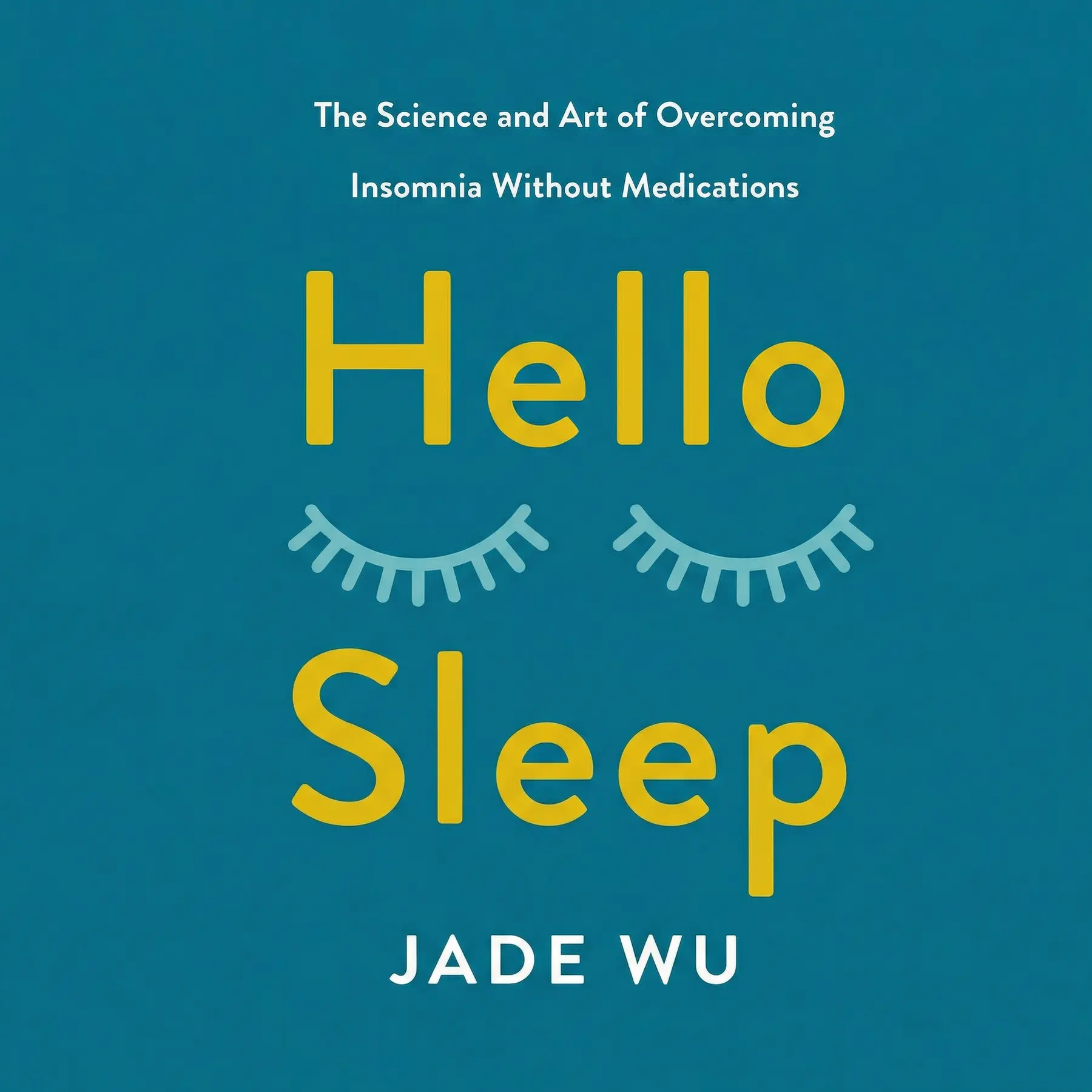
Hello Sleep: The Science and Art of Overcoming Insomnia Without Medications
By Jade Wu
Hello Sleep offers a compassionate, science-backed approach to overcoming insomnia. By shifting your relationship with sleep and embracing natural biological rhythms, you can reclaim restful nights without relying on sleep medications.
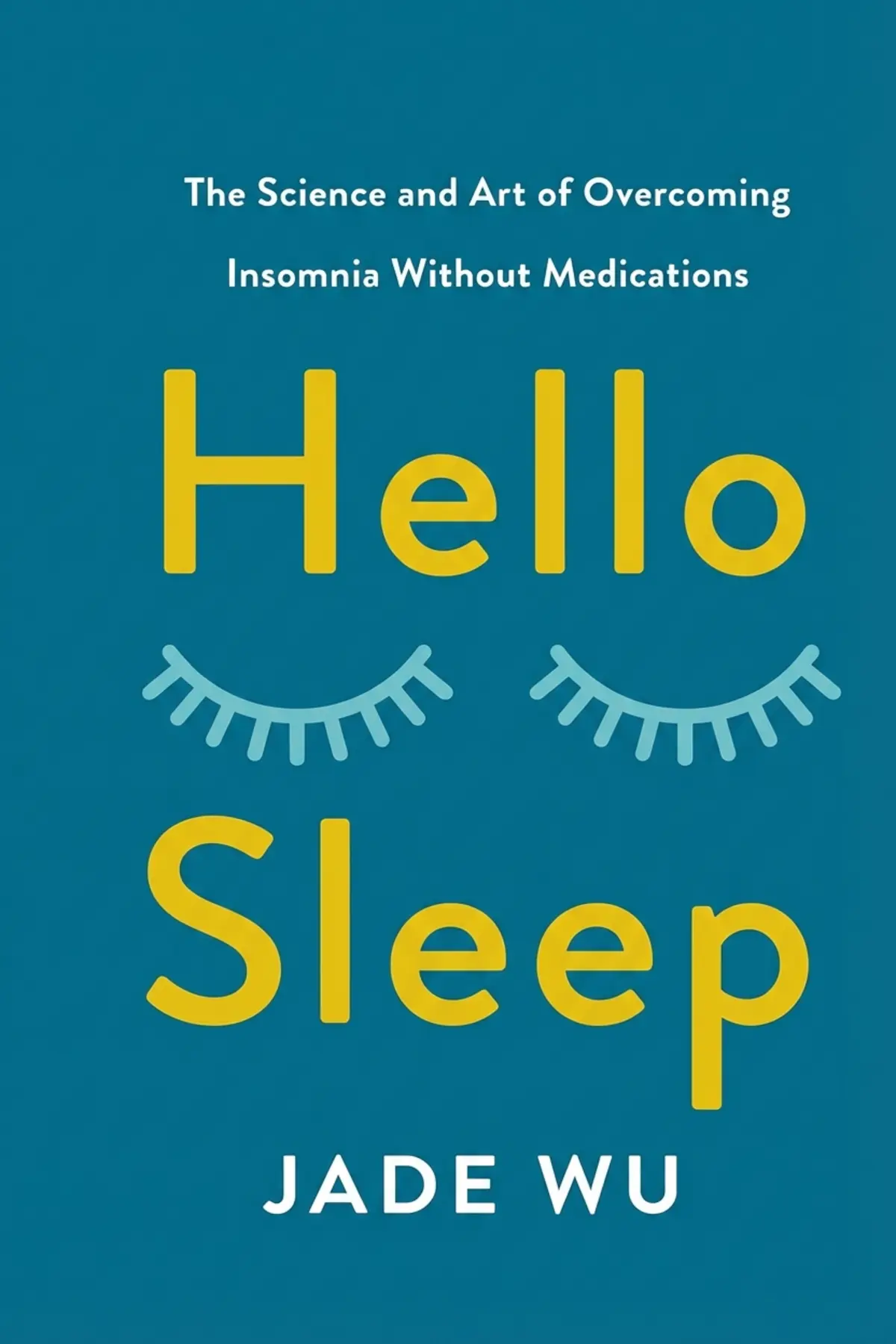
Table of Content
1. Introduction
1 min 32 sec
In the quiet hours of the night, when the rest of the world seems to have drifted into a peaceful slumber, millions of people find themselves caught in a frustrating loop of wakefulness. They watch the minutes tick by on the bedside clock, calculating exactly how tired they will feel the next day. This struggle isn’t just about a lack of rest; it is an emotional and physical battle that affects nearly twenty-five million people in the United States alone. For those caught in this cycle, sleep has ceased to be a natural, refreshing part of life and has instead become a source of profound anxiety.
But what if the way we think about sleep is actually the thing keeping us awake? This is the central question explored in Hello Sleep. Instead of offering another list of rigid rules or suggesting more medications, this approach invites you to look at sleep through a different lens. It’s about moving away from the idea that sleep is something we must control and toward the understanding that it is a natural, involuntary process that knows how to take care of itself if we simply get out of its way.
Throughout this exploration, we will look at how our modern society has distorted our relationship with rest, why the standard advice often fails, and how we can use behavioral science to rebuild a healthy, effortless connection to the night. By understanding the biology and psychology of our internal rhythms, we can stop fighting against insomnia and start welcoming sleep back into our lives.
2. The Evolution of Sleep Attitudes
2 min 27 sec
Explore how the transition from natural rhythms to industrial productivity fundamentally changed our relationship with rest and created the modern struggle with insomnia.
3. Sleep as a Biological Maintenance Process
2 min 24 sec
Discover why sleep is an involuntary biological system that resists control and why the rigid eight-hour rule may be holding you back.
4. Insomnia as a Twenty-Four-Hour Condition
2 min 11 sec
Learn why chronic insomnia is more than just a nighttime problem and how shifting your focus to your daytime habits can break the cycle.
5. Balancing Sleep Drive and Arousal
2 min 21 sec
Understand the mechanics of the ‘sleep piggy bank’ and how common mistakes like going to bed too early can accidentally sabotages your rest.
6. The Power of Acceptance and Non-Resistance
2 min 32 sec
Learn why fighting against wakefulness is counterproductive and how the principles of acceptance can help you find peace even on restless nights.
7. Conclusion
1 min 21 sec
The journey to better sleep is not about finding a magic pill or a perfect schedule; it is about rebuilding a sense of trust with your own body. We have seen how our modern world has complicated an instinctive process, turning a natural rhythm into a source of stress. By understanding that sleep is a biological maintenance system that varies for everyone, we can stop chasing the ‘perfect’ eight hours and start listening to our own unique needs.
Overcoming insomnia requires a dual approach. First, we must manage our daytime behavior to build a strong sleep drive, ensuring that we aren’t accidentally sabotaging our natural rhythms by resting too much during the day or going to bed before we are truly sleepy. Second, we must change our psychological response to wakefulness. By practicing acceptance and shifting our focus from the racing mind to the present body, we lower the arousal that keeps us awake.
What this really means is that you don’t have to be a victim of your sleeplessness. You have the tools to change your relationship with the night. If you can stop treating sleep as a performance and start viewing it as a natural, albeit sometimes unpredictable, ally, you can find your way back to restorative rest. Better sleep begins with the realization that you don’t need to fight the night—you just need to say ‘hello’ to it and let it take its course.
About this book
What is this book about?
Many people view sleep as a chore to be managed or a performance to be optimized, leading to a cycle of anxiety and chronic wakefulness. Hello Sleep breaks this cycle by exploring the biological, historical, and psychological roots of insomnia. It challenges the common misconceptions that fuel sleep anxiety, such as the rigid eight-hour rule and the excessive reliance on sleep hygiene rituals. This guide provides a roadmap for rebuilding a healthy relationship with rest. It introduces behavioral strategies to strengthen your natural sleep drive and psychological techniques to reduce the mental friction of being awake at night. By moving away from the struggle and toward acceptance, you can learn to trust your body’s innate ability to recover and find a sustainable path to restorative sleep.
Book Information
About the Author
Jade Wu
Jade Wu is a behavioral sleep medicine specialist and researcher at Duke University School of Medicine. In addition to her clinical and research work, she has contributed to major news outlets such as NBC News, BBC News, and Scientific American, and has gained popularity as the former writer and host of the Savvy Psychologist podcast.
Ratings & Reviews
Ratings at a glance
What people think
Listeners find the work both helpful and straightforward, with one person highlighting how easily it translates complex theories into clear language. Additionally, they value its empathetic perspective and the functional techniques provided for managing sleep issues without medication. The content is also praised for being rooted in scientific evidence, leading one listener to label it the international gold standard for insomnia treatment.
Top reviews
Ivan
Dr. Jade Wu has managed to do something truly remarkable here by turning dense clinical research into a warm, accessible conversation. I’ve always been intimidated by CBT-I (Cognitive Behavioral Therapy for Insomnia), but this book makes it feel achievable without needing a private therapist. The writing style is ultra-readable and often quite funny, which helps when you’re reading it through the fog of exhaustion. I especially appreciated the deep dives into how minor depression and even sunlight exposure can drastically shift your circadian rhythm. It truly feels like the international gold standard for non-medication treatment. For those of us who want to avoid pills, this is the definitive guide. It's practical, kind, and based on real human biology rather than just wishful thinking. I've already recommended it to several friends who struggle with tossing and turning.
Show morePui
Ever wonder why your brain suddenly decides to run a marathon the second your head hits the pillow? Dr. Wu explains that people with insomnia actually have significantly higher brain activity during sleep than 'normal' sleepers, which was such a validating thing to read. The 'Hello Sleep' program is tough—it involves some extreme schedule shifts—but the logic is sound. I stopped beating myself up for not being able to 'force' sleep and started focusing on my relationship with my bed. Not gonna lie, the first few nights of staying up late were brutal. But after a week, my sleep efficiency shot up. This book doesn't just give you tips; it resets your entire philosophy on rest. It’s easily the best book on sleep patterns I’ve ever picked up. I’m finally starting to see the sun as a tool rather than an enemy.
Show morePhimwan
This isn't just another self-help book filled with generic advice like 'don't drink caffeine after noon.' Instead, it’s a deep dive into the 'Art and Science' of retraining your brain to trust sleep again. I loved the section on 'The Golden Years' because it’s rare to find a sleep book that specifically addresses how aging changes our requirements. Dr. Wu’s voice is soothing and authoritative without being condescending. She treats the reader like a partner in the process. The focus on overcoming insomnia without medications is exactly what I was looking for. I’ve spent years worried that I was 'broken,' but this book proved that insomnia is just a learned response to stress. It provides a clear, step-by-step process that actually works if you commit to the work. It’s truly an empowering read for anyone feeling hopeless.
Show moreCharlotte
To be fair, I was skeptical that a book could actually replace a therapy session, but Dr. Wu makes a compelling case for the self-guided approach. She addresses every doubt and fear I had about my insomnia with a mix of science and humor. I especially liked the part about how we wake up ten to sixteen times a night without even knowing it—it made me feel so much less anxious about those brief moments of consciousness. The book is very well-organized, leading you through the 'why' before hitting you with the 'how.' It’s a relief to find a researcher who actually practices therapy and understands the emotional toll of sleeplessness. If you’re tired of being razed up by your own thoughts, buy this immediately. It is worth every penny for the peace of mind alone.
Show morePloy
As a lifelong insomniac, I’ve tried every tea, supplement, and weighted blanket on the market with very little success. Dr. Wu’s approach is fundamentally different because it focuses on the science of 'sleep drive' rather than just superficial hygiene tips. The concept of the sleep-wake equation really clicked for me. It explains how our hunger for sleep builds throughout the day and why my racing brain at 2 AM isn't just a personal failing. Personally, I found the tone to be incredibly compassionate and less clinical than other manuals. However, the plan she proposes—staying up until you are truly sleepy—is quite rigorous and requires a lot of discipline. I struggled with the no-napping rule during the first week. Still, it’s the most evidence-based guide I’ve encountered, and I feel like I finally have a roadmap to follow.
Show morePacharapol
Finally got around to reading this after a friend mentioned it, and I’m glad I did. The way Wu breaks down the difference between being 'tired' and being 'sleepy' is a total game-changer for how I plan my evenings. I used to go to bed far too early, which only led to hours of anxiety and staring at the clock. Now, I understand that I was actually sabotaging my own sleep drive. To be fair, some of the advice feels a bit repetitive if you’ve already done a lot of research into sleep science. However, her specific tips for those dealing with chronic pain were very insightful. She acknowledges how pain creates a vicious cycle of hyperarousal that makes sleep feel impossible. It’s a very empathetic look at a difficult medical condition. A solid four stars for clarity and compassion.
Show moreLuke
The chapter on menopause and sleep was a complete revelation for me. It’s so rare to see a sleep specialist actually acknowledge how hormonal shifts create unique challenges for women's rest. Dr. Wu doesn't just offer platitudes; she provides specific tweaks to the CBT-I protocol to account for hot flashes and night sweats. In my experience, most doctors just want to hand out a prescription and move on. This book offers a real alternative. The writing is approachable, though I will say the book is quite long for a topic that could be summarized more briefly. I found myself scanning the sections on pregnancy since that doesn't apply to me. If you can get past some of the fluff, the actual protocol is gold. I feel much more in control of my nights now.
Show moreAndrew
Wow, I actually found myself looking forward to reading this at night, which is ironic considering the subject matter. It's written in such a conversational, gentle way that it actually helped lower my arousal levels before bed. Dr. Wu’s explanation of how our brains are 'hyper-alert' during insomnia was a huge 'aha' moment for me. I’ve been following the light-therapy suggestions and it’s already helping my morning grogginess. My only complaint is that the book can feel a bit wordy in the middle sections. Sometimes I just wanted her to get to the point. But the depth of the research is undeniable. For anyone struggling with the 'insidious' nature of poor sleep, this is a fantastic, medication-free toolkit. It’s definitely helped me build a better relationship with my bedroom. Four stars for being a truly helpful, compassionate guide.
Show moreLaddawan
The structure of this book is undeniably valuable, but the presentation felt incredibly repetitive for someone listening to the audiobook version narrated by Susannah Mars. At the end of every single chapter, there are recaps and check-ins that work well in a physical copy but become tedious to hear over and over again. Frankly, I think I would have gotten more out of a hardback where I could easily skip the sections that didn't apply to me. For instance, the chapters on pregnancy and menopause were interesting but totally irrelevant to my current life stage. While the science is solid and the 'sleep drive' concepts are eye-opening, I found myself zoning out during the longer explanations. It is a comprehensive guide, but it could have been about fifty pages shorter without losing the core message. Get the physical book instead.
Show moreDiego
Look, I really wanted to love this, and while the information is scientifically sound, the program is just too rigid for my lifestyle. The requirement to stay up until you are 'sleepy' sounds great in theory, but when you have to be at work by 7 AM, it’s nearly impossible to manage the initial sleep deprivation. I felt like the book assumes a level of control over one's morning schedule that many people just don't have. Truth is, I felt more stressed trying to follow the rules than I did before. I do appreciate the evidence-based strategies and the explanation of circadian rhythms, which were very clear. But the 'one-size-fits-all' approach to the scheduling felt a bit restrictive for my needs. It’s a good resource, but definitely be prepared for a very difficult adjustment period that might not fit every career.
Show moreFeatured in
Readers also enjoyed
AUDIO SUMMARY AVAILABLE
Listen to Hello Sleep in 15 minutes
Get the key ideas from Hello Sleep by Jade Wu, plus 5,000+ more titles in English and Thai.
- 5,000+ titles
- Listen as much as you want
- 7-day free trial
- Cancel anytime







