
Adults in The Room: My Battle With Europe’s Deep Establishment
Yanis Varoufakis
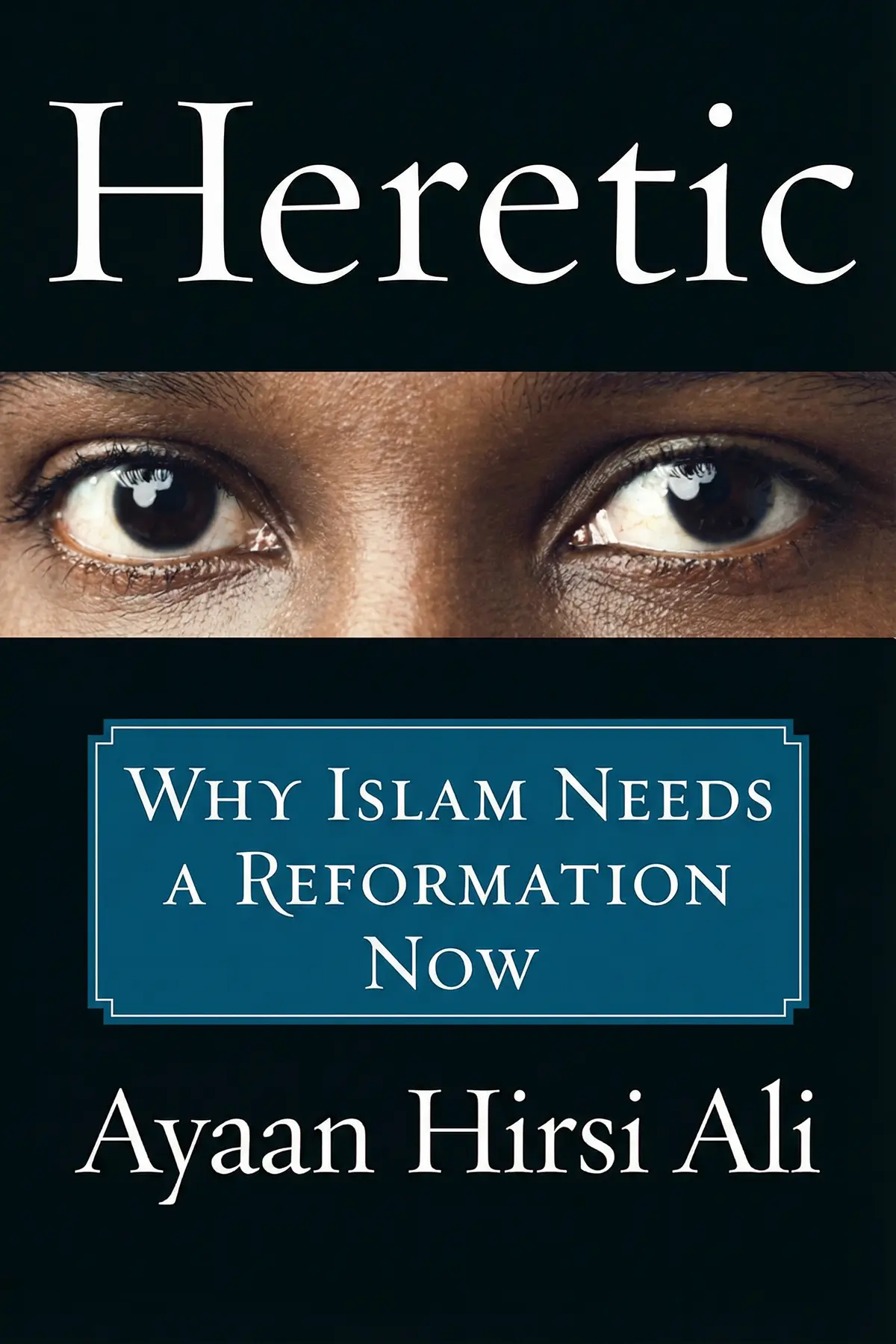
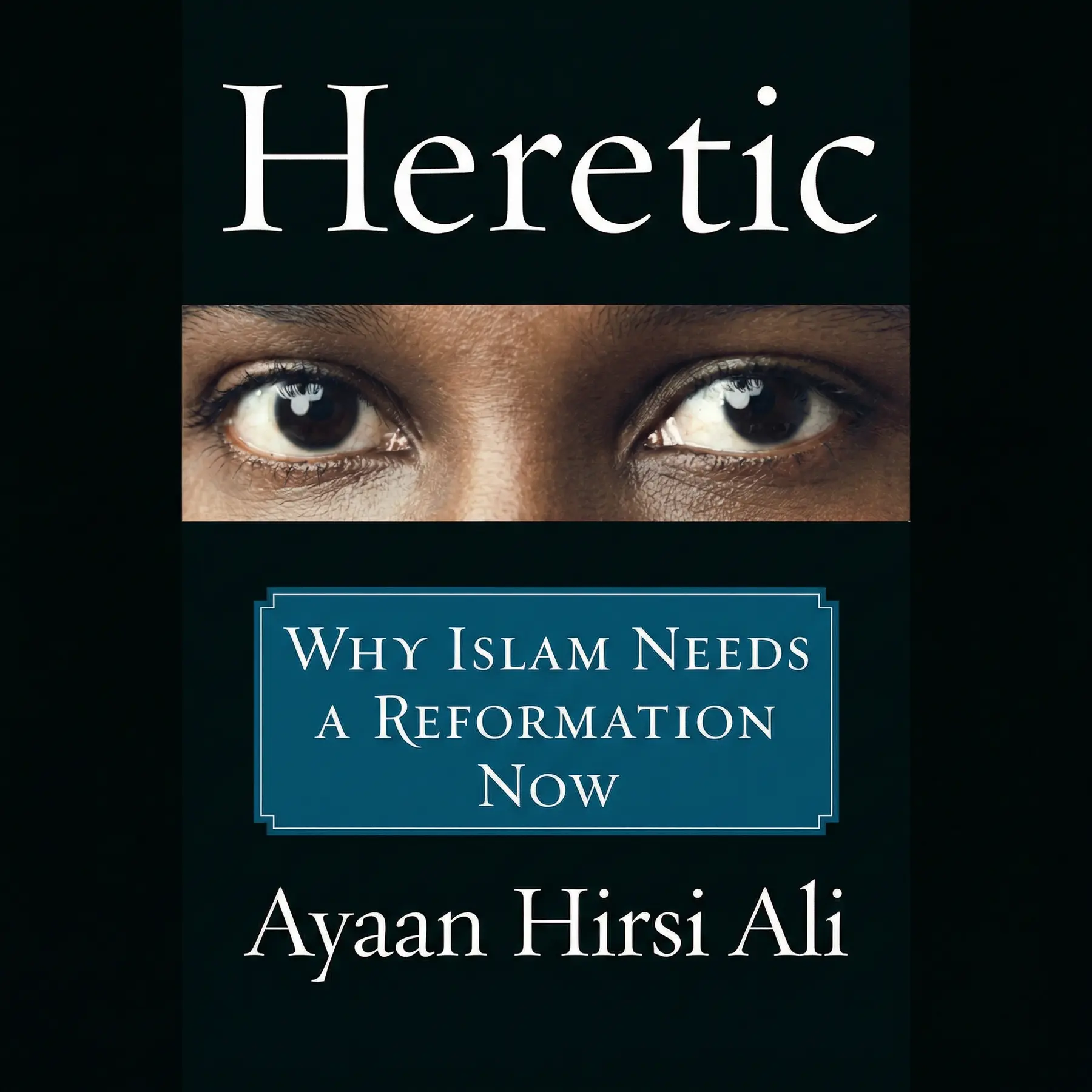
Ayaan Hirsi Ali argues that Islam must undergo a fundamental reformation. She explores the scriptural roots of modern violence and outlines five specific theological shifts necessary to align the faith with modern secular values.
1 min 50 sec
We live in an era where the mention of a specific religion often brings to mind images of conflict, rigid laws, and international headlines. Since the dawn of the twenty-first century, specifically following the tragic events of September 11, the world has grappled with a surge of violence committed in the name of Islam. From the global reach of groups like Al-Qaeda to the regional brutality of Boko Haram and the Islamic State, the question of ‘why’ has never been more pressing. Is this violence a distortion of a peaceful faith, or is it something more deeply embedded in the religion’s DNA?
Ayaan Hirsi Ali, in her insightful work, suggests that we need to move past the comforting cliché that Islam is solely a religion of peace that has been high-jacked by a few radicals. Instead, she invites us on a journey to examine the core of the faith itself. Her throughline is clear: Islam, as it is practiced and interpreted today by millions, is in desperate need of a reformation similar to the one that transformed Christianity centuries ago. This isn’t just about politics or economics; it’s about a fundamental shift in how religious texts are read, how the Prophet is viewed, and how the afterlife is prioritized over the present.
Over the course of this summary, we will explore the historical shifts that created two very different versions of the Islamic message. We will look at why criticizing these beliefs is so dangerous and why the connection between religion and government has created a roadblock for progress. Most importantly, we will identify the specific theological pillars that must be dismantled if a truly peaceful, modern version of the faith is to emerge. It’s a challenging conversation, but according to Ali, it’s the most important one we can have today.
2 min 07 sec
Explore the uncomfortable reality that modern violence isn’t just a political byproduct, but is often explicitly justified by historical religious texts.
2 min 27 sec
Understand the internal divisions within the faith, from those clinging to seventh-century laws to those seeking a new way forward.
2 min 19 sec
Learn the specific theological barriers that must be dismantled to pave the way for a truly modern and peaceful Islamic reformation.
1 min 58 sec
Discover why the simple act of asking questions is often the most dangerous thing a person can do in many Islamic societies.
2 min 02 sec
Explore how the concepts of honor and shame create a self-policing social order that discourages individual freedom.
1 min 56 sec
Examine the direct conflict between ancient legal codes and modern human rights, and why these laws persist today.
2 min 00 sec
Learn why the call to holy war is a scriptural obligation that requires a direct and official renunciation by religious authorities.
2 min 05 sec
Find hope in the emerging catalysts—from social media to failed regimes—that are finally sparking a global call for change.
1 min 51 sec
The message of Ayaan Hirsi Ali is both a warning and a call to hope. We cannot ignore the fact that the violence we see in the world today is often linked to specific, deeply held religious beliefs. By pretending that Islam has nothing to do with the acts committed in its name, we actually hinder the very people who are trying to fix the problem from the inside. To make Islam a truly peaceful religion, we must support a fundamental reformation that moves the faith away from the literalism and militancy of its seventh-century origins and toward a spiritual, personal belief system that respects human rights and the rule of law.
This is a journey that requires immense courage, especially for those living within Muslim communities. It involves challenging the semi-divine status of the Prophet, prioritizing this life over the next, and completely renouncing the idea of Sharia and Jihad as modern tools. The path is long, but the catalysts for change—technology, migration, and the lived experience of failed fundamentalism—are already at work.
The most important takeaway for all of us is to never be intimidated into silence. Whether you are a believer or a critic, progress only happens when we are free to voice our doubts and have honest, even difficult, conversations. Don’t let the fear of being labeled ‘intolerant’ stop you from standing up for universal human values. By supporting the ‘modifying’ voices and encouraging critical thought, we can help move toward a world where no one has to fear a ‘heretic’ and where faith is a source of peace, not a mandate for war. The reformation is not just a possibility; it is a necessity for the twenty-first century.
Heretic is a provocative examination of why the Islamic world faces a crisis of violence and stagnation. Drawing on her own transition from a devout believer in Somalia to a political figure in the West, Ayaan Hirsi Ali argues that the religion's current struggles are not merely the result of political or economic factors, but are deeply rooted in its foundational texts and early history. The book provides a roadmap for a total religious overhaul. Ali identifies five specific tenets that she believes are incompatible with the twenty-first century, ranging from the literal interpretation of the Qur'an to the glorification of holy war. She provides a compelling call to action for Muslims and Westerners alike to support 'modifying' voices who seek to modernize the faith, suggesting that a peaceful future depends on the courage to criticize dogma and separate mosque from state.
Ayaan Hirsi Ali is a renowned human rights activist and a fellow at Harvard University’s John F. Kennedy School of Government. Her journey is one of remarkable transformation: she grew up in a traditional Muslim household in Somalia before eventually seeking asylum in the Netherlands. There, she rose from working in factories to serving as a member of the Dutch Parliament. A prolific writer and outspoken advocate for women's rights, she is also the author of the bestsellers Infidel and Nomad.
Listeners find this work to be profound and articulate, offering a transparent look at Islamic doctrines and the issues with political Islam. Additionally, they regard it as a necessary read for international leaders, pointing to the author's fearlessness and the deep ideas presented. Nevertheless, the book gets varied feedback on how scary it is, with several listeners characterizing it as frightening.
Ayaan Hirsi Ali has produced a work that is both terrifying and deeply necessary for our current geopolitical climate. She breaks down the complexities of political Islam with a level of clarity that is often missing from mainstream media discussions today. Her distinction between 'Mecca Muslims' and 'Medina Muslims' provides a helpful framework for understanding why some adherents remain peaceful while others are drawn to violence. Truth is, the book is incredibly well-written and logical, even if the implications are enough to keep you up at night. I found her five points for reformation to be a pragmatic roadmap, though I wonder if the Western world has the stomach to support such a shift. This is a must-read for anyone who cares about the future of global democracy and religious freedom.
Show moreIt takes a remarkable amount of guts to write a book like this knowing the personal risk involved for the author. Hirsi Ali isn't just complaining; she’s proposing a structural overhaul of how Islam interacts with the 21st century. The chapters regarding the status of Muhammad and the literalist reading of the Qur'an are particularly poignant and well-argued. Look, some people will find this book offensive, but ignoring the problems she highlights won't make them go away. I was moved by her optimism that a reformation is possible through the power of the internet and global communication. It’s a sobering look at the clash between medieval doctrine and modern values that every world leader should have on their desk.
Show moreThe division between the three types of Muslims that Hirsi Ali outlines is perhaps the most useful part of this entire work. By categorizing believers based on their philosophical approach rather than just their sect, she makes the issue much more accessible to a general reader. I was particularly struck by her argument that we must stop tolerating intolerance in the name of multicultural sensitivity. We often give a free pass to oppressive practices because we are afraid of being labeled, but she challenges us to stand up for liberal values. The writing is sharp, direct, and doesn't waste any time with fluff or unnecessary jargon. This is easily one of the most thought-provoking books I have read in the last decade.
Show moreWow, this was a heavy read. Hirsi Ali describes a reality that most of us in the West prefer to ignore or pretend isn't happening. Her explanation of why 'Mecca Muslims' are often silenced by the more radical elements of the faith was particularly illuminating. The truth is, the book is frightening because it highlights a deep-seated resistance to change that has lasted for centuries. Yet, there is a thread of hope throughout the narrative that the next generation will find a way to modernize. I finished this book feeling much more informed, albeit a bit more worried about the future of global stability. It's a powerful, well-written call to action that refuses to pull any punches for the sake of politeness.
Show moreFinally got around to reading this and I’m kicking myself for waiting so long. Hirsi Ali provides a roadmap for what she calls a 'Muslim Reformation' that is both brilliant and terrifying in its simplicity. She doesn't just point out what is wrong; she offers five concrete areas where change must happen if we want a peaceful future. The section on the 'investment in life after death' was a real lightbulb moment for me in terms of understanding extremist psychology. In my experience, very few authors are willing to be this honest about the role of doctrine in conflict. It’s a must-read for anyone trying to make sense of the modern world. Regardless of where you stand politically, you cannot ignore the logic she presents here.
Show morePicked this up after hearing a lot of buzz about Hirsi Ali’s recent lectures and it did not disappoint. The author writes with a certain fearlessness that makes you question your own assumptions about multiculturalism and tolerance. Frankly, the sections describing the rigidity of Sharia law were quite eye-opening and, to be honest, a bit frightening to consider in a modern context. While she moves away from the purely autobiographical style of her earlier books, her personal scars still inform every page of this urgent plea. I don’t agree with every single conclusion she draws regarding the inherent nature of the faith, but her call for a 'Muslim Reformation' is compelling. It’s a dense read but well worth the time for the sheer insight into how doctrine can drive conflict.
Show moreIs it possible to reform a religion from within when the penalty for questioning it is so severe? That is the central question Hirsi Ali grapples with in this insightful and often scary volume. She compares the current state of Islam to the Christian Reformation, suggesting that a similar 'Martin Luther moment' is currently underway. Her focus on five specific areas of reform—including the status of Sharia and the exaltation of the afterlife—provides a clear agenda for dissidents. I did find some of her statistical claims a bit thin in places, but the overall logic of her argument remains sound. It’s a challenging book that forces you to confront uncomfortable truths about the world we live in today.
Show moreAfter finishing her previous memoirs, I wasn't sure what to expect from a more analytical work, but Hirsi Ali transitioned beautifully into this role. She manages to balance personal conviction with a structured argument about the need for a theological shift. Her critique of how Western liberals often abandon Muslim women to avoid appearing 'Islamophobic' was especially stinging and necessary. To be fair, she does focus heavily on the most extreme versions of the faith, which might skew the perception of some readers. However, her core message about the incompatibility of Sharia with modern human rights is hard to argue against. It’s a sophisticated piece of writing that demands your full attention.
Show moreThere is no denying that the prose is sharp and the author’s perspective is unique, but I walked away with mixed feelings about the content. On one hand, her defense of free speech and women’s rights within Islamic communities is vital and heroic. On the other hand, I found her dismissal of Islamic history and its various evolutions over 1,400 years to be quite reductive. Not gonna lie, the book feels a bit repetitive in the middle sections where she hammers the same points about 'Medina Muslims' over and over again. It’s a good starting point for a conversation, but it shouldn’t be the only book you read on the subject if you want a balanced view. Still, her courage is undeniable.
Show moreWhile I appreciate the author's bravery in the face of death threats, her actual analysis in this book feels surprisingly shallow and often relies on sweeping generalizations. She explicitly states that she will not 'sub-divide Islam,' which is a massive red flag for any serious academic study of a global religion. By treating the faith as a monolith, she ignores the vast differences between countries like Indonesia and Saudi Arabia. Furthermore, her historical claims about Al-Ghazali and his influence on modern jihadi groups are factually questionable at best. It felt like she was leaning into intellectual dishonesty just to make her thesis more provocative for a Western audience. I wanted to like this, but the lack of nuance makes it hard to take as a definitive authority on the subject.
Show moreYanis Varoufakis
Deepak Chopra
Yuval Noah Harari
Pico Iyer
Jacinda Ardern
Pankaj Mishra
Alcoholics Anonymous World Services
James Comey
Anthony Pratkanis
AUDIO SUMMARY AVAILABLE
Get the key ideas from Heretic by Ayaan Hirsi Ali, plus 5,000+ more titles in English and Thai.







