

31 min 38 sec
Hidden Valley Road: Inside the Mind of an American Family
Hidden Valley Road explores the tragic yet scientifically vital story of the Galvin family, where six of twelve children were diagnosed with schizophrenia, fundamentally changing our understanding of mental illness.
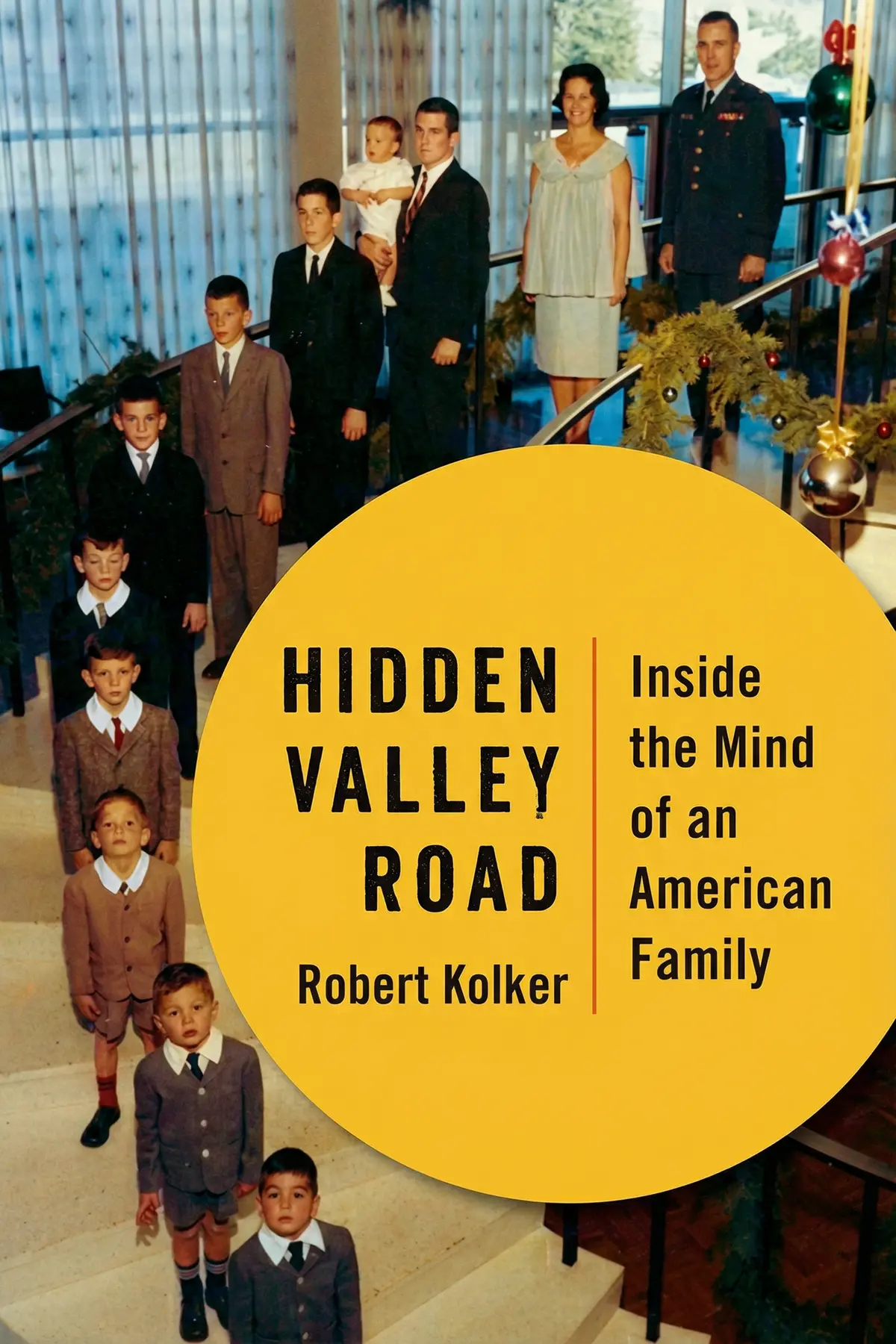
Table of Content
1. Introduction
2 min 11 sec
In the decades following the Second World War, the American Dream was often measured by the size of one’s family and the stability of one’s home. Don and Mimi Galvin seemed to be the ultimate manifestation of this ideal. Married young and driven by a sense of duty and ambition, they represented the post-war optimism that defined an era. Don, a man of military discipline and intellectual yearning, and Mimi, a woman of grace and maternal fortitude, eventually settled in Colorado, where they raised twelve children. To the outside world, the Galvins were a marvel—a large, athletic, and seemingly perfect household. But beneath this polished exterior, a terrifying reality was beginning to take hold, one that would eventually tear the family apart and, simultaneously, provide the scientific community with its most significant breakthrough in the study of schizophrenia.
This isn’t just a story about a family in crisis; it is a chronicle of the evolution of human understanding. For decades, the medical world struggled to define what schizophrenia was, where it came from, and how to treat it. The Galvins found themselves at the very center of this struggle. As six of their sons began to display the telltale signs of the illness—delusions, hallucinations, and social withdrawal—the family became a living laboratory. Their story bridges the gap between the era of blaming mothers for their children’s psychiatric breaks and the modern age of genetic mapping.
As we explore this narrative, we will see how the Galvin family navigated a world that had no vocabulary for their suffering. We will look at the internal dynamics of a household where the line between sibling rivalry and psychological collapse was often blurred. Most importantly, we will follow the throughline of scientific discovery, seeing how the unique genetic makeup of this one family allowed researchers to move beyond theories of the mind and into the hard data of the brain. This is a journey through the darkest corners of domestic life and the brightest hopes of medical science, illustrating how the unimaginable trials of one family paved the way for a deeper understanding of the human condition.
2. A Facade of Perfection on Hidden Valley Road
2 min 36 sec
The Galvin family moved to Colorado with dreams of a perfect life, but their large household soon became a site of hidden tension and early psychological distress.
3. Donald’s Spiral and the First Diagnosis
2 min 43 sec
The eldest son’s behavior shifted from eccentricity to self-destruction, leading to the family’s first encounter with the confusing world of psychiatric labeling.
4. The Weight of Stigma and the Blame Game
2 min 26 sec
In the mid-20th century, psychiatric theories often pointed the finger at parents, causing the Galvins to hide their struggle from the world.
5. A Rising Tide of Internal Violence
2 min 36 sec
As the illness spread to other sons, the family’s attempts to maintain order were shattered by acts of aggression and unthinkable tragedy.
6. The Collapse of the Hockey Brothers
2 min 30 sec
The younger sons, once united by sports and health, soon began to succumb to the same mysterious forces that had claimed their older siblings.
7. Lindsay’s Escape and the Continued Struggle
2 min 32 sec
One daughter found a new identity and a way out, while the brothers continued to cycle through a system of heavy medication and poor results.
8. A New Scientific Frontier: The Biological Shift
2 min 25 sec
Researchers began to move away from psychological theories and toward the brain’s physical structure, finding the Galvins to be the perfect case study.
9. The Mystery of Sensory Gating
2 min 30 sec
Dr. Robert Freedman explored how the brain filters information, discovering a specific genetic link that explained the overwhelming sensory experience of the brothers.
10. The High Cost of Treatment and Lost Time
2 min 31 sec
Despite scientific advances, the practical application of new drugs stalled, and the brothers paid the price with their long-term health.
11. The SHANK2 Breakthrough and the Spectrum of the Mind
2 min 26 sec
Decades of data finally led to the identification of a shared genetic mutation, suggesting that mental illnesses might all be part of a connected spectrum.
12. A Legacy of Hope and a New Generation
2 min 08 sec
The Galvin story concludes with a sense of reconciliation and the possibility of a brighter future for the descendants of a troubled house.
13. Conclusion
2 min 04 sec
The story of the Galvin family is a haunting journey from the peak of mid-century American optimism into the depths of a unique psychological nightmare. Through the lives of twelve children, we see the devastating impact of schizophrenia, a disease that doesn’t just affect an individual, but ripples through every connection and corner of a household. For the Galvins, this meant decades of violence, secrecy, and loss. But more importantly, their story serves as a bridge between two worlds of medicine. It takes us from a time when mothers were cruelly blamed for their children’s mental illness to a modern era where we can pinpoint the very genetic mutations that cause the brain’s communication to falter.
The throughline of this narrative is the transformation of suffering into progress. Because of the Galvins’ unprecedented openness and their contribution to science, the mystery of schizophrenia has become a little less opaque. We now understand the importance of sensory gating, the role of specific receptors like alpha-7, and the potential of nutritional interventions like choline. The Galvins provided the ‘how’ and ‘why’ that researchers had been searching for for a century. Their legacy is not just one of tragedy, but one of profound service to the future of mental health.
As we reflect on the lessons from Hidden Valley Road, the most important takeaway is the power of persistence and the necessity of looking at mental illness through a lens of biology rather than judgment. For the survivors of the Galvin family, the path forward has been one of reconciliation and caretaking. For the rest of us, their story is a call to advocate for continued research and to replace the old stigmas with a commitment to scientific understanding. The journey of the Galvins reminds us that while we cannot always control the cards we are dealt, our response to those challenges can leave a lasting, positive mark on the world. It is a story that invites us to view mental health with both scientific rigor and deep human empathy.
About this book
What is this book about?
Hidden Valley Road tells the extraordinary true story of Don and Mimi Galvin and their twelve children. Living in mid-century Colorado, the family appeared to be the quintessential image of American success. However, behind closed doors, a domestic crisis was unfolding as six of their ten sons eventually descended into schizophrenia. This narrative follows the family's harrowing journey through a time when psychiatric science was in its infancy and often prone to blaming parents for the suffering of their children. The book serves as both a heartbreaking family saga and a medical detective story. It traces the shift in mental health science from Freudian theories of the 'schizophrenogenic mother' to a modern understanding rooted in genetics and biology. Because the Galvins provided their genetic material to researchers, they became the cornerstone of modern schizophrenia studies. The promise of this story is a deep look at the intersection of human endurance and scientific progress, showing how one family's pain became the key to potentially helping millions of others.
Book Information
About the Author
Robert Kolker
Robert Kolker is a best-selling author and investigative journalist whose work has appeared in publications such as New York Magazine and Bloomberg Businessweek. His highly acclaimed book, Lost Girls (2013), about a series of unsolved killings on Long Island, was adapted into a film of the same name released in 2020.
Ratings & Reviews
Ratings at a glance

What people think
Listeners find this account both absorbing and expertly crafted, presenting a gripping narrative about the intersection of family struggles and psychiatric conditions. The scientific exploration is captivating, and listeners value how the family’s willingness to be transparent offers a deep look into their personal history. The text provides extraordinary perspective on mental health issues, making it a necessary pick for those focused on the field. Even though listeners label the story as heart wrenching, some find it to be disturbing.
Top reviews
Game
What a staggering achievement of narrative non-fiction. Kolker manages to weave the tragic, intimate history of the Galvin family with the broader, often cold clinical history of schizophrenia research. It is almost inconceivable that six out of twelve children in one family could be diagnosed with the same devastating illness. The book doesn't shy away from the horrific reality of life in that Colorado home, from the violence to the internal family dynamics that bordered on chaotic. I found the sections on Lynn DeLisi and the hunt for genetic markers absolutely riveting. It’s a heavy read, certainly not for the faint of heart given the depictions of abuse, but the openness of the surviving siblings is a gift to the medical community. To be fair, it’s a lot of information to process, yet the author’s prose kept me anchored even during the dense scientific explanations. This is an essential look at how we've failed and eventually begun to understand mental health.
Show morePisit
It’s rare to find a non-fiction book that pulses with the urgency of a thriller, but this story is just that. The Galvins' lives were a sequence of mounting tragedies that felt like something out of a gothic novel, yet it was all terrifyingly real. I was particularly struck by the resilience of the two sisters, Lindsay and Margaret. Growing up in a house where your older brothers are essentially ticking time bombs is a trauma I can't even fathom. Kolker writes with a lot of empathy, never turning the brothers into monsters, even when their actions were monstrous. Truth is, this book changed how I view the 'nature vs nurture' debate entirely. The way the family's DNA eventually helped unlock secrets about the human brain is a silver lining that gives the book a sense of purpose beyond just tragedy. An absolute must-read for anyone interested in the mysteries of the mind.
Show moreMingkwan
Pick this up only if you’re prepared to have your heart broken. This family's experience is so extreme it feels like a statistical impossibility, yet Kolker’s reporting makes it all feel grounded and human. I was fascinated by the contrast between the public-facing 'perfect' family and the private nightmare they were living. The chapters on the development of Thorazine and the evolution of the DSM were surprisingly engaging—I usually find medical history dry, but here it felt personal because you saw the drugs' effects on the Galvin boys. It’s a masterclass in research. The way the family eventually opened their lives to science to prevent others from suffering is a powerful testament to their strength. It is a thick book, but I flew through it because I had to know what happened to each brother. A truly phenomenal piece of journalism.
Show morePenelope
Ever wonder how much one family can actually endure before they completely shatter? The Galvins are the answer to that question. This is one of the most gripping non-fiction books I’ve ever read. Kolker doesn't just list facts; he builds a world. You feel the tension in the kitchen and the fear in the hallways. I appreciated that he gave so much space to the researchers like Lynn DeLisi, who fought against the psychiatric establishment to prove that schizophrenia had a genetic component. It’s a story of incredible suffering but also of incredible scientific breakthroughs. Personally, I found the openness of the family members to be the most moving part. They didn't have to share these painful, often shameful memories, but they did. It’s a heavy, unputdownable read that stays with you long after the final page.
Show moreBoss
Kolker manages to humanize a condition that is so often sensationalized or stigmatized in popular media. By focusing on one family, he makes the abstract statistics of schizophrenia—one in a hundred people—feel personal and urgent. I was moved by the way the siblings tried to care for one another, even as their own lives were being upended by their brothers' conditions. The book is a perfect blend of a domestic drama and a scientific mystery. It’s a long journey, and yes, it’s often disturbing, but the writing is so clear and the pacing is so deliberate that I never felt overwhelmed. Gotta say, it’s rare for a book to be this informative while also being a total page-turner. If you want to understand the history of mental health in America, this is the book to read. Five stars, no question.
Show moreRungtip
Finally got around to this after seeing it on so many 'best of' lists, and I have complicated feelings. On one hand, the storytelling is top-tier; Kolker makes you feel the claustrophobia of that house on Hidden Valley Road. You can almost see Mimi Galvin trying to maintain a veneer of perfection while her world literally imploded. On the other hand, the descriptions of neglect were incredibly difficult to stomach. Looking back, it’s easy to judge the parents for their 'magical thinking,' but the book does a good job showing how few resources they actually had in the 60s and 70s. I did notice a few spots where the editing felt a little loose, and some of the tangents about falconry felt like they belonged in a different book. Still, the insight into how Big Pharma halted certain research for profit was eye-opening. It’s a compelling, haunting, and deeply disturbing family portrait that I won't forget anytime soon.
Show morePat
As a healthcare professional, I found the timeline of psychiatric treatment presented here absolutely haunting. We've come so far from the days of blaming 'schizophrenogenic mothers,' yet this book reminds us how much damage those theories did to families like the Galvins. Mimi Galvin was a woman under siege, and while her denial was frustrating, the lack of support she received was the real crime. Kolker does a brilliant job balancing the science with the human element. My only minor gripe is that the ending felt a bit rushed compared to the painstaking detail of the early chapters. However, the exploration of how the brothers' illnesses manifested differently—some violent, some catatonic—was handled with great nuance. It’s a profound view of a family’s disintegration and their eventual, partial healing. Deeply informative and deeply sad.
Show moreJeeranan
The chapter on falconry was such an odd, specific detail that somehow grounded the whole story in its 1960s Colorado setting. It’s those little details that make the Galvins feel like real people rather than just case studies. This book offers incredible insight into the burden of being a 'healthy' sibling in a household dominated by illness. I felt so much for Donald, the eldest, whose descent into madness set the tone for the entire family's future. My only real criticism is that the author sometimes gets lost in the weeds with the side-stories of various researchers, which slowed the momentum down. But overall, it’s a well-written, compelling story about family dysfunction and the desperate search for answers. It’s heart-wrenching, but it’s an important contribution to the conversation about the stigma of mental illness.
Show moreBunyarit
To be fair, the subject matter is incredibly important, but the execution felt uneven at times. The author is clearly talented, but the book is quite long and meanders into historical tangents that took me out of the Galvins' personal story. I struggled with the parents' choices—letting the older, ill sons remain in the home with small children was an unforgivable lapse in judgment, regardless of the era. The writing also had some frustrating technical errors, like confusing different lobes of the brain, which makes me question how rigorous the fact-checking was for the scientific portions. It’s a fascinating case study, and I understand why it was an Oprah’s Book Club pick, but it felt like a missed opportunity to provide a tighter, more cohesive narrative. It’s informative, yes, but also incredibly draining and sometimes a bit muddled in its conclusions.
Show moreRay
I’m probably in the minority here, but this was just too bleak for me to enjoy or even appreciate. The level of detail regarding the sexual abuse and the domestic violence within the home felt voyeuristic after a certain point. I picked this up hoping for a scientific exploration of schizophrenia, but it felt more like a long-form exposé on a dysfunctional family that happened to have a lot of mental illness. Frankly, I found the parents to be incredibly negligent, and the book didn't hold them accountable enough for the trauma the younger children endured. The writing is fine, but the pacing is sluggish in the middle sections. If you’re looking for a clinical or uplifting look at mental health, this isn't it. It’s just one tragedy after another without much light at the end of the tunnel. It was more disturbing than it was enlightening.
Show moreReaders also enjoyed


A Year in the Life of William Shakespeare: 1599
James Shapiro


ADHD an A-Z: Figuring It Out Step by Step
Leanne Maskell



Agent Sonya: The Spy Next Door
Ben Macintyre
AUDIO SUMMARY AVAILABLE
Listen to Hidden Valley Road in 15 minutes
Get the key ideas from Hidden Valley Road by Robert Kolker, plus 5,000+ more titles in English and Thai.
- 5,000+ titles
- Listen as much as you want
- 7-day free trial
- Cancel anytime







