
19 min 14 sec
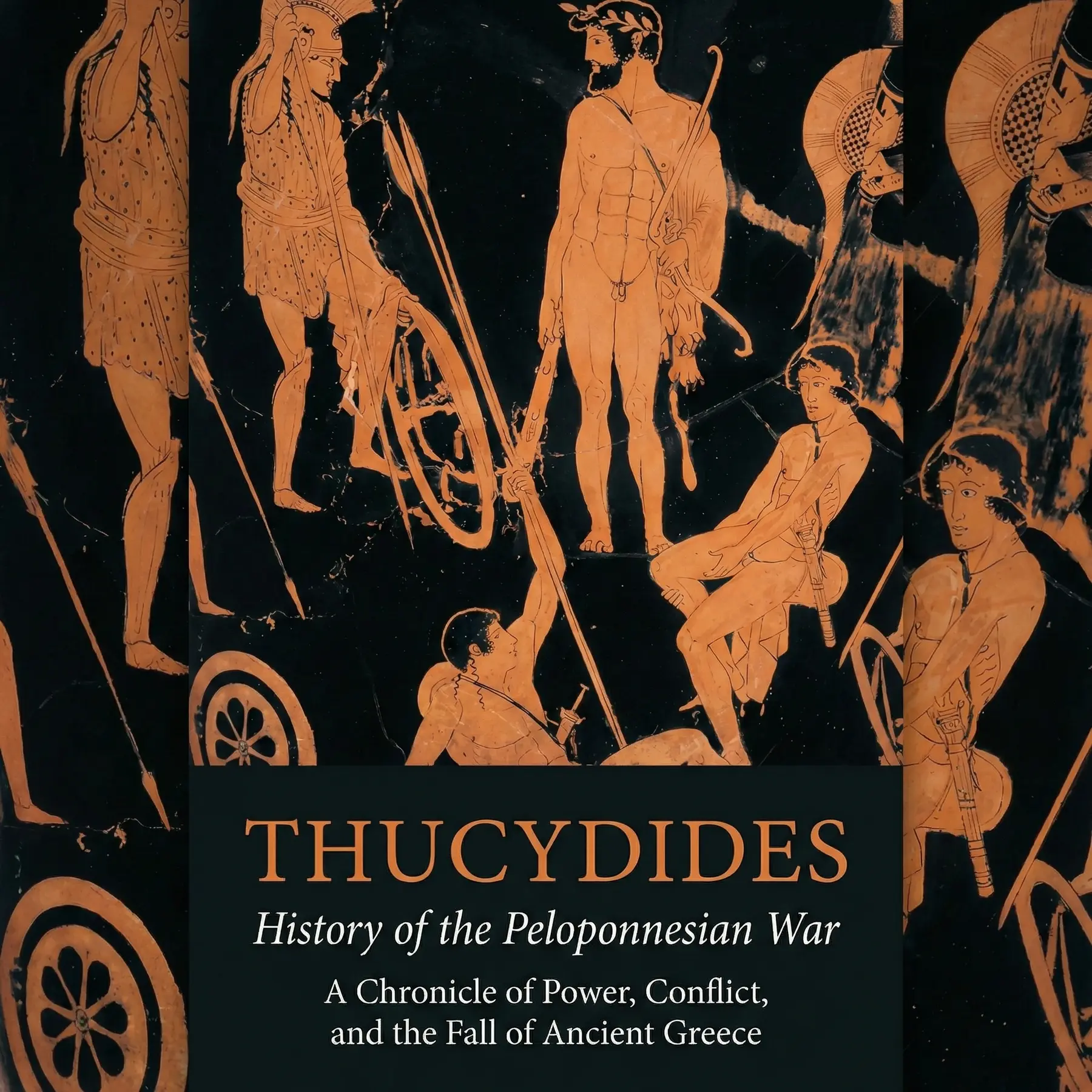
History of the Peloponnesian War
By Thucydides
Explore the foundational text of political realism. This summary examines the brutal conflict between Athens and Sparta, revealing timeless lessons on power dynamics, human nature, and the inevitable pressures of rising empires.
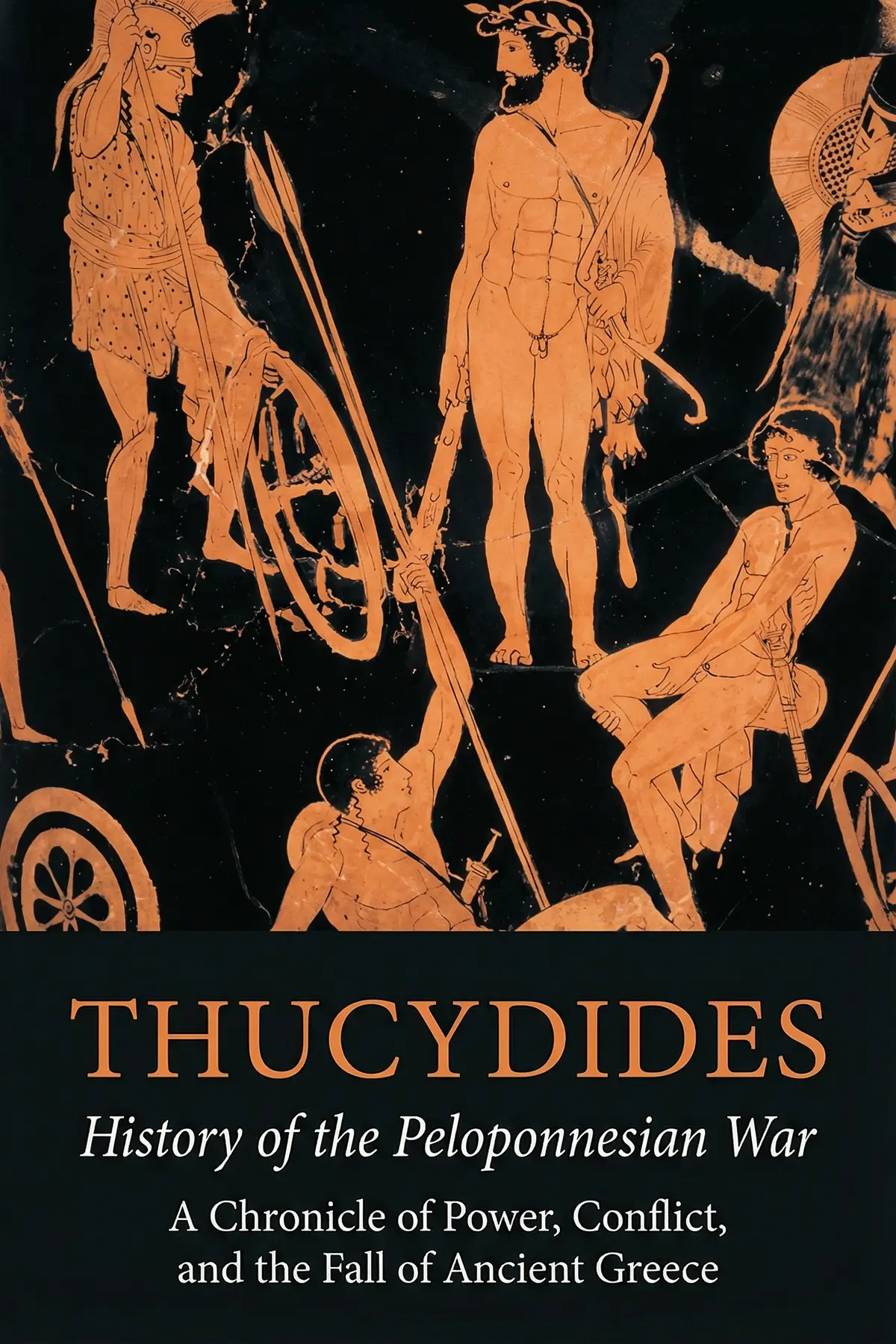
Table of Content
1. Introduction
1 min 33 sec
Imagine standing on the shores of the Mediterranean over two thousand years ago, watching the sun rise over a world caught in a struggle for its very soul. This was the landscape of the fifth century BCE, an era when the cradle of Western civilization was nearly torn apart by its own two greatest children: Athens and Sparta. While the battles were fought with bronze shields and wooden triremes, the underlying forces at play—the drive for security, the thirst for prestige, and the crushing weight of fear—are identical to the forces shaping our world today.
We are embarking on a journey through one of the most significant records of human history, a chronicle written not as a collection of myths or a tribute to the gods, but as a clinical, unflinching examination of how societies behave when pushed to the limit. The author, Thucydides, didn’t just want to tell a story; he wanted to create a tool for future generations. He believed that because human nature remains constant, the patterns of the past would inevitably repeat themselves.
In this BookBits summary, we will explore the arc of a twenty-seven-year war that leveled cities and toppled an empire. We will see how a rising power and an established one find themselves on an unavoidable collision course. We will witness the terrifying descent of a sophisticated democracy into internal chaos and the way ambition can blind even the most brilliant leaders. Through the lens of this ancient conflict, we gain a clearer view of the permanent realities of power, the fragility of social order, and the enduring complexity of the human spirit in times of crisis.
2. The Architecture of Rivalry
3 min 14 sec
Two vastly different superpowers find themselves locked in an escalating cycle of suspicion as their competing values and growing influence make a final confrontation seem unavoidable.
3. The Invisible Enemy and the Shift in Command
3 min 10 sec
The onset of conflict brings an unexpected biological catastrophe that tests the limits of Athenian resilience and fundamentally changes the city’s political landscape.
4. The Fatal Reach of Ambition
2 min 59 sec
A bold and risky overseas expedition becomes a cautionary tale of how overextension and internal betrayal can lead a superpower toward total catastrophe.
5. The Fractured State and the Final Defeat
3 min 16 sec
Struggling with the loss of its fleet and facing internal revolution, the world’s first democracy faces its darkest hour as enemies close in from all sides.
6. The Enduring Lens of Historical Realism
2 min 56 sec
Discover how a single exiled general invented the modern discipline of history by looking past myths to the raw mechanics of human power and psychology.
7. Conclusion
2 min 06 sec
As we close this account of the Peloponnesian War, we are left with a sobering picture of how easily the foundations of civilization can be shaken. What began as a dispute over regional influence between Athens and Sparta spiraled into a total war that consumed an entire generation, drained the wealth of the Mediterranean, and ended the golden age of one of history’s most influential cities. We have seen how the ‘Thucydides Trap’—the fear an established power feels toward a rising one—can lead to a collision that neither side truly wants but both feel compelled to pursue.
The core message Thucydides leaves us is that human nature is the ultimate driver of history. The same impulses of pride, the same paralyzing fears, and the same short-sighted ambitions that led the Athenians to Syracuse or the Spartans to the gates of Athens are still at work in our modern world. The collapse of the Athenian democracy under the weight of the plague and the stress of war serves as a timeless reminder that our institutions are only as strong as the citizens who uphold them.
However, there is also a call to action in this history. By providing a clear-eyed analysis of these patterns, Thucydides gives us the opportunity to recognize them in our own time. To read his work is to gain a kind of strategic foresight. It challenges us to look beyond the immediate rhetoric of conflict and ask: Is this a matter of true security, or is it a matter of misplaced honor? Are we acting out of a rational assessment of the facts, or are we being swept away by the same ‘violent teacher’ that degraded the Greeks?
Ultimately, the Peloponnesian War is more than just a list of ancient battles. It is a profound meditation on the responsibilities of power and the costs of losing our collective perspective. By studying the fall of Athens and the hollow victory of Sparta, we can better appreciate the value of stability, the importance of measured leadership, and the necessity of seeking a path toward peace before the momentum of rivalry becomes unstoppable. Thucydides’ chronicle remains a possession for all time because it continues to ask the questions that every civilization must answer if it wishes to survive.
About this book
What is this book about?
This account dives deep into the Peloponnesian War, the transformative struggle that brought the Golden Age of Greece to a close. It chronicles the transition from regional cooperation to a zero-sum game of dominance between the naval superpower of democratic Athens and the disciplined land force of oligarchic Sparta. Through this exploration, we witness the fragility of democracy under the strain of prolonged warfare and the devastating impact of unforeseen disasters like the plague. Beyond the battle lines, the narrative offers a profound look at the motivations that drive historical events. It promises to reveal the psychological underpinnings of conflict—fear, honor, and self-interest—as identified by Thucydides. By examining the shifting alliances, internal political coups, and the disastrous expansionist policies of the era, the work provides a blueprint for understanding modern international relations and the recurring patterns of state behavior.
Book Information
About the Author
Thucydides
Thucydides was an Athenian general and historian who lived from approximately 460 to 400 BCE. His direct involvement in the Peloponnesian War ended in exile in 424 BCE after he failed to protect a strategic city. This period of forced absence allowed him the perspective to document the conflict with unprecedented objectivity. Though his work remained unfinished at his death, his commitment to evidence-based reporting and the analysis of cause and effect earned him the reputation as the father of scientific history and a pioneer of political realism.
Ratings & Reviews
Ratings at a glance
What people think
Listeners view this as a magnificent historical work, especially highlighting Thucydides' unparalleled observations regarding human behavior and intent. The translated text earns favorable remarks, and listeners feel it offers excellent worth for the price. Opinions on the flow and ease of reading are divided, with some noting it as a pleasurable experience whereas others characterize it as a lengthy and challenging undertaking.
Top reviews
Noppadol
The Landmark edition is an absolute game-changer for anyone trying to navigate these ancient waters. Without the maps and marginal notes, I would have been completely lost in the shifting alliances of the various city-states. The highlight for me was definitely the Melian Dialogue, which perfectly encapsulates the brutal logic of imperialism. 'The strong do what they can and the weak suffer what they must' is a chilling line that still echoes today. Thucydides has a way of stripping away the romanticism of war to show the raw bones of human ambition. Even the long descriptions of the Sicilian Expedition felt like watching a slow-motion train wreck. It is a masterpiece of historical writing that justifies every bit of its formidable reputation.
Show moreKevin
What struck me most wasn't the tactical maneuvers, but the chillingly accurate portrayal of human nature under pressure. The account of the Corcyrean revolution is a terrifying look at how civil war destroys the very meaning of words. Truth is, Thucydides captures the breakdown of social norms better than almost any modern novelist I’ve ever read. You see friends turning on each other and basic morality being discarded in the name of party loyalty. It’s a bleak perspective on humanity, but it feels incredibly authentic and hard-earned through the author's own exile. The Sicilian Expedition narrative is particularly gripping, building a sense of dread as the Athenian fleet sails toward its doom. This isn't just a history book; it's a profound meditation on the fragility of civilization.
Show morePim
This reads less like a dry textbook and more like a tragedy about the inevitable fall of an empire. Thucydides shows us an Athens that is brilliant and innovative but also arrogant and cruel to its subordinates. The contrast with the Spartan system is fascinating, showing how two completely different cultures were locked into a struggle neither could truly win. I loved the focus on how external events, like the plague or earthquakes, can derail even the best-laid political plans. It’s a reminder that we aren't always in control of history, no matter how much we plan. The prose is lean and muscular, avoiding the fluff you find in later ancient writers. For anyone interested in the roots of Western political theory, this is the foundational text.
Show morePhimwan
Comparing Thucydides to Herodotus is like comparing a gritty political documentary to a sprawling fantasy epic. While Herodotus gives us gold-digging ants and legends, Thucydides demands our attention for the cold, hard realities of power. His focus on military strategy and political maneuvering feels remarkably modern, even when he’s describing hoplites instead of tanks. I’ll admit that the prose can be dense, and some of the detailed descriptions of minor skirmishes tested my patience. However, the insights into why nations go to war—fear, honor, and interest—remain as sharp today as they were in 400 BC. If you want to understand the 'Thucydides Trap,' you have to go to the source. It’s a challenging read that rewards the persistent student of history.
Show moreSamart
Few books written over two millennia ago feel as painfully relevant to modern geopolitics as this one. The rise and fall of Athens serves as a timeless warning about the dangers of hubris and unchecked democratic passion. By detailing how the Athenian assembly was swayed by the charismatic yet utterly reckless Alcibiades, Thucydides illustrates how easily a democracy can be convinced to pursue a ruinous path based on sheer vanity and greed. While the military catalogs can get repetitive, the psychological depth found in the various orations is staggering. You can see the shift from Pericles’ early optimism to the later desperation as the plague and constant fighting take their toll. To be fair, you need a decent amount of coffee to get through the slower chapters in the middle. Still, the value you get from wrestling with these ideas is well worth the effort.
Show moreWatcharee
As a student of history, you simply cannot skip this, even if the middle sections drag occasionally. The book offers an unparalleled look at how fear drives the decisions of great powers, a concept still used in international relations today. I appreciated how Thucydides moves beyond the gods to look at human causes, even if his 'objectivity' is sometimes questionable. He clearly has favorites, like Pericles, and villains, like the 'demagogue' Cleon. The detail on the trireme battles was surprisingly technical, which might appeal to military buffs but bored me slightly. In my experience, reading it in small chunks is the only way to avoid feeling overwhelmed by the sheer volume of facts. It is a great value for the price.
Show moreCherry
Ever wonder why we still study the Greeks when their world seems so distant and strange? Reading this book provides the answer within the first fifty pages through its deep psychological insights. Thucydides doesn't just tell you what happened; he explains the motivations behind the madness. The way he analyzes the shift in Athenian morale as the war drags on is masterful and sobering. I did find some of the naval maneuvers in the later books a bit hard to follow without a visual aid. Also, his disdain for the common people often colors his reporting of the assembly meetings. Despite these minor gripes, the sheer intellectual weight of the work is undeniable. It forces you to think about power and justice in a way few other books can.
Show moreSomsak
It’s a bit of a slog, if I'm being frank, even though the historical importance is undeniable. I spent way too much time looking up geography because my version lacked the necessary maps. Thucydides claims to be precise, yet he admits to making up the speeches to fit the occasion, which feels like a strange contradiction. The parts about the Spartans were amusing, especially how they’d head home the moment a tiny earthquake happened or a sacrifice didn't look right. It makes you wonder if their 'fierce' reputation was just a very successful PR campaign. The translation I used felt a bit archaic and slowed down the pacing significantly. While I’m glad I read it, I won’t be revisiting the whole thing anytime soon.
Show moreBig
Finally finished the Crawley translation and I have some very mixed feelings about the experience. The language is certainly dignified, but it adds an extra layer of difficulty to an already dense text. I found myself rereading paragraphs several times just to keep track of who was betraying whom. Pericles' Funeral Oration was a definite high point, offering a beautiful but perhaps biased vision of Athenian exceptionalism. However, the subsequent description of the plague was a grim reminder of how quickly civilization can unravel. The lack of female voices is also very noticeable, as women only seem to appear as victims or bread-makers. It’s an essential text for understanding Western thought, but it isn't exactly a 'page-turner.' Look for a more modern translation if you value your sanity.
Show moreSing
Maybe I'm just not the target audience, but I found the endless, fabricated speeches incredibly tedious. Thucydides is hailed as the father of scientific history, yet he fills pages with what he thinks people should have said. It felt less like a factual account and more like a staged drama where the author is pulling all the strings. The narrative is incredibly dry and often quite boring. I struggled to stay engaged when the text moved away from the main players to focus on obscure towns I'd never heard of. Frankly, I preferred the more colorful and imaginative style of Herodotus, even if he was less 'accurate.' This makes for a very exhausting reading experience.
Show moreReaders also enjoyed

A Year in the Life of William Shakespeare: 1599
James Shapiro
A Warning
Miles Taylor

Agent Sonya: The Spy Next Door
Ben Macintyre

1491: New Revelations of the Americas Before Columbus
Charles C. Mann

Alexander Hamilton
Ron Chernow
1929: Inside the Greatest Crash in Wall Street History--and How It
Andrew Ross Sorkin
Alexander the Great
Philip Freeman
AUDIO SUMMARY AVAILABLE
Listen to History of the Peloponnesian War in 15 minutes
Get the key ideas from History of the Peloponnesian War by Thucydides, plus 5,000+ more titles in English and Thai.
- 5,000+ titles
- Listen as much as you want
- 7-day free trial
- Cancel anytime







