
18 min 24 sec
How Fascism Works: The Politics of Us and Them
Examine the psychological and political mechanics of authoritarianism. This analysis reveals how strategic division, myth-making, and the erosion of truth are used to dismantle democratic culture and consolidate power.
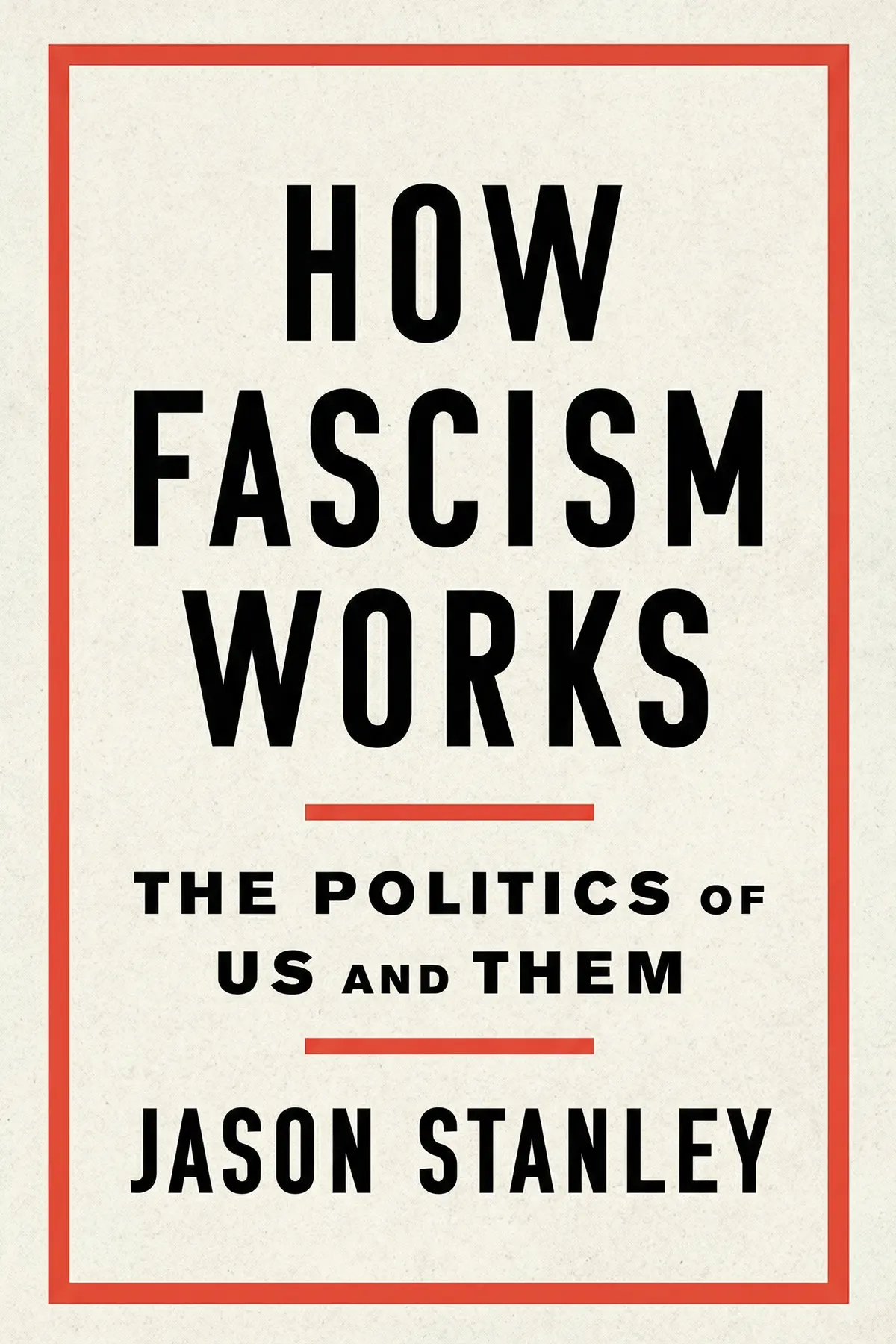
Table of Content
1. Introduction
1 min 58 sec
If you look at the landscape of modern politics and feel a sense of profound disorientation, you are witnessing a phenomenon that has repeated itself throughout history. We often think of major political shifts as sudden explosions—revolutions or coups that happen overnight. But the reality is much more subtle. Authoritarianism rarely arrives with a loud bang; instead, it creeps in through the language we use, the stories we tell ourselves about our history, and the way we begin to view our neighbors. This is the central focus of our exploration today: understanding the specific, repeatable mechanics used to pull a society away from democratic equality and toward a rigid, exclusionary hierarchy.
In this journey, we are going to look at a toolkit of sorts. It is a toolkit used by those who wish to dismantle the ‘we’ in ‘we the people’ and replace it with a fractured landscape of ‘us’ versus ‘them.’ We will see how certain leaders create a sense of crisis by pointing toward a mythic, golden age of the past, suggesting that the only way to save the nation is to return to a time that never truly existed. This narrative is powerful because it taps into deep-seated human desires for order and identity, but as we will see, it often serves a much darker purpose.
Through the lens of this analysis, we will examine how truth itself becomes a casualty of this process. When a population can no longer agree on basic facts, the ground is prepared for a new kind of ‘unreality’—a world where conspiracy theories and emotional slogans carry more weight than evidence-based debate. We will also look at the geographical and social divisions that are intentionally widened, such as the manufactured conflict between the ‘pure’ heartland and the ‘corrupt’ city. By the end of this summary, you will have a clearer understanding of the signposts of fascism, allowing you to recognize these patterns not just in history books, but in the news cycles and political rhetoric of the present day. This isn’t just a study of the past; it’s a guide to protecting the future of social solidarity.
2. The Construction of a Mythic Past
2 min 50 sec
Discover how authoritarian leaders use idealized history to manufacture a sense of modern crisis and justify a return to patriarchal strength and national purity.
3. The Strategic Destruction of Shared Truth
2 min 55 sec
Learn how the dismantling of educational institutions and the promotion of ‘unreality’ through propaganda make a population susceptible to emotional manipulation and control.
4. Weaponizing Victimhood and Moral Panics
2 min 42 sec
Explore the psychological tactic of reframing dominant groups as victims of equality, using fear of the ‘other’ to justify harsh authoritarian measures.
5. The Heartland Myth and the Urban Enemy
2 min 44 sec
Analyze how the intentional divide between rural ‘purity’ and urban ‘decay’ is used to delegitimize democratic voters and consolidate political power.
6. The Breakdown of Solidarity and the Normalization of Overreach
3 min 22 sec
See how the erosion of social safety nets and labor unions leads to an isolated population that eventually accepts authoritarian control as the new ‘normal.’
7. Conclusion
1 min 53 sec
As we conclude this exploration of the mechanics of authoritarianism, the throughline becomes clear: fascism is not a static ideology, but a dynamic process of fragmentation. It succeeds by taking the complex, messy reality of a diverse society and flattening it into a simple, violent story. By weaponizing nostalgia for a mythic past, dismantling the institutions that safeguard truth, and stoking moral panics, these movements systematically destroy the trust and empathy that allow a democracy to function. They create a world where ‘unreality’ is the norm and where the ‘other’ is always to blame for the nation’s perceived decline.
But understanding how these tactics work is also the key to resisting them. When you hear a politician talk about a ‘golden age’ or describe certain citizens as ‘enemies of the people,’ you are now equipped to see those phrases as tools from a very old and very dangerous toolkit. When you see efforts to divide the ‘heartland’ from the city or to weaken the structures that bring workers together, you can recognize those moves as attempts to erode our collective strength. The ‘us versus them’ dynamic is not an inevitable part of human nature; it is a political strategy that can be challenged.
The most important takeaway is that the defense of democracy happens in the everyday choices we make to uphold solidarity. It happens when we insist on factual debate, when we refuse to succumb to moral panics, and when we recognize that a threat to the rights of any group is ultimately a threat to the rights of all. The road to authoritarianism is paved with the normalization of division. To stay on the path of freedom, we must remain vigilant, empathetic, and committed to a shared reality where everyone, regardless of which group they belong to, is seen as a full and valuable member of the community.
About this book
What is this book about?
This exploration investigates the persistent patterns that allow fascist ideologies to infiltrate modern societies. It moves beyond historical definitions to look at the 'how'—the specific rhetorical tools and social strategies used to destabilize equality. By analyzing the weaponization of nostalgia, the demonization of education, and the creation of perceived 'others,' the work provides a framework for recognizing authoritarian creep before it becomes irreversible. The promise of this study is a sharper set of analytical tools. Listeners will learn to identify the early warning signs of democratic decay, from the manipulation of rural-urban tensions to the strategic use of 'unreality.' It serves as both a historical retrospective and a contemporary warning, emphasizing that the protection of social solidarity is the primary defense against the politics of division.
Book Information
About the Author
Jason Stanley
Jason Stanley is a prominent American author and public intellectual serving as the Jacob Urowsky Professor of Philosophy at Yale University. He is known for his award-winning work on language and politics, including the book How Propaganda Works, which received a PROSE Award. In 2025, Stanley announced his intention to move his family to Canada and join the University of Toronto, citing concerns over the political environment in the United States and a commitment to raising his children in an atmosphere of freedom.
Ratings & Reviews
Ratings at a glance
What people think
Listeners find the work does a superb job of explaining how fascism works, utilizing clear and concise writing that makes it an essential listen for Americans. The historical content earns high praise, with one listener highlighting how the author masterfully integrates a wide historical swath of material. Its readability and argument accuracy are well-regarded, as one listener mentions it triggers numerous "ahhh-haa-of-course" moments. The caliber of the writing is also lauded, with one listener describing the work as a masterpiece of concise, insightful prose. Reactions to the book's intensity and political leaning are varied; some find it terrifying, while others criticize the author's strong political stance.
Top reviews
Sukit
Jason Stanley has produced a masterpiece of political philosophy that feels incredibly accessible for the average reader. The way he weaves together historical precedents from Nazi Germany with modern events in countries like Hungary and the US is nothing short of brilliant. I found myself having constant moments of clarity as he explained how the "mythic past" is weaponized to create division. The prose is concise and sharp, avoiding the dense jargon often found in academic texts. It is a terrifying read, certainly, but one that feels absolutely necessary for anyone concerned about the current state of global democracy. This book is a call to action against the normalization of rhetoric that dehumanizes our neighbors.
Show moreRatthapong
After hearing several interviews with Stanley, I finally picked up the book and found it even more relevant than I imagined. He masterfully integrates a wide historical swath of material, showing that fascist tactics aren't just a relic of the 1930s but a recurring virus. The chapter on victimhood was a major "aha" moment for me; it explains how dominant groups can be convinced they are being oppressed when they are actually just being asked to share power. It’s a slim volume, but it packs a heavy emotional punch because it forces you to look at the normalization of extremism in your own backyard. Frankly, it should be required reading for every voter before the next election cycle begins.
Show moreSurasit
The chapter on the dismantling of public welfare and unity was particularly striking to me because it connects economics to identity in a way I hadn't considered. Stanley argues that destroying the social safety net is a key step in creating the divisions necessary for fascist politics to take root. This book is a superb job of explaining how the "othering" process works in real-time. It’s one of those rare books that makes you see the world differently as soon as you put it down. The writing is clear, the arguments are logical, and the historical context is integrated masterfully throughout. It’s definitely a scary read, but ignoring these patterns is a much more frightening prospect for our future.
Show moreWipawan
Truth is, this book acts as a mirror for our current democratic crisis and what it reveals is deeply unsettling. Stanley does not pull any punches when describing how fascist politics dehumanizes segments of the population to limit empathy among the majority. I found the section on "sexual anxiety" and the patriarchal hierarchy to be an eye-opening addition to the usual discussions about ultranationalism. The author’s personal connection to the subject, as the son of refugees from Nazi Germany, adds a layer of urgency to the text that you don't always get in academic writing. This is a masterpiece of concise, insightful prose that everyone should spend a few hours with to understand the stakes of our current moment.
Show moreNan
This is an essential guide for anyone trying to navigate the confusing and often aggressive rhetoric of the modern political era. Stanley identifies ten specific strategies, such as anti-intellectualism and sexual anxiety, that authoritarian leaders use to dismantle democratic norms. To be fair, the book is much stronger on identifying these patterns than it is on explaining the underlying economic reasons why they become popular in the first place. I would have appreciated a deeper dive into the role of late-stage capitalism in fueling this resentment. However, as a manual for recognizing the "us versus them" tactics currently flooding our news cycles, it is undeniably superb and very easy to get through in a few sittings.
Show moreOscar
Gotta say, the prose here is remarkably concise and avoids the usual fluff you get in political science books. Stanley breaks down complex social psychological evidence into a framework that anyone can understand without needing a PhD. I particularly liked how he addressed the concept of "law and order" being used as a tool for hierarchy rather than actual justice. My only real complaint is that it felt a little repetitive by the end, as if the same points were being hammered home across different chapters. Still, the core message about the dangers of complacency is vital. It’s a quick read that provides a lot of intellectual ammunition for understanding the world right now.
Show moreTuck
In my experience, books on political theory tend to be dry, but this was a page-turner that I finished in two days. Stanley’s focus on the "mythic past" explains so much of the current nostalgia-based politics we see globally today. He shows how leaders invent a pure, fictional history to justify excluding anyone who doesn't fit their narrow definition of the nation. While I think he occasionally ignores legitimate grievances of the working class in favor of focusing on rhetoric, his analysis of how propaganda functions is incredibly sharp. It’s an important read for Americans who think "it can't happen here." The warnings about the erosion of the rule of law are particularly timely and well-argued.
Show moreWoramet
Ever wonder why certain political patterns keep repeating across different countries like Hungary, India, and the US? This book provides the blueprint for those tactics, explaining that fascism is a method of achieving power rather than just a specific government structure. Stanley is at his best when he describes how anti-intellectualism is used to discredit universities and the press to create a vacuum for a single leader’s truth. To be fair, the book is quite short and I wanted more on how to actually resist these movements. However, as a diagnostic tool, it’s incredibly effective. It’s clear, concise, and provides enough historical context to make the modern comparisons feel grounded and serious.
Show moreSven
While the author's passion is undeniable, the book often feels like it is trying to fit every modern policy he dislikes into a single fascist box. Look, there are definitely parallels to be drawn, but some of the comparisons felt a bit stretched and lacked the historical nuance I was expecting from a Yale professor. The truth is that the book functions better as a long-form op-ed than a rigorous scholarly work. That said, the sections on the erosion of truth and the creation of "unreality" are chillingly accurate to our current situation. It’s worth reading to understand the terminology being used today, even if you find the author’s personal political bias a bit distracting at times.
Show moreThitima
Picked this up hoping for a rigorous historical analysis but found instead a very contemporary polemic centered mostly on the Trump era. Personally, I think the book would have been more effective if it spent more time on the 20th-century movements it frequently references as a baseline. The breadth of the ten strategies is commendable, but the depth is lacking in areas where I wanted more granular detail on the rise of Orban or Erdogan. It feels like a book written in a hurry to meet a specific political moment. It’s not a bad book by any means, and many of the observations about propaganda are spot on, but it didn't quite live up to the massive hype for me.
Show moreReaders also enjoyed
A Warning
Miles Taylor
Abolish Rent: How Tenants Can End the Housing Crisis
Tracy Rosenthal
Abortion: Our Bodies, Their Lies, and the Truths We Use to
Jessica Valenti

Adults in The Room: My Battle With Europe’s Deep Establishment
Yanis Varoufakis
21 Lessons for the 21st Century
Yuval Noah Harari
AUDIO SUMMARY AVAILABLE
Listen to How Fascism Works in 15 minutes
Get the key ideas from How Fascism Works by Jason Stanley, plus 5,000+ more titles in English and Thai.
- 5,000+ titles
- Listen as much as you want
- 7-day free trial
- Cancel anytime







