

19 min 14 sec
How to Be a Positive Leader: Small Actions, Big Impact
Discover how small, intentional shifts in leadership can transform organizational culture. This guide explores research-backed strategies for fostering employee thriving, meaningful work, and high-quality connections to drive long-term institutional success.
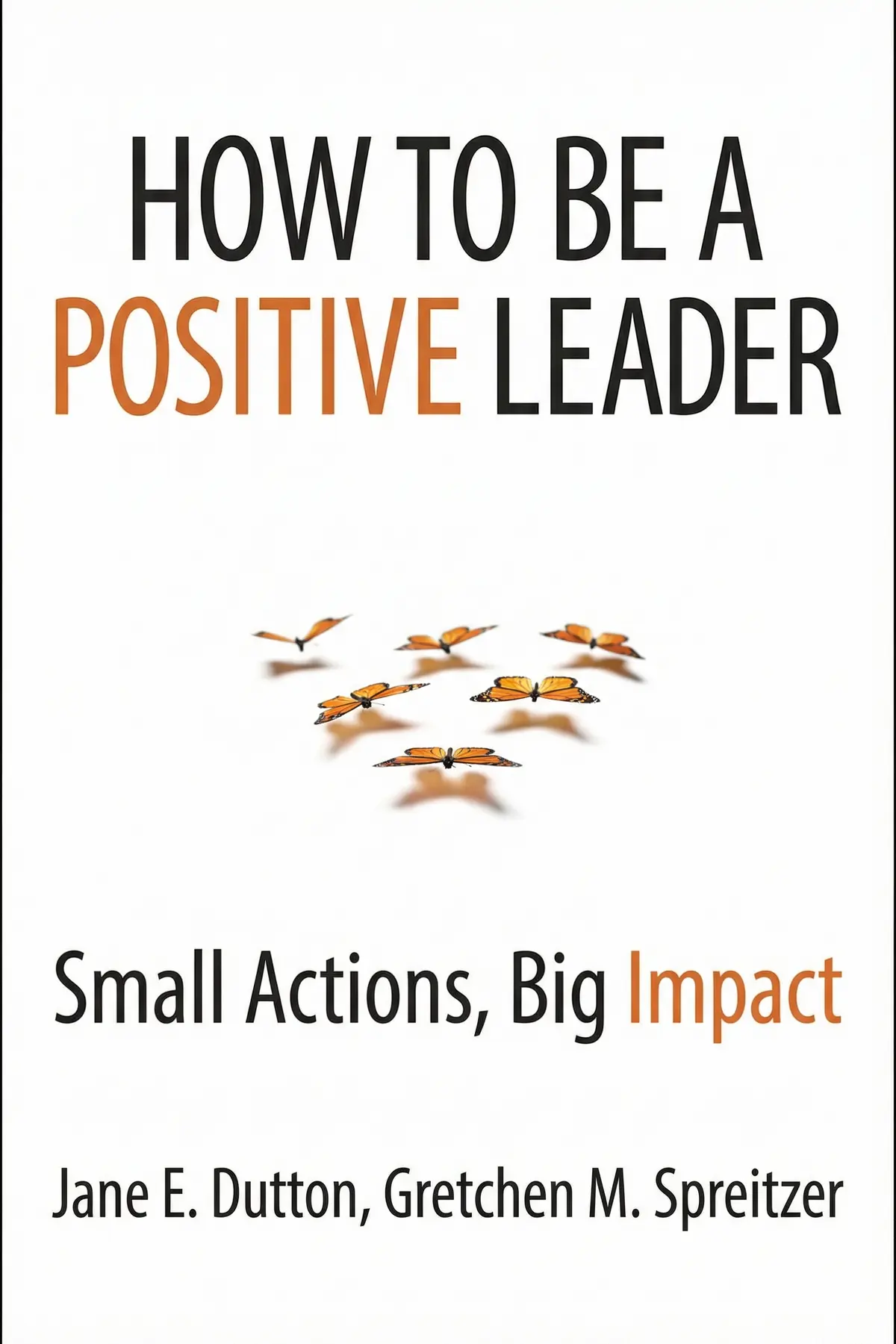
Table of Content
1. Introduction
1 min 31 sec
In the modern corporate world, we often get caught up in the mechanics of business—the data points, the quarterly targets, and the operational efficiencies. But what if the real secret to high performance wasn’t found in a ledger, but in the quality of human interaction? Welcome to the exploration of How to Be a Positive Leader, a book that acts as a foundational text for what experts call positive organizational scholarship. This isn’t just about “being nice” or maintaining a sunny disposition; it’s a rigorous, research-backed look at how organizations can reach a state of flourishing.
Think of this as your guide to shifting the internal weather of your workplace. The throughline here is simple yet profound: small, deliberate actions by leaders have the power to create massive ripples of positive impact. Throughout this summary, we are going to look at the latest findings from a field that is still young and evolving, yet already transforming how the world’s most successful companies operate. We will move past the theoretical and get into the practical recommendations for day-to-day business life.
We’ll explore why something as simple as a gratitude journal can change the trajectory of a team, how to negotiate effectively even when you’re dealing with someone you don’t particularly like, and the secret to making even the most mundane job feel deeply motivating. By the end of this journey, you’ll see work not as a drain on human energy, but as a potential source of it. You will learn how to move your team from merely surviving to truly thriving, creating a competitive advantage that is built on the very best of human nature.
2. The Power of High-Quality Connections
2 min 00 sec
Humans are social creatures who thrive on positive interactions. Discover how small, respectful gestures can turn brief encounters into powerful sources of organizational energy.
3. Connecting Work to Meaningful Impact
1 min 34 sec
Motivation skyrockets when employees see the tangible benefits of their labor. Learn how to bridge the gap between daily tasks and the real-world lives they touch.
4. Mastering the Art of Mindful Negotiation
1 min 28 sec
Don’t let past grievances or current frustrations derail your professional goals. Learn to stay present and emotionally neutral for better outcomes.
5. Creating an Environment Where People Thrive
1 min 46 sec
Thriving is more than just doing a good job—it’s about feeling alive and energized. Discover the two pillars of employee vitality and how to support them.
6. Cultivating Positive Identity with the GIVE Model
1 min 40 sec
How we see ourselves at work dictates how we perform. Learn the four elements that build a strong, positive self-image in your employees.
7. The Strategic Advantage of Job Crafting
1 min 43 sec
One size does not fit all in modern roles. Learn how allowing employees to personalize their duties can lead to higher performance and lower turnover.
8. Encouraging Virtuousness for a Better Bottom Line
1 min 26 sec
Virtues like gratitude and honesty aren’t just ‘soft’ skills; they are productivity boosters. See how a culture of virtue leads to a more committed workforce.
9. The Ripple Effect of Ethical Leadership
1 min 30 sec
Ethical leaders do more than follow rules—they inspire greatness. Learn how treating others with justice and care creates a cycle of reciprocity.
10. Fostering Hope as a Prerequisite for Excellence
1 min 34 sec
Hope isn’t just a feeling; it’s a strategic engine for change. Discover how belief in a better future drives confidence and real-world results.
11. Managing Change by Empowering Employees
1 min 36 sec
Change is often met with resistance, but it doesn’t have to be. Learn how to view your staff as resources for growth rather than obstacles to be overcome.
12. Conclusion
1 min 26 sec
As we wrap up our journey through the principles of positive leadership, it becomes clear that the most effective organizations are those that refuse to separate professional success from human flourishing. The research is definitive: when leaders take into account the emotional and psychological well-being of their staff, they don’t just create a ‘nicer’ workplace—they create a more resilient, more creative, and more profitable one.
We’ve seen how high-quality connections can spark energy, how meaning can drive motivation, and how hope can make the impossible feel achievable. These aren’t just abstract concepts; they are practical tools that you can start using today. The transition from a traditional leadership style to a positive one doesn’t require a massive budget or a complete structural overhaul. It starts with small, intentional actions that signal respect, value, and vision.
If you want to take one immediate step toward becoming a more positive leader, start with your next conversation. Give that person your full, undivided attention. Move away from the distractions of technology and truly listen. This one small gesture of respect can be the first ripple in a wave of positive change for your organization. By consistently applying these principles, you move beyond the role of a manager and become a true catalyst for growth, helping everyone around you reach their full potential. Work doesn’t have to be something we simply endure; under the right leadership, it can be the place where we truly come alive.
About this book
What is this book about?
How to Be a Positive Leader serves as a comprehensive bridge between academic research and practical management. Based on the field of positive organizational scholarship, it argues that excellence isn't just about spreadsheets and efficiency—it is about the human spirit. The book offers a series of actionable frameworks for leaders at all levels who want to move beyond traditional command-and-control styles toward a more generative approach. The core promise of the text is that small, accessible actions—like practicing mindful negotiation, fostering hope, and encouraging job crafting—can lead to disproportionately large impacts on productivity and morale. You will learn how to build high-quality connections that energize your team, how to help employees find deep meaning in their daily tasks, and how to use virtues like gratitude to enhance performance. By focusing on employee strengths and promoting a culture of civility, leaders can create environments where people don't just work, but truly flourish. This summary provides the tools to cultivate a resilient, innovative, and deeply human workplace.
Book Information
About the Author
Jane E. Dutton
How to Be a Positive Leader was edited by Jane E. Dutton and Gretchen M. Spreitzer, who are both respected organizational scientists. The work features insights from several distinguished researchers in the field of management and psychology. Notable contributors include Adam Grant, the acclaimed author of Give and Take, and Amy Wrzesniewski, a prominent professor at the Yale School of Management.
Ratings & Reviews
Ratings at a glance
What people think
Listeners find the research quality impressive, with one individual noting its effective balance between academic study and real-world application. The book also earns high marks for its content on leadership; one listener specifically called it an excellent compendium of positive leadership studies. Additionally, the pacing resonates with listeners, who feel it works well for leaders at any stage, including those just starting out.
Top reviews
Charles
After hearing Shawn Achor mention this in a talk, I knew I had to grab a copy to see if the research backed up the hype. It definitely does, presenting a very sophisticated blend of organizational behavior and practical application that few other books manage to balance so well. I’ve started tracking my efforts with high-quality connections every single day, and the shift in my team's energy is already palpable. Not gonna lie, I was skeptical about the "higher purpose" chapter at first, but it really makes you rethink the pursuit of profit versus the pursuit of value. This should be mandatory reading for every middle manager who feels like they’re just a cog in the machine.
Show moreSamroeng
As someone who has spent years in middle management, I found this book to be a refreshing change of pace from the typical cut-throat leadership guides. It presents the human face of the workplace in a way that is both inspiring and deeply pragmatic, showing how treating people as individuals actually drives productivity. The concept of being "positively deviant" really resonated with me because it encourages moving beyond just "doing okay" to actually thriving. I love that it’s not just for the C-suite; front-line employees can take these lessons on connections and values and apply them tomorrow morning. It’s easily one of the best compendiums of leadership studies I’ve come across in a long time.
Show moreFort
The chapter on high-quality connections alone was worth the price of the book for me. I’ve been experimenting with giving people my full attention and focusing on those small moments of interaction, and the results have been genuinely surprising. This book does a fantastic job of simplifying complex ideas and supporting them with life examples that make the concepts feel tangible and urgent. It emphasizes that leadership acts must go beyond the individual and penetrate the entire organization to create a shared sense of virtue and purpose. If you want to move beyond financial goals and actually build something meaningful, this is the research-backed guide you need to start that journey.
Show morePatchara
This book provides a surprisingly grounded look at what it means to lead with a "positive" mindset without being overly saccharine. While some business books rely purely on anecdote, Dutton and Spreitzer have compiled a collection of chapters written by actual experts that bridge the gap between academic theory and daily practice. To be fair, some sections feel a bit more robust than others, but the overall pacing kept me engaged throughout the weekend. I especially appreciated how it targets leaders at all levels, making the "positively deviant" organization feel like an achievable goal rather than a pipe dream. It's an excellent compendium for anyone who wants their leadership style to have a more human face.
Show moreSamart
Truth is, I was mostly interested in the section on high-quality connections, but I ended up finding value in the chapters on crisis management as well. The authors do a great job of explaining how to create opportunity from a crisis by analyzing vulnerabilities and encouraging a long-term learning mindset. I appreciate that the research quality is top-notch, as you'd expect from the faculty at Michigan, yet it remains very accessible for newbies to the field. One minor criticism is that it can feel a bit repetitive if you read it straight through, as several authors touch on the same core themes of empathy and meaning. Still, it’s a very practical tool for anyone looking to foster a more resilient workforce.
Show moreVimolwan
Picked this up as part of a bundle and found it to be a bit of a mixed bag in terms of depth. The structure is quite nice, with chapters organized by specific themes like resilience and high-quality connections, but the quality fluctuates wildly from one author to the next. Some contributors offer incisive, research-backed points that I can use immediately, while others just reiterate what your grandmother might have advised regarding being a "nice" person. I did find the Twitter-based summary idea interesting, though the actual pre-written tweets were a bit cheesy for my personal taste. It’s a decent enough primer if you are new to positive organizational scholarship, but seasoned leaders might find it a bit thin.
Show moreJoe
Finally got around to finishing this, and I'd say it's a solid 3-star read for anyone interested in the softer side of management. The pacing is quite good because the chapters are short and focused, which makes it easy to digest in small chunks during a commute. In my experience, the book works best when it focuses on the New York Times test for values or the "cutting off the straps" analogy for empowerment. However, it sometimes lacks the comprehensive depth I was hoping for, feeling more like a collection of essays than a unified manual. It’s a helpful resource to have on the shelf, but it won’t necessarily revolutionize your entire corporate culture overnight.
Show morePrim
Not what I expected given the high credentials of the contributors involved in this project. While the authors are all PhDs and clearly know their stuff, the tone frequently veered into that "let's all hold hands and be positive" territory that makes me cringe. Frankly, the advice on finding meaning in your work felt like a rehash of basic concepts I've seen in a dozen other HR manuals over the years. Some of the pre-written tweets included in the text were particularly jarring and felt like a desperate attempt to be trendy. It’s not entirely without merit, but you have to dig through a lot of fluff to find the actual data.
Show moreRung
Look, I appreciate the intent here, but the execution felt a little too much like a "Leadership for Dummies" version of much more serious research. While there are some points that can be leveraged, like the idea of seeing employees as resources rather than resistors, the delivery is just too dry. I struggled to stay engaged with the "wise" quotes and the pre-written tweets, which felt like they were trying too hard to be relevant to a younger audience. Personally, I think there are better books out there that cover organizational behavior without the "be positive" fluff that occasionally drags these chapters down. It’s okay as a quick reference, but not something I’d recommend as a deep dive.
Show moreSam
Ever wonder how many ways people can say "be nice" and call it a leadership breakthrough? This was incredibly boring to get through, despite the short chapters and the various attempts to make it "social media friendly" with weird tweet suggestions. The truth is, most of this "research" feels like common sense dressed up in academic robes to justify the PhDs on the cover. I found myself rolling my eyes at the suggestion to define a higher purpose when we're just trying to hit our quarterly KPIs in a high-stress environment. Invest your time into people? Sure, but maybe read something with a bit more grit than this "hold your hands" philosophy.
Show moreReaders also enjoyed

Acting with Power: Why We Are More Powerful Than We Believe
Deborah Gruenfeld
All In: How Great Leaders Build Unstoppable Teams
Mike Michalowicz
7 Powers: The Foundations of Business Strategy
Hamilton Helmer

A Bigger Prize: How We Can Do Better Than the Competition
Margaret Heffernan
AUDIO SUMMARY AVAILABLE
Listen to How to Be a Positive Leader in 15 minutes
Get the key ideas from How to Be a Positive Leader by Jane E. Dutton, plus 5,000+ more titles in English and Thai.
- 5,000+ titles
- Listen as much as you want
- 7-day free trial
- Cancel anytime







