
26 min 09 sec
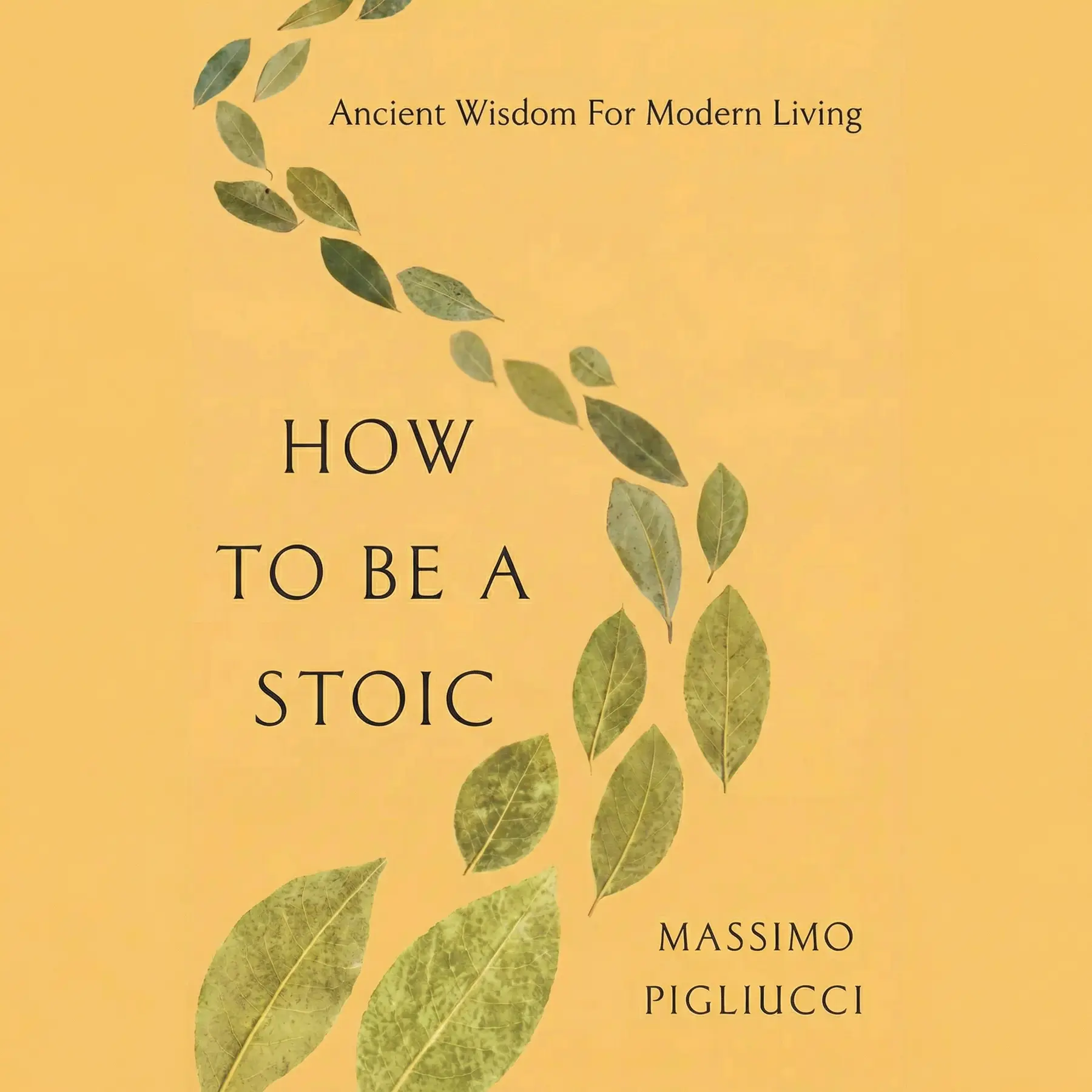
How to Be a Stoic: Using Ancient Philosophy to Live a Modern Life
Explore the timeless wisdom of Stoicism with Massimo Pigliucci. This guide transforms ancient philosophy into a practical toolkit for navigating modern stress, making ethical decisions, and finding genuine fulfillment in an unpredictable world.
Table of Content
1. Introduction
1 min 47 sec
Every culture throughout human history has grappled with the same fundamental question: how exactly are we supposed to live? It is a question that pops up in our quietest moments and our loudest crises. How do we face the daily grind of our jobs? How should we treat our neighbors when they annoy us? And how on earth are we supposed to deal with the heavy reality that our time here is limited? For some, the answer is found in religion; for others, it is in science. But for a growing number of people in the modern world, the answer lies in an ancient school of thought known as Stoicism.
You might have heard the word ‘stoic’ used to describe someone who just grins and bears it—someone who stays silent while they suffer. But as we dive into this exploration of Massimo Pigliucci’s work, you will see that this is a complete misunderstanding. Real Stoicism isn’t about being a robot. It’s about being a better human. It’s a very practical, very ‘boots-on-the-ground’ philosophy that was designed to help people live good, virtuous lives, no matter what kind of chaos was happening in the world around them.
In the pages ahead, we are going to look at how these ancient ideas can be used as a modern toolkit. We’ll talk about the ‘dichotomy of control,’ which is essentially a way to stop wasting your energy on things you can’t change. We’ll explore why having a moral compass is actually more rewarding than having a fat bank account. We’ll even look at how to choose our friends and how to view our own mortality without being paralyzed by fear. The throughline here is simple: life is unpredictable and often difficult, but by focusing on our own character and our own reactions, we can find a sense of peace that nothing in the outside world can touch. Let’s begin this journey by looking at what Stoicism really is and why it has survived for over two thousand years.
2. A Functional Manual for Modern Challenges
2 min 26 sec
Stoicism is far from a passive acceptance of fate. Discover how this ancient toolkit provides a proactive strategy for refining your desires, actions, and reactions in a chaotic world.
3. Mastering the Dichotomy of Control
2 min 53 sec
Stop exhausting yourself by fighting the unchangeable. Learn the liberating secret of dividing your life into things you can influence and things you must simply accept.
4. Choosing Character Over Comfort
2 min 43 sec
Wealth and health are nice, but they aren’t the key to a good life. Explore why the Stoics prioritized moral integrity above all external successes.
5. The Four Pillars of a Virtuous Life
3 min 23 sec
What does it actually mean to be ‘good’? Discover the four core virtues that provide a universal moral compass for navigating any situation, no matter how difficult.
6. The Power of Moral Mentorship
2 min 52 sec
We don’t have to figure out how to live all by ourselves. Learn how holding up role models—both ancient and modern—can provide a blueprint for your own growth.
7. A Healthy Perspective on the End
2 min 37 sec
Death is the one thing we all share, yet we spend our lives running from it. Discover why the Stoics believed that meditating on mortality is the key to truly living.
8. Widening the Lens of Experience
2 min 33 sec
When anger or frustration flares up, your perspective narrows. Learn the technique of ‘other-izing’ to regain your calm and respond with wisdom instead of impulse.
9. Cultivating Relationships of Substance
2 min 52 sec
Not all friendships are created equal. Learn to distinguish between casual acquaintances and the ‘friendships of the good’ that truly enrich your character.
10. Conclusion
2 min 03 sec
As we reach the end of our exploration into Stoicism, it is clear that this ancient philosophy is anything but outdated. In fact, it might be exactly the medicine our modern world needs. We’ve learned that by practicing the dichotomy of control, we can drop the heavy luggage of anxiety that comes from trying to fix the unfixable. We’ve seen that true success isn’t found in what we own, but in who we are—our courage, our justice, our temperance, and our wisdom. We’ve explored the power of role models and the liberating reality of our own mortality, which reminds us to cherish every single moment.
But the most important thing to remember is that Stoicism is a practice, not a destination. You don’t just ‘become’ a Stoic one day and stay that way forever. It’s something you have to choose, over and over again, every time you face a challenge or a temptation. It’s about the small decisions. It’s about how you respond to the person who cuts you off in traffic today, or how you handle a piece of bad news tomorrow. It’s about building a better version of yourself, one choice at a time.
To help you start this journey, consider a simple Stoic exercise: the evening reflection. Before you go to sleep tonight, find a quiet moment to look back on your day. Ask yourself three questions: What did I do well today? Where did I fall short of my values? And what could I do better tomorrow? Don’t be too hard on yourself; the goal isn’t perfection, but progress. Be an honest observer of your own life. By doing this every day, you turn your life into a laboratory for character. You start to see patterns in your behavior, and you gain the clarity needed to make better choices the next time around. Stoicism doesn’t promise a life without problems, but it does promise that you can become the kind of person who can handle anything life throws at you with grace, strength, and a quiet, unshakable peace.
About this book
What is this book about?
Have you ever felt overwhelmed by the chaotic pace of modern life, wondering if there is a more stable way to navigate the ups and downs of existence? This summary explores the enduring power of Stoicism, a philosophy born in ancient Greece and Rome that remains remarkably relevant today. It moves beyond the common misconception that Stoics are merely emotionless or passive. Instead, it reveals a proactive framework for living a life of character, purpose, and inner peace. At its heart, the book promises a shift in perspective. You will learn to identify the narrow sliver of life that is actually under your control and release the heavy burden of everything else. Through the lens of historical figures and modern examples, you will discover how to cultivate core virtues like courage and wisdom. By the end, you will have a clear roadmap for managing difficult emotions, choosing better friends, and even facing the reality of mortality with a sense of calm appreciation. This is about more than just thinking; it is a practical handbook for being.
Book Information
About the Author
Massimo Pigliucci
Massimo Pigliucci is a prominent figure in contemporary philosophy, currently serving as a professor at CUNY-City College. His academic journey is unique, as he was formerly a professor specializing in the fields of ecology and evolution. This background in hard science informs his logical, evidence-based approach to philosophical questions. Beyond the classroom, he has reached wide audiences as a former co-host of the well-known podcast, Rationally Speaking, where he explored the intersections of reason, science, and life.
Ratings & Reviews
Ratings at a glance
What people think
Listeners find this work offers a solid entry point into Stoicism and includes useful daily exercises. Furthermore, the prose is accessible and straightforward, with one listener pointing out the inclusion of a thorough appendix. The title also earns praise for being easy to grasp, with one review emphasizing its beautiful interpretation for modern times. Conversely, some listeners mention worries regarding the author's personal political views affecting the material.
Top reviews
Mia
Ever wonder how ancient wisdom actually fits into a 21st-century schedule? This book answers that question with a very approachable and friendly tone that makes complex ideas feel manageable. I loved the connection made between the Stoic mindset and the modern Serenity Prayer, showing just how long these ideas have been around. The author isn't just reciting Marcus Aurelius; he's evaluating how these principles of courage and temperance function in a world of dating and workplace stress. Personally, I found the Socratic style of the narrative quite refreshing, even if it was a bit disorienting at first. It’s a beautiful interpretation for modern times that focuses on what we can actually control. I will definitely be returning to the practical exercises at the end whenever life feels overwhelming.
Show moreSuthida
Wow, I didn't expect a philosophy book to feel so much like a conversation with a friend. Pigliucci has a talent for taking dense concepts from Cicero and Seneca and making them feel relevant to our current social landscape. The book is incredibly easy to read and understand, avoiding the heavy jargon that usually plagues this genre. I found myself highlighting passages on almost every page, especially regarding the four principles of justice and practical wisdom. Some might find his personal anecdotes a bit too focused on his own life, but I think it adds a layer of authenticity. It’s a realistic approach to a philosophy that is often misunderstood as being cold or emotionless. This is definitely a book I'll keep on my shelf for years to come as a reference guide.
Show moreSau
The chapter on the twelve spiritual exercises in the final section alone makes the purchase price worth it. I’ve read a lot of self-help, but this feels grounded in a much sturdier tradition than your average modern guru’s advice. Pigliucci writes with a smile, yet he never loses sight of the seriousness of the ethical questions he's tackling. The way he interprets the 'discipline of assent' helped me understand how to better manage my own impulsive reactions to stress. I did find the parts where he pretends to talk to Epictetus a bit silly, but the actual philosophy shines through regardless. It’s a practical toolkit for anyone trying to live a more virtuous life in a chaotic world. Highly recommended for those who want action over just theory.
Show moreRania
Finally got around to reading this, and it’s a solid introduction for anyone curious about how ancient ideas apply today. Pigliucci breaks down the core tenets like the dichotomy of control without making it feel like a dry textbook. I found the section on the three disciplines—desire, action, and assent—particularly helpful for structuring my own thoughts. Truth is, some of the personal anecdotes felt a bit self-indulgent, but they didn't detract from the overall message too much. The appendix is a goldmine for those wanting a specific toolkit of exercises to try out in their daily routine. It’s definitely more of a 'how-to' than a scholarly deep dive into history. If you're looking for a realistic way to handle modern stress, this is a great starting point.
Show moreKofi
As someone who has always leaned towards Marcus Aurelius, I appreciated how this book focused on Epictetus as the primary mentor. The structure is very clear, dividing the philosophy into the disciplines of desire, action, and assent, which helps organize the learning process. Pigliucci explains the land requirements for vegetarianism and other modern dilemmas through a Stoic lens, though some of these examples felt a bit shallow. Look, the book isn't perfect—the conversational tone can occasionally feel a bit patronizing—but the core message remains strong. I particularly liked the distinction between things we control and things we don't, which is a life-changing realization. It serves as a fantastic bridge between ancient theory and practical, daily application. If you can get past the slightly chatty prose, there is a wealth of wisdom here.
Show moreJackson
Picked this up on a whim after seeing it mentioned in a podcast, and I’m glad I did. It’s a comprehensive presentation that manages to meld ancient ideas with the realities of modern society quite effectively. The author does a great job explaining why Stoicism isn't just about suppressing feelings, but rather about logical reflection. I especially appreciated the detailed appendix which provides a concrete list of spiritual exercises to practice. My only real gripe is that some sections felt a bit superficial when I wanted a deeper dive into the history. Still, for a general reader, this is likely the most accessible guide on the market today. It makes you think about your own behavior in a way that is both challenging and encouraging.
Show moreWanphen
After hearing so much about the 'Stoic revival,' I wanted a guide that didn't just feel like a collection of quotes. This book delivers a cohesive narrative that traces the philosophy from Zeno to the modern day with great clarity. Pigliucci's personal journey is woven throughout, which makes the advice feel more lived-in and less like a lecture. I did notice some of the 'chatty' writing that other reviewers mentioned, and it does occasionally distract from the heavier topics. But the insights into the difference between Epicureanism and Stoicism were exactly what I was looking for. It’s a friendly, approachable volume that works well for anyone who feels like their life is currently a bit of a mess. A solid four-star read that offers genuine value to the modern seeker.
Show moreLuke
It’s hard to ignore the author’s tendency to get a bit chatty, which sometimes muddies the waters of an otherwise brilliant philosophy. Pigliucci chooses Epictetus as his guide, literally staging imaginary conversations with the ancient teacher. While the concept is interesting, the execution felt a bit awkward and forced during the mid-narrative segments. I wanted more of a rigorous analysis of Stoic logic rather than a memoir of the author’s personal journey toward inner peace. To be fair, the book does a decent job of distinguishing between the 'stiff upper lip' stereotype and actual Stoic practice. However, the disjointed writing style makes it difficult to stay engaged for long periods. It’s a fine overview, but it lacks the depth of more academic texts I've encountered.
Show morePatcharaporn
To be fair, the content here is exceptionally rich, but the presentation felt disjointed at times. The author uses a lot of parenthetical examples that interrupt the flow of the argument and make the reading experience a little mediocre. I also found the 'interviews' with Epictetus to be a strange stylistic choice that didn't always work for me. However, I can’t deny that I learned a great deal about the origins of Stoicism and its connection to Socrates. The discussion on how to handle a physical injury or a bad breakup using Stoic logic was genuinely insightful. It’s a good introduction if you can overlook the writing quirks and occasional political diversions. Not a masterpiece, but certainly a useful starting point for a beginner.
Show moreFrida
This book was a major disappointment for me, primarily because Pigliucci injects far too much of his own political bias into the text. He tends to dismiss opposing viewpoints, like New Atheism or certain environmental arguments, with a level of flippancy that feels very un-Stoic. It’s difficult to trust a guide on wisdom when the author seems to struggle with nuance himself in several chapters. The writing is also quite disjointed, moving from deep philosophical insights to mundane personal stories that don't always land. Frankly, the 'imaginary friend' routine with Epictetus was more cringeworthy than enlightening for a serious reader. While there are some interesting excerpts from primary sources, the surrounding commentary is too clouded by the author's personal opinions. I’d recommend sticking to the original Meditations instead of this modern filter.
Show moreReaders also enjoyed
A Guide to the Good Life: The Ancient Art of Stoic Joy
William B. Irvine
A High-Performing Mind: Strengthen Your Mind and Live Your Best Life
Andrew D. Thompson
Abundance: The Inner Path to Wealth
Deepak Chopra
A Little History of Philosophy
Nigel Warburton
AUDIO SUMMARY AVAILABLE
Listen to How to Be a Stoic in 15 minutes
Get the key ideas from How to Be a Stoic by Massimo Pigliucci, plus 5,000+ more titles in English and Thai.
- 5,000+ titles
- Listen as much as you want
- 7-day free trial
- Cancel anytime







