

16 min 03 sec
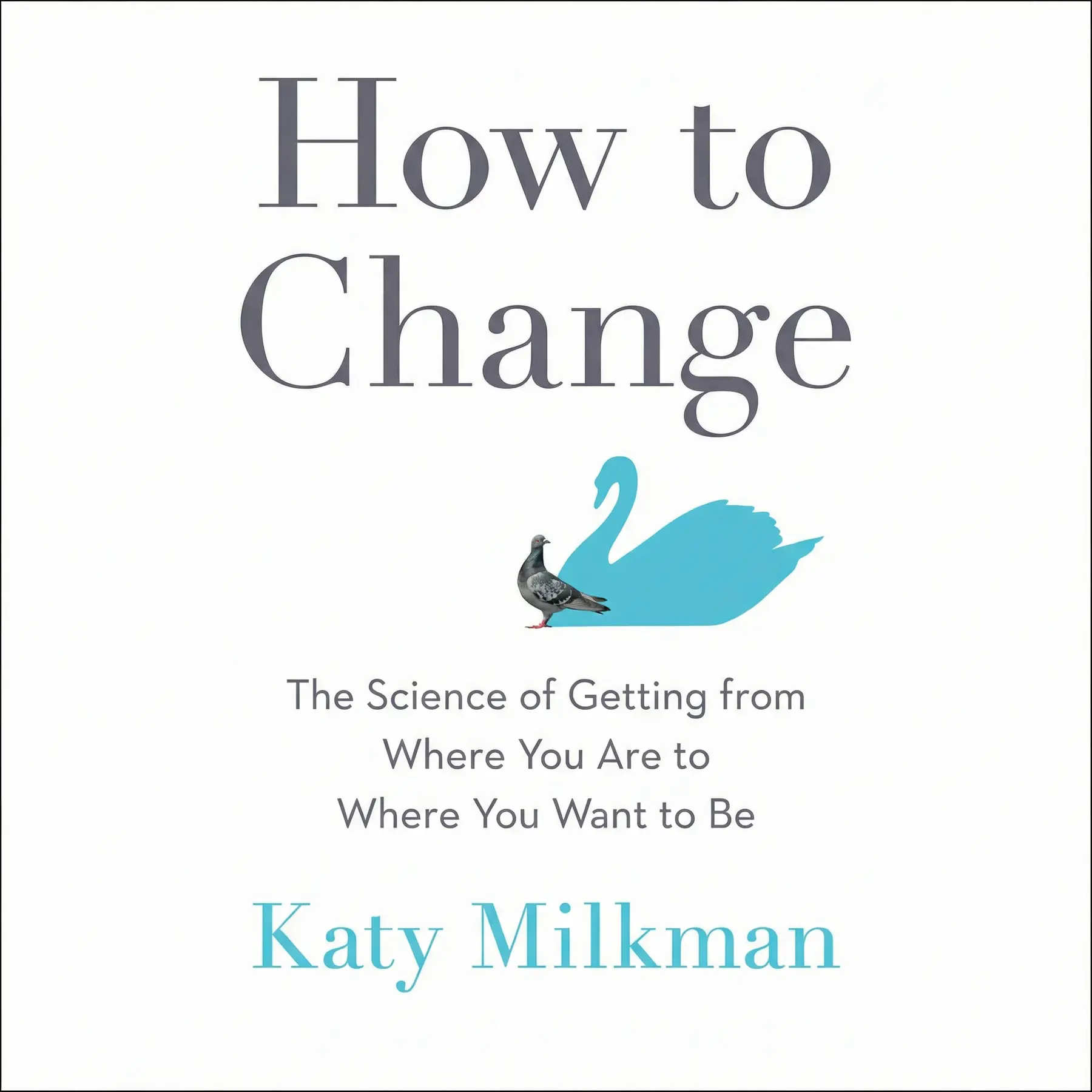
How to Change: The Science of Getting from Where You Are to Where You Want to Be
By Katy Milkman
Discover why willpower alone fails and how to use behavioral science to overcome procrastination, impulsivity, and laziness. This guide provides evidence-based strategies to bridge the gap between your current self and your goals.
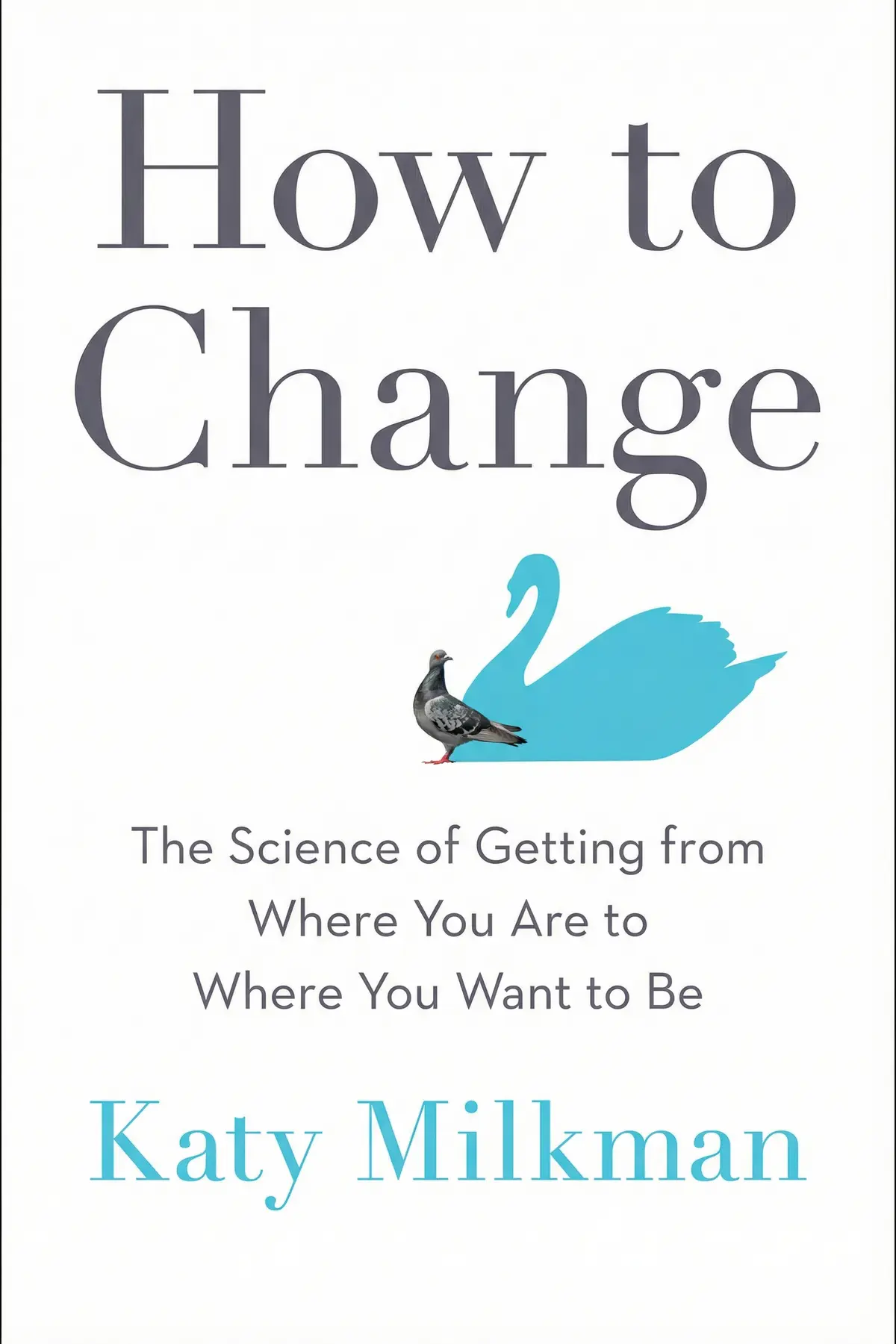
Table of Content
1. Introduction
1 min 41 sec
We have all been there. It is late December, and you are feeling a surge of motivation. You buy a new planner, sign up for a gym membership, and swear that this year will be different. But by mid-February, the planner is dusty, the gym membership is an unused line item on your bank statement, and your old habits have come roaring back. This cycle is incredibly common, and it leads many of us to believe that we simply lack the willpower or character to truly change. We think that if we were just a bit more disciplined, we could finally reach those elusive goals.
However, the science of behavioral economics suggests a different story. The problem isn’t necessarily you; it’s the tools you’re using. Most of us try to change our lives using a one-size-fits-all approach, ignoring the specific psychological barriers that are actually holding us back. We treat every obstacle as a lack of motivation, when in reality, the hurdle might be impulsivity, forgetfulness, or even a lack of confidence. To truly transform, we need to stop fighting ourselves and start outsmarting our own human nature.
In this summary, we are going to explore the research-backed strategies developed by Katy Milkman. We will move beyond the surface-level advice of ‘just do it’ and look at the underlying mechanics of why we fail and how we can succeed. You’ll learn how to identify the specific ‘opponents’ you face—whether that is the urge to procrastinate or the tendency to take the easy way out—and how to apply a tailored solution to each one. By the end of this journey, you’ll see that change isn’t just about trying harder; it’s about being smarter about how you approach your own mind. Let’s dive into the science of getting from where you are to where you want to be.
2. Harnessing the Power of Fresh Starts
1 min 55 sec
Timing is everything when it comes to transformation. Discover why certain dates on the calendar act as psychological resets that can propel you toward your goals.
3. Combining Pleasure with Productivity
1 min 47 sec
Impulsivity often derails our long-term plans. Learn how to use ‘temptation bundling’ to make your most difficult tasks feel like a treat.
4. Turning Life into a Game
1 min 49 sec
When motivation flags, adding a bit of play can make the difference. See how gamification can boost participation and keep you engaged.
5. Overcoming Procrastination with Commitment Devices
1 min 55 sec
We all put things off, but what if you could make it physically or financially impossible to fail? Explore the power of locking in your future choices.
6. Building Habits to Bypass Laziness
1 min 45 sec
Laziness is often just the path of least resistance. Learn how to turn your desired behaviors into automatic routines that require zero willpower.
7. The Advice-Giver Effect and Self-Confidence
1 min 54 sec
Receiving advice can actually undermine your progress. Discover the counterintuitive reason why giving advice to others is the best way to help yourself.
8. Choosing Your Social Circle Wisely
1 min 53 sec
We are more influenced by our peers than we realize. Learn how to use social contagion to ‘copy and paste’ your way to success.
9. Conclusion
1 min 24 sec
As we conclude our exploration of the science of change, the most important takeaway is that transformation is a clinical process, not a moral one. We often fail because we use the wrong tools for the job, trying to solve every problem with a blunt instrument like ‘willpower.’ By identifying your specific internal barriers—whether it’s the lure of the present, the fog of procrastination, or the friction of laziness—you can apply the targeted strategies we’ve discussed. Use fresh starts to find momentum, temptation bundling to make hard work fun, and commitment devices to keep your future self honest. Build habits to make success automatic, and surround yourself with people who pull you upward.
One final piece of advice to carry with you: focus on the process rather than innate ability. When you encounter setbacks, don’t tell yourself that you aren’t ‘talented’ enough or ‘disciplined’ enough. Instead, look at the effort you’ve put in and the strategies you’ve used. This shift toward a growth mindset—praising hard work over natural gifts—ensures that failure is seen as a sign to change your tactics, not a sign of your worth. Change is not a one-time event; it is a constant process of adjusting your environment and your mindset. With the right scientific tools in your kit, the distance between where you are and where you want to be will start to shrink, one smart choice at a time.
About this book
What is this book about?
Have you ever wondered why your most sincere intentions so often fall through? How to Change explores the internal barriers—like procrastination, forgetfulness, and the allure of immediate gratification—that prevent us from reaching our full potential. Rather than relying on generic advice or sheer grit, the book introduces a more surgical approach to personal development. By identifying the specific psychological hurdles standing in your way, you can apply targeted scientific solutions to overcome them. The book promises a shift in perspective: instead of viewing your flaws as permanent character defects, you learn to see them as predictable behaviors that can be managed through clever environmental design and psychological shifts. From the power of 'fresh starts' to the strategic use of 'temptation bundling,' you will discover how to make the difficult path to success feel more like an easy, downhill stroll. It is a roadmap for anyone looking to transform their habits and achieve lasting change through the lens of behavioral economics.
Book Information
About the Author
Katy Milkman
Katy Milkman is a distinguished researcher in the field of behavioral economics. She holds a professorship at the Wharton School of the University of Pennsylvania, where her work focuses on how to nudge people toward better decisions. How to Change is her first book, distilling years of academic study into practical advice.
Ratings & Reviews
Ratings at a glance
What people think
Listeners find the work delivers an excellent, hands-on overview of behavioral science while sharing practical tips for personal improvement. The prose is accessible, and listeners appreciate the narrative approach, with one listener mentioning that the book is enriched by clear examples and stories. They value how well the guide works for mapping out life goals, and one listener points out the effective integration of essential observations regarding human nature. Though listeners find the material captivating, opinions are divided on the topic of changeability, as one listener observes that transformation involves more than just sheer willpower.
Top reviews
Kofi
Ever wonder why certain people seem to change effortlessly while you’re stuck in the same frustrating ruts? This book offers a compelling scientific explanation for that gap. Katy Milkman manages to take decades of behavioral research and condense it into a series of actionable strategies. I loved the concept of 'gamification' and using symbolic rewards to make boring tasks more engaging. It’s not just a collection of anecdotes; it’s a toolkit for navigating the obstacles that our own brains put in our way. While she does mention her privileged background quite a bit, the core strategies are universal. I’ve already recommended this to several friends who are struggling with their New Year’s resolutions.
Show moreSeksan
Wow, this book is essentially a masterclass in behavioral engineering that avoids most of the fluff common in the self-help genre. Milkman’s background as an engineer shines through in the way she structures the book. Identify the friction. Then find the tool to fix it. The 'fresh start' concept helped me reset my mindset after a rough professional setback last month. I also found the 'implementation intentions' to be much more effective than vague goal-setting. It’s a lean, pithy read that delivers a high-impact payload in just a couple hundred pages. This is easily one of the most useful books I’ve read this year.
Show moreRome
As someone who has struggled with chronic procrastination for years, I found the chapter on commitment devices particularly illuminating. Milkman doesn't just tell you to 'try harder.' She explains the engineering behind restricting your own future choices to ensure success. I actually set up a locked savings account after reading this to curb my impulse spending. To be fair, some of the examples feel a bit repetitive, and the tone can be slightly pitying toward those who aren't naturally conscientious. However, the 'cue-based planning' strategy is a total game-changer for my daily workflow. It’s a practical read that offers actual tools rather than just vague motivational quotes.
Show moreDome
Finally got around to this one, and it serves as a fantastic, evidence-based summary of behavioral science over the last decade. It’s brief, breezy, and avoids the fluff that usually ruins this genre. The 'fresh start effect' is something I’ve experienced intuitively, but seeing the data behind it was eye-opening. Milkman uses vivid stories—like the transformation of Andre Agassi—to show how small tweaks in strategy can lead to massive results. Some critics might say she lives in an academic bubble, and they aren't entirely wrong. Still, for anyone looking for a science-backed nudge, this is much more reliable than your average influencer’s advice.
Show moreRungtip
I’ve been making my way through the pop-psychology canon, and this stands out for its focus on the 'why' behind our failures. Unlike James Clear’s focus on the mechanics of building habits, Milkman treats behavioral change like an engineering problem centered on overcoming specific obstacles. She identifies friction points like laziness or impulsivity and provides tailored solutions for each. I especially liked the section on how giving advice to others can actually boost your own performance. It’s a bit repetitive in the middle sections, and the constant mentions of Wharton colleagues can get a little annoying. Nevertheless, the actionable advice is grounded in real research that you can actually apply to your own life.
Show moreAisha
Honestly, the highlight of this book for me was the deep dive into 'temptation bundling.' I’ve started allowing myself to watch my favorite trashy TV shows only while I’m on the exercise bike, and it’s been incredibly effective. Before this, I’d just scroll through social media and feel guilty about not moving. Milkman’s writing is very approachable, making complex psychological concepts easy to digest for a layman like me. I did feel like the book ignored systemic barriers—not everyone has the luxury of a supportive family or a stable job. But if you have a specific, manageable goal like flossing or saving money, these techniques are legitimately helpful.
Show moreYulia
Gotta say, the writing style here is surprisingly breezy even when Milkman is discussing dense academic studies or medical data. She has a real knack for storytelling that makes the research feel personal rather than clinical. I appreciated the chapter takeaways at the end of each section, which helped me synthesize the main points quickly. My only real gripe is that the book feels a bit narrow in its scope of goals. It seems obsessed with exercise and voting while ignoring things like building deeper relationships or improving emotional regulation. If you want to optimize your productivity, it’s great. If you want a deep psychological overhaul, you might find it a bit superficial.
Show moreSara
Not what I expected from the promotional blurb, which made this sound like a step-by-step manual for the average person. Instead, I got an endless stream of anecdotes about exercise, voting, and flossing. Seriously, the index mentions exercise over fifty times! While the science is solid, the book focuses on such narrow, 'should-do' goals that it ignores deeper personal growth. I wanted to learn how to be a better listener or a more empathetic parent, not just how to remember my colon cancer screening. It feels like a guide for high-achievers who just want to optimize their schedules. It is a breezy read, but the lack of imaginative goals was a letdown.
Show moreWoramet
Truth is, I listened to the audiobook version and struggled to stay engaged due to the dry delivery. The book is marketed as a self-help guide, but it leans much more heavily into the medical and academic side of behavioral science. I found myself hitting the 1.5x speed just to get through the dense case studies about generic prescriptions and flu vaccines. By the time I finished, I realized I hadn't retained much practical information I could actually use tomorrow. It’s clearly well-researched, and the narrator was fine, but the structure felt a bit all over the place. If you're a psychology student, you'll love it; for the rest of us, it’s a bit of a slog.
Show moreTong
While I appreciate the scientific rigor, I found myself increasingly frustrated by the 'academic bubble' the author seems to inhabit. Every success story in this book involves a support network of mentors, facilitators, and research teams. If you’re an individual trying to change your life without a Wharton professor in your corner, you might feel left behind. Milkman treats high-level support as a default rather than a privilege, which makes the advice feel exclusionary for those facing real systemic barriers. The focus on 'mindset' as a cure for a lack of support is genuinely disappointing. It’s a well-written book, but it lacks the imagination to help people who aren't already well-off or highly connected.
Show moreReaders also enjoyed
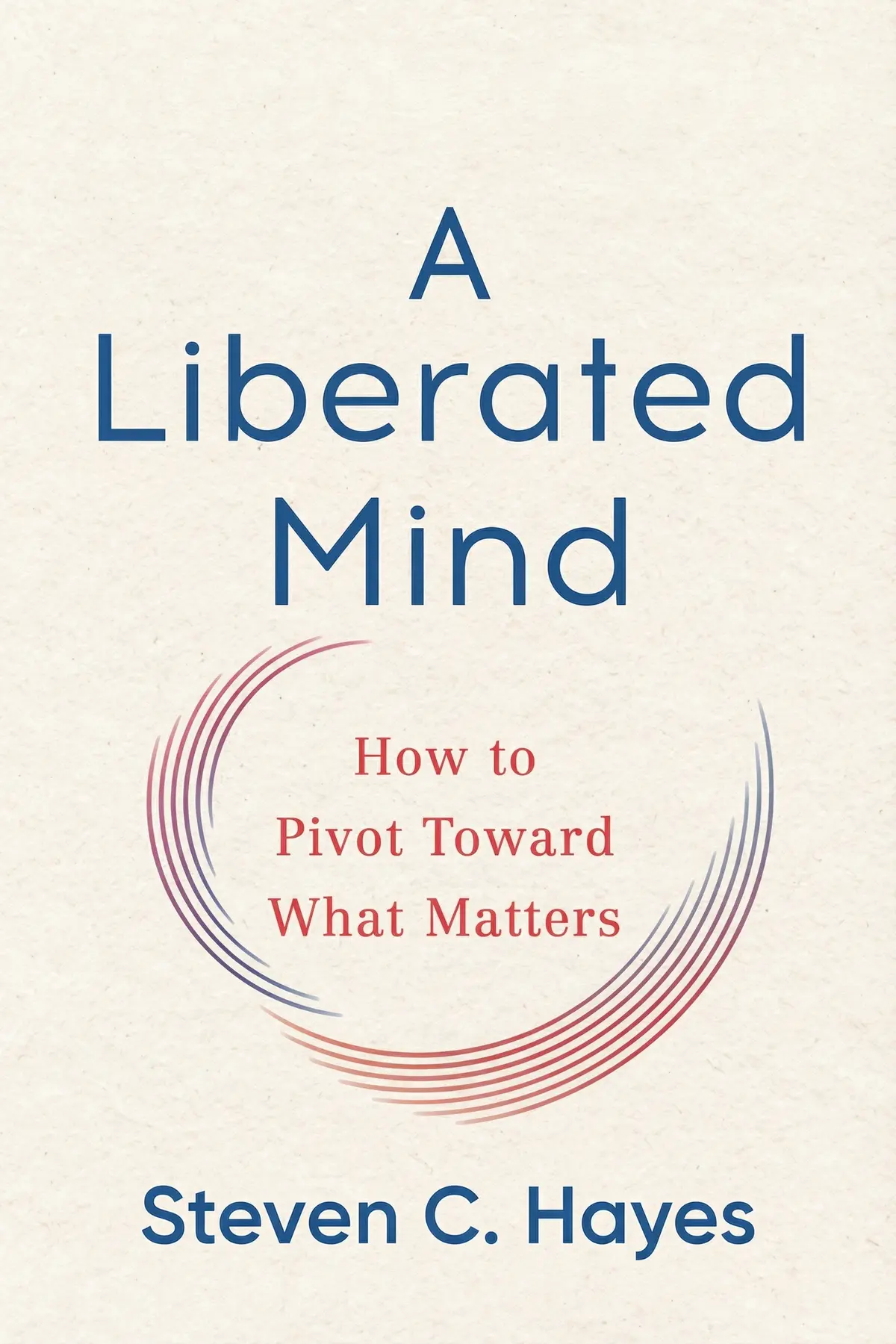
A Liberated Mind: How to Pivot Toward What Matters
Steven C. Hayes
Acting with Power: Why We Are More Powerful Than We Believe
Deborah Gruenfeld
Age of Propaganda: The Everyday Use and Abuse of Persuasion
Anthony Pratkanis
AUDIO SUMMARY AVAILABLE
Listen to How to Change in 15 minutes
Get the key ideas from How to Change by Katy Milkman, plus 5,000+ more titles in English and Thai.
- 5,000+ titles
- Listen as much as you want
- 7-day free trial
- Cancel anytime







