
16 min 47 sec
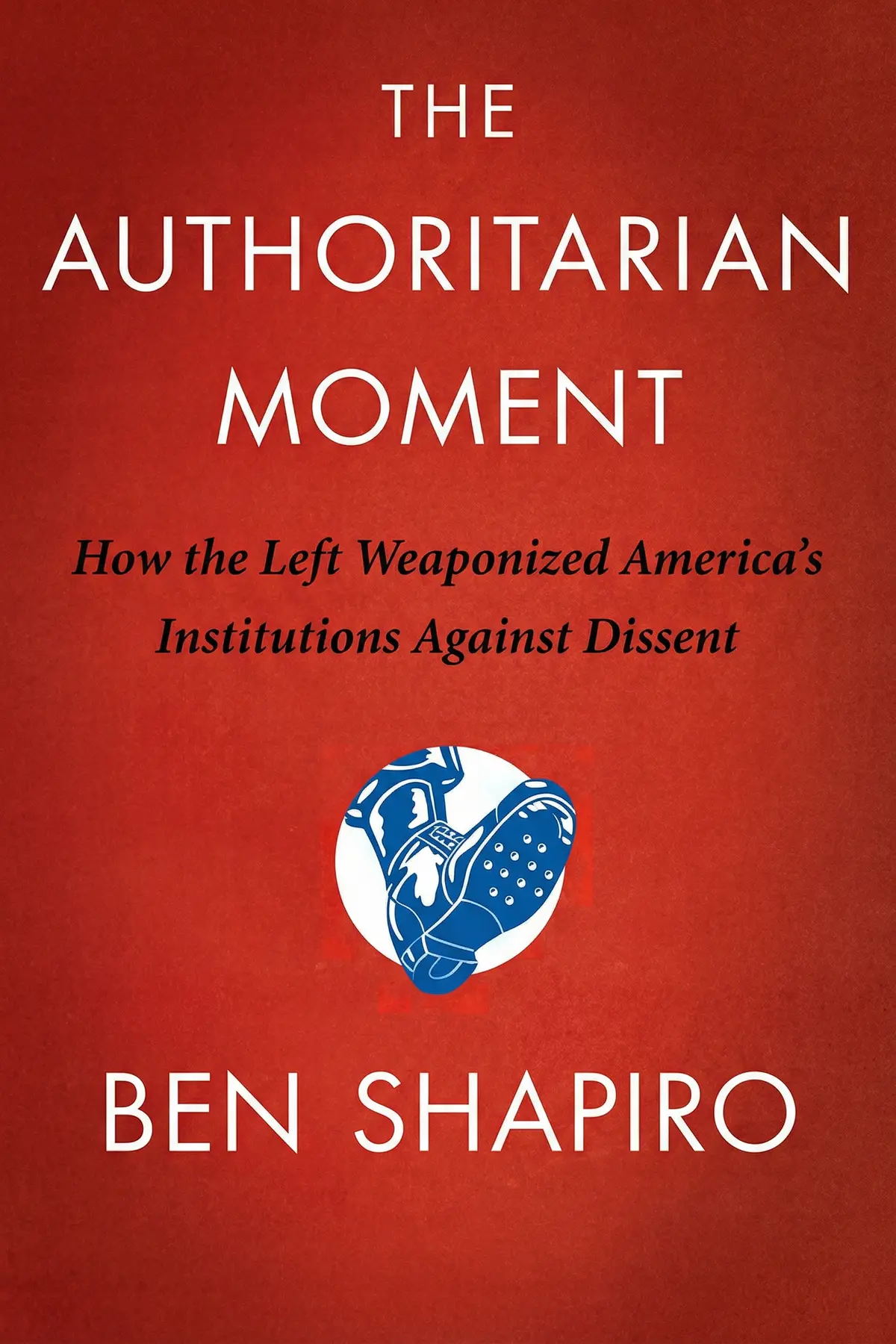
How To Destroy America in Three Easy Steps
By Ben Shapiro
Explore the ideological divide threatening American unity. This summary examines how conflicting views on history, culture, and philosophy are reshaping the nation and what is required to preserve its founding principles.

Table of Content
1. Introduction
1 min 43 sec
Walking through any major American city or scrolling through a social media feed today, it is impossible to ignore the palpable sense of friction that defines modern life. It often feels as though the United States is no longer a single nation sharing a common purpose, but rather two distinct groups of people who happen to occupy the same geographic space. This isn’t just a matter of differing opinions on tax rates or infrastructure spending; it is a deep-seated disagreement about the very nature of the American project. The bonds that once held the country together are fraying, and many feel that the nation is on the verge of a significant rupture.
In this exploration, we look at the ideological machinery that is driving this separation. We are going to examine the concept that America is being pulled apart by a specific movement that rejects the core tenets upon which the country was built. To understand where we are going, we have to look back at the philosophical and cultural bedrock that previously ensured stability. We will find that the conflict boils down to a battle between those who want to maintain the original union and those who believe that the entire system must be deconstructed.
By the end of this journey, you will have a clearer understanding of why rights have become the center of our most heated debates and why the way we tell our history has become a political weapon. We are going to look at how a shared sense of virtue and a specific interpretation of human nature are essential for a functioning democracy. This isn’t just a political critique; it’s an urgent look at the throughline of American identity and the forces that threaten to break it forever. Let’s begin by looking at the three fundamental pillars that have historically defined the American consensus.
2. The Three Pillars of the Unionist Vision
2 min 22 sec
Discover the foundational trio of beliefs—individual rights, equality under the law, and restricted government—that once provided a common ground for all Americans.
3. The Disintegrationist Counter-Philosophy
2 min 22 sec
Explore how a new ideological movement seeks to redefine rights and human nature, shifting the focus from individual liberty to state-managed outcomes.
4. A Culture Defined by Tolerance and Virtue
2 min 21 sec
Analyze the cultural habits that once allowed a diverse nation to function, focusing on the essential role of private institutions and mutual respect.
5. The Cultural Shift Toward Constraint
2 min 03 sec
Examine how the traditional ‘live and let live’ attitude is being replaced by a culture that prioritizes safety and government dependence over liberty.
6. History as a Narrative of Progress
2 min 06 sec
Investigate the ‘Unionist’ view of American history, which sees the nation’s past as a flawed but ultimately heroic journey toward its founding ideals.
7. History as an Inherent Crime
2 min 07 sec
Contrast the progress narrative with the ‘Disintegrationist’ view, which argues that America’s foundations are permanently tainted by systemic injustice.
8. Conclusion
1 min 43 sec
The ideological conflict tearing at the fabric of the United States is not a surface-level political disagreement; it is a fundamental clash over the core of the American identity. We have seen how the three pillars of the Unionist vision—natural rights, equality before the law, and limited government—have historically provided the framework for a free and stable society. We have also seen how the Disintegrationist movement seeks to replace these values with a state-centric philosophy that redefines rights as entitlements and views human nature as a tool for social engineering.
The shift in our culture, moving from a spirit of tolerance and self-reliance toward a demand for constraint and state protection, further complicates the path toward unity. When this cultural change is coupled with a historical narrative that portrays the nation as an irredeemable record of injustice, the bonds of citizenship begin to break. We are left with a choice between two paths. One path involves returning to the principles that made the country’s existence possible in the first place, acknowledging our flaws but remaining committed to the ideals that allow us to overcome them. The other path leads to a continued fracturing of the social contract, where we are defined not by our shared values, but by our divisions and grievances.
Ultimately, the survival of the United States depends on the ability of its citizens to recognize what is at stake. To remain a ‘united’ nation, there must be a consensus on the philosophy that guides us, the culture that sustains us, and the history that informs us. By re-embracing the traditional understanding of liberty and equality, the country can move past the current era of disintegration. The challenge for the future is to decide whether we will be a nation defined by its foundations or one destroyed by the rejection of them.
About this book
What is this book about?
The United States is currently navigating a profound internal crisis, characterized by a growing chasm between two fundamentally different visions for its future. One perspective seeks to uphold the traditional foundations of the country, while the other aims to dismantle them in favor of a radical new structure. This exploration delves into the three pillars—philosophy, culture, and history—that have traditionally sustained the American experiment and analyzes how they are being challenged today. Listeners will gain insight into the specific beliefs that have historically united Americans, such as the commitment to natural rights and limited government. The narrative also examines the rise of an opposing worldview that redefines equality as a matter of guaranteed outcomes and views the nation's past as an unredeemable record of injustice. By contrasting these two paths, the summary highlights the high stakes of current political tensions and emphasizes the importance of a shared cultural identity. Ultimately, it offers a framework for understanding the forces driving modern polarization and suggests a way back toward national cohesion.
Book Information
About the Author
Ben Shapiro
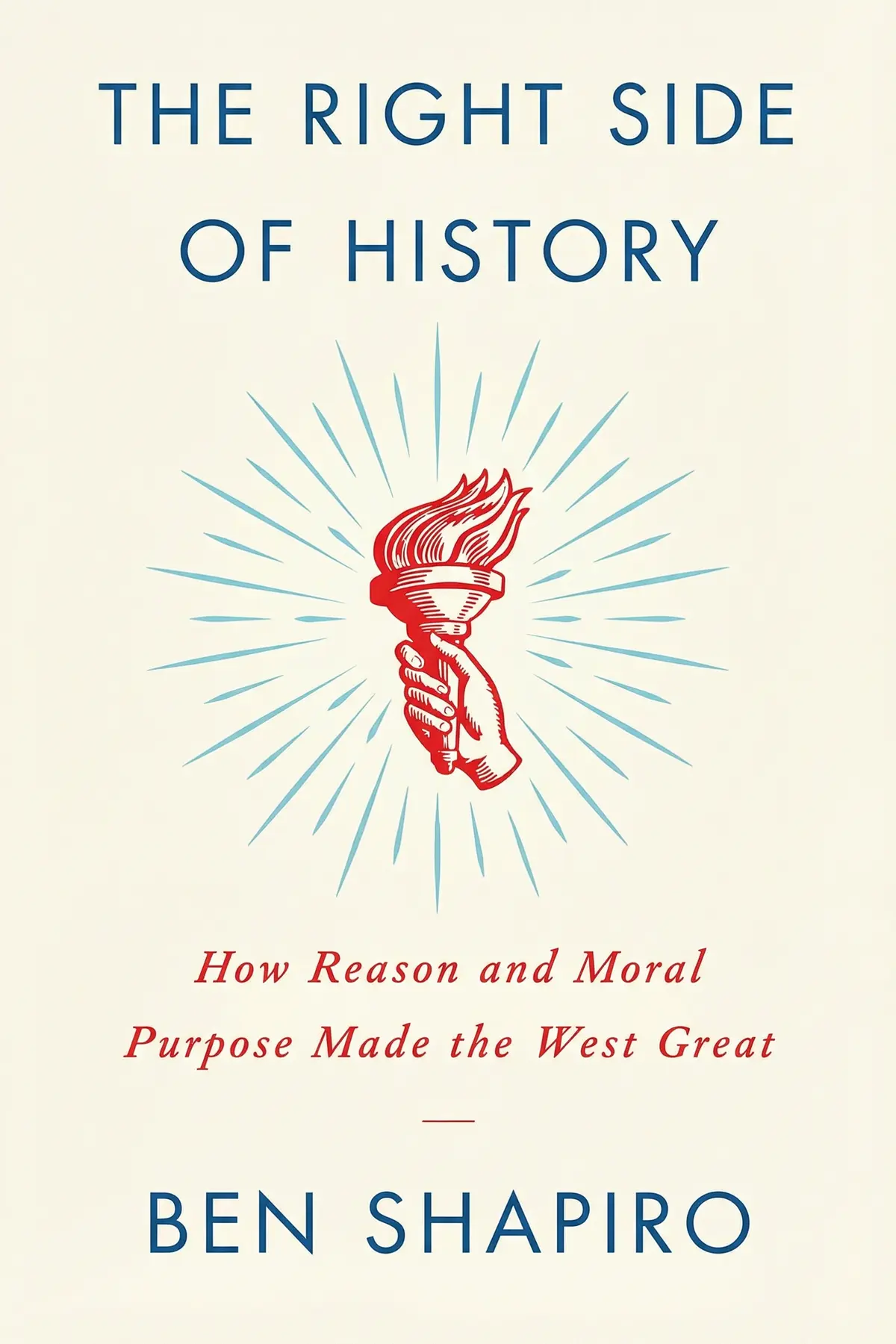
Ben Shapiro is a prominent American conservative known for his political journalism and broadcasting. He is the editor in chief of The Daily Wire and host of The Ben Shapiro Show. He is also the author of The Right Side of History.
Ratings & Reviews
Ratings at a glance

What people think
Listeners find this title to be a vital and enlightening listen, offering well-documented perspectives that emphasize factual clarity. The style is perceived as both empathetic and direct, and listeners value how the content connects historical context to modern issues. They appreciate the candid delivery of evidence and its investigation into the American past, with one listener mentioning that it clearly defines the country's foundational principles. The work earns high marks for its political philosophy, with one review specifically noting its critique of the socialist movement within the United States.
Top reviews
Sven
Few books capture the current fracture of our nation quite as poignantly as this one. Shapiro lays out a stark contrast between 'Unionists,' who believe in the enduring power of freedom and individualism, and 'Disintegrationists,' who view America as a failed experiment rooted in systemic oppression. The way he frames the importance of our shared Judeo-Christian values and classical liberal foundations is both enlightening and terrifying. Honestly, the truth is that we are losing our sense of common identity. This book serves as a much-needed wake-up call for anyone who values the principles that actually built this country into a global powerhouse. While the prose is fast-paced, the underlying logic is incredibly dense and demands your full attention. If you are tired of the constant vilification of American history, you will find this perspective refreshing. It is a straightforward, factual defense of the republic that doesn't shy away from naming the forces currently trying to tear it all down.
Show morePridi
Can a nation survive without a shared story? That is the central question Shapiro asks, and his answer is a resounding 'no.' I was particularly impressed by the section on the socialist movement in America and how it directly conflicts with the founding principles of individualism. The research here is top-tier. He provides a wealth of facts that directly counter the modern revisionist history often pushed by the media. I love how he breaks down the 'American philosophy' into manageable concepts. The book is incredibly relevant to our current times, especially with the rise of cancel culture and the decline of civic engagement. It’s refreshing to read something that isn’t just an emotional rant but a structured, logical defense of why tradition matters. Some people will hate this book because it challenges their worldview, but that is exactly why it’s so important. It’s an eye-opening deep dive into the roots of our nation and the threats we face today.
Show moreGioia
This should be required reading for every high school student in the country. Shapiro does a fantastic job of articulating why the United States is exceptional without falling into the trap of blind nationalism. He acknowledges the flaws of the past but argues that the foundations themselves—the philosophy and the culture—are worth saving. The distinction between those who want to build and those who want to disintegrate is a powerful lens through which to view modern politics. Truth is, we are living through a period of massive cultural upheaval, and this book provides the intellectual armor needed to defend the American project. I found the writing to be incredibly compassionate yet firm. It doesn't pull any punches when it comes to the dangers of identity politics. Whether you are a fan of Ben’s daily show or not, the historical references he brings to the table are undeniable. This is a five-star effort that really clarifies the stakes of our current political divide.
Show morePrim
Wow. This was exactly the book I needed to read to make sense of the chaos in the world today. Shapiro is one of the few voices out there actually willing to stand up for the original intent of the Founding Fathers. He brilliantly explains how the shift toward group identity is destroying the individual freedom that made America great. The way he ties together Judeo-Christian values with the success of our economic system is masterful. I especially appreciated his rebuttal of the idea that America was founded solely on genocide; he brings the actual documents and quotes to the forefront. It is a straightforward, factual presentation that doesn't get bogged down in academic jargon. If you want to understand why the country feels so divided, this book gives you the blueprint. It’s compassionate, intelligent, and incredibly relevant. I’ve already recommended it to several friends who were feeling just as lost as I was about the current state of politics.
Show moreWacharapol
Ever wonder why it feels like we are living in two different countries? Ben Shapiro answers that question with chilling clarity in this book. He identifies the three pillars—philosophy, culture, and history—and shows how they are being systematically dismantled by those who no longer believe in the American experiment. The logic is tight, and the historical references are abundant. I particularly liked the section on how capitalism has been a force for peace and prosperity globally, despite what the revisionists say. It’s a bold defense of the things we used to take for granted, like property rights and the rule of law. Some might call it an 'appeal to tradition,' but Shapiro argues convincingly that these traditions are the only thing keeping us from total collapse. It’s an important, eye-opening read that brings much-needed facts to a conversation that is usually dominated by pure emotion. Truly the best book I've read on political theory this year.
Show moreYothaka
Shapiro offers a compelling, if occasionally repetitive, look at the philosophical divide currently splitting the United States. The structure is quite clever, alternating between the Unionist vision and the Disintegrationist critique across philosophy, culture, and history. Personally, I found the chapters on the cultural decline and the rise of tribalism to be the most impactful parts of the entire work. He correctly identifies how the retreat into safe spaces and the refusal to engage with opposing viewpoints is killing civil discourse. However, I have to mention that the Audible version is a bit of a mixed bag; his impressions of political figures can be distracting when you're trying to focus on the heavy subject matter. Despite that, the core argument remains strong. It’s a solid 4-star read for anyone looking to understand why we can’t seem to agree on anything anymore. He brings up some great historical references that challenge the Howard Zinn narrative often taught in schools today.
Show moreSeksan
Picked this up during my lunch break and ended up finishing it in two sittings. As someone who has read 'The Right Side of History,' I did notice some overlapping themes, but this feels much more focused on the immediate 'now.' Shapiro's breakdown of how we've moved away from a shared culture is spot on. We no longer have the same heroes, the same holidays, or even the same understanding of basic rights. My only real complaint is that he focuses so much on the problem that the 'steps' to fix it feel a bit rushed at the end. He talks about the decline of the family and community, which is true, but I wanted more practical solutions. Still, the analysis of the 'Disintegrationist' narrative is eye-opening. It really helps you understand the logic behind the radical shifts we're seeing in the news every single day. Definitely worth a read for anyone who cares about the future of the country.
Show moreNaomi
While I appreciate the effort to define what 'American-ness' actually means, the title is a bit misleading. This isn't really a guide on how to destroy the country, but rather a long-form essay on political polarization. Look, I agree with many of his points regarding the importance of property rights and the successes of capitalism. But I found his interpretation of the Founding Fathers to be a bit too neat and cherry-picked. He paints them as ideological purists of classical liberalism when the reality was far more messy and politically motivated. Also, citing Martin Luther King Jr. repeatedly while ignoring the more radical, socialist-leaning aspects of his later work felt a bit intellectually dishonest to me. To be fair, he does a great job explaining why the 'Disintegrationist' view is gaining ground in academia. It’s a decent read if you want to understand the conservative perspective, though it feels a bit like a series of PragerU scripts stitched together into a book.
Show morePairot
After hearing both sides scream about this book on social media, I decided to see for myself what the fuss was about. The book is definitely polarized, which is ironic given its subject matter. I found the chapters on the history of the socialist movement in the US to be quite informative and well-researched. However, Shapiro’s tone can be quite abrasive at times. He has a tendency to speak in absolutes that might turn off anyone who isn't already a fan of his work. Not gonna lie, I felt like he was preaching to the choir for about 60% of the book. While his defense of capitalism is strong, he doesn't really engage with the valid criticisms of imperialism that many historians raise. It’s an interesting read for the political philosophy alone, but don't expect a balanced take. It is very much a conservative manifesto. If you can get past the snark, there are some decent points about the importance of civic engagement and common decency.
Show moreBua
The premise sounds academic, but the execution feels more like a partisan Twitter thread than a serious historical analysis. Ben Shapiro claims to use 'facts and logic,' yet he relies heavily on his own narrow definitions of what constitutes a 'true' American value. For instance, he suggests that supporting the Boy Scouts' right to discriminate is an American value, which is just bizarre. I also found his constant attacks on Howard Zinn to be a bit of a straw man argument. Most schools still use standard texts like 'The American Pageant' anyway. Frankly, the whole thing feels like he's arguing against a version of history that doesn't actually exist in the way he describes. He ignores the complexities of the Boston Tea Party to make a point about private property that doesn't quite hold up to historical scrutiny. If you want a deep dive into political philosophy, you're better off reading actual primary sources rather than this biased summary. It was a fast read, but not a particularly insightful one.
Show moreReaders also enjoyed

A Warning
Miles Taylor
Abolish Rent: How Tenants Can End the Housing Crisis
Tracy Rosenthal
Abortion: Our Bodies, Their Lies, and the Truths We Use to
Jessica Valenti

Adults in The Room: My Battle With Europe’s Deep Establishment
Yanis Varoufakis
21 Lessons for the 21st Century
Yuval Noah Harari

A Different Kind of Power: A Memoir
Jacinda Ardern
AUDIO SUMMARY AVAILABLE
Listen to How To Destroy America in Three Easy Steps in 15 minutes
Get the key ideas from How To Destroy America in Three Easy Steps by Ben Shapiro, plus 5,000+ more titles in English and Thai.
- 5,000+ titles
- Listen as much as you want
- 7-day free trial
- Cancel anytime







