
How To Destroy America in Three Easy Steps
Ben Shapiro
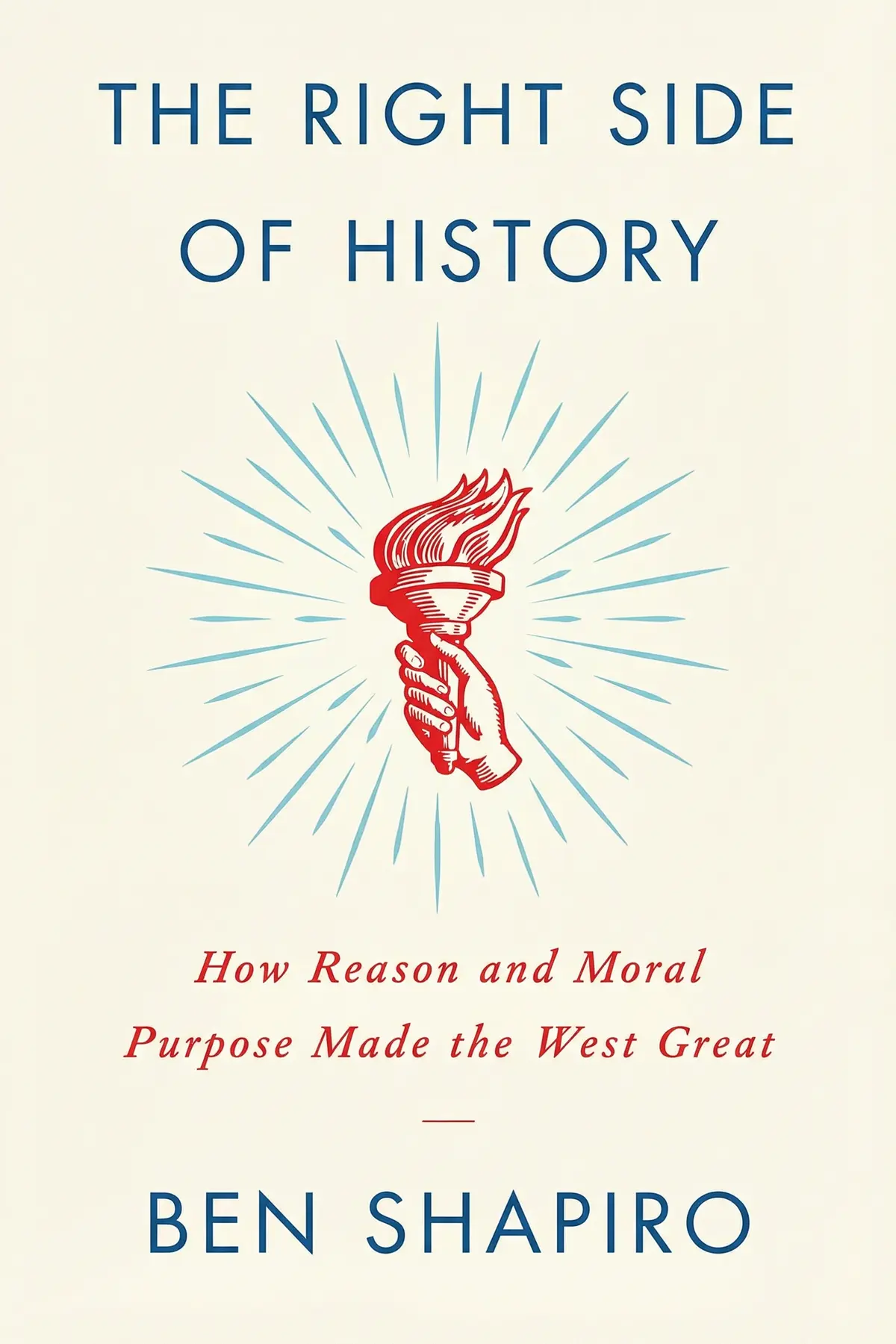
Explore the foundational pillars of Western civilization—faith and reason. This summary details how the fusion of Jerusalem’s morality and Athens’ intellect created the modern world and why these values are currently under threat.
2 min 02 sec
In the modern era, it often feels as though the foundations of our society are trembling. We live in a time of incredible technological convenience and political freedom, yet the public square is filled with more vitriol and distrust than perhaps any other time in living memory. It is a strange paradox: we have never had more, yet we have rarely felt so unmoored. People on opposite sides of the political aisle don’t just disagree on policy; they often view one another as existential threats. Why is this happening? Why does the very culture that produced the most prosperous civilization in history seem so intent on tearing itself apart?
To answer these questions, we have to look deeper than the headlines or the latest social media controversies. We have to look at the ideas that built the house we live in. Western civilization wasn’t an accident. It didn’t just happen. It was constructed on a very specific set of philosophical and religious foundations. Specifically, it was built on a synthesis of two ancient cities: Jerusalem and Athens. Jerusalem gave us the moral framework of the Bible, teaching us that every individual has inherent value and a divine purpose. Athens gave us the tools of reason and logic, teaching us how to investigate the world and govern ourselves through rational discourse.
In this exploration of The Right Side of History, we will walk through the development of these ideas. We will see how the concept of human equality was born, how the scientific revolution was fueled by a religious desire to understand God’s creation, and how the American experiment attempted to harmonize faith and reason to protect individual liberty. We will also look at the darker side of history—what happens when societies try to throw away these foundations in favor of utopian visions or tribal identities. By the end, we will have a clearer understanding of what we stand to lose if we continue to drift away from the values that made the West a beacon of progress and freedom.
2 min 31 sec
Could our modern unhappiness stem from a fundamental misunderstanding of what it means to be satisfied? Discover why the ancients viewed happiness as an action rather than a feeling.
2 min 45 sec
The idea that every human being is inherently equal is so common today that we forget it was once a radical departure from the norm. Learn where this life-changing idea actually originated.
2 min 38 sec
While Jerusalem provided the heart and soul of the West, Athens provided the mind. Explore how the Greek pursuit of logic laid the groundwork for modern science and democracy.
2 min 42 sec
We are often told that religion and science are at odds, but history suggests the opposite. Learn how a religious worldview actually provided the necessary spark for scientific progress.
2 min 36 sec
Not all revolutions are created equal. Discover why the American attempt to build a nation succeeded while the French attempt descended into a bloody nightmare.
2 min 41 sec
The dream of a perfect society often turns into a nightmare when the group is valued over the individual. Learn how collectivist ideas nearly destroyed the West.
2 min 38 sec
In our current era, we are seeing a return to the group-based thinking of the past. Discover why the rise of identity politics may be a sign of civilizational decay.
1 min 49 sec
The story of the West is the story of a delicate balance. It is the story of how the ancient wisdom of Jerusalem and the ancient intellect of Athens came together to create something the world had never seen before: a society that values the individual, protects liberty, and seeks the truth through reason. This synthesis gave us the scientific revolution, the end of slavery, the rise of democracy, and a level of prosperity that would have seemed like magic to our ancestors. It provided us with a map for how to live a life of purpose and how to build a society that respects human dignity.
However, as we have seen, this balance is fragile. When we lose our sense of moral purpose, we become desperate and despondent, chasing after shallow pleasures that never satisfy. When we lose our commitment to reason, we fall back into tribalism and superstition, viewing our neighbors as enemies rather than fellow citizens. We are currently living through a period where both of these pillars are under sustained attack. We are being told that our history is nothing but a record of oppression and that our foundational values are obsolete.
The message of this exploration is that we cannot survive without these values. We are currently living off the ‘social capital’ of previous generations, enjoying the fruits of a tree whose roots we are busy cutting. If we want to preserve our freedom and our future, we must rediscover the ‘right side of history.’ This means reclaiming the idea that we are made in the image of God and that we have a duty to use our minds to seek the truth. It means teaching the next generation that they have a moral purpose and that they are part of a great intellectual and spiritual tradition. The path forward isn’t found in a new utopia or a new tribal identity; it’s found in the timeless wisdom that built our civilization in the first place.
The modern West is currently experiencing a crisis of purpose and identity. Despite unprecedented levels of wealth, freedom, and technological advancement, society feels more divided and agitated than ever before. Why are we so unhappy in an era of such abundance? This summary explores the argument that we have abandoned the two pillars that made Western civilization successful: Jerusalem and Athens. By Jerusalem, we mean the Judeo-Christian tradition that provides a sense of moral purpose, individual worth, and the belief that every person is created in the image of God. By Athens, we mean the Greek philosophical tradition that gave us the tools of reason, logic, and scientific inquiry. Together, these traditions formed a unique framework that allowed for the rise of individual liberty, human rights, and the scientific revolution. We will examine how the rejection of these values leads to tribalism and social decay, and why reconnecting with our philosophical heritage is the only way to ensure a prosperous future for the generations to come.
Ben Shapiro is a prominent conservative commentator, attorney, and media host in the United States. He is the host of The Ben Shapiro Show, which is recognized as one of the most popular conservative podcasts in the nation. As an influential public speaker and author, he has written several New York Times bestsellers, including works such as Primetime Propaganda and The People Vs. Barack Obama. His work frequently focuses on the intersection of politics, philosophy, and traditional Western values.
Listeners find this work to be a captivating listen, offering meticulous research and sharp perspectives on numerous elements of Western history and philosophy. The delivery is expertly structured, and listeners value the emphasis on critical analysis, with one listener noting the fascinating links it creates between different philosophers. They appreciate the depth of historical background, as one listener describes it as a well-written summary of Western thought and history, while another points out its logical stance on political correctness. Listeners find the content both immersive and entertaining, with one listener highlighting the way it bridges the gap between philosophical concepts and modern history.
The intersection of reason and revelation is something we rarely talk about in modern discourse, but Shapiro centers it perfectly here. Truth is, we have collectively forgotten our intellectual origins. By exploring the tension between Athens and Jerusalem, he builds a compelling case for why our society is currently struggling with its own identity. The historical context provided regarding the Enlightenment and Judeo-Christian values gave me a much deeper appreciation for the logic used by the Founding Fathers. Some sections on Greek philosophy were dense. Yet, they were absolutely necessary to understand the big ideas that shaped the West. I found his analysis of individual rights to be especially relevant given today’s turbulent political climate. This isn't just a book for conservatives; it's a serious look at the philosophical structures that prevent us from falling into chaos. Highly recommended.
Show moreFinally, someone puts into words the spiritual void currently haunting our modern culture and points us back to our roots. Shapiro argues convincingly that without a shared belief in the divine and the capacity for reason, our civilization is essentially a house of cards. I found the chapter on the difference between the American and French Revolutions to be the highlight of the entire book. It explains so clearly why one resulted in a stable democracy while the other spiraled into a bloody reign of terror. Not gonna lie, I was expecting a partisan rant, but what I got was a thoughtful defense of the enduring truths that our country was built upon. It’s a compact book, but it’s packed with insights that made me sit back and really think about my own purpose. It provides a sensible approach to understanding our history without the usual cynicism found in modern academia.
Show moreAfter hearing so much noise about this book on social media, I was pleasantly surprised by its depth and its commitment to serious ideas. Ben Shapiro has written a book that is both entertaining and deeply educational, providing a historical context that many of us are missing today. The way he frames the success of the West as a balance between faith and reason is a brilliant way to look at our heritage. I especially appreciated the sections on individual rights and how they are protected by the moral laws handed down through the Judeo-Christian tradition. Frankly, it’s refreshing to read something that isn't just complaining about the other side but actually offers a positive vision for the future. It’s a stirring defense of the philosophy of our founders that made me rethink several of my own preconceived notions. This book is a must-read for anyone who cares about the direction our country is moving in.
Show moreBen Shapiro’s dive into the bedrock of Western civilization is surprisingly academic for a media personality known mostly for fast-talking debates. He presents a well-crafted summary of how Judeo-Christian values paired with Greek reason to create the most prosperous society in history. To be fair, there are moments where the descriptions get a bit lengthy and I found myself nodding off during the middle chapters on the Dark Ages. However, the way he connects Spinoza, Locke, and Kant to our current struggles with political correctness is genuinely insightful and well-researched. I appreciated the casual roasts sprinkled throughout, which kept the tone from becoming too dry or overly pedantic. It’s a solid read that encourages critical thinking about where we came from and where we are headed next. Even if you aren't a fan of his podcast, the historical synthesis here is worth your time.
Show moreOne specific section that stood out to me was the comparison between the 1776 and 1789 revolutions and how they shaped our modern world. Shapiro does a great job illustrating how the structural moral law of the Founding Fathers provided a necessary safeguard against the raw passion of the mob. I did feel that he occasionally short-shrifted thinkers like Dostoevsky or Kant to keep the book at a manageable length. Nevertheless, the point-to-point focus on how we transitioned from the Dark Ages to the Enlightenment was easy to follow and very well-written. The book is engaging and manages to connect complex philosophy to modern history in a way that feels urgent. My only real complaint is that he sometimes ignores other cultures when discussing universals, focusing almost exclusively on the West. Still, it’s a compelling read that offers a lot of food for thought for those on both sides of the aisle.
Show moreLook, you don't have to agree with every single policy position Shapiro takes to find value in this historical synthesis of Western thought. He presents a very rational argument for why we need to return to the values of Jerusalem and Athens to find meaning again. Truth be told, the book is most successful when it stays focused on the broad context of history rather than veering into modern political grievances. The research feels thorough, and he provides a solid high-level overview of the big ideas that have governed human behavior for centuries. To be fair, some of the logical leaps regarding causation are a bit of a stretch, but the core message remains powerful. It’s a well-written summary that is accessible to the average reader while still providing enough depth to satisfy those with a philosophy background. It’s definitely not a skippable book if you want to understand the conservative intellectual framework.
Show moreGotta say, the research here is far more thorough than what you get in a standard political manifesto from a media pundit. Shapiro takes the time to walk the reader through the development of Western thought, from the Greeks to the modern day, with a clear focus. While I don't always agree with his dismissal of certain leftist constructs, his critique of how we've abandoned our core values is very well-stated. The book is compact and fast-paced, though some of the descriptions of historical transitions felt a little rushed to me. I found the connections he drew between various thinkers like Locke and the Founding Fathers to be some of the most engaging parts of the work. It’s a well-written summary of Western thought that highlights the importance of using logic and reason to guide our collective existence. Even if you find his tone a bit abrasive at times, the ideas he presents are well worth considering in an open-minded way.
Show moreWhile I appreciate the effort to bridge the gap between ancient philosophy and modern policy, the execution feels a bit uneven at times. Shapiro is a smart pundit, but his tendency to use spurious correlations as causal claims makes it difficult to take his more academic arguments seriously. He claims the Enlightenment was only possible through Judeo-Christianity while largely ignoring the massive scientific advancements made by non-European civilizations during the same periods. Frankly, the book feels like it was written for his existing audience—those who will nod along without questioning his underlying premises or his occasional misunderstanding of intersectionality. That said, the introduction is stellar and provides a very clear-eyed look at the hole in the heart of modern Americans. It’s an engaging read, but readers should be prepared to do their own fact-checking regarding his interpretations of Voltaire and Rousseau. A decent starting point, but not the definitive history it claims to be.
Show moreEver wonder why our society feels so fractured and angry lately, even though we are technically living in the most prosperous time ever? This book attempts to answer that by looking at the empty hole of meaning in the modern heart, which is a fascinating premise. Personally, I think Shapiro is a bit too focused on the idea that every American needs to believe in God for culture to survive. While the book is well-researched, it often feels like a long-form version of his podcast rants, complete with the occasional non-sequitur and meandering conclusion. It’s a decent summary of Western thought, but it’s also quite superficial when it comes to the actual nuances of the Enlightenment thinkers he cites. He manages to cover 2000 years of history in 200 pages, which is impressive, but it means a lot of things get oversimplified or ignored entirely. It’s worth a read, but don't expect a deep academic dive.
Show moreIt’s hard to ignore the blatant cherry-picking of historical data used to prop up a very specific political agenda throughout these chapters. The author spends an incredible amount of time creating straw men of the political left rather than actually arguing for the merits of his own premise. In my experience, a truly intellectual work should be able to withstand the scrutiny of opposing views without resorting to misrepresenting those views entirely. He argues that logic is the foundation of the West. Yet, he dismisses any logic other than his own a priori. This feels incredibly hypocritical. The writing style is definitely well-crafted and fast-paced, but that speed often serves to gloss over complex historical nuances that don't fit his narrative. It lacks the depth found in works by actual historians like Niall Ferguson. Skip it if you want real history.
Show more
James Comey
Anthony Pratkanis

Barack Obama

Masaji Ishikawa
John Rawls



Miles Taylor
AUDIO SUMMARY AVAILABLE
Get the key ideas from The Right Side of History by Ben Shapiro, plus 5,000+ more titles in English and Thai.