
13 min 32 sec
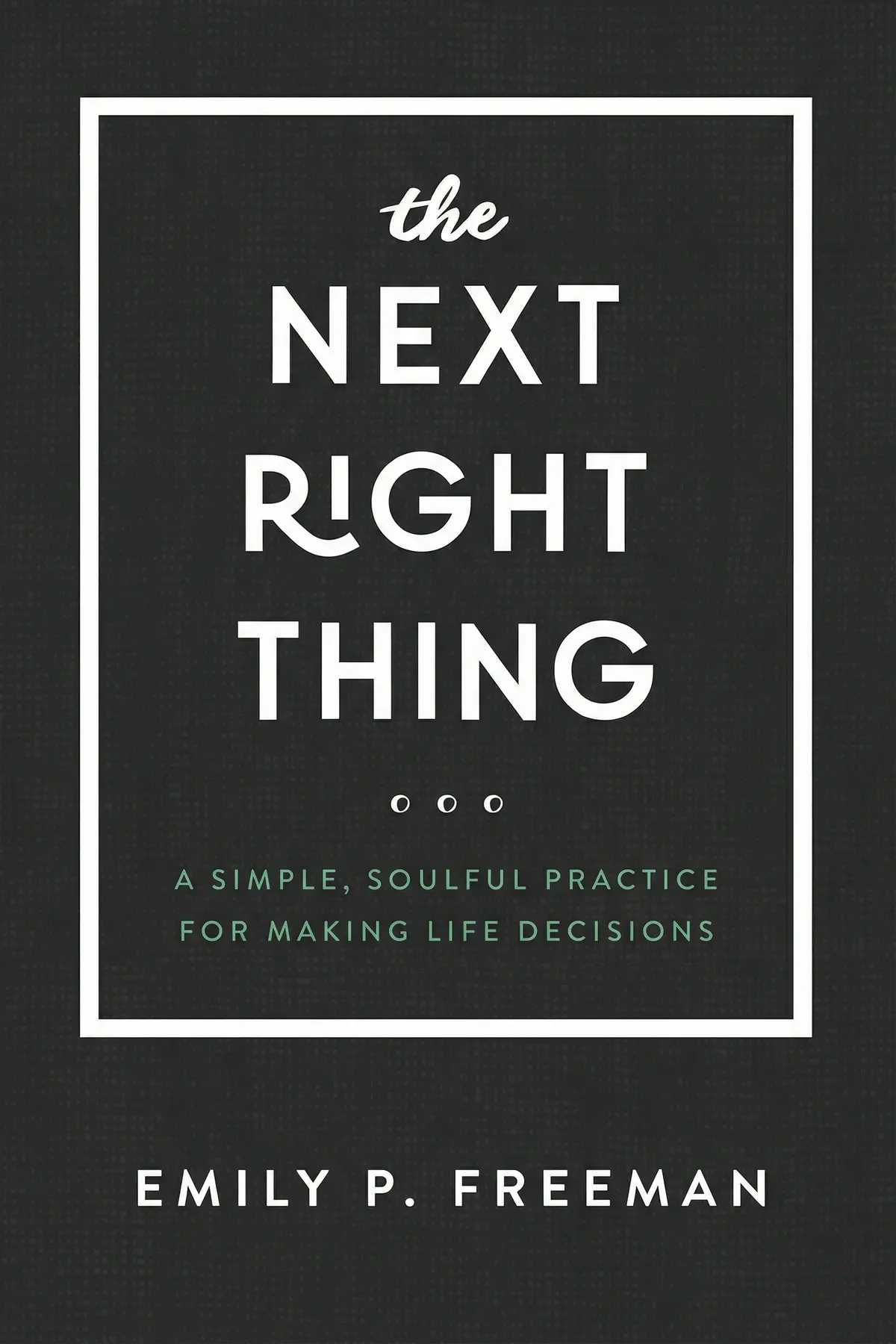
How to Walk into a Room: The Art of Knowing When to Stay and When to Walk Away
Emily P. Freeman offers a contemplative guide to navigating life’s transitions. Using the metaphor of a house, she helps listeners decide when to stay in their current circumstances and how to move forward.
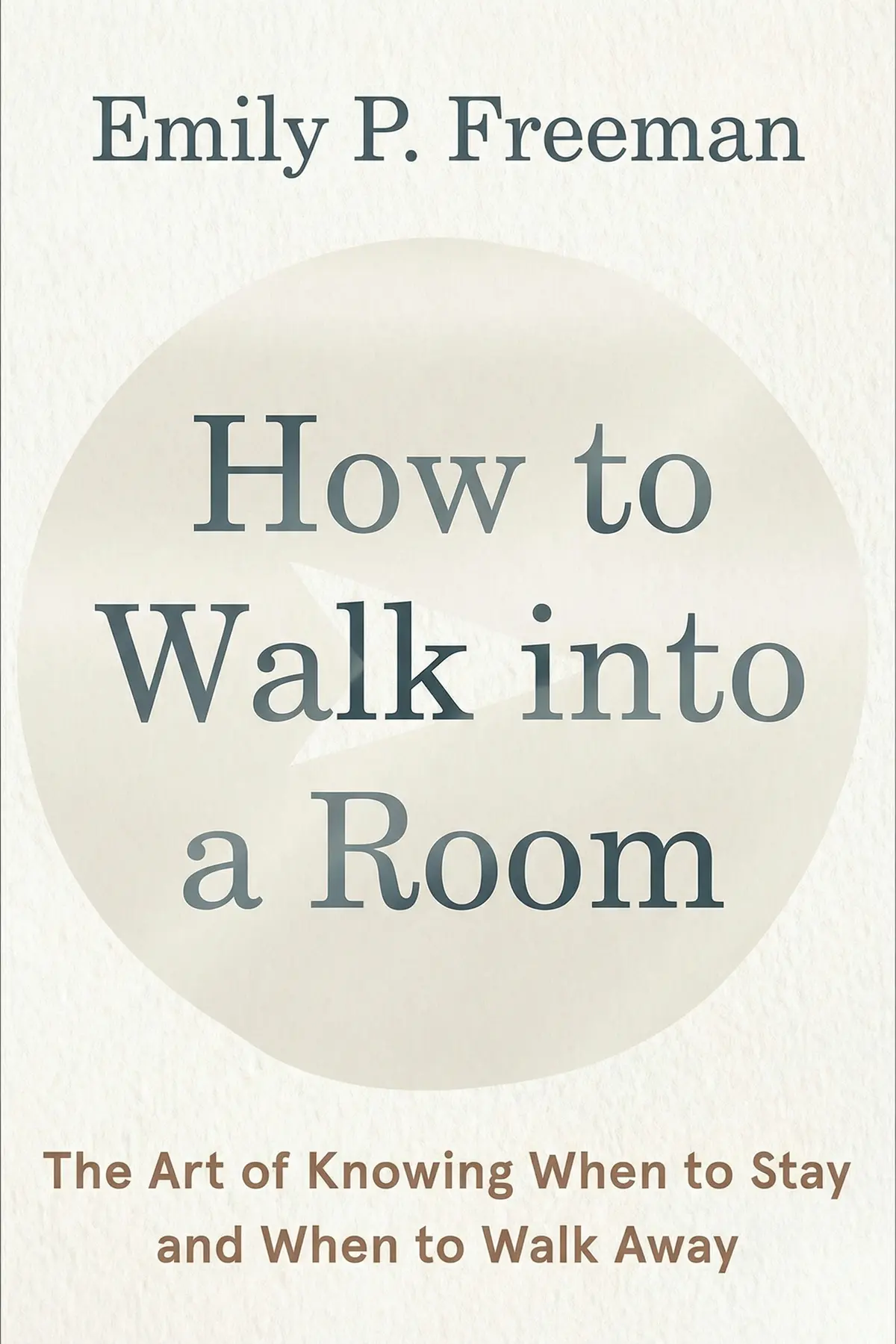
Table of Content
1. Introduction
1 min 22 sec
Have you ever found yourself standing in the middle of a life you built, wondering if you still belong there? We often talk about the excitement of new beginnings, but we rarely discuss the messy, quiet, and often painful process of realizing that something is ending. Whether it’s a job that once fueled your passion but now leaves you drained, a relationship that has shifted in a way you can’t quite name, or a community that no longer feels like home, the question of whether to stay or go is one of the most profound dilemmas we face.
There is a certain comfort in the familiar. We settle into routines, find our place in the social order, and tell ourselves that stability is the ultimate goal. But what happens when that stability starts to feel like a plateau? If growth is the objective of a life well-lived, then we must be willing to face the terrifying prospect of change. This isn’t just about making a snap judgment; it’s about a deeper kind of wisdom that helps us recognize when our time in a particular space has reached its natural conclusion.
In the following sections, we’re going to explore a framework for navigating these existential thresholds. You’ll learn how to view your commitments through a new lens, how to handle the uncertainty of the “in-between” spaces, and how to eventually step into a new environment with both confidence and grace. This is about more than just walking away; it’s about the art of moving toward your most authentic self.
2. Viewing Life as a Series of Rooms
1 min 48 sec
Imagine your life as a grand estate where every obligation and relationship is a distinct space. Learn how to evaluate these areas to see if they still fit your soul.
3. The Practice of Naming Your Reality
1 min 34 sec
Discovery begins with the simple act of observation. Explore a technique used to maintain focus and how it can reveal the hidden truths about your current situation.
4. Consulting Your Internal Guideposts
1 min 37 sec
Your decisions should be rooted in something deeper than just a passing feeling. Discover how your spiritual personality and core values act as a permanent compass.
5. Living in the Hallway of Transition
1 min 29 sec
Leaving a room doesn’t mean you immediately find a new one. Learn to embrace the ‘in-between’ spaces without the pressure of binary thinking.
6. Practical Rhythms for Uncertain Times
1 min 36 sec
When the timing feels off or anxiety runs high, simple mantras can provide the grounding you need. Explore the power of staying present with the ‘for now’ approach.
7. Differentiating Between People-Pleasing and Leadership
1 min 30 sec
Walking into a new space requires a shift in how you view yourself. Learn the crucial difference between keeping the peace and being a principled leader.
8. Recognizing the Resonance of a True Homecoming
1 min 25 sec
How do you know when you’ve finally found the right space? Discover why the body’s physical response and a sense of ‘unhurriedness’ are key indicators.
9. Conclusion
1 min 11 sec
Navigating the transitions of life is an art form that requires patience, honesty, and a deep commitment to your own growth. By using the metaphor of the house, you can begin to see your commitments not as permanent obligations, but as rooms that you have the right to evaluate. Remember to use the tool of pointing and calling to name your reality, and always look to your spiritual personality and core values as your permanent guideposts.
When you find yourself in the hallway between rooms, don’t rush the process. Use the ‘for now’ mantra and breath prayers to stay grounded in the present. Understand that the discomfort you feel is often just the friction of growth, and that being a well-differentiated leader is far more valuable than being a people-pleaser. Ultimately, the goal is to walk into every room with a sense of purpose and grace. Whether you are staying or leaving, let your decisions be an act of authenticity. Listen to your body, trust your intuition, and have the courage to seek out the spaces where you truly belong. Your life is an ongoing journey of discovery, and every threshold you cross is an opportunity to show up more fully as yourself.
About this book
What is this book about?
Life is a series of entries and exits, but knowing when a chapter has truly closed is rarely easy. How to Walk into a Room provides a spiritual and practical framework for making difficult decisions about careers, relationships, and communities. Emily P. Freeman introduces the house metaphor, where every commitment represents a room. Some rooms nourish us, while others begin to feel cramped or misaligned with our evolving values. The book promises to help you navigate the hallways of life—those awkward, uncertain periods of transition between where you were and where you are going. By focusing on discernment rather than just decision-making, Freeman teaches readers how to listen to their bodies, identify their core values, and embrace the silence. Ultimately, the book is about more than just leaving; it is about the art of showing up as your most authentic self in every new space you enter. It offers a path to living with greater intention, ensuring that your presence in any room is a reflection of your deepest convictions and spiritual peace.
Book Information
About the Author
Emily P. Freeman
Emily P. Freeman is an author and podcast host known for her insightful writings on faith, creativity, and intentional living. With a gift for blending vulnerability and wisdom, she empowers others to embrace their true selves and live with purpose. Her other books include The Next Right Thing and Simply Tuesday.
Ratings & Reviews
Ratings at a glance
What people think
Listeners find this book to be overflowing with wisdom and practical advice, particularly highlighting it as essential listening for people in their forties. It provides effective instruments for making decisions and includes real-life stories, making the content feel remarkably intimate and recognizable. Listeners value the author’s openness and courage, noting the book evokes strong emotions while offering reflective prompts for discernment and processing.
Top reviews
Nim
This book offers a refreshing framework for anyone standing at a threshold, unsure whether to turn the handle or walk away. Freeman uses the "room" metaphor with such surgical precision that I found myself re-evaluating every major commitment in my current season. Frankly, her breakdown of how we outgrow spaces without even realizing it felt like a mirror held up to my own soul. While some might find the lack of explicit scriptural citations jarring, her spiritual direction is deeply felt through her own vulnerability and the PRAY acronym. It’s a brave piece of writing that doesn't offer easy answers but instead provides the right questions. For those of us in our forties, this kind of nuanced guidance is exactly what the doctor ordered. I finished the last page feeling lighter and more empowered to trust my own discernment process.
Show moreLucia
Wow, this was a gut-punch in the best possible way for anyone navigating the disorientation of mid-life transitions. Freeman’s voice is so incredibly kind, acting as a lamp post for those of us wandering in the dark transitions of our forties. I found myself crying through the chapter on yielding to arrows because it gave me permission to admit that I was tired of trying to change systems that didn't want to change. Look, leaving a room is never easy, but this book makes the process feel less like a failure and more like a holy necessity. Her vulnerability regarding her family's journey and her church exit was handled with such grace and dignity. This isn't just a book; it’s a toolkit for staying sane while your world shifts.
Show moreBig
Finally got around to reading this, and I'm left feeling deeply seen by Freeman's honest portrayal of spiritual transition. She captures the lonely, disorienting feeling of leaving a community you once loved with such profound bravery. Not gonna lie, I was worried it would be another bitter deconstruction story, but it was actually full of hope and a generous orthodoxy. The questions she poses for discernment are now taped to my desk because they are that vital for my daily processing. She has this unique ability to take high-level spiritual concepts and ground them in the reality of being a mom and a neighbor. If you are struggling with a major life change, please do yourself a favor and read this immediately.
Show morePot
Picked this up during a period of intense career transition, and the timing couldn't have been better for my mental health. Freeman’s Point and Call technique, borrowed from Japanese railways, is a game-changer for someone like me who overthinks every tiny detail. I appreciated how she didn't just tell us to "follow our hearts" but gave us a structured way to acknowledge the arrows pointing toward our next step. My only real gripe is that the middle sections felt a bit repetitive, circling the same metaphors several times before getting to the point. Still, the emphasis on self-leadership and making peace with the hallway between rooms was incredibly comforting. It's a gentle, wise companion for anyone who feels stuck in a situation that no longer fits.
Show moreSupatra
After hearing Freeman on a podcast, I decided to grab the audiobook, and hearing her read her own words adds a layer of intimacy that shouldn't be missed. Her PRAY acronym—Point, Remember, Acknowledge, Yield—provided a much-needed structure to my morning reflections this week. I especially loved the section on well-differentiated leadership and the idea that we don't always need everyone's consent to do what is right for our souls. While the theological shifts she describes might be a bridge too far for some readers, her focus on the "God within" felt like a valid expression of her personal discernment. The book is a bit slow-paced at times, but the wisdom tucked into the margins is worth the wait. It’s a solid resource for anyone in a stay-or-go dilemma.
Show moreEli
The chapter on Remembering Your Path was exactly what I needed to hear as I navigate some tough questions about my own faith community. Freeman writes with a gentle authority that doesn't demand you agree with her conclusions, but asks you to be honest about your own. To be fair, her perspective on sexuality and how it influenced her departure from her church will be polarizing for many. However, the tools she provides for discernment are universal, regardless of where you land on doctrinal issues. I appreciated her distinction between the relief of avoidance and the actual peace of doing the right thing. It’s a thoughtful, beautifully written guide that respects the reader's intelligence and autonomy.
Show moreKom
Not what I expected, but How to Walk into a Room turned out to be a really insightful study on the mechanics of making difficult choices. Freeman treats the reader like a friend, sharing her failing and her finding with equal weight and zero pretension. Some of the sections on acknowledging presence felt a little too mystical for my personal brand of faith, yet I couldn't deny the truth in her observations about internal peace. The book excels at validating the awkwardness of the hallway—that space where you've left one thing but haven't yet found the next. It’s a quiet, contemplative read that encourages you to slow down and listen to the arrows in your own life. Definitely worth a read for anyone feeling othered.
Show moreFatou
Ever wonder if you’re leaving a situation too early or staying far too long? That is the central question Emily P. Freeman tackles here, though her answers aren't always as clear as I would have liked. The truth is, writing from the middle of a story can be tricky, and at times it felt like the "blind leading the blind" because she's still in her own hallway. I resonated with the idea of "gathering without walls," but I struggled with the lack of closure regarding the specific family situation she hints at. It’s an interesting thought experiment for those of us navigating church hurt or deconstruction, yet it lacks the meat of a finished memoir. It’s a decent read for the right season, but don’t expect a definitive roadmap.
Show moreManika
In my experience, Freeman is at her best when she is being practical, but this book leaned a bit too heavily into the abstract for my taste. I’ve been a fan of her work for years, so I was excited for this, yet the room and hallway metaphors started to feel a bit stretched by the halfway mark. There are definitely some good nuggets here—the idea of safety practices in decision-making is brilliant—but the narrative flow felt a little disjointed. I also agree with other reviewers who felt that the specific church conflict was too obscured to be truly helpful as a case study. It’s a beautiful book to look at and the prose is elegant, but it didn't quite hit the home run I was expecting. It's helpful, just not her strongest work.
Show moreElla
To be fair, I went into this expecting a traditional Christian book on discernment, but it felt much more like a secular self-help manual with a thin spiritual veneer. I was disappointed that for a book marketed to believers, there was a noticeable absence of actual Scripture to ground the advice. The reason she eventually gives for leaving her church community felt based more on personal feelings and proximity than on biblical truth, which made it hard for me to trust her as a guide. If you are looking for something that aligns with a conservative theological worldview, you might find her "generous orthodoxy" a bit too foggy. It’s well-written, as all of her work is, but the content itself felt like she had departed from the foundations I was looking for. I’ll be passing on this one for my small group.
Show moreReaders also enjoyed
A Guide to the Good Life: The Ancient Art of Stoic Joy
William B. Irvine
A High-Performing Mind: Strengthen Your Mind and Live Your Best Life
Andrew D. Thompson
Abundance: The Inner Path to Wealth
Deepak Chopra

A Force for Good: The Dalai Lama's Vision for Our World
Daniel Goleman
AUDIO SUMMARY AVAILABLE
Listen to How to Walk into a Room in 15 minutes
Get the key ideas from How to Walk into a Room by Emily P. Freeman, plus 5,000+ more titles in English and Thai.
- 5,000+ titles
- Listen as much as you want
- 7-day free trial
- Cancel anytime







