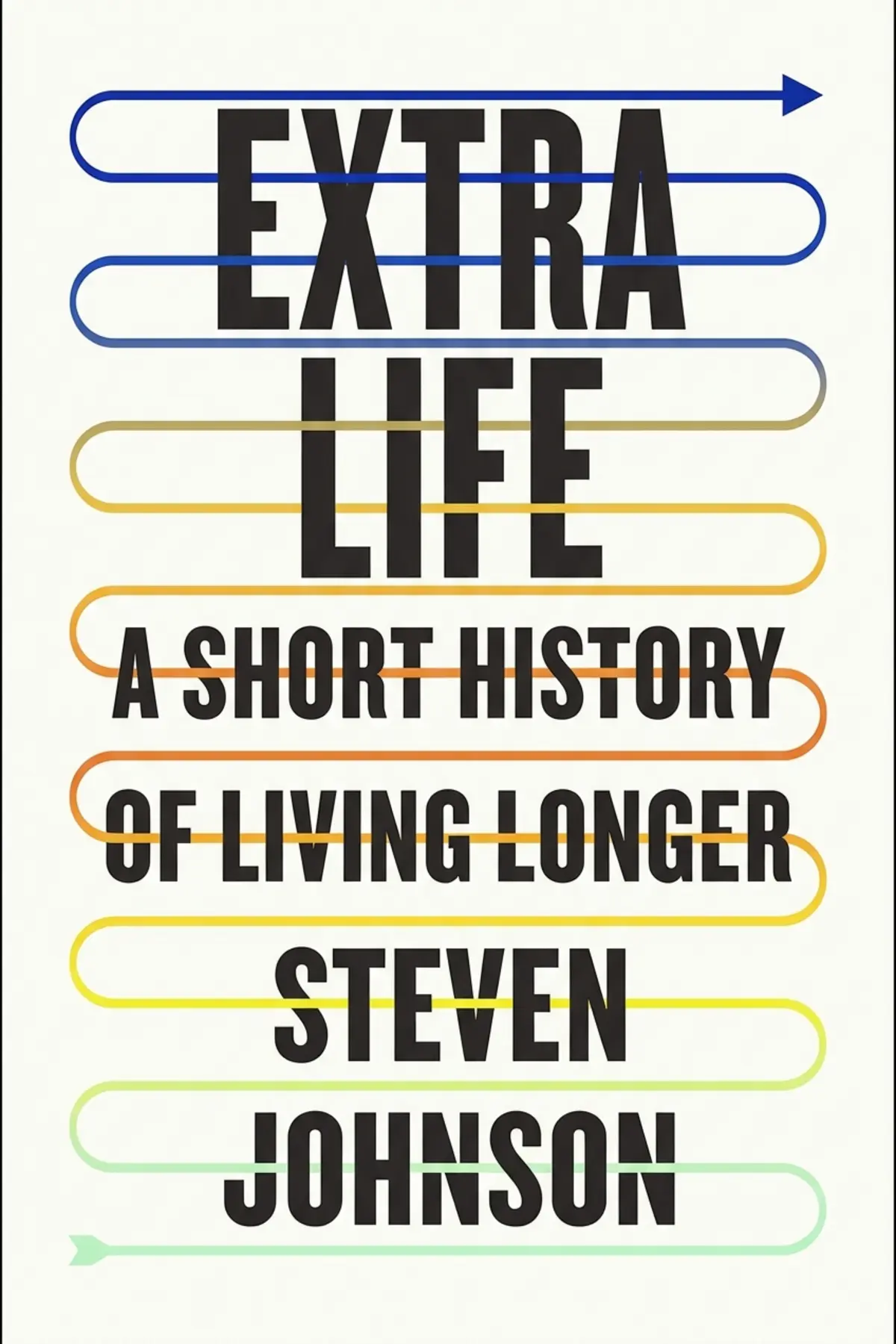
Extra Life: A Short History of Living Longer
Steven Johnson
Explore the surprising history of innovation and discover how simple breakthroughs in glass, cold, and light triggered vast societal shifts that fundamentally reshaped the modern world and our daily lives.
1 min 46 sec
When we look at the world around us, we often see a collection of discrete objects. We see a smartphone, a refrigerator, or a pair of spectacles, and we think of them as isolated inventions created to solve specific problems. But if we peel back the layers of history, we find a much more complex and fascinating story. The reality is that our world is built on a foundation of hidden connections, where an innovation in one field—say, the production of clear glass—might lead to a revolution in biology, art, or even our very sense of self. This is the central premise of Steven Johnson’s exploration into the origins of our modern life.
He argues that we cannot understand the present by looking at inventions in a vacuum. Instead, we must adopt what he calls a long-zoom perspective. This approach allows us to see the ‘adjacent possible,’ the way one breakthrough opens up a new room of possibilities that no one could have initially predicted. It is a story of coevolution, where humans and their technologies change one another in a constant, echoing loop. In this summary, we will explore how a handful of fundamental innovations—in light, cold, glass, and sound—didn’t just make life easier; they fundamentally altered the trajectory of the human species.
We will move from the frozen wilderness of Canada to the dark alleys of nineteenth-century New York, and from the tragic sinking of the Titanic to the birth of computer code. Along the way, we’ll discover that the path to ‘now’ was never a straight line. It was a web of accidents, unintended consequences, and brilliant leaps of faith. By the end, you’ll see that the most world-changing ideas often come from the most unexpected places, and that the history of technology is, at its heart, the history of how we are all connected.
1 min 54 sec
Discover how the natural world provides a blueprint for innovation, showing how a change in one species can lead to a radical transformation in another.
1 min 54 sec
Learn why looking at the big picture is essential for understanding how a single business decision can collapse an entire industry.
1 min 49 sec
See how a naturalist’s observation about frozen fish in the Arctic eventually led to a revolution in how we plan our families.
1 min 43 sec
Explore how the invention of clear glass didn’t just help us see the world, but fundamentally changed how we see ourselves.
1 min 53 sec
Uncover the connection between the light bulb and social reform, and how artificial light helped change the law of the land.
1 min 50 sec
Track how a tragic maritime disaster led to a technology that can map the ocean floor and see inside the human body.
1 min 56 sec
Re-evaluate what it means to be an inventor, comparing the collaborative work of Edison to the poetic mathematics of Ada Lovelace.
1 min 29 sec
As we have seen, the journey from the first piece of clear glass to the digital world we inhabit today is not a series of straight lines, but a complex web of interconnected events. We’ve explored how the simple desire to see ourselves clearly in a mirror eventually led to the birth of the individual and a revolution in art and literature. We’ve seen how the quest to preserve a fish in the Arctic paved the way for modern fertility treatments, and how a tool designed to find icebergs ended up looking into the human womb.
These stories teach us that innovation is rarely just about the object itself. It is about the environment that the object creates and the ‘adjacent possible’ that it reveals. When we invent something, we are rarely just solving one problem; we are planting a seed that will grow in directions we cannot predict. Some of those directions will lead to social reform and the protection of the vulnerable, while others may lead to difficult ethical dilemmas.
The key takeaway is to embrace the long-zoom perspective in our own lives. By understanding that everything is connected—from the way we light our homes to the way we perceive time and sound—we can better appreciate the complexity of the world we’ve built. The history of how we got to ‘now’ is still being written, and every new idea we foster has the potential to ripple out across the globe in ways that will shape the ‘now’ of future generations. Stay curious about the hidden links behind the tools you use every day, for that is where the true story of human progress lies.
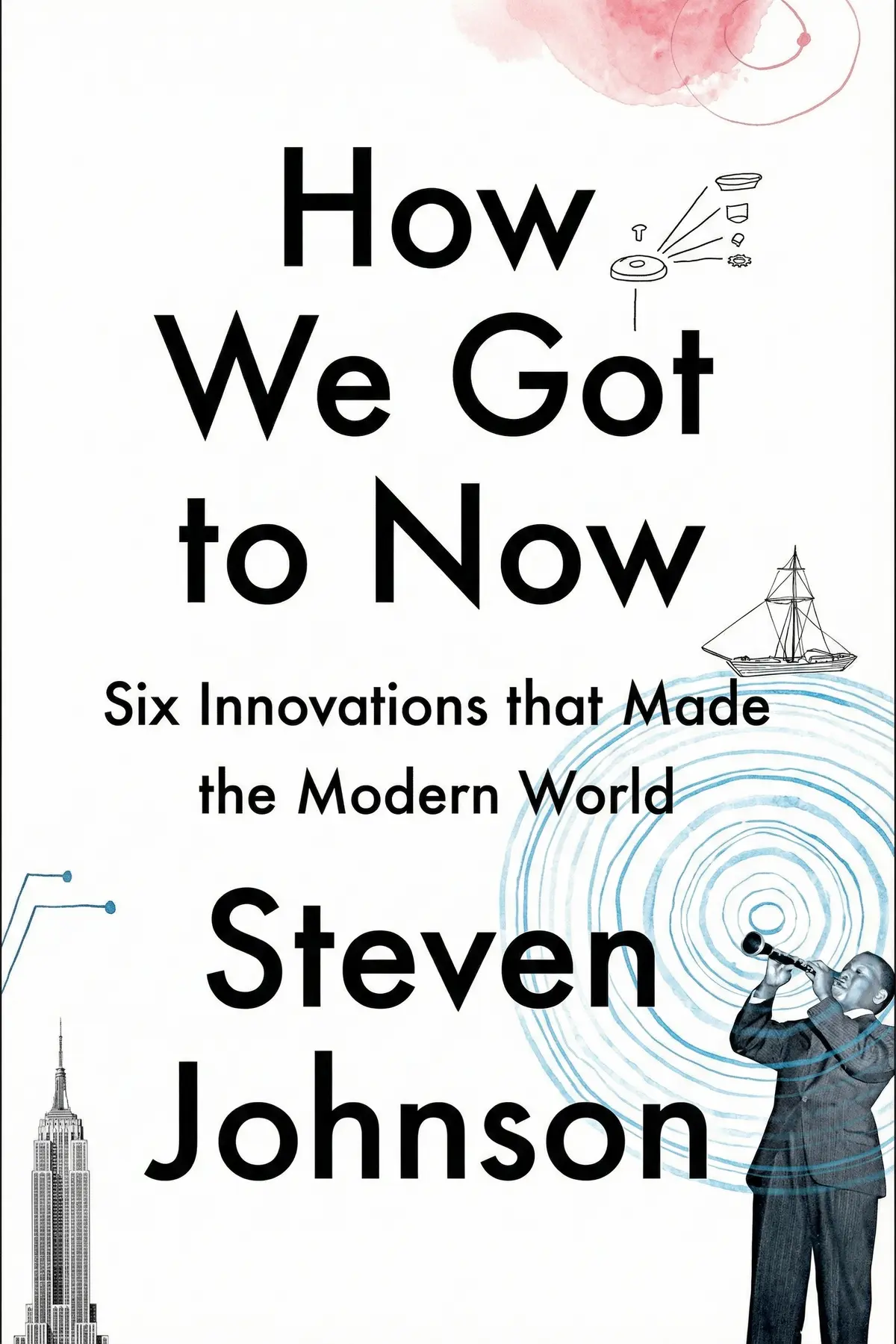
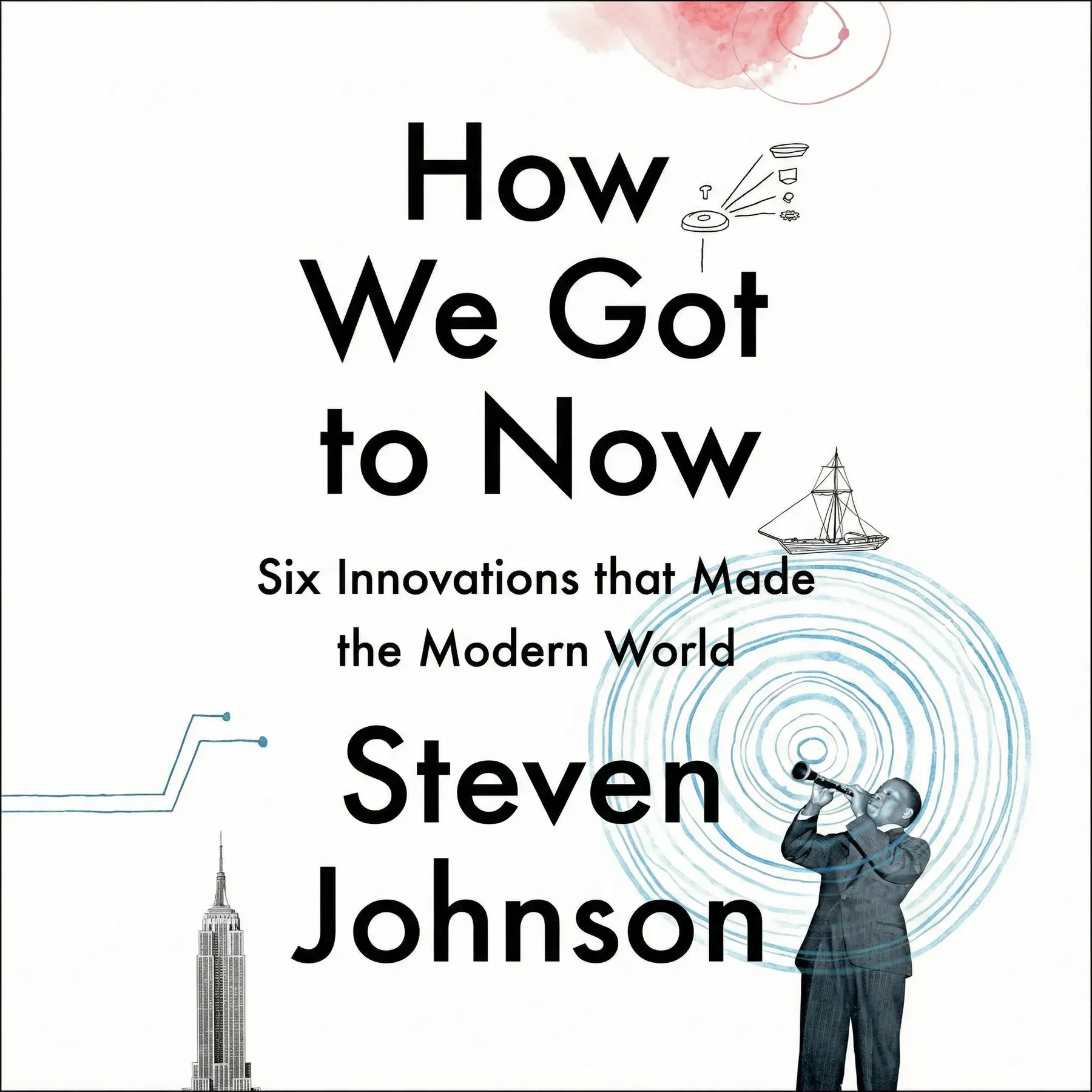
How We Got to Now investigates the hidden history behind the innovations that define our contemporary existence. Rather than viewing history as a simple timeline of great men and women, it uses a long-zoom perspective to reveal how a discovery in one field often triggers a chain reaction in completely unrelated areas. From the way glass allowed us to see ourselves and the stars, to how the quest for ice revolutionized human reproduction, the book highlights the interconnectedness of human ingenuity. Steven Johnson takes listeners through six key areas of development, showing how technologies like sonar and flash photography did more than solve immediate problems—they created new social norms, sparked political reforms, and altered the course of biological evolution. This summary provides a deep dive into the unexpected consequences of creativity, illustrating that the world we inhabit is the result of complex, symbiotic relationships between ideas, environment, and accidental discoveries. It promises to change how you look at the mundane objects surrounding you, from the light bulb in your lamp to the mirror on your wall.
Steven Johnson is a distinguished author and media personality who was educated at Columbia University. He is the host and co-creator of the PBS and BBC Two television series also titled How We Got to Now, which serves as the visual counterpart to the research and narratives presented in this book.
Steven Johnson
Steven Johnson
Listeners find this work captivating and highly accessible, highlighting its impressive research and how it makes historical and scientific topics truly intriguing. Furthermore, the prose is superb, and listeners value the educational merit, with one noting it is technical enough to keep non-tech readers interested. Additionally, the book offers deep reflections that introduce new perspectives, and listeners are enthralled by its examination of discoveries and their long-term impacts across history.
Steven Johnson has a gift for making the invisible structures of our world suddenly visible and fascinating. I was particularly captivated by the "hummingbird effect," where a breakthrough in one niche, like glass-making, ripples out to create entirely unexpected shifts in how we see the stars or ourselves. The narrative is breezy and accessible without sacrificing the intellectual weight of its research. Personally, I found the section on “Clean” to be the most surprising, especially the sheer physical effort it took to lift the city of Chicago. It’s the kind of book that leaves you looking at your lightbulb or your wristwatch with a newfound sense of awe. If you want a history that isn't just a list of dates, this is an essential read for any curious mind.
Show morePicked this up after seeing a recommendation on a blog, and I ended up finishing the whole thing in a single weekend. The way Johnson connects the dots between 19th-century whaling and the eventual birth of the laser is masterfully done. I love how he focuses on the “we” of the West while acknowledging the specific cultural conditions that allowed these breakthroughs to flourish. The illustrations and photos in the hardcover edition are beautiful and really help ground the more abstract scientific concepts. It’s a thought-provoking journey that forced me to rethink how innovation actually happens in the real world. Every chapter left me with at least three incredible facts to share with my friends at dinner.
Show moreFinally got around to finishing this, and I’m impressed by how Johnson synthesizes so much information into such a compelling package. The discussion on ultrasound and its unintended impact on gender ratios in China was a sobering reminder of how technology can go sideways. It’s a fascinating exploration of the “long view” of history that looks past the headlines to see the slow-moving currents that actually change civilization. The truth is, most of us take things like artificial light for granted, but this book shows just how much effort and failure it took to get here. It’s a brilliant piece of popular science that I’ll be recommending to everyone I know.
Show moreWow, what a ride through human ingenuity and the weird paths that progress takes over the centuries. From King Tut’s glass jewelry to the fiber optic cables that power our modern internet, this book is a treasure trove of unexpected connections. I loved the section on “Sound” and the idea that ancient cave paintings might have been markers for the best acoustic spots rather than just art. Johnson has a wonderful way of making the reader feel like an insider in the laboratory of history. Even the minor details, like the story of the sperm whale oil, are treated with such care and curiosity. It’s a thought-provoking, beautifully written book that I’ll definitely be revisiting soon.
Show moreEver wonder how a simple block of ice managed to reshape the entire population map of the United States? Johnson explores this in the “Cold” chapter, tracing the path from the frozen water trade to the invention of air conditioning and frozen dinners. The truth is, I never realized how many of our modern comforts were born from such strange, unintended consequences. While some of the commentary between the anecdotes feels a bit repetitive, the stories themselves are absolutely gripping. He does a fantastic job of debunking the “lone genius” myth by showing how Edison and others were part of a larger network of ideas. It’s a very polished, educational read that doesn’t require a technical background to enjoy.
Show moreThe chapter on clean water was eye-opening because I had no idea that 19th-century cities were quite that disgusting or that Chicago was physically jacked up by several feet. Johnson’s writing style is incredibly engaging and he has a knack for finding the human drama behind things as mundane as a sewer pipe. Not gonna lie, I was skeptical about a whole section dedicated to “Time,” but the evolution of the clock is actually a thrilling story of navigation and industrialization. My only minor gripe is that he dismisses the importance of individual inventors a little too aggressively at times. Still, the overall message about the collective nature of progress is very convincing. It’s a solid, educational read that makes history feel alive.
Show moreLook, I’m not usually a science person, but this book was so breezy and accessible that I never felt lost or bored. The author manages to take technical topics like sound waves and vacuum tubes and turn them into a narrative that feels like a detective story. I particularly enjoyed learning about Clarence Birdseye and how his observations of Inuit fishing techniques led to a revolution in the way we eat today. The book is well-researched but stays light on its feet, making it perfect for a casual reader who wants to learn something new without getting bogged down in jargon. It really opens your mind to the strange links between technologies you use every single day.
Show moreAs someone who enjoys a long-view history of civilization, I found this to be a refreshing take on the standard “great man” narrative of invention. Johnson argues that ideas are networks, and he proves it by showing how the mirror influenced the Renaissance and the rise of individualism. While he focuses almost exclusively on Europe and North America, he at least acknowledges this limitation upfront and explains the historical context behind it. The formatting of the book is excellent, with short, punchy paragraphs that keep the momentum going even through the more technical descriptions. It’s not a perfect book, but it is a highly entertaining one that makes you appreciate the complexity of the modern world.
Show moreTo be fair, the “hummingbird effect” concept is brilliant, but the book often feels like it's skimming the surface of deep waters. Since it was written to accompany a PBS series, the chapters sometimes feel like scripts that are missing their visual aids. I enjoyed the opening section on glass, yet the later chapters on sound and light began to feel like a bit of a slog. Frankly, the writing is smooth, but I wanted more of the cultural insight you might find in a more academic text. It's a decent introduction to technological history for a general audience. However, if you are looking for a dense, three-volume treatise on these innovations, you might end up feeling a little underwhelmed by the brevity.
Show moreI really wanted to love this, but it felt like visiting an EPCOT pavilion—interesting for a moment, yet ultimately lacking in any real depth or rigor. The author makes some jarring errors regarding eye conditions like hyperopia that made me question the precision of the rest of his research. While the connections between things like the printing press and spectacles are cool, the book relies too heavily on buzzwords like the “adjacent possible.” In my experience, James Burke’s “Connections” covers this same ground with far more sophistication and detail. This felt like it was thrown together quickly to capitalize on the television show's popularity. It’s far too superficial for anyone who has already read a bit of history or science.
Show more

James Shapiro

Charles C. Mann

Pankaj Mishra
Andrew Ross Sorkin

Ben Macintyre

Fay Bound Alberti
Ron Chernow
AUDIO SUMMARY AVAILABLE
Get the key ideas from How We Got to Now by Steven Johnson, plus 5,000+ more titles in English and Thai.