Extra Life: A Short History of Living Longer
Steven Johnson
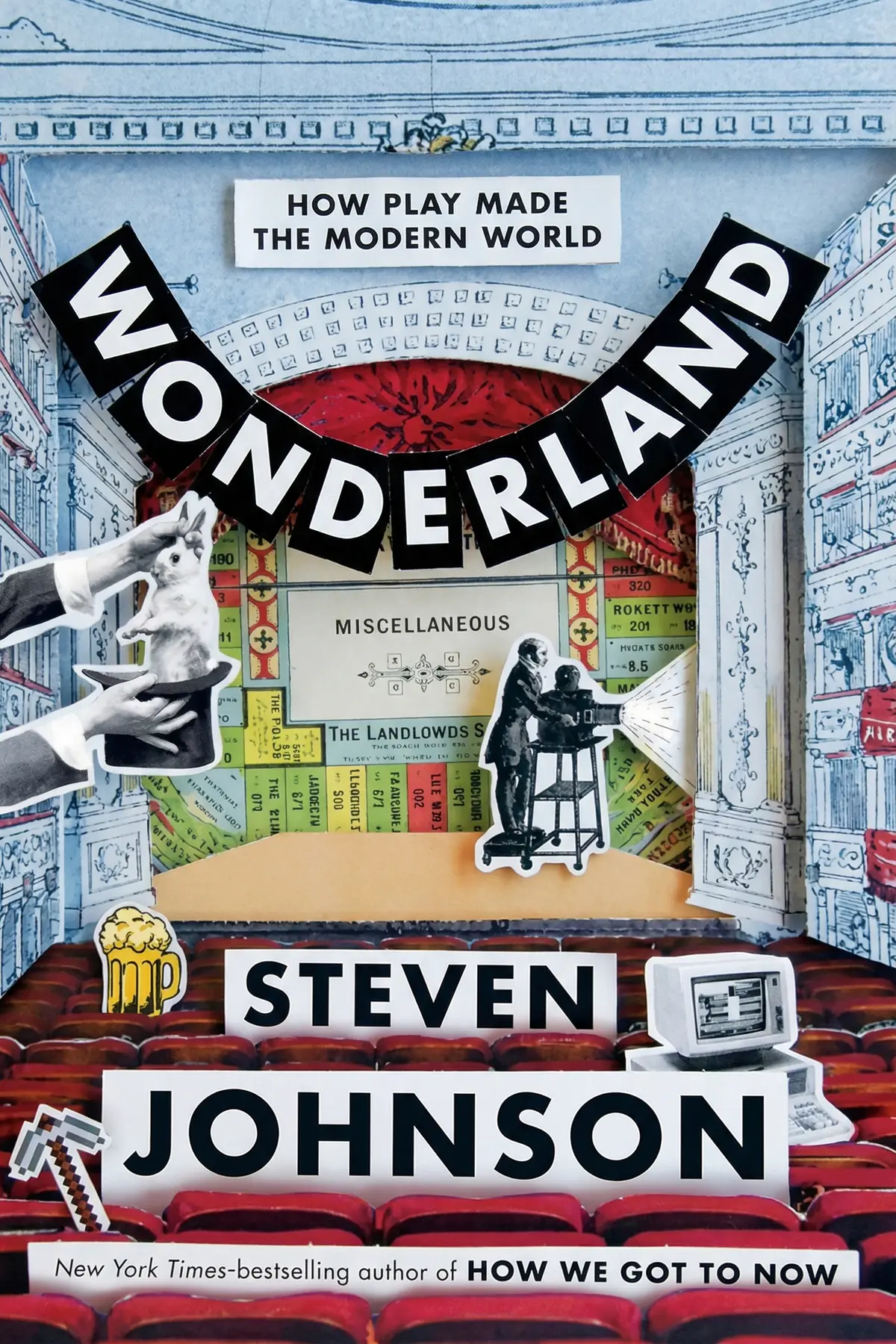
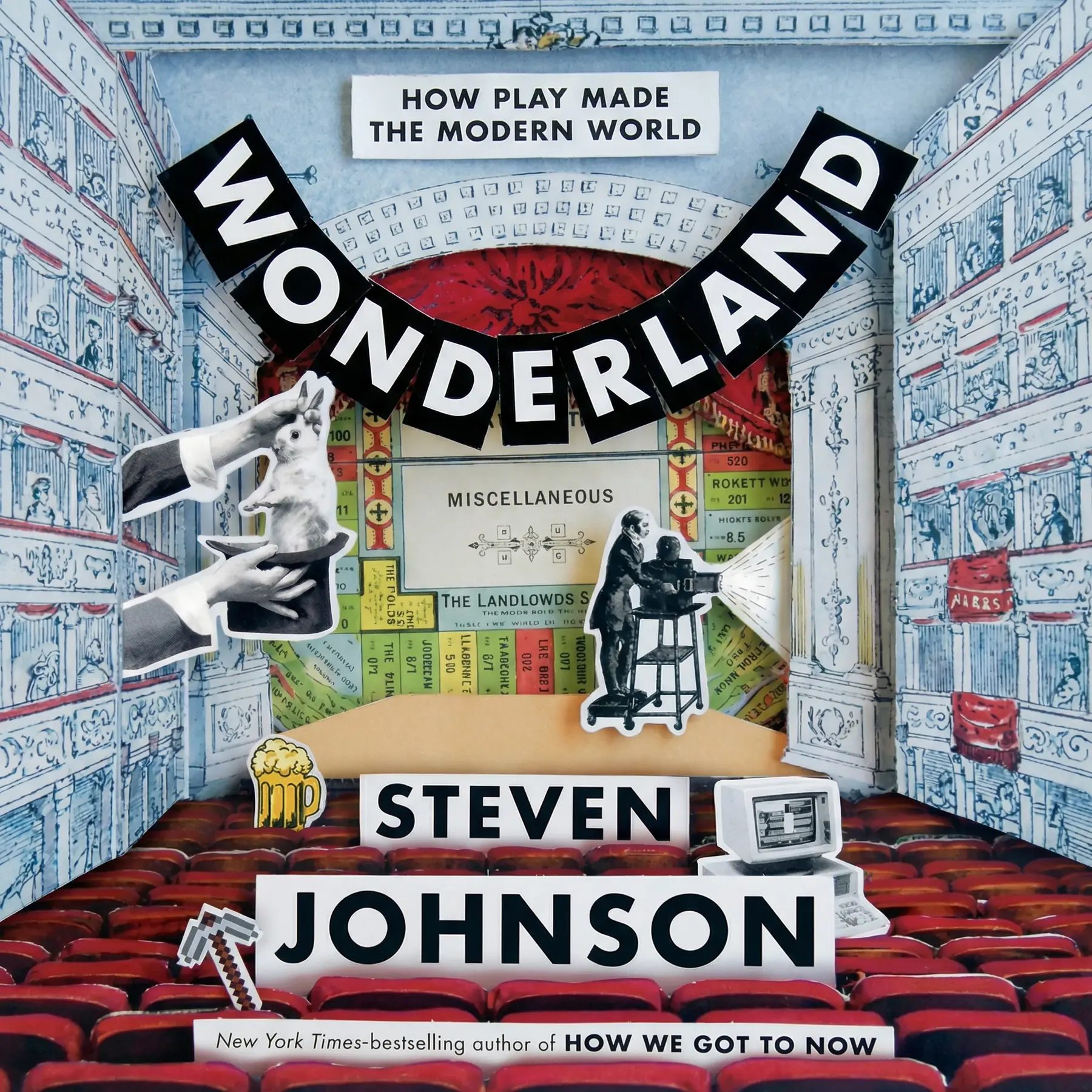
Wonderland explores the surprising history of how human play, pleasure, and the search for novelty have been the primary drivers behind the most significant technological and social breakthroughs in the modern world.
1 min 18 sec
Think back to the history books you read in school. Most of them probably painted a picture of humanity defined by serious struggle—great wars, economic shifts, and the heavy toil of labor. We are taught that the steam engine was born of necessity and that the computer was a byproduct of military defense. But there is a parallel history that is often ignored, one that suggests our most profound innovations didn’t start in a boardroom or a battlefield, but in the nursery, the tavern, and the music hall.
In this exploration of Steven Johnson’s Wonderland, we are going to look at the world through a different lens. We will see how the human drive for delight, surprise, and play has acted as a silent engine for progress. It turns out that when humans are at their most playful, they are also at their most creative. We aren’t just a species of survival; we are a species of wonder.
Throughout this journey, we’ll trace the throughline from simple mechanical toys to the jet engine, and from ancient musical instruments to the digital coding that runs our lives today. You’ll see how the search for a specific shade of purple sent sailors into uncharted oceans and how a Victorian ghost show paved the way for the cinema. By the end, you’ll realize that the things we take for granted as ‘serious’ infrastructure almost always began as something someone did just for the fun of it.
1 min 57 sec
Discover why the human brain is naturally wired to seek out surprises and how our biological quest for dopamine has fueled some of history’s most impressive mechanical inventions.
1 min 44 sec
Explore the surprising link between ancient bone flutes and modern software, revealing how our ancestors’ musical play led to the birth of the first programmable machines.
2 min 01 sec
Learn how the demand for vibrant colors and comfortable fabrics drove ancient sailors into the Atlantic and eventually sparked the fire of the Industrial Revolution.
1 min 47 sec
Discover how the simple craving for exotic flavors like pepper and cloves created the first complex international trading networks and turned spices into currency.
1 min 45 sec
Follow the evolution of optical illusions from spooky 18th-century performances to the birth of cinema, showing how our love of being fooled created modern media.
1 min 55 sec
Examine how the rules of games like Chess and Monopoly have subtly influenced how we perceive social hierarchies and economic systems throughout the ages.
1 min 50 sec
Investigate how the reimagining of public spaces—from local taverns to urban parks—provided the necessary environment for social and political movements to flourish.
1 min 26 sec
As we have seen, the history of the modern world is not just a ledger of work and war; it is a vibrant tapestry woven from the threads of play, fashion, taste, and entertainment. When we look at a computer, we should see the mechanical flutes of Baghdad. When we look at a steam engine, we should see the colorful cotton craze of 17th-century London. And when we look at our democratic institutions, we should remember the taverns where those ideas were first debated over a drink.
The throughline of Steven Johnson’s Wonderland is that the search for novelty and delight is a fundamental part of what makes us human. We are wired to explore, to be surprised, and to play. This isn’t a distraction from the ‘real work’ of humanity; it is the very engine that makes that work possible. Our most playful moments are often our most transformative ones.
The actionable takeaway here is to never underestimate the power of ‘frivolous’ curiosity. If you find yourself drawn to a new hobby, a strange new game, or an unusual flavor, don’t dismiss it as a waste of time. History shows us that today’s toy is often tomorrow’s essential technology. By fostering a culture that values play and exploration, we aren’t just having fun—we are laying the groundwork for the next great leap in human progress. The next time you see someone ‘just playing,’ remember: you might be looking at the birth of the future.
When we analyze history, we often focus on necessity, war, or survival. However, Steven Johnson argues that the human desire for amusement and delight is a far more powerful engine of progress. Wonderland traces the lineage of modern marvels back to their origins in leisure and entertainment. From the ancient flutes that preceded the computer to the fashion trends that sparked the Industrial Revolution, this exploration reveals that the future is often found where people are having the most fun. By looking at how we play, eat, dress, and game, we can see the unexpected ways our pursuit of wonder has shaped the infrastructure of our current lives.
Steven Johnson is the best-selling author of ten nonfiction books. These include How We Got to Now, Where Good Ideas Come From, and Everything Bad Is Good for You. He is also a regular contributor to the New York Times, the Wall Street Journal, and the Financial Times.
Listeners find the book captivating and quick-moving, noting that the deep research offers a stimulating look at significant moments in history. Furthermore, the caliber of prose earns high marks, and listeners value the exploration of how play and imagination drive major breakthroughs. The book's arrangement also draws compliments, with one listener specifically highlighting its well-structured format. Nevertheless, there is a lack of consensus among listeners regarding whether the work is genuinely enjoyable to read.
I never realized how much our craving for spices shaped the modern world until I dove into these pages. The section on black pepper and the global trade routes it necessitated was an eye-opener for me. Johnson’s storytelling is top-notch, weaving together seemingly random inventions like robotic automatons and the development of the insurance industry. The book’s layout is fantastic, with each chapter focusing on a specific sensory or cultural experience that most historians ignore. It is one of those rare non-fiction books that manages to be both profoundly educational and genuinely fun to read. After reading this, I have been thinking a lot about the senses and how our desire for pleasure drives technology. Truly a masterpiece of popular science writing that makes history feel alive.
Show moreEver wonder why we play the games we do and how they actually change our brains? Johnson’s exploration of Monopoly and its socialist roots was absolutely fascinating to me. He manages to turn a history of rubber and games into a compelling narrative about how humans learn and adapt to their environments. The writing is sharp and the pace never sags, which is a testament to his skill as a communicator. I particularly loved the sections on the illusion of early cinema and how that led to our modern understanding of visual spectacle. It is a well-researched deep dive into the things we usually dismiss as mere hobbies. This book successfully argues that our hobbies are actually the things that define our future. Highly recommended for curious minds.
Show moreAfter finishing this, I can't look at a simple shopping mall or a game of chess the same way again. Johnson has this incredible way of making you see the serious world as a byproduct of our collective need for amusement. To be fair, I was skeptical about the chapter on music, but seeing the link between early flutes and the binary system was a total lightbulb moment. The book is beautifully written and captures that sense of curiosity that makes science so exciting in the first place. It is a fast-paced journey through centuries of innovation that celebrates the rebels and the dreamers. Highly recommended for anyone who thinks history is just a list of boring wars and treaties. It is an absolute joy to read and left me wanting more.
Show moreSteven Johnson has a gift for finding the invisible threads that connect high-stakes history with low-stakes fun. While we often think of progress as a series of solemn meetings and grim laboratories, this book argues that the search for novelty is the true engine of change. The way he links the Phoenician purple dye trade to modern shopping malls is nothing short of brilliant. It is well-researched and fast-paced, though occasionally he leans a bit too hard into the serendipity angle without acknowledging the darker sides of some historical shifts. Still, the writing is incredibly engaging. I found myself highlighting passages every few pages because the insights were so unexpected. It is a refreshing take on cultural evolution that doesn't feel like a dry textbook at all. To be fair, his optimism is infectious even if you don't agree with every single conclusion.
Show morePicked this up after seeing the author's previous work on television, and it definitely follows his signature style. The book is incredibly fast-paced, jumping from the origins of Monopoly to the invention of the computer without ever losing the reader. Not gonna lie, I think his strongest points are when he discusses how frivolous things like fashion and toys paved the way for serious breakthroughs in manufacturing. The research is deep, yet it never feels bogged down by unnecessary jargon or dry dates. One minor gripe is that the narrative occasionally feels a bit repetitive in its structure across chapters. Despite that, the enthusiasm Johnson has for his subject matter is infectious. It is a thought-provoking perspective on key historical junctures that most people overlook.
Show moreFans of old-school science documentaries like James Burke’s Connections will find a lot to love here. Johnson excels at drawing lines between Phoenician sailors searching for purple dye and the layout of a modern-day shopping mall. The way he frames history as a series of playful experiments rather than a planned march of progress is very compelling. To be fair, some of the stories felt a bit familiar if you have read his previous books like How We Got to Now. But his ability to synthesize disparate facts into a coherent story about human ingenuity is still unmatched. It is an engaging and accessible piece of cultural history that I will probably end up recommending to my friends. The layout is clean and the illustrations add a nice touch to the experience.
Show moreAs a student of game design, I was eager to see how Johnson tackled the concept of play as a driver of innovation. Personally, I found the book informative, but his definition of play feels a little too loose for my liking. He often conflates play with mere entertainment or leisure, which misses the deeper, immersive psychological state that true play entails. The chapters on music and illusion were fascinating, yet the connection-building sometimes felt like a stretch to fit his specific thesis. It is a fun, breezy read that will definitely spark some interesting dinner conversations. However, if you are looking for a rigorous academic study of play theory, you might find this a bit too focused on the commercial outcomes. It’s good, but not groundbreaking.
Show moreThe structure of the book makes it very easy to digest, with clear chapters on themes like fashion and public space. I appreciated how Johnson highlights the role of the coffeehouse in fostering democratic ideals and scientific exchange. However, look, some of the historical leaps are so broad that they start to lose their impact after the fourth or fifth example. The book is well-structured and definitely offers a unique lens through which to view human history, but it can feel a bit scattered. I liked the focus on how creativity inspires great inventions, though I wish there was more focus on the failures too. It is a solid read that provides a decent introduction to cultural history. Good for a weekend read but not necessarily life-changing for me.
Show moreFrankly, I found some of the transitions between historical anecdotes a bit of a stretch in this latest volume. While the exploration of how the human desire for play shapes culture is interesting, the narrative can feel a bit formulaic after a while. I did enjoy the bits about the development of the piano and how it influenced the precision engineering required for the industrial revolution. It is a bit of a mixed bag; some chapters are riveting while others feel like they are just filling space to meet a word count. The research is obviously there, but the wonder promised in the title didn't always materialize for me. It is informative enough, just don't expect it to reinvent the way you think about history entirely. Decent, but not his best work.
Show moreThe premise is certainly catchy, but the execution left me wanting much more than just a collection of historical trivia. To be honest, it felt like Johnson was trying too hard to force a connection between every fun activity and a major industrial revolution. While the writing quality is praised by many, I found the tone to be a bit too pop-science for the weight of the topics he was covering. The link between rubber balls in Mesoamerica and modern economics felt tenuous at best and confusing at worst. It is an easy enough read, but it lacks the analytical bite I was expecting after hearing so many good things. If you enjoy light anecdotes, you might like it, but for me, it just didn't quite land. It felt like a collection of trivia rather than a cohesive argument.
Show more
William J. Bernstein
Ben Macintyre

Charles C. Mann

James Shapiro
Andrew Ross Sorkin
AUDIO SUMMARY AVAILABLE
Get the key ideas from Wonderland by Steven Johnson, plus 5,000+ more titles in English and Thai.