
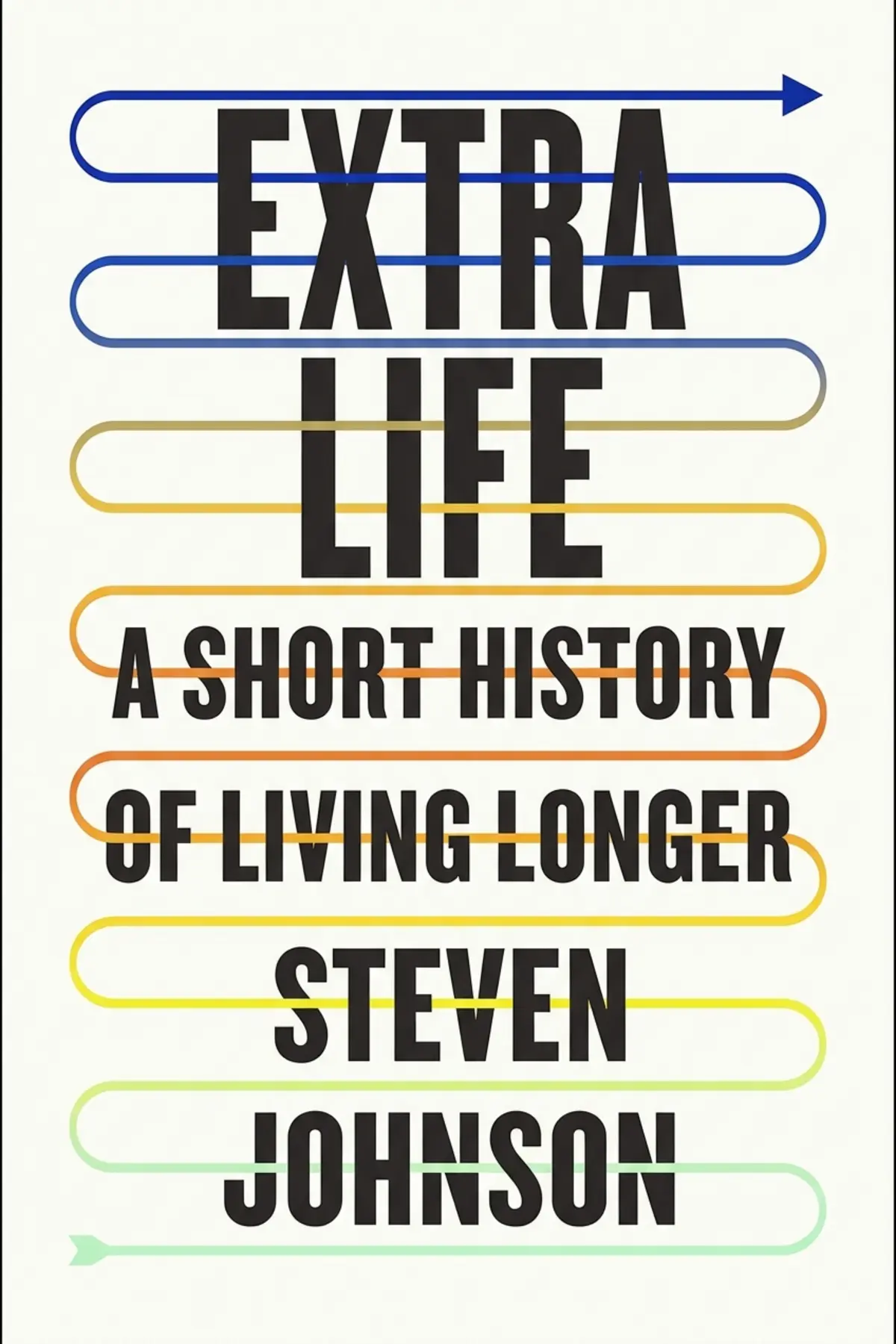
Extra Life: A Short History of Living Longer
Steven Johnson
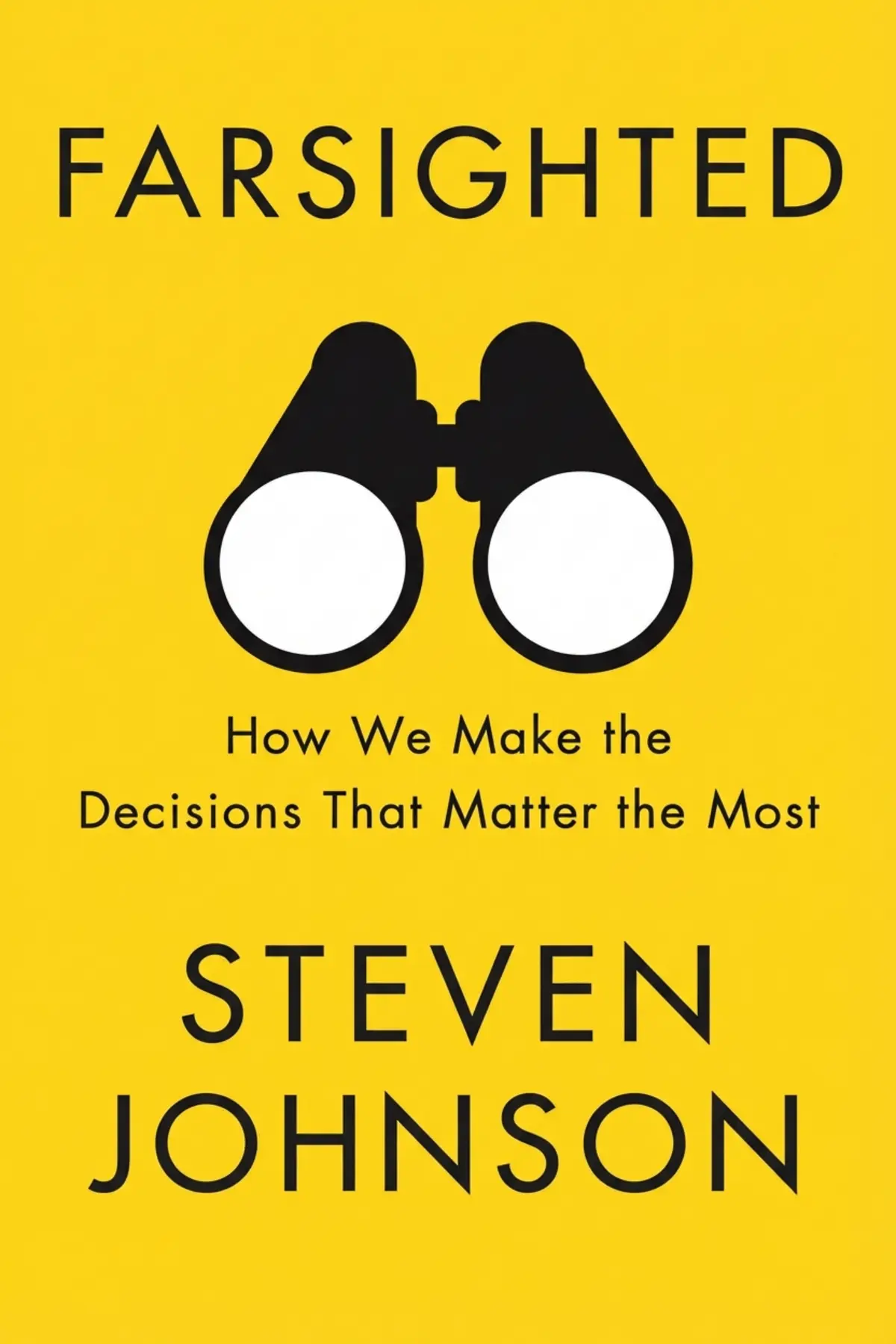
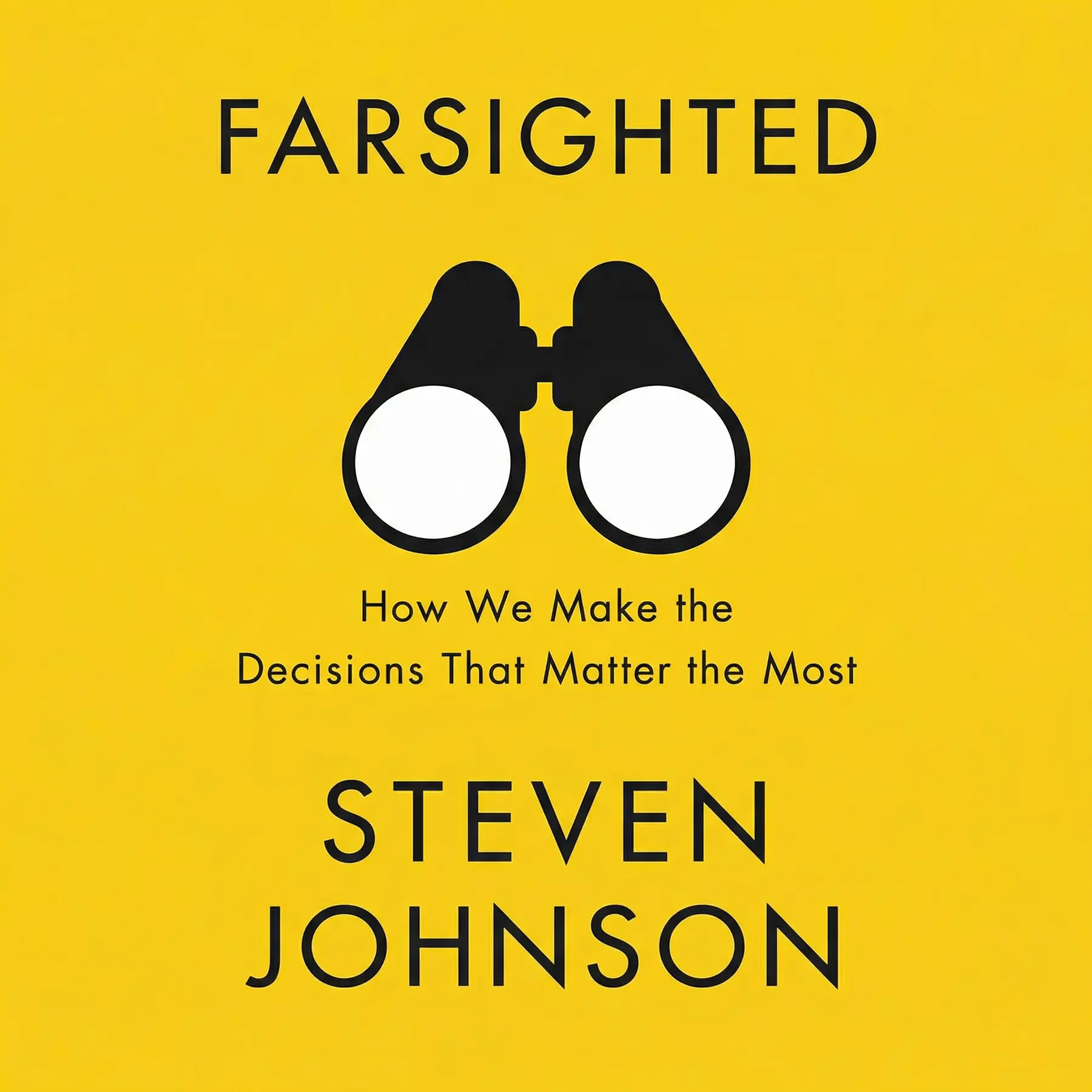
Farsighted explores the complex science behind long-term decision-making. Steven Johnson reveals how diverse perspectives, strategic tools, and patient reflection allow us to navigate high-stakes choices with greater clarity and success.
1 min 36 sec
Have you ever found yourself completely stuck at a crossroads, paralyzed by the weight of a major life decision? Whether it’s a career shift, a relationship milestone, or a significant investment, these moments feel heavy because the consequences stretch far into an invisible future. Most of us rely on our intuition or a basic list of pros and cons, but as we’ll see, our natural instincts are often the very thing leading us astray. We are living in a world of increasing complexity, yet our brains are still operating with hardware designed for much simpler, more immediate choices.
To become truly farsighted, we have to move beyond the quick fix. We have to learn how to map out the complicated landscape of our options, engage with perspectives that challenge our own, and even use mathematical models to weigh what truly matters. It’s about more than just making a choice; it’s about the process of deliberation that leads to that choice.
In the following journey, we’re going to look at how history was shaped by these high-stakes decisions—sometimes successfully, and sometimes through hard-earned failure. We’ll explore why experts are often surprisingly bad at seeing what’s coming, and why a diverse group of amateurs might actually have the upper hand. We will also dive into the tools used by governments and high-level strategists to peek into the future and prepare for the unexpected. By the end, you’ll have a new toolkit for your own life, moving from reactive guessing to a disciplined, panoramic view of the path ahead. It’s time to slow down, look further, and understand the mechanics of the decisions that define us.
2 min 11 sec
Explore why even the most legendary leaders can make catastrophic errors when they ignore their own cognitive biases and the hidden complexities of a situation.
2 min 12 sec
Discover how stepping outside of your own social and professional circles can drastically improve the quality of your choices and prevent the pitfalls of groupthink.
1 min 59 sec
Learn why being an expert in a specific field might actually make you worse at predicting the future and why generalists often have the upper hand.
1 min 59 sec
Unpack the reasons why the future rarely follows a straight line and how multiple independent factors can collide to create massive shifts.
2 min 00 sec
Learn a powerful technique used by military and intelligence agencies to find the flaws in your plans before it’s too late.
2 min 00 sec
See how a simple accounting tool transformed into a sophisticated way for governments to value things as abstract as clean air and human life.
2 min 11 sec
Explore a mathematical approach to decision-making that helps clarify personal values and provides a framework for the future of artificial intelligence.
2 min 04 sec
Understand why sometimes the best thing you can do for a big decision is to stop thinking about it and let your subconscious take the lead.
1 min 43 sec
The journey toward becoming a farsighted decision-maker isn’t about finding a magic formula that guarantees success every time. Instead, it’s about a fundamental shift in how we approach the unknown. We’ve seen that the most common trap is our own biology—the desire to avoid loss, the tendency to listen only to those who agree with us, and the habit of assuming the future will look just like today.
To move past these limitations, we have to be intentional. We have to build ‘full-spectrum’ maps of our problems, seeking out the kind of diversity that challenges our assumptions. We have to embrace tools like cost-benefit analysis and linear value modeling, not because they are perfect, but because they force us to be honest about our priorities. And perhaps most importantly, we have to learn the value of the ‘long deliberate’—the process of sitting with a problem, looking at it from every angle, and then letting it rest in our subconscious.
As a final piece of actionable advice, look at the teams and social circles you inhabit. If you find yourself surrounded by people who share your exact professional background and worldview, make a conscious effort to bring in an outsider. Whether it’s a project at work or a major personal life choice, seek out that ‘diverse jury’ or that ‘red team’ to challenge your path. By doing so, you aren’t just being inclusive; you are being strategically intelligent. You are giving yourself the best possible chance to see around the corner and make choices that you will be proud of decades from now. The future is complex and often invisible, but with a farsighted mindset, you can navigate it with a steady hand and a clear vision.
We all face moments where a single choice could change everything—from our personal careers to the fate of an entire nation. Yet, humans are naturally ill-equipped for these complex, long-term decisions. We are prone to cognitive biases, overwhelmed by data, and notoriously bad at predicting the future. This book serves as a guide for those moments when the stakes are at their highest, offering a more disciplined approach to the art of choosing. Steven Johnson explains that great decisions aren't just about gut feelings or simple checklists. Instead, they require a multi-layered process of mapping out variables, seeking out diverse viewpoints, and simulating potential outcomes. By examining historical triumphs, scientific studies, and modern technology, the author provides a framework for moving beyond short-term impulses. The promise of this work is a more refined, farsighted perspective that allows us to approach life's most daunting crossroads with confidence and rigor.
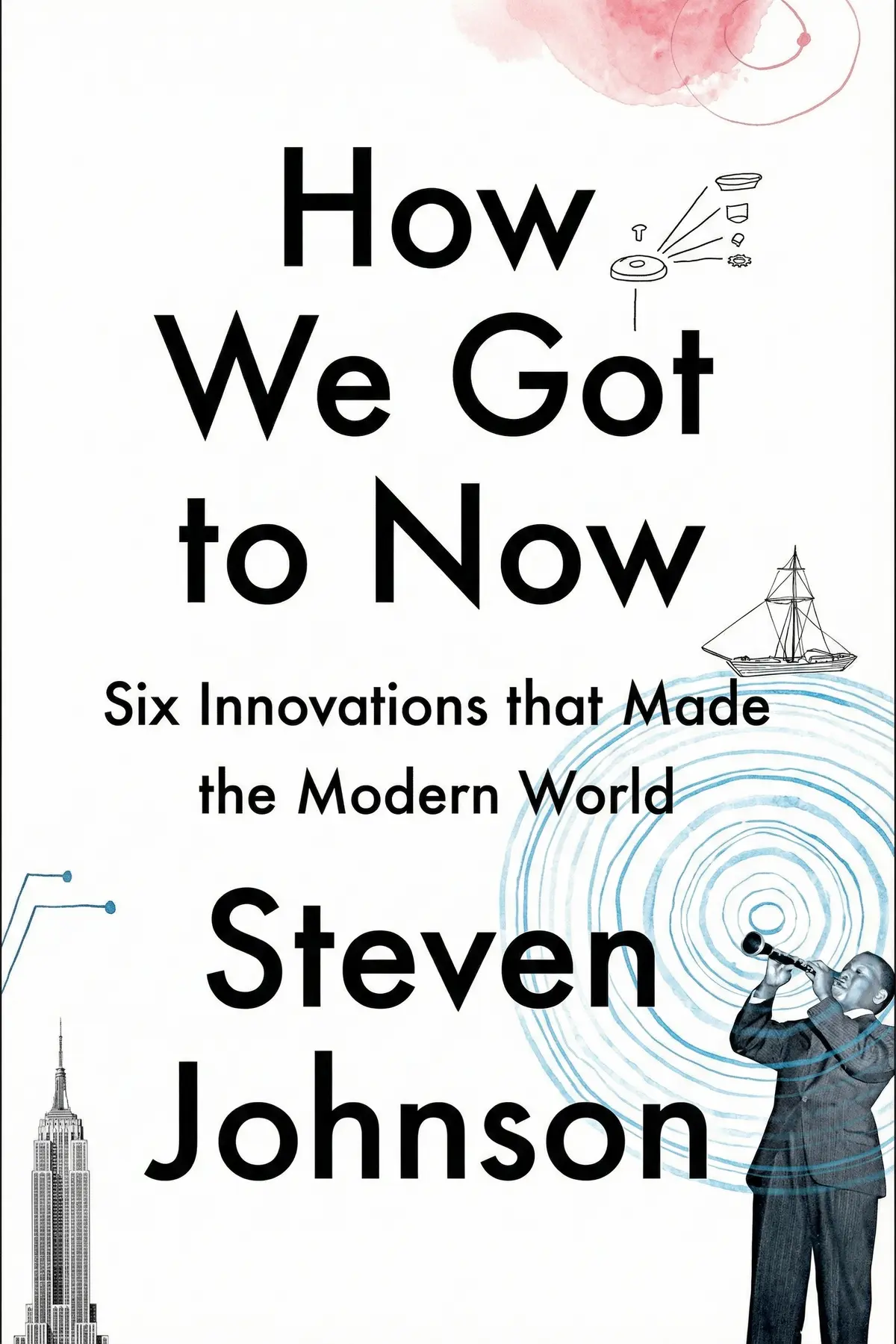
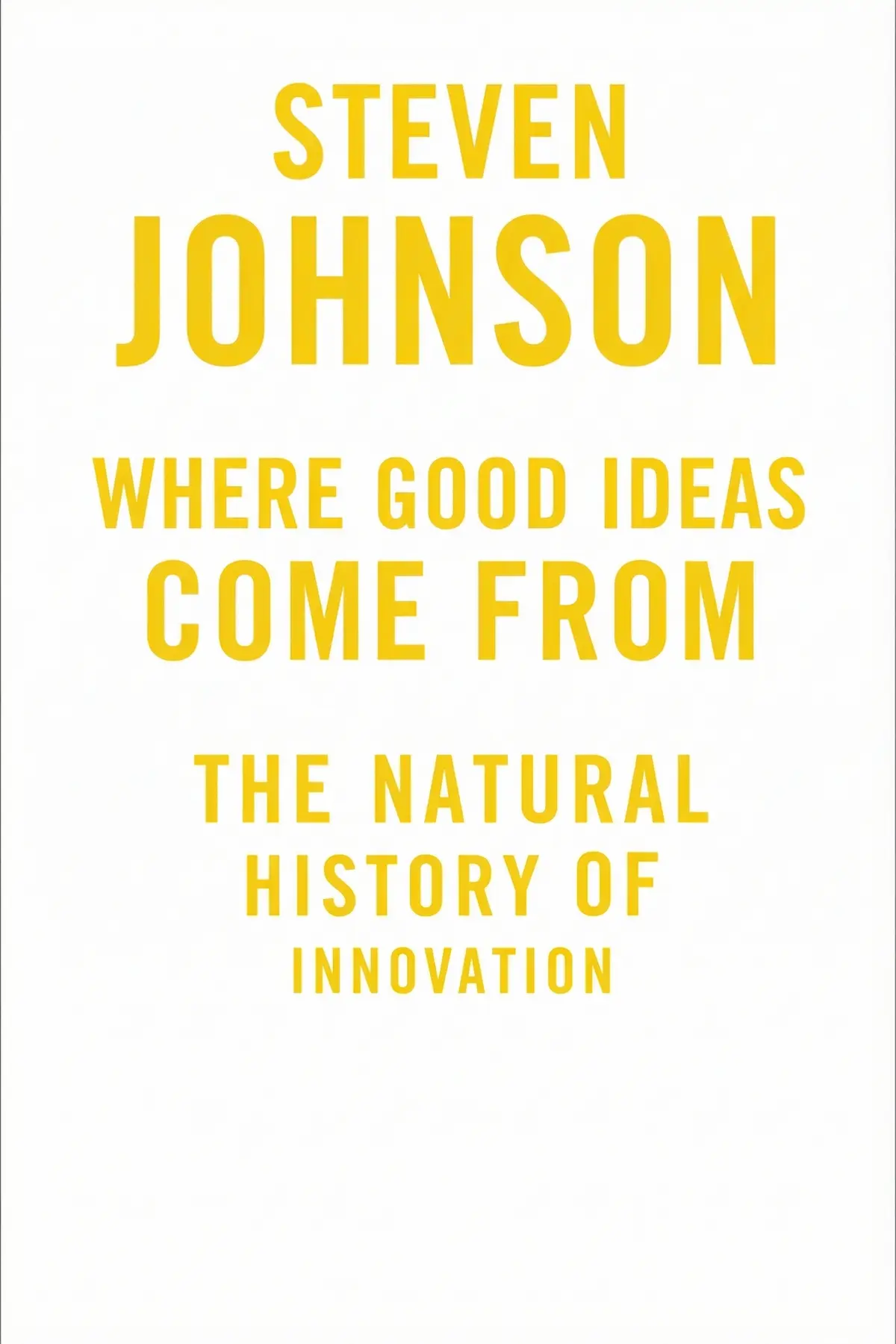
Steven Johnson is a highly acclaimed bestselling author of nonfiction whose work often explores the intersection of science, technology, and history. His notable publications include Where Good Ideas Come From, How We Got to Now, and Everything Bad is Good for You. Beyond his writing, Johnson is a digital innovator, website creator, and blogger. He has also made a significant impact on television as the co-creator of successful shows like How We Got to Now, which reached international audiences through the PBS and BBC networks.
Steven Johnson
Steven Johnson
Listeners find this book thought-provoking, especially valuing the unique perspectives it offers on navigating complex choices. They commend how easy it is to digest, with one listener describing it as an enjoyable experience driven by its storytelling. Listeners appreciate the practical value, as one mentions its relevance to both private affairs and career development. The work is packed with captivating narratives, and one listener points out the effective use of these tales to explain data.
Steven Johnson has a knack for taking dense, multi-variable concepts and spinning them into a narrative that actually sticks. I found the breakdown of the bin Laden raid particularly gripping, as it serves as a perfect lens for seeing how high-stakes choices are orchestrated through a mix of data and intuition. Truth is, we often ignore the long-view in favor of immediate gratification, but this book provides a solid framework for resisting that impulse. The way he weaves in the 'default network' of the brain explains so much about why we daydream about the future. It’s an entertaining read that doesn't just dump data on you but uses storytelling to illustrate complex points. While some might find the military history sections a bit dense, I thought they were essential for understanding how to map out variables. This is a must-read for anyone facing a major life transition.
Show moreFinally got around to reading this, and it’s easily one of the most insightful books on my shelf this year. Johnson takes us beyond the simple pros and cons list into the world of full-spectrum mapping. I loved the idea that we should make decisions when we hit the 70% rule of certainty rather than waiting for 100% clarity. It’s a practical way to avoid the paralysis that usually comes with big life changes. The discussion on how diverse groups are more likely to be right because they embrace uncertainty was especially relevant to my work in management. Personally, I think the section on George Eliot's Middlemarch was a masterclass in how fiction acts as a simulator for the soul. It’s rare to find a science book that respects literature this much.
Show morePicked this up during a major life transition and found the framework for 'farsighted' thinking incredibly helpful. The idea that we need to intentionally calculate decisions for future outcomes sounds obvious, but Johnson shows how rarely we actually do it. I was particularly struck by the discussion on how daydreaming is actually a neurologically active state of 'prospecting.' It changed how I view my own downtime. The writing is top-notch, moving effortlessly between historical biography and cutting-edge neuroscience. It’s a wonderful popular book that stands up well against other behavioral economics titles. If you’re looking for a way to sharpen your long-term thinking, this is a great place to start. Every big decision I make from now on will involve a much more diverse set of perspectives.
Show moreEver wonder why we struggle so much with big life choices like who to marry or where to live? Picked this up during a period of personal uncertainty and found the concept of 'moral-mental algebra' surprisingly grounding. The book highlights Darwin’s famous pro-and-con list about marriage, which makes a world-renowned scientist feel incredibly human. Johnson argues that diversity of perspective improves our judgment, and honestly, the 'diversity trumps ability' theory was a total lightbulb moment for me. Not gonna lie, some of the science regarding randomized control trials felt a bit simplified, but the overall message about simulation is powerful. We use novels and stories to rehearse life before we live it. It’s a fascinating perspective on behavioral science that is helpful for both professional and personal spheres.
Show moreThis book is essentially a deep dive into the 'default network' of our brains and why we are wired to look ahead. Johnson is a skilled communicator who makes neuroscience feel accessible rather than intimidating. I especially appreciated the 'impact pathways' concept, which shows how decisions rarely move in a straight line. In my experience, most people rush into choices without considering the third option—the 'Option C' that Obama used to look for. The book is packed with these kinds of small, useful frameworks. While it does get a little bogged down in the military case studies, the payoff in the final chapters is worth the effort. It’s an engaging read that uses stories to make data feel much more visceral.
Show moreThe chapter on the RCT method and smoking was a bit of a head-scratcher for me. Claiming that Sir Austin Bradford Hill used a randomized control trial to prove smoking causes cancer is just factually off, and for a book about 'reality-based' decisions, that's a tough pill to swallow. To be fair, the rest of the book is quite engaging if you can look past the occasional scientific stumble. I enjoyed the sections on 'knowable unknowns' and how we can map out the rippling effects of our actions. The writing style is fluid and the anecdotes are fun, even if they sometimes feel like they're padding the page count. It’s a decent introduction to behavioral economics if you’re new to the genre, but seasoned readers might find it a bit repetitive.
Show moreAs someone who works in strategic policy, I found that this book didn't offer many new insights for sound, farsighted decision-making. Coming from a background where Shell’s scenario planning and Philips' technological forecasting are standard, most of these concepts felt like a rumination on well-known theory. The book touches on the role of values in decision-making—a point Popper famously made—but it never dives deep enough into the 'how.' It deals more with the difficulty of complex decisions than with the actual tools needed to navigate complex situations. Got to say, the writing is pleasant and the stories are well-told, but it lacks the conceptual complexity I expected. It’s fine as a popular science primer, but experts in the field will likely find it a bit elementary.
Show moreThe analysis of Middlemarch was surprisingly the highlight for me, which says a lot about the rest of the book. Johnson’s main thesis—that realist fiction helps us simulate complex choices—is fascinating and persuasively argued. However, the rest of the book felt a bit disjointed. One chapter focuses on the minute details of the Iraq war, while another dwells on Darwin's personal life. It’s hard work to keep all these threads together. I didn't gain a lot of new insight into the actual 'science' of decision-making, as most of it was covered in Superforecasting. Still, the prose is elegant and the anecdotes are interesting enough to keep you turning the pages. It’s a solid 3-star read: good for the stories, but maybe not the definitive guide it wants to be.
Show moreI really wanted to love this, but frankly, it feels like a bit of a mess. It's like Johnson tried to stuff ten pounds of research into a five-pound bag, and the result is a tossed salad of ideas that never quite gelled. I've been a fan since The Ghost Map, but the focus on the military history of Long Island felt disconnected from the central thesis of personal decision-making. Look, the analysis of Middlemarch was actually quite brilliant, but I shouldn't have to slog through hundred-page anecdotes to get to the point. The book touches on the role of ideology and futurology without ever fully elaborating on how to apply them. It lacked the actionable tools I was looking for. If you want a clear manual on how to decide, this isn't it.
Show moreNot what I expected based on the glowing recommendations. The book is an entertaining read if you like anecdotes, but it fails to offer the deep insights promised by the subtitle. It felt like a collection of interesting facts that didn't quite build to a cohesive conclusion. One minute we're talking about the hunt for bin Laden, and the next we're doing a literary analysis of a 19th-century novel. I struggled to finish it because the narrative just didn't gel. Frankly, it felt more like a series of long-form magazine articles than a structured book. There are better resources out there for learning the actual science of forecasting. It’s fine for a casual reader, but it didn't provide the 'how-to' I was hoping for.
Show more
Steven C. Hayes
Deborah Gruenfeld
Anthony Pratkanis
Richard Wiseman
AUDIO SUMMARY AVAILABLE
Get the key ideas from Farsighted by Steven Johnson, plus 5,000+ more titles in English and Thai.







