
13 min 43 sec
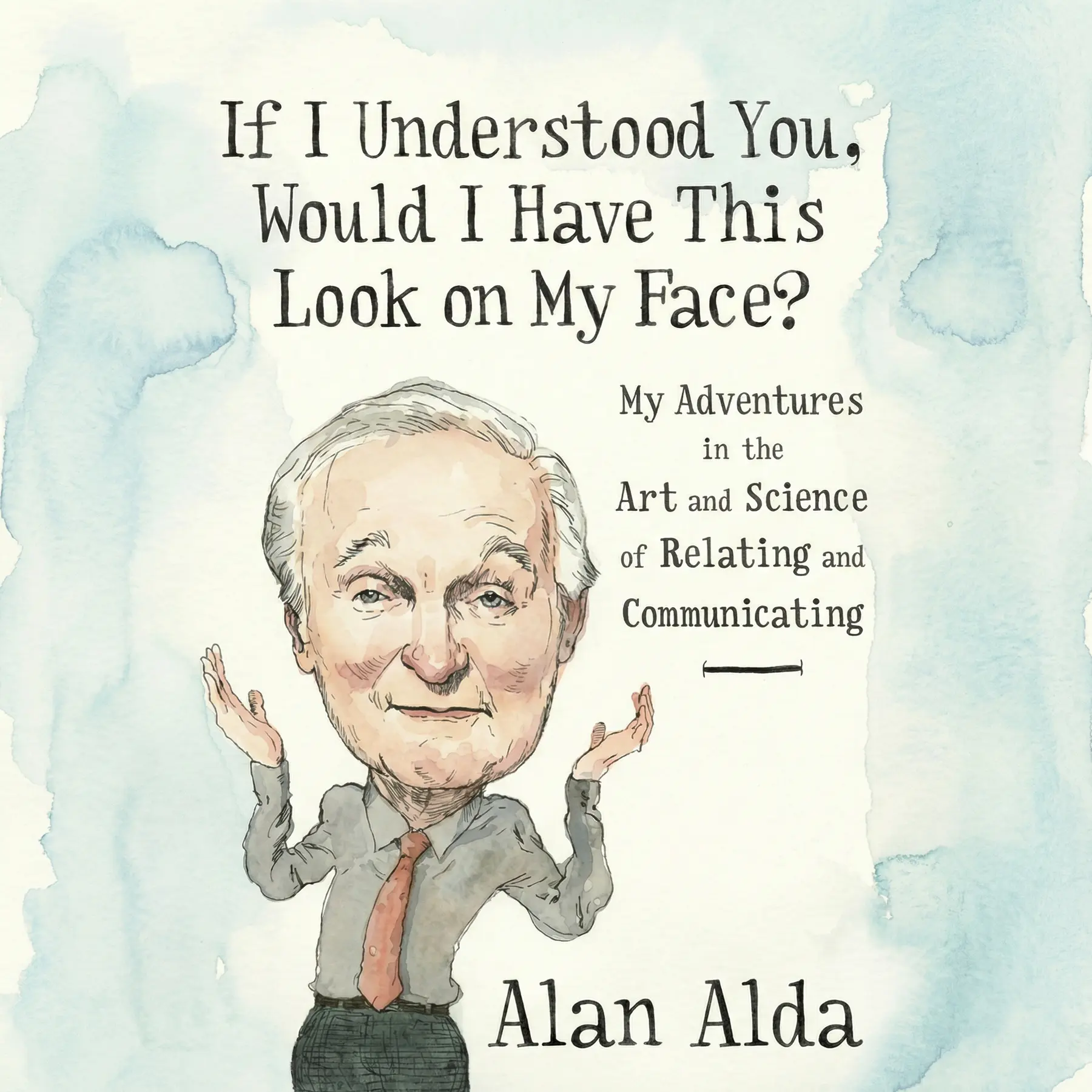
If I Understood You, Would I Have This Look On My Face?: My Adventures in the Art and Science of Relating and Communicating
By Alan Alda
Explore how the techniques of improvisational acting and empathy can transform complex communication into meaningful connection, making science, medicine, and everyday interactions more accessible and human.
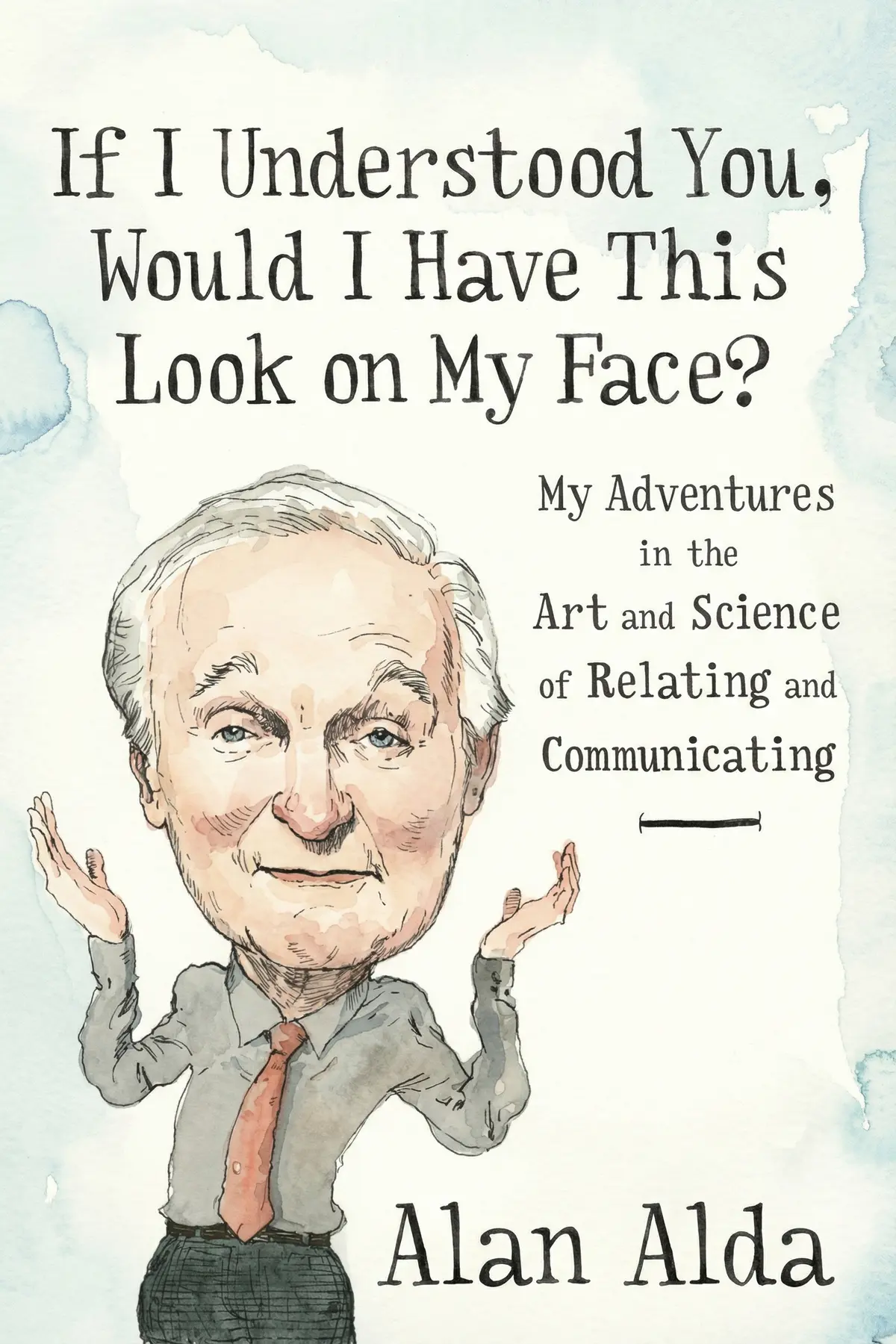
Table of Content
1. Introduction
1 min 41 sec
Think about a time you were sitting in a professional’s office—perhaps a doctor’s exam room or a financial advisor’s suite—and they used a word that sounded like plain English, but you had no idea what it meant in that context. Most of us, in an effort to avoid looking uneducated or slowing things down, simply nod along. This is exactly what happened to Alan Alda during a routine dental visit. When his dentist mentioned a procedure called ‘tethering,’ Alda didn’t ask for clarification. He assumed it was standard. That silence, however, led to an experimental procedure that permanently altered his ability to smile—a devastating outcome for an actor whose face is his primary tool of the trade.
This moment serves as a powerful entry point into a much larger conversation about the bridge between what we say and what others actually hear. Communication isn’t just about the transmission of information; it’s about the relationship between two people. If that relationship is fractured by jargon, ego, or a lack of empathy, the message is lost, sometimes with painful consequences.
In this journey, we are going to look at how the world of acting and improvisation provides a surprising set of tools for fixing these common disconnects. We’ll explore the idea that being a good communicator isn’t about being the smartest person in the room. In fact, it’s often about being the most curious. We will see how our brains are literally wired to connect with others through mirror neurons and how we can use that biology to our advantage. The goal here is to move beyond the technical ‘what’ of communication and dive into the human ‘how.’ By the end, you’ll see that relating to someone else is a skill that can be practiced, refined, and mastered, much like an actor preparing for a role.
2. The Power of Curiosity and Strategic Ignorance
2 min 10 sec
Discover why being the least informed person in the room can actually be your greatest communication advantage when trying to bridge the gap with experts.
3. Harnessing Empathy and the Rational Brain
2 min 02 sec
Explore the biological roots of connection and why we must sometimes override our natural instincts to truly understand another person’s perspective.
4. The 'Yes, And' Approach to High-Stakes Interaction
2 min 17 sec
Learn how the fundamental rule of comedy can de-escalate conflict and turn mistakes into breakthroughs in both science and life.
5. Decoding the Silent Language of the Body
2 min 04 sec
Words are only a small part of the story. Discover how to train your ability to read and project the nonverbal signals that define every encounter.
6. Finding the Balance: Empathy vs. Jargon
2 min 19 sec
Communication is a balancing act. Learn when to lean into empathy and when to step back, while avoiding the technical traps that alienate your audience.
7. Conclusion
1 min 10 sec
As we’ve seen, the art of relating to others is far more than just a sequence of words. It is a physical, emotional, and cognitive dance that requires us to be fully present. From the dental chair to the laboratory, the lessons are clear: we must be willing to let go of our own ego, lean into our natural curiosity, and use the tools of empathy and improvisation to build real bridges.
Communication isn’t about being ‘right’ or showing off how much you know; it’s about making sure the person on the other side of the conversation feels seen and understood. It’s about taking that ‘Yes, and’ spirit into every interaction, looking for ways to build on what others offer rather than shutting them down.
The next time you find yourself in a conversation where someone gives you a look of confusion, don’t just push through. Pause. Check your body language. Ask a curious question. Remember that your goal isn’t just to be heard, but to be understood. If you can master the art of truly relating, you won’t just be a better speaker—you’ll be a better friend, a better colleague, and a more connected human being. The smile you save might just be your own.
About this book
What is this book about?
Communication is often treated as a simple exchange of data, but it is actually a deeply emotional and physical process. This exploration delves into the adventures of Alan Alda as he discovers how the world of improvisational acting can bridge the gap between technical expertise and public understanding. From dental mishaps to interviewing world-class scientists, the narrative reveals that true understanding requires more than just clear words; it requires a genuine connection with the person on the other side of the conversation. By examining the intersection of art and science, this summary promises to equip you with the tools to read nonverbal cues, harness the power of empathy, and use storytelling to make your message stick. You will learn why ‘ignorance’ can be a speaker’s greatest asset and how the simple rules of improv can prevent misunderstandings in high-stakes environments. Whether you are a professional looking to explain complex ideas or simply someone who wants to be better understood, these insights offer a roadmap to relating to others with clarity and heart.
Book Information
About the Author
Alan Alda
Alan Alda is an award-winning actor who has won six Emmy Awards. He is most famous for his iconic role as Hawkeye Pierce on the legendary television series M*A*S*H. Beyond his acting career, Alda hosted the PBS program Scientific American Frontiers, an experience that inspired him to help those in the scientific community find more effective ways to share their work with the world.
Ratings & Reviews
Ratings at a glance
What people think
Listeners find this book to be an exceptional resource with helpful perspectives on improving communication, particularly via improvisational methods. They value the scientific research included, with one listener highlighting the great equilibrium between personal anecdotes and the functional use of improv activities. Listeners appreciate the narrative voice, wit, and deep storytelling, which ensure the work is both amusing and informative.
Top reviews
Rin
Ever wonder why people give you a blank stare when you’re explaining something you’re passionate about? Alan Alda has clearly spent years obsessing over this question, and the results are profound. This book isn't just for scientists; it’s for anyone who wants to build better relationships through the 'Theory of Mind.' I loved the description of the mirror exercise where you have to move in perfect sync with a partner. It sounds simple, but it requires a level of focus on the other person that most of us lack in daily conversation. The writing is conversational and witty, making it a very quick read. I’ve already started trying to 'read the mind in the eyes' during my morning meetings, and the difference is startling.
Show moreSamuel
Finally got around to reading this and I’m genuinely surprised by how much I learned about the art of relating. Alan Alda is something of an institution, and his transition into science advocacy is inspiring. This book is a levelheaded blend of entertainment and educational discourse. I loved the concept that you aren't really listening unless you are 'willing to be changed' by the person you are talking to. That is a high bar for communication! The stories are sublime, especially when he talks about his own failures to communicate with his wife or colleagues. It’s a vulnerable, smart, and necessary book for our currently toxic public discourse. I’ll be buying copies for my children’s teachers as a gift.
Show moreCaleb
Wow, who knew Hawkeye Pierce was such a science nerd? This book is absolutely fantastic. It balances anecdotal evidence with a genuine curiosity about how our brains process social cues. The way Alda explains 'Theory of Mind'—essentially the rational ability to understand what someone else is thinking—is clear and accessible. I’ve already started using his tip about silently naming the emotions I see on people’s faces during conversations. It really does make you feel like you’re reading minds. The writing is full of nuggets of wisdom and profound experience. Every single person on the planet should read this, especially in an era where we mostly just yell at each other through screens. This is a five-star read for sure.
Show moreSing
Alda’s narration in the audiobook version is what truly sells this entire experience. He brings a warmth and a distinctive rhythmic cadence that makes even the drier sections about neurobiology feel like an intimate fireside chat. I was particularly fascinated by his transition from a legendary actor on M*A*S*H to a dedicated science communicator. The way he describes using theatrical improv exercises to help scientists drop their jargon is brilliant. Frankly, it makes so much sense that we need to mirror others to truly understand them. My only gripe is that the middle section felt a bit repetitive, hammering home the 'empathy' point a few more times than necessary. However, the humor and the rich personal anecdotes kept me engaged until the very last chapter.
Show moreArt
After hearing about the Alan Alda Center for Communicating Science, I had high hopes for this, and it mostly delivered. The core idea—that communication happens in the recipient, not the speaker—is a total game-changer. Alda explores the bridge between emotional empathy and the rational 'Theory of Mind' with real grace. I particularly enjoyed the sections on how doctors can better communicate terminal diagnoses without being cold or overly technical. It’s a serious tome focused on a critical skill, yet it never feels heavy or academic. The truth is, we all have a bit of the 'curse of knowledge,' and Alda provides a fun, theatrical roadmap for how to break out of it. Highly recommended for professionals.
Show morePhimwan
The chapter on jargon and the 'Flame Challenge' was worth the price of the book alone. It is incredible how much we hide behind big words when we don't actually understand the person we are talking to. Alda writes with such a comfortable, inviting style that you can almost hear his voice on the page. I found his focus on 'listening with your eyes' to be a very helpful reminder to stop just waiting for my turn to speak. While some of the lab experiments he financed didn't yield the 'eureka' moments he hoped for, his honesty about those failures makes the book more authentic. It isn't a magic wand for social skills, but it’s a great starting point for being more present.
Show moreMonthon
As someone who works in a technical field, I found Alda’s insights into the 'curse of knowledge' to be incredibly relatable. We often think we are being clear when we are actually just drowning our audience in data. Alda uses his acting background to show that the emotional connection is the 'glue' that makes the facts stick. The book is short, conversational, and packed with interesting stories about the Alan Alda Center's work. To be fair, some of the science feels a bit 'pop-science,' but the practical applications of his improv-based techniques are solid. It really changed how I approach my presentations at work. If you want to be understood, you have to look at the face of the person you're talking to!
Show moreLucia
Picked this up because I’ve always been a fan of Alda’s curiosity, but I found the content to be a bit of a mixed bag. The personal stories from his time on 'Scientific American Frontiers' are definitely the highlight. They provide a wonderful context for why he cares so much about this topic. However, the advice itself is somewhat limited if you aren't able to join an improv troupe. He keeps coming back to 'active listening' and 'having empathy,' which are great concepts but hard to implement without the specific games he mentions. In my experience, the book could have been a long essay and achieved the same result. It's a charming read, but not quite the practical handbook I was expecting.
Show moreAhmed
Look, I appreciate the enthusiasm Alda brings to the table, but there's a lot of repetition here for a 200-page book. He spends a lot of time talking about how great improv is for empathy, which I don't doubt, but it's not a very accessible solution for the average person. I was hoping for more exercises I could do on my own rather than just reading about what scientists do in his workshops. Not gonna lie, I grew a bit weary of the anecdotal nature of the science towards the end. It’s a 'light' version of science writing that feels more like a memoir about a hobby. It’s perfectly readable and Alda is a joy, but it lacked the 'bite' I wanted from a serious look at communication.
Show moreNannapat
Disappointing for a book that purports to be about the science of communication. While I enjoy Alda's work, the absence of rigorous references is incredibly lazy for a nonfiction book making such bold claims. For instance, he asserts that empathy training for doctors significantly improves patient outcomes, yet the meta-analysis he alludes to is based on tiny sample sizes. Science is a method for understanding the universe, not just a collection of 'gee-whiz' factoids to be sprinkled into an acting memoir. To be fair, he's a master communicator, but this kind of mess illustrates why you must understand the scientific process before you can teach it. If you're looking for actual data, look elsewhere; if you want stories about improv, this is fine.
Show moreFeatured in
Readers also enjoyed

AUDIO SUMMARY AVAILABLE
Listen to If I Understood You, Would I Have This Look On My Face? in 15 minutes
Get the key ideas from If I Understood You, Would I Have This Look On My Face? by Alan Alda, plus 5,000+ more titles in English and Thai.
- 5,000+ titles
- Listen as much as you want
- 7-day free trial
- Cancel anytime







