
21 min 26 sec
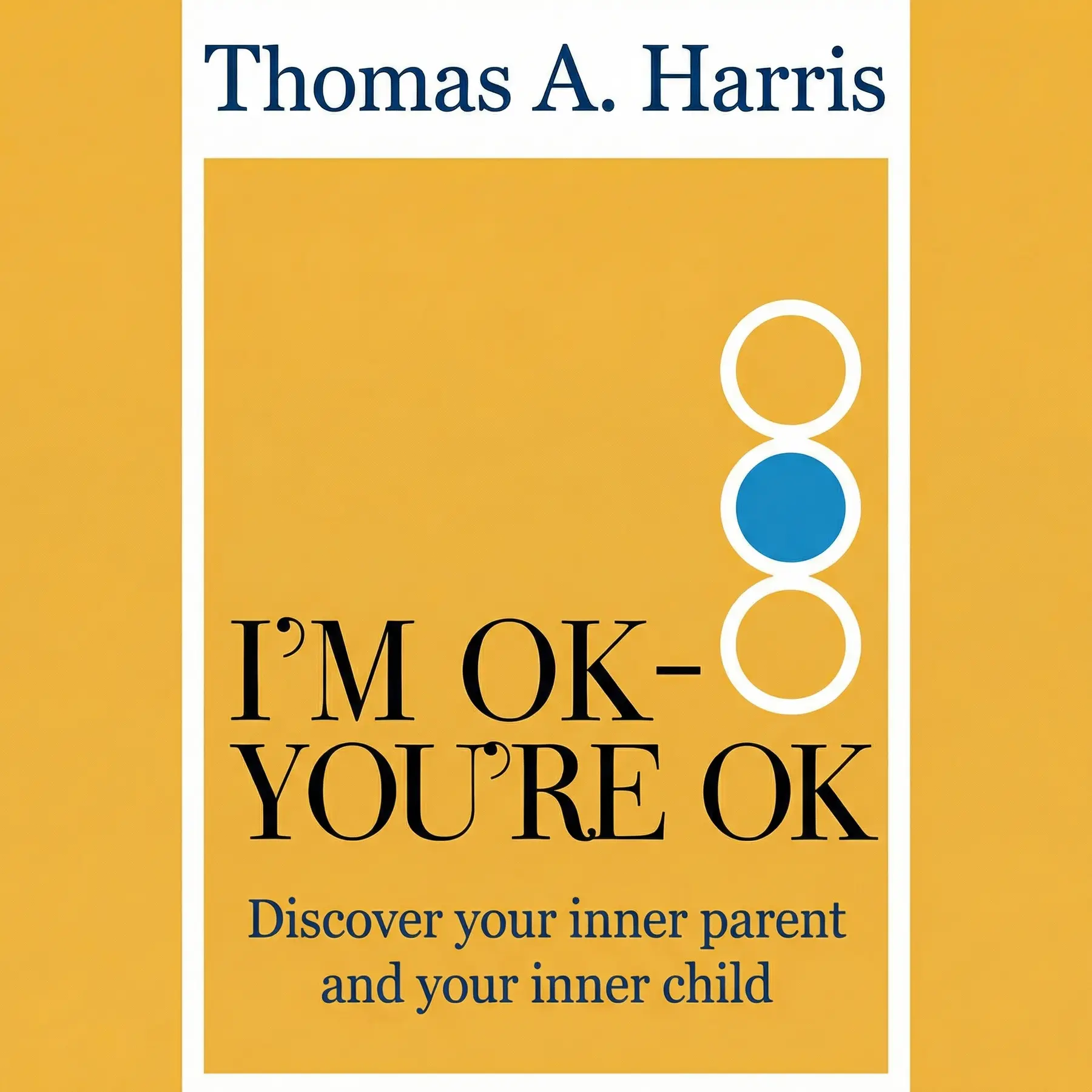
I’m Ok, You’re Ok: The Pioneering and Bestselling Self-Help Guide
Explore the foundational principles of Transactional Analysis to understand how the inner Parent, Child, and Adult influence your behavior, relationships, and self-perception in this transformative guide to emotional health and social interaction.
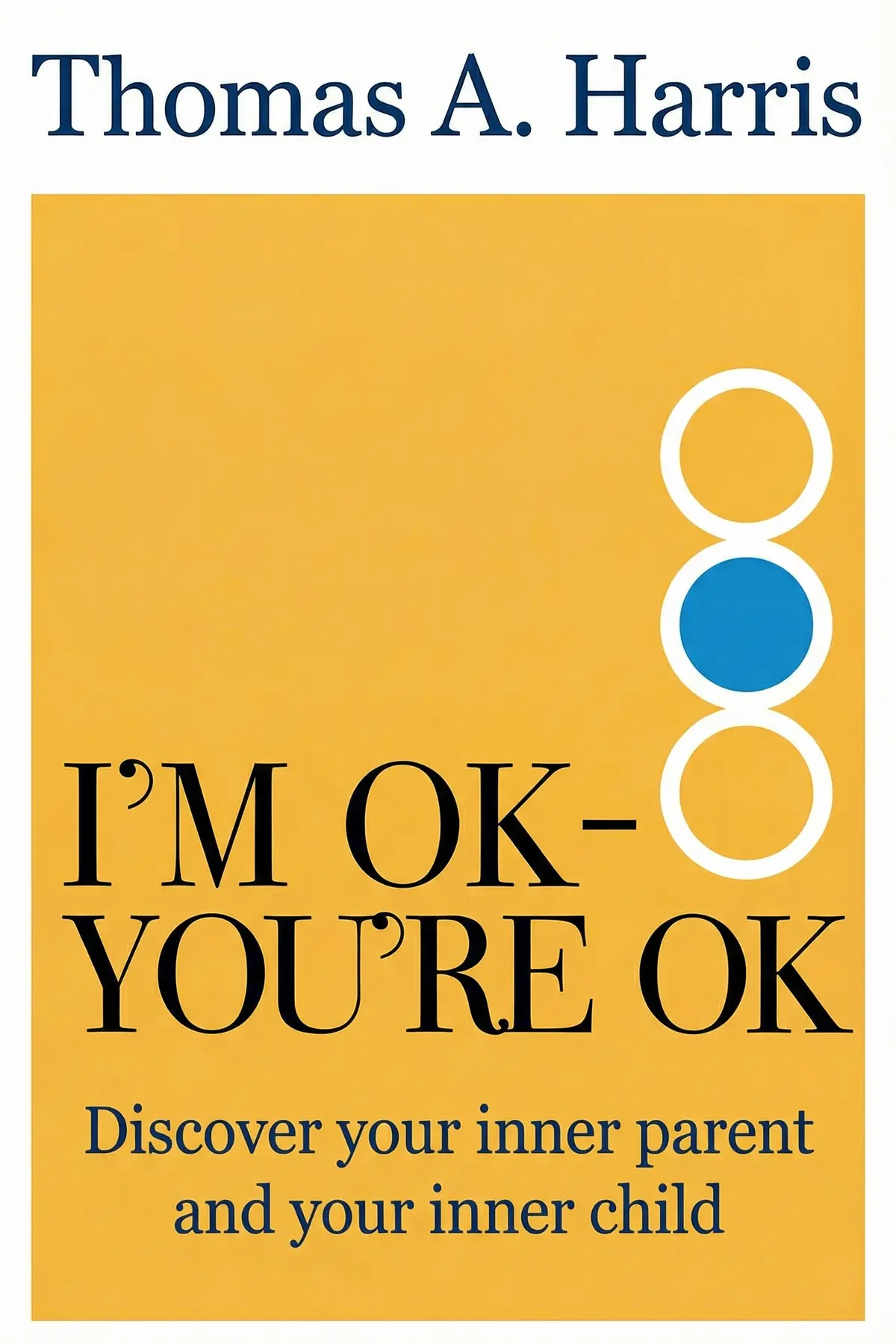
Table of Content
1. Introduction
2 min 21 sec
Have you ever found yourself in the middle of a conversation, perhaps a heated one, only to suddenly realize that the words coming out of your mouth sound exactly like something your mother or father would say? It is an eerie experience to hear their tone, their specific choice of words, or even their peculiar brand of logic flowing through you as if you were a mere conduit. Or perhaps you’ve experienced the opposite: a moment where you felt small, helpless, and overwhelmed by a wave of anxiety that seemed far too intense for the situation at hand. In those moments, it feels as though the competent, rational version of yourself has vanished, replaced by a frightened child.
According to the landmark work of Thomas A. Harris in the classic self-help guide, I’m Ok, You’re Ok, these moments are not glitches in your personality. They are, in fact, the visible peaks of a deep psychological structure that resides within every one of us. Harris introduces us to the world of Transactional Analysis, a method of understanding human behavior that was pioneered by Dr. Eric Berne. The core of this philosophy is that our minds are partitioned into three distinct states—the Parent, the Child, and the Adult.
In this exploration, we are going to look at how these three forces interact to shape everything from our most casual greetings to our deepest personal crises. We will discover how our earliest memories are recorded in our brains like high-fidelity tapes, capturing not just events but the raw emotions that accompanied them. We will see why many of us walk through life with a persistent, nagging feeling that we aren’t quite good enough—a state Harris calls being ‘Not Okay.’
But this isn’t just a study of what is wrong; it is a roadmap for how to get things right. By the end of this journey, you’ll understand how to strengthen your inner Adult, the rational part of you that can evaluate data and make objective choices. You’ll learn how to recognize the psychological games that hold you back and, most importantly, how to shift your perspective to a place of mutual respect and self-acceptance. It’s about moving from a life dictated by old scripts to a life lived with intention. Let’s begin by looking at the fascinating way our brains record our history.
2. The Brain as a Living Recorder of Memory and Emotion
2 min 39 sec
Discover how your past is never truly gone, as every experience and its accompanying feeling is etched into your brain, waiting to be replayed by the triggers of daily life.
3. The Three Ego States: Parent, Child, and Adult
2 min 45 sec
Learn to identify the three distinct personalities that live inside you, dictating your rules, your feelings, and your rational decisions.
4. The Universal Struggle of Being 'Not Okay'
2 min 28 sec
Uncover why almost everyone starts life with a deep-seated sense of inferiority and how this ‘Not Okay’ feeling shapes our adulthood.
5. Breaking the Chains of Childhood Conditioning
2 min 25 sec
Explore how to stop operating on autopilot and start making conscious choices by recognizing the influence of your inner Parent and Child.
6. Reading the Signs: Identifying Ego States in Real Time
2 min 30 sec
Learn the physical and verbal cues that reveal which part of your personality is in control at any given moment.
7. Internal Conflicts: Contamination and Exclusion
2 min 24 sec
Understand the psychological glitches that occur when your Parent, Child, and Adult stop working in harmony and begin to interfere with each other.
8. Psychological Games and the Road to 'I’m Okay'
2 min 21 sec
Recognize the destructive ‘games’ people play to avoid intimacy and learn how to finally reach a state of mutual respect and health.
9. Conclusion
1 min 33 sec
In the end, the journey through Transactional Analysis brings us back to a simple but powerful truth: we are not doomed to be puppets of our past. While the recordings of our childhood—the strict rules of our parents and the frightened reactions of our younger selves—will always be a part of our brain’s library, they do not have to be the authors of our future. Thomas A. Harris shows us that by cultivating a strong, observant inner Adult, we can begin to sort through those old tapes, keeping what is useful and setting aside what is harmful.
Moving toward a position of ‘I’m Okay, You’re Okay’ is not a one-time event, but a daily practice. It involves catching yourself in a moment of judgment and realizing it’s your Parent speaking. It involves feeling a wave of inadequacy and recognizing it as a playback from your inner Child. Most importantly, it involves the Adult stepping in to say, ‘I see the data, but I am choosing a different path.’ This process is the key to breaking the cycles of prejudice, conflict, and self-doubt that hold so many of us back.
As you move forward, try to be a more active observer of your internal dialogue. When you feel a strong emotion, ask yourself which state it’s coming from. When you interact with others, look for the Parent or the Child in them, and try to respond with your Adult. By doing so, you invite them to engage their Adult as well. This is how we build healthier families, better workplaces, and a more compassionate society. You have the power to change your script. You are Okay, and with the right tools, you can ensure that the life you live is truly your own.
About this book
What is this book about?
This summary explores the psychological framework of Transactional Analysis, a method designed to help individuals decode their internal dialogues and external interactions. At its core, the book suggests that our personalities are composed of three distinct ego states: the Parent, the Child, and the Adult. By learning to identify when we are acting from a place of regressive childhood fear or borrowed parental authority, we can empower our rational Adult state to take control. The promise of this work is a path toward more authentic communication and a healthier self-image. It moves beyond the common feeling of inadequacy—what the author calls being Not Okay—and provides the tools necessary to achieve a life-affirming stance. Through understanding memory, emotional triggers, and the social games we play, you will learn how to break free from old scripts and build more meaningful, positive connections with those around you.
Book Information
About the Author
Thomas A. Harris
Thomas A. Harris was a prominent psychiatrist who served as a physician for the United States Navy. Following his military service, he transitioned into academia as a university professor. He is best known for founding an organization dedicated to Transactional Analysis, building upon the psychological theories originally established by Dr. Eric Berne.
Ratings & Reviews
Ratings at a glance
What people think
Listeners find the material a superb resource for grasping psychology and human conduct, with one review noting the way it organizes daily relationship challenges using straightforward terminology. Additionally, the work is clear and accessible, with one listener pointing out its success in strengthening communication abilities. They also appreciate its suitability as a present and view it as a lasting reference.
Top reviews
Meen
Finally got around to this 70s classic after seeing it on so many 'must-read' lists. While some of the cultural references feel anchored in the Vietnam era, the core psychology remains remarkably relevant. Harris takes the dense concepts of Transactional Analysis and breaks them down into a Parent-Adult-Child model that anyone can grasp. It's an excellent source for understanding why we fall into repetitive, toxic patterns with the people we love. Truth is, I started seeing my own 'Child' reactions everywhere within the first fifty pages of reading. The writing is clear and simple, avoiding the heavy jargon that usually plagues this genre of self-help. Even if you aren't a psych major, this functions as a timeless reference for bettering your communication. It is a gift that keeps on giving to your mental health.
Show moreTeng
Picked this up on a whim after a friend recommended it for my recurring social anxiety. I wasn't expecting a book from the seventies to speak so directly to my modern-day struggles, but here we are. The realization that most of us are walking around in a 'not OK' state was incredibly liberating for me. Harris writes with a disarming engagement that makes you feel seen rather than just being studied. The way he explains how our 'Parent' tapes play in our heads is something I think about every day. It’s more than just a self-help book; it’s a manual for becoming a functional human being. Frankly, it’s a timeless reference that I plan on rereading whenever I feel myself slipping back into old habits. Truly a life-changing read.
Show moreChai
Ever wonder why you react the way you do when your boss or spouse hits a nerve? This book provides a fascinating framework for answering that specific question. By systematizing everyday issues of human relationships into simple language, Harris makes the internal workings of our minds feel manageable. I found the breakdown of the 'Not OK' positions particularly eye-opening for my own personal growth. Although some sections on religion and morality felt like a distraction, the core message about reaching the 'I'm OK, You're OK' state is life-changing. It really helps in enhancing communication skills during heated arguments with family members. Not gonna lie, I’ve already bought two extra copies to give as gifts to my siblings who struggle with social anxiety.
Show moreSofia
The chapter on the P-A-C system completely changed how I view my internal dialogue and my interactions with others. It's rare to find a book that takes complex psychiatric theories and turns them into something so practical for the average person. Harris does a great job of systematizing everyday issues, making it much easier to spot when someone is 'hooking' your Child. Some of the references to 1960s American counterculture are a bit jarring, but they don't detract from the psychological value. For anyone wanting to improve their interpersonal communication, this is a total goldmine. It is simple, effective, and offers deeply insightful looks into the human mind. Every household should have a copy on the shelf.
Show moreGabriel
Look, if you can get past the 1969 publication date, there is some serious gold in here for anyone struggling with relationships. I’ve read a lot of modern self-help, and most of it is just a watered-down version of what Harris wrote. The book is remarkably easy to read and understand, which is a testament to his skill in translating complex ideas. It’s helped me tremendously in enhancing my communication skills at work and at home. Sometimes the tone gets a little bit 'preachy' regarding older values, but the core psychological framework is absolutely solid. A classic for a reason, despite the outdated bits. You will likely find yourself checking your own ego states mid-conversation.
Show moreTee
I've been interested in Eric Berne for a while, and while Harris isn't quite as focused as 'Games People Play', he is digestible. This book acts as an excellent bridge for those who find academic texts too intimidating or dry. I love how it categorizes human behavior into four distinct modes, providing a roadmap for reaching emotional maturity. Personally, I found the discussion on the 'Adult' state to be the most helpful part of the entire book. It’s a great tool for anyone looking to break out of the cycle of ennui or boredom. While the writing style is a bit loose and meandering, the insights into the human mind are undeniable. It remains a staple of transactional analysis for a reason.
Show moreOrathai
Frankly, it's rare to find a psychology book that doesn't feel like a dense textbook, yet manages to offer such profound insights. Harris has a knack for systematizing everyday issues of human relationships using the P-A-C model. I found the advice on how to stay in the 'Adult' mode during conflict particularly useful for my marriage. The book feels like a timeless reference that you can dip back into whenever you need a quick perspective shift. My only gripe is that it can feel a bit repetitive in the middle chapters of the book. Overall, it is a very solid and helpful read for anyone curious about human behavior. I highly recommend it for the curious reader.
Show moreThida
As someone who appreciates psychology, I found the core concepts of Transactional Analysis fascinating but the delivery a bit dated. Harris is clearly passionate, yet his tendency to make blanket statements about 'moral decay' and international politics felt entirely unnecessary. However, the basic structure of the Parent, Adult, and Child personas is a brilliant way to visualize our ego states. It’s an easy read, which I appreciated, even if it feels like it belongs on a 1969 clearance rack. In my experience, the four modes of interaction are the most valuable takeaway from this classic text. It’s a decent introductory text, just take the 'global' theories with a grain of salt. The core logic remains sound even after fifty years.
Show moreNongnuch
To be fair, Harris writes in a very accessible way, but he tends to wander off into strange territory regarding international politics. I enjoyed the explanation of the four life positions and how they dictate our general happiness. But then the author starts talking about 'Parent' nations and 'Child' nations in the context of war, and it just feels silly. It’s a bit of a mixed bag for me as a reader. The psychological parts are a 5-star resource for understanding human behavior, but the social commentary is a 1-star distraction. I’d say it’s worth reading for the P-A-C theory alone, but feel free to skim the philosophical tangents. It is a product of its era for better or worse.
Show moreTang
This book suffers from being a product of its time and an author who doesn't know where his expertise ends. While the 'I’m OK – You’re OK' mantra sounds nice on a coffee mug, the actual text is a disorganized mess. Harris tries to apply P-A-C theory to everything from the Vietnam War to hippie culture, making himself look like a jackass. Stick to Eric Berne if you want actual science instead of errant speculation. To be fair, the four life positions are interesting, but they’re buried under far too much 1960s fluff. The state of marriage and international politics shouldn't be explained via simple nursery-room analogies. I finished this one so you won't have to waste your own precious time.
Show moreFeatured in
Readers also enjoyed
Acting with Power: Why We Are More Powerful Than We Believe
Deborah Gruenfeld
Age of Propaganda: The Everyday Use and Abuse of Persuasion
Anthony Pratkanis
A Guide to the Good Life: The Ancient Art of Stoic Joy
William B. Irvine
AUDIO SUMMARY AVAILABLE
Listen to I’m Ok, You’re Ok in 15 minutes
Get the key ideas from I’m Ok, You’re Ok by Thomas A. Harris, plus 5,000+ more titles in English and Thai.
- 5,000+ titles
- Listen as much as you want
- 7-day free trial
- Cancel anytime







