
18 min 37 sec
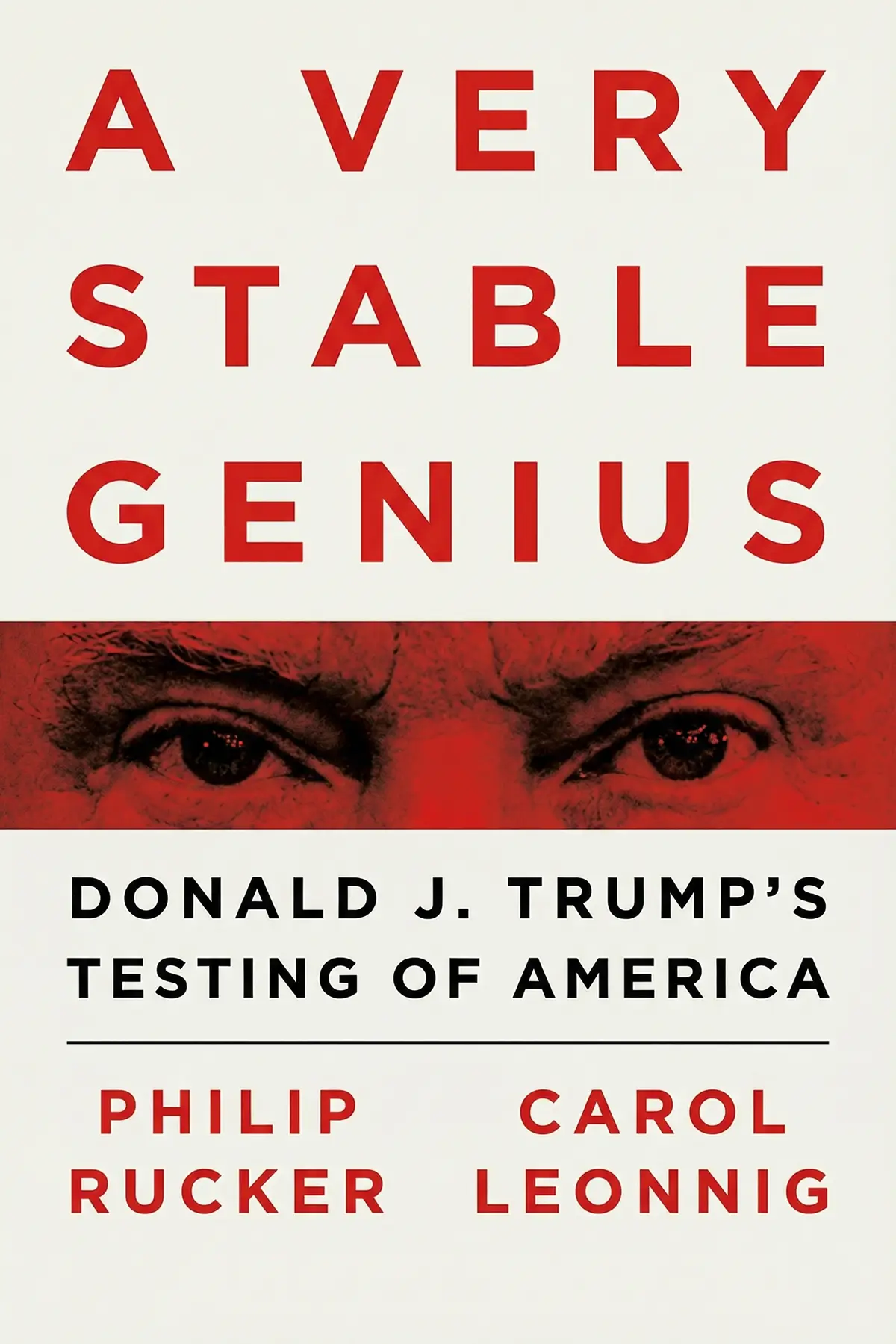
Imagined Communities: Reflections on the Origin and Spread of Nationalism
Discover the historical and cultural origins of nationalism, exploring how print technology, language shifts, and shared rituals allowed millions of strangers to imagine themselves as a single, unified community.
Table of Content
1. Introduction
2 min 05 sec
Have you ever stopped to wonder why you feel such a deep, unshakeable connection to millions of people you’ve never met? You share a passport, a language, and perhaps a certain pride when your national anthem plays, yet the vast majority of your fellow citizens are complete strangers to you. This bond isn’t an ancient biological fact; rather, it’s a relatively modern invention. For the bulk of human history, people didn’t define themselves by the hard borders of a nation-state. Instead, they belonged to vast, sprawling empires or were united by universal religious faiths that didn’t care much for where one kingdom ended and another began.
In those earlier eras, a person’s identity was often tied to a local village, a specific monarch, or a sacred language that spanned continents. But around the end of the eighteenth century, the world began to change. The old structures of power—the divine right of kings and the universal authority of the church—started to lose their grip. In their place, a new and powerful idea emerged: the nation. This was what scholar Benedict Anderson famously called an “imagined community.” It was a way for people to see themselves as part of a coherent group, moving through history together, even if they would never see the faces of their compatriots.
In the following exploration, we’re going to peel back the layers of history to see how this transition happened. We’ll look at how the invention of the printing press turned language into a commodity, how the simple act of reading a newspaper became a secular version of morning prayer, and how the collapse of ancient empires forced people to find new ways to make sense of life and death. This isn’t just a history of politics; it’s a history of how we learned to see the world—and ourselves—in an entirely new way. We will trace the journey from a world of fluid boundaries and sacred scripts to a world of maps, flags, and dictionaries. By the end, you’ll see that the nation is not something we simply inhabit, but something we collectively dream into existence every single day. Let’s dive into the fascinating mechanisms that built the modern world.
2. Nationalism as a Response to Human Mortality
2 min 22 sec
How does a nation offer the same kind of comfort as a religion? Explore why the anonymity of the modern soldier provides a sense of eternal continuity.
3. The Role of Sacred Languages in Ancient Empires
2 min 34 sec
Discover how ancient civilizations were held together by ‘truth languages’ and why these scripts were considered more important than the way people actually spoke.
4. Print Capitalism and the Standardization of Speech
2 min 26 sec
How did the quest for profit lead to the creation of modern national languages? Uncover the intersection of the printing press and early capitalism.
5. The Newspaper as a Shared Secular Ritual
2 min 26 sec
Explore why reading the news every morning acts as a ‘secular prayer’ that binds millions of strangers together in a single moment of time.
6. Philology and the Scientific Construction of Identity
2 min 15 sec
See how the study of old manuscripts and the creation of dictionaries turned language into a powerful tool for political independence.
7. Imperial Tension and the Global Spread of Nationalism
2 min 36 sec
How did the very systems designed to control empires—like schools and administrative paths—unintentionally create the leaders of independence movements?
8. Conclusion
1 min 53 sec
The journey from ancient empires to modern nations is one of the most significant transformations in human history. We have seen how the nation is not an objective fact of nature, but a powerful “imagined community” constructed through cultural shifts, technological innovations, and changes in the way we use language. From the spiritual void left by the decline of traditional religion to the profit-driven rise of print capitalism, the forces that shaped our national identities were often indirect and unintentional. Yet, they created a world where millions of strangers feel a bond so strong that they are willing to die for a flag and a border.
The throughline of this entire story is the human need for connection and meaning. We crave a sense of belonging that extends beyond our immediate family and village, and the nation-state has become the primary way we satisfy that craving in the modern era. We use the daily rituals of the news, the shared rules of our language, and the monuments to our collective past to remind ourselves that we are part of something enduring. This realization doesn’t make the nation “fake” or unimportant; on the contrary, it shows just how powerful the human imagination can be when it is channeled through technology and shared experience.
As you move forward, take a moment to notice the “imagined” elements in your own daily life. When you read a headline, use a specific word, or look at a map, you are participating in the ongoing creation of your national community. The lesson here is that our identities are not fixed in stone; they are built through the stories we tell and the rituals we share. By understanding the historical roots of nationalism, we gain a clearer perspective on how the world was put together—and perhaps, we gain the insight to imagine new ways of connecting with the rest of humanity in the future. The nation is a dream we share, and understanding the architecture of that dream is the first step toward navigating the complex, interconnected world we inhabit today.
About this book
What is this book about?
This exploration into the origins of nationalism reveals how the modern nation-state was born not from ancient facts, but from a powerful shift in collective imagination. It addresses the fundamental mystery of how individuals can feel a profound, even life-sacrificing, loyalty to a community of millions whom they will never personally meet. By tracing the transition from vast religious empires to localized sovereign states, the narrative explains the mechanisms that made this possible. The core of the work examines the concept of the "imagined community." It details how the rise of the printing press and the shift from sacred languages like Latin to everyday vernaculars allowed for a shared sense of time and space. From the daily ritual of reading the newspaper to the scientific study of grammar and history, it shows how modern identity was meticulously constructed. This is a story of how market forces, technological innovation, and colonial experiences converged to redraw the world map, transforming subjects into citizens and diverse territories into unified nations with a shared destiny.
Book Information
About the Author
Benedict Anderson
Benedict Anderson (1936-2015) was a distinguished professor of international studies at Cornell University in New York. A remarkably talented polyglot, he was fluent in several Asian languages and initially gained prominence as a leading scholar of Indonesia. Beyond his groundbreaking work on the theory of nationalism and Southeast Asian studies, Anderson authored several other significant works, including the 2005 book Under Three Flags, which looked at the global anarchist movement. His reflections on his own scholarly journey and life were published posthumously in his 2016 memoir, A Life Beyond Boundaries.
Ratings & Reviews
Ratings at a glance
What people think
Listeners view this work as a fundamental and wide-ranging introduction to nationalism, with one listener emphasizing its inclusive look at examples outside of Europe. Furthermore, the title earns praise for its perceptiveness, readability, and the strength of its reasoning, while one listener describes how it heightens awareness of ideological influence. They also value its continued pertinence, as one listener mentions that it provides an effective overview of the dilemmas of modernity. Conversely, perspectives on the literary style and language are varied; though some think it is excellently written, others feel the writing is too cluttered to digest, and one listener highlights the unnecessarily complex vocabulary.
Top reviews
Koi
Finally got around to this foundational text, and it completely shifted my understanding of how we perceive the world. Anderson explains that nations aren't ancient, primordial entities but are actually 'imagined' through specific historical shifts like the rise of print-capitalism. The way he describes the move from sacred Latin to local vernaculars as a tool for creating shared identities is absolutely brilliant. While the vocabulary can be a bit demanding, the core argument remains incredibly sharp and relevant to our current global fractures. It isn't just about history; it's about the psychological architecture of the modern state. I found his analysis of the 'creole pioneers' in the Americas particularly illuminating because it challenges the Eurocentric bias found in most political theory. This is a must-read for anyone trying to understand why we feel such a fierce, visceral connection to people we will never actually meet face-to-face.
Show moreYaowaluk
What exactly makes a person willing to die for a piece of colored cloth or an arbitrary line on a map? This book provides the most comprehensive answer I’ve ever found. Anderson’s definition of the nation as an 'imagined community' is a stroke of genius that clarifies so much about modern conflict and loyalty. I was fascinated by the idea of 'empty-homogenous time' and how newspapers allow us to imagine thousands of others doing the same thing at the same moment. It’s an intellectual journey that manages to be both cynical about the 'invention' of tradition and sympathetic to the genuine love people feel for their countries. The writing is elegant, though definitely academic, and it requires your full concentration. If you want to understand the machinery of the modern world and how elites manipulate identity, start here.
Show morePor
Ever wonder how the collapse of religious dynasties gave way to the flags and borders we see today? Benedict Anderson provides a brilliant roadmap through this transition, highlighting the role of print-capitalism in making the 'nation' possible. I loved his take on how the novel and the newspaper changed our perception of time and community. It’s a very deep, analytical look at the 'sacred scripts' and how their decline allowed local languages to take over the consciousness of the masses. The book is global in scope, which I really appreciated, as it doesn't just stick to the usual French or American revolutions. It’s a relatively slim volume, but don't let that fool you; it requires a lot of mental energy to process. This is truly essential reading for anyone interested in the social sciences or the history of ideas.
Show moreGioia
Picked this up to better understand why certain identities feel so ancient when they are actually quite new. Anderson’s ability to weave together the history of the Americas, Europe, and Asia into a single, cohesive theory of the 'imagined community' is nothing short of breathtaking. He challenges the idea that nationalism is just a form of racism, arguing instead that it is a much more complex form of 'love' and civic attachment. The updated chapters on the census and the map really rounded out the book, showing how modern states continue to categorize and control our sense of self. It’s a dense, scholarly work, but the clarity of the central metaphor makes it stick in your mind long after you finish. If you want to see the 'man behind the curtain' in terms of political identity, this is the book for you.
Show moreKevin
As someone who focuses on global history, I appreciated how this book moves beyond the typical European borders to find the roots of nationalism. Anderson looks at Southeast Asia and Latin America with a level of detail that is often missing from other seminal works in the social sciences. The chapter on the 'census, map, and museum' is particularly striking, showing how colonial administrations inadvertently built the tools for their own undoing. However, be prepared for some heavy lifting with the prose. The author uses a lot of academic jargon and leaves some French and German phrases untranslated, which can be frustrating if you aren't a polyglot. Despite the occasional slog through dense footnotes, the insights into how media creates a shared sense of time are worth the effort. It really forces you to question the 'naturalness' of your own national identity.
Show moreGun
The sections concerning the 'census, map, and museum' are worth the price of admission alone for their sheer insight. It is fascinating to see how the tools of colonial control—defining people by categories and drawing hard borders—eventually became the foundation for independent national identities. Anderson’s prose is dense, and he has a habit of dropping untranslated snippets of multiple languages, which feels a bit elitist at times. However, the way he connects the decline of religious dynasties to the rise of the nation-state is masterful. He fills a massive gap in Marxist theory by explaining why people are more likely to die for their country than their social class. While it is a tough read that requires slow going, the intellectual payoff is significant. It sharpens your awareness of how governments use history and culture to manufacture a sense of unity where none existed before.
Show moreRoo
Look, this isn't light reading for a beach trip, but its relevance to our current political climate is staggering. Anderson’s exploration of how print media allowed us to conceive of ourselves as part of a larger whole explains so much about our current digital echo chambers. The book is remarkably short, yet it packs in an ocean of knowledge spanning across centuries and continents. I did find some of his Indonesian examples a bit niche, and the Marxist jargon can feel a bit dated, but the core thesis remains unshakable. He manages to show that while the nation is 'imagined,' the emotions it inspires are very real and powerful. It’s a brilliant deconstruction of the myths we live by every day. Just be ready for the eye-straining footnotes and a writing style that assumes you already know a great deal about world history.
Show moreSomsak
It’s rare to find a scholar who treats Southeast Asian and Latin American history with as much weight as European events. This global perspective is what makes Anderson's work so seminal and enduringly popular. He effectively debunks the idea that nationalism started in Europe and was simply exported elsewhere. Instead, he shows how 'creole' officials in the colonies were the true pioneers of the national idea. The writing can be messy and a bit over-the-top in its intellectualism, but the sheer volume of original insights compensates for the difficult style. I particularly enjoyed the discussion on how 'sacred' languages like Latin and Chinese script once held the world together before the printing press tore them apart. It is a provocative essay that invites you to debate with the author on every page. Definitely worth the effort for the perspective shift it provides.
Show moreKenji
To be fair, this is a difficult text to penetrate without a dictionary or a background in political science. I picked it up because I wanted to understand the roots of modern conflict, but the haughty language often got in the way of the message. Anderson makes some incredible points about how the printing press revolutionized our sense of belonging, but he spends an awful lot of time on obscure Indonesian history that might lose some readers. There are also moments where he seems to ignore the role of warfare and technology in favor of focusing solely on language. It’s a seminal work for a reason, but it’s definitely not a complete picture of nationalism. I felt like I was reading a series of loosely connected essays rather than a tight, singular argument. Read it for the big ideas, but don't expect it to be an easy or definitive guide.
Show moreOtt
Frankly, I found the author’s style to be unnecessarily elitist and the jargon quite alienating for a general reader. There is an arrogance in the writing, with frequent references to obscure events and several languages left completely untranslated. If you aren't already well-versed in Marxist theory and Southeast Asian history, you are going to spend more time in the footnotes than in the actual text. Furthermore, the argument feels very lopsided; he places so much weight on 'print-capitalism' that he ignores the physical realities of war and revolution that actually forged these nations. It felt more like a collection of clever reflections than a rigorous, scientific study. There are some interesting observations buried in here, but the 'impenetrable' nature of the prose makes it a chore to finish. I’ve read much clearer accounts of nationalism that don't require a PhD to navigate.
Show moreReaders also enjoyed
A Year in the Life of William Shakespeare: 1599
James Shapiro
A Warning
Miles Taylor

Agent Sonya: The Spy Next Door
Ben Macintyre
1491: New Revelations of the Americas Before Columbus
Charles C. Mann
Alexander Hamilton
Ron Chernow
1929: Inside the Greatest Crash in Wall Street History--and How It
Andrew Ross Sorkin
Alexander the Great
Philip Freeman
AUDIO SUMMARY AVAILABLE
Listen to Imagined Communities in 15 minutes
Get the key ideas from Imagined Communities by Benedict Anderson, plus 5,000+ more titles in English and Thai.
- 5,000+ titles
- Listen as much as you want
- 7-day free trial
- Cancel anytime







