
15 min 45 sec
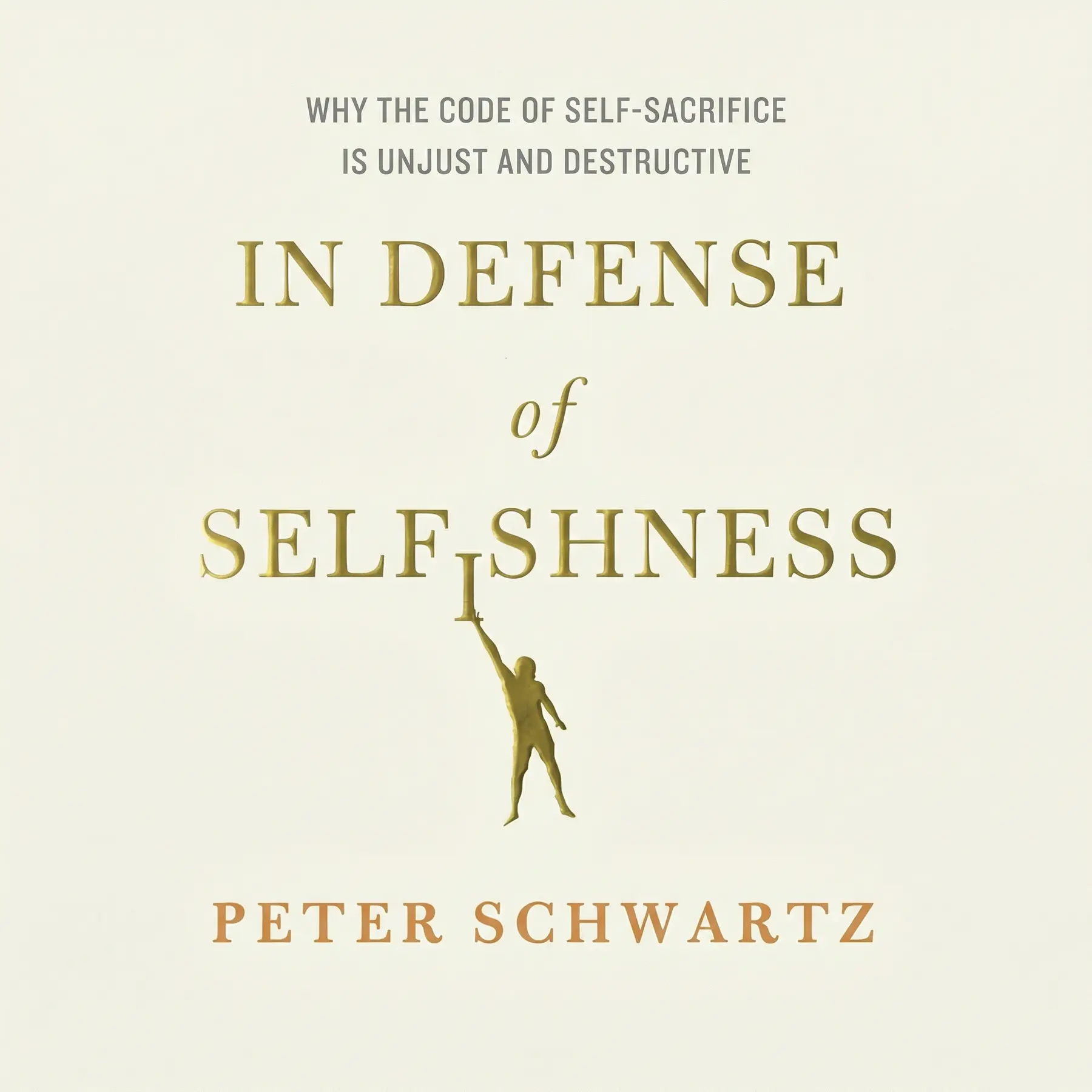
In Defense of Selfishness: Why the Code of Self-Sacrifice is Unjust and Destructive
A provocative philosophical exploration that challenges the moral supremacy of self-sacrifice, arguing instead that rational selfishness is the only ethical path toward individual achievement, genuine happiness, and a free society.
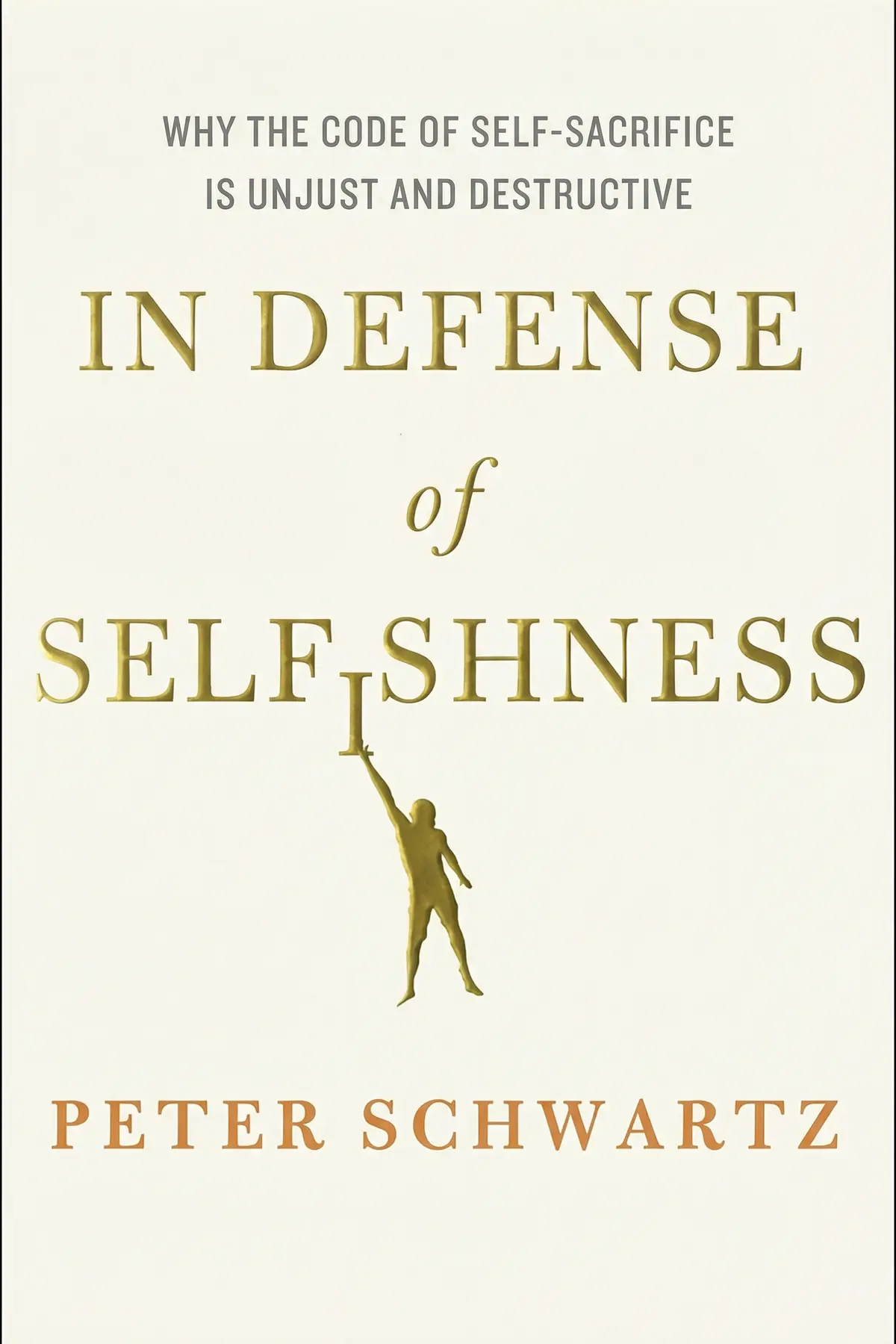
Table of Content
1. Introduction
1 min 42 sec
From the time we are children, we are taught a very specific moral script. We are told that sharing is a duty, that giving is inherently better than receiving, and that the ultimate sign of a good person is their willingness to put others first. This concept, known as altruism, is almost never questioned. It is the invisible air we breathe in our social and political lives. But what if this core assumption is fundamentally flawed? What if the code of self-sacrifice isn’t a path to a better world, but a roadmap to the destruction of the individual?
In this exploration of Peter Schwartz’s provocative work, we are going to look at the moral landscape from a completely different perspective. We’ll examine the idea that selfishness, when understood rationally, is actually a virtue—not a vice. This isn’t a defense of the criminal or the predator, but a defense of the person who refuses to be a servant to the needs of others simply because those needs exist.
Over the next few segments, we will dismantle the myth of the ‘public interest’ and see how altruism can lead to the loss of independent thought. We’ll see why a society built on the idea of unchosen debt is destined for stagnation, and why the alternative—rational egoism—is the only way to build a life of integrity, productivity, and true happiness. It’s time to ask the hard questions about why we believe sacrifice is noble, and discover why your own life should be your highest priority. Let’s dive into a perspective that challenges the status quo and offers a new way to think about your rights, your mind, and your future.
2. The True Nature of Altruism
2 min 09 sec
Explore why the common definition of altruism as mere kindness is misleading and how it actually creates a system of unchosen moral debt and subordination.
3. The Illusion of the Public Interest
2 min 07 sec
Understand how the concept of the ‘public interest’ is often used to justify the violation of individual rights and foster a collectivist mindset.
4. The Intellectual and Emotional Cost of Selflessness
2 min 11 sec
Discover how the pressure to be selfless can lead to the surrender of one’s own convictions and the inability to experience true love.
5. Redefining Selfishness Through Reason
2 min 03 sec
Learn to distinguish between the common ‘predatory’ view of selfishness and the rational egoism that actually promotes cooperation and integrity.
6. Egoism as a Survival Strategy
1 min 53 sec
Understand why prioritizing one’s own well-being is a logical necessity for long-term survival and why there is no middle ground between egoism and altruism.
7. The Political Framework of a Selfish Society
2 min 05 sec
Explore the connection between rational egoism and the principles of capitalism, and why individual rights are the only protection against tyranny.
8. Conclusion
1 min 35 sec
As we reach the end of this exploration, the central message becomes clear: the moral compass we have been given is pointing us in a dangerous direction. By glorifying altruism, we are inadvertently glorifying the erasure of the self. We have seen how this mindset leads to the myth of the public interest, the loss of personal judgment, and the rise of systems that treat human beings as interchangeable parts of a collective machine.
The alternative—rational selfishness—is not a call to become a heartless hermit. It is a call to become a person of principle. It is an invitation to use your mind, to value your time, and to recognize that your life is your own to live. When you reject the unearned guilt of self-sacrifice, you open the door to a life of genuine achievement and authentic relationships based on mutual respect rather than mutual debt.
Moving forward, consider the ‘selfish’ path as the more honest and productive one. In your daily life, start by recognizing the value of your own effort and your own judgment. Understand that you do not owe your success to the world at large, but to the focus and discipline you bring to your work. When you celebrate the star player on a team or the innovator in a company, you are acknowledging that greatness comes from individual excellence, not collective mediocrity. By standing up for your own interests and respecting the same right in others, you contribute to a world of freedom and flourishing. Don’t be afraid to live for yourself; it is the most moral thing you can do.
About this book
What is this book about?
In Defense of Selfishness takes a critical look at one of society’s most cherished virtues: altruism. Peter Schwartz argues that the cultural pressure to put others first is not a benign call to kindness, but a destructive moral code that demands the subordination of the individual. By examining the roots of self-sacrifice, Schwartz reveals how this mindset fuels collectivism, erodes personal judgment, and ultimately threatens political freedom. The book offers a robust alternative through the lens of rational egoism. This isn't about the predatory or impulsive behavior often mistaken for selfishness. Instead, Schwartz presents a case for a principled life based on reason, where individuals pursue their own long-term interests and engage in voluntary exchange. The promise of this work is a new understanding of morality—one that champions the right of every person to exist for their own sake and flourish through their own effort.
Book Information
About the Author
Peter Schwartz
Peter Schwartz is the retired Chairman of the Board of Directors and a current Distinguished Fellow of the Ayn Rand Institute. In Defense of Selfishness is his third book.
Ratings & Reviews
Ratings at a glance
What people think
Listeners find this work exceptionally clear and articulate, with one mentioning it’s not as demanding as reading Ayn Rand's works. The book offers a profound grasp of egoism versus altruism, and one listener characterizes it as a road map to living a guiltless life. Listeners value its stimulating nature and powerful reasoning, with one likening the narrative to an exciting detective story. They prize its moral outlook, with one pointing out its focus on rational self-interest, and find the material enlightening, with one describing it as a blindingly clear revelation.
Top reviews
Komsan
Finally got around to reading this, and it’s a breath of fresh air compared to the dense, often impenetrable prose of some other Objectivist writers. Schwartz offers a road map to a guiltless life that feels both radical and incredibly logical once you sit with the arguments. He breaks down the difference between rational self-interest and the common, messy definition of selfishness we’re all taught to fear in grade school. The writing is highly readable, moving with a pace that makes philosophical inquiry feel more like a detective story uncovering a hidden truth about our culture. While some points about the FDA felt a bit repetitive, the core message remains powerful. If you’ve ever felt weighed down by the constant social pressure to sacrifice your own happiness for others, this book might just set you free. It's a compelling argument for your own life being your primary moral value.
Show moreTom
Schwartz has managed to turn ethics into something as gripping as a thriller, which is no small feat for a book on philosophy. As someone who has dabbled in Rand’s works before, I found this to be a much more accessible entry point into the mechanics of egoism versus altruism. The author presents a blindingly clear revelation: that we have been conditioned to see our own success as a moral failure. Truth is, the way he deconstructs the 'virtue' of sacrifice is both eye-opening and deeply unsettling to everything we’re taught in school. My only real gripe is that he can be quite repetitive, hammering home the same points about collectivism until you feel a bit exhausted. Still, the underlying logic is robust. It's an essential read for anyone looking to build a stronger philosophical foundation for their personal liberty and happiness.
Show morePing
Finding a road map to a guiltless life is not what I expected from a philosophy book, but Schwartz delivers exactly that with surgical precision. It provides a deep understanding of why we feel guilty for succeeding and offers a way to reclaim our moral standing. The way Schwartz explains rational self-interest is far more exciting than I anticipated; it almost felt like an exciting detective story at times. He systematically dismantles the idea that being good requires you to suffer or lose something valuable. Personally, I found the clarity of his logic to be refreshing, even if he does repeat himself to ensure the message sticks. It’s an eye-opening book that I’d recommend to anyone tired of the relentless message of collectivism that pervades our current culture. A five-star read for its boldness.
Show moreCooper
This book is like a blindingly clear revelation for anyone who has struggled with the feeling that they are being 'used' by society's expectations. I was particularly struck by how Schwartz contrasts the end results of actions against the sheer amount of sacrifice involved. Often, we judge a person’s goodness by how much they suffer, rather than what they actually achieve. To be fair, the author’s tone can come across as a bit condescending at times, almost like he’s lecturing a student who just doesn’t get it. However, the examples regarding government entities and their alleged benefits were fascinating to digest. It’s a thought-provoking read that challenges the very foundation of modern ethics. You might not agree with everything, but you will definitely think differently about how you allocate your resources and your time.
Show moreSin
Ever wonder why sacrifice is always treated as the ultimate virtue while personal achievement is met with skepticism? Schwartz dives deep into this paradox, offering a fascinating look at the ethics of rational self-interest. The narrative flow is surprisingly smooth for a philosophy book, making it far more readable than the thousand-page doorstoppers usually associated with these ideas. I appreciated the specific element of how altruism is often used as a tool for political manipulation, though I think some of the religious examples were a bit extreme and isolated. Despite that, the book functions as a powerful guide to living without unearned guilt. It’s an eye-opening perspective that insists your life belongs to you alone. A solid four stars for the clarity of thought and the courage to challenge the status quo.
Show moreWatchara
Look, you don't have to agree with every political point in this book to appreciate the sheer audacity of Schwartz's thesis. He argues that altruism is not just overrated but actually destructive to a functional society. This perspective is so at odds with everything I was taught that it genuinely had my head spinning for a few days. The chapter regarding the FDA was particularly illuminating, showing how 'protection' can often lead to stagnation. I did feel that he plays 'hide the ball' with some of the more complex issues in Objectivism, and his dismissal of other philosophers like Locke felt a bit hand-wavy. Nevertheless, it serves as a compelling argument for a life lived for one's own sake. It is well-written and far more engaging than a standard textbook. Definitely worth a look if you want your assumptions challenged.
Show morePot
The information in this fascinating book is so different from the status quo that it’s almost shocking to read. Schwartz writes simply and clearly, making complex philosophical constructs understandable for the average reader. I loved the way he framed the 'ethics of rational self-interest' as a necessary strength rather than a moral weakness. It’s a much more readable alternative to diving straight into Ayn Rand’s fiction. I will say that the author’s tone can be a bit 'jerk-ish' in some sections, which might distract from his otherwise solid points. But if you can get past the occasional name-calling, there is a lot of wisdom here about property rights and individual agency. It encouraged me to consider a completely alternative approach to my resources and time. A very thought-provoking and worthwhile read for the modern era.
Show moreGai
Not what I expected when I picked this up, and frankly, I have mixed feelings about the execution. While the author makes some valid points about individual rights, the tone is often off-putting and unnecessarily negative. It feels like he’s shouting at the reader rather than inviting them into a conversation. I also found the repetition to be a major hurdle; it felt like a college student trying to hit a word count by rewording the same three paragraphs over and over. The examples he uses to illustrate 'altruism gone wrong' feel like extreme and absurd caricatures that don't really reflect how most people live their lives. I didn’t find myself persuaded to change my worldview, though I can see why fans of Objectivism would find this to be a reinforcing read. It's okay, but proceed with caution if you prefer a more nuanced approach.
Show moreKamol
Picked this up after a recommendation from a philosophy group, but I found it to be a bit of a slog. To keep this review short, the book is essentially a modern-day parroting of John Galt’s speech from decades ago without much new ground being broken. The author's tone is quite harsh, which might alienate anyone who isn't already a hardcore libertarian or Rand devotee. Truth is, I agreed with the premise that we shouldn't be slaves to others, but the way Schwartz sets up altruism as this purely destructive monster felt like a straw man argument. He uses biblical teachings as negative arguments in a way that felt a bit lazy and intellectually shallow. There’s some common sense mixed in here, but you have to dig through a lot of repetition and condescension to find it.
Show moreBoy
I'm frankly disappointed by the lack of nuance in these pages. The author sets up a very extreme version of altruism—one that almost nobody actually practices—and then spends the rest of the book tearing it down with a very negative tone. It felt like a God-less philosophy that misses the human element of compassion and community. While I agree that we shouldn't be forced to help others at the cost of our own survival, Schwartz seems to think any form of sacrifice is an evil. The repetition was also a huge issue for me; I felt like I was reading the same chapter ten times. The examples provided were often so out of date or isolated that they didn't really prove the point he was trying to make. I struggled to finish it because it just felt so angry and one-sided.
Show moreReaders also enjoyed
A Guide to the Good Life: The Ancient Art of Stoic Joy
William B. Irvine
A Little History of Philosophy
Nigel Warburton
A Theory of Justice
John Rawls

Becoming Beauvoir: A Life
Kate Kirkpatrick
AUDIO SUMMARY AVAILABLE
Listen to In Defense of Selfishness in 15 minutes
Get the key ideas from In Defense of Selfishness by Peter Schwartz, plus 5,000+ more titles in English and Thai.
- 5,000+ titles
- Listen as much as you want
- 7-day free trial
- Cancel anytime







