Managing Oneself
Peter Drucker
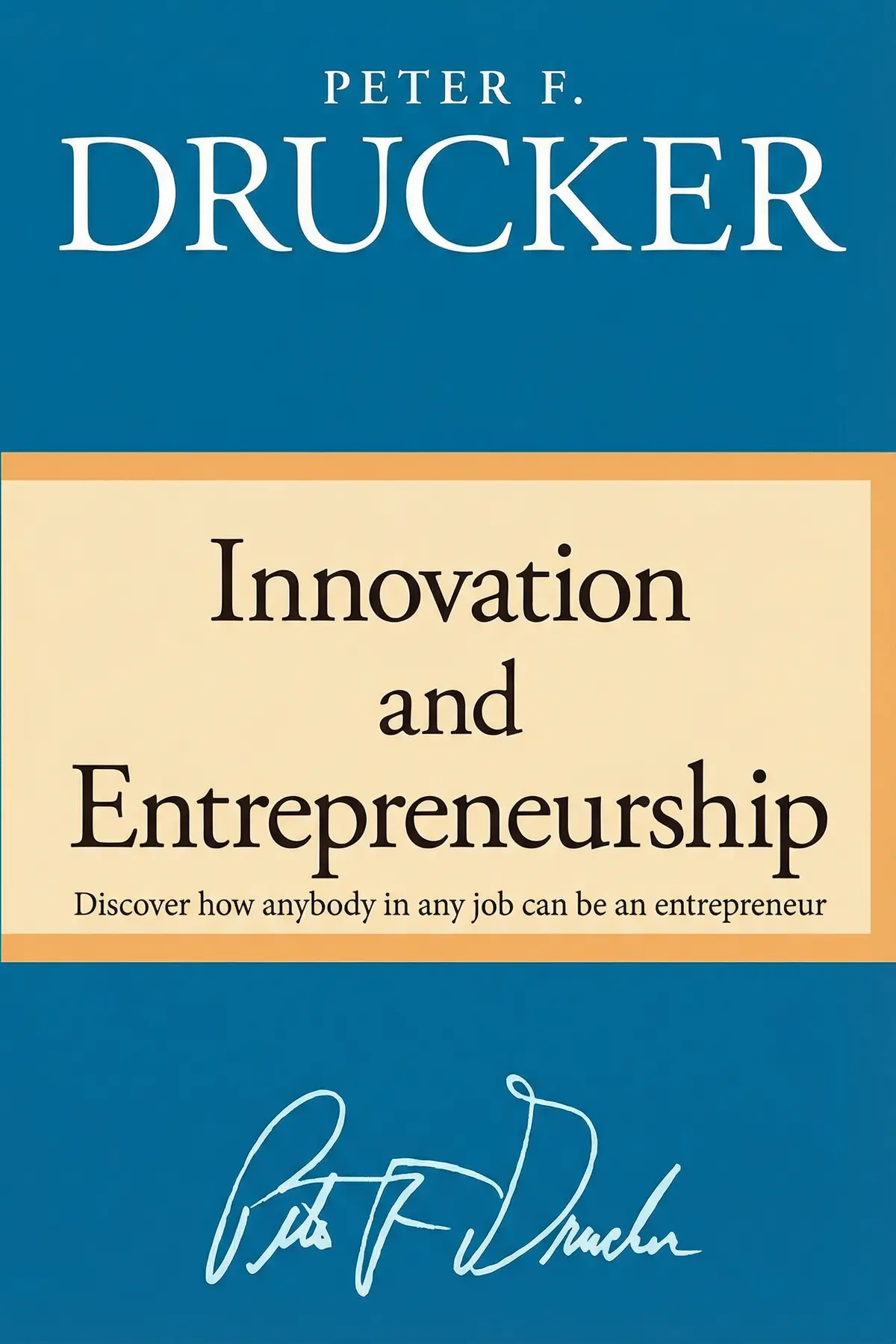
Explore the systematic discipline of innovation and entrepreneurship. Peter Drucker reveals how anyone can harness specific strategies and sources of opportunity to drive economic growth and create successful, sustainable modern enterprises.
1 min 35 sec
When we think of the word “entrepreneur,” many of us picture a specific type of person—someone with a high tolerance for risk, a charismatic personality, and a lightning-bolt of inspiration that strikes out of nowhere. But what if that image is completely wrong? According to Peter Drucker, the legendary management thinker, entrepreneurship isn’t about a specific personality type at all. It isn’t an innate gift that some people have while others don’t. Instead, it is a purposeful, systematic discipline. It is a practice that can be studied, mastered, and applied by anyone, whether you are starting a tiny shop in your garage or leading a massive multinational corporation.
In this exploration of Innovation and Entrepreneurship, we are going to look at the mechanics of how change actually happens. We often mistake innovation for “invention,” but Drucker argues that while invention creates something new, innovation creates new value. You don’t have to build a flying car to be an innovator; you simply have to find new ways of doing things that better serve a market or solve a problem. The throughline here is simple but profound: successful entrepreneurship is the result of looking for change and then exploiting that change as an opportunity.
Over the next several sections, we’ll dive into the specific places where these opportunities hide. We will look at why some companies thrive during market shifts while others collapse, why a weak link in a surgery room can be the foundation of a massive business, and how the simple act of pricing a product differently can change the world. By the end, you’ll see that the path to success isn’t found in waiting for a lucky break, but in knowing exactly where to look for the next big shift.
1 min 58 sec
What if your biggest mistakes or unexpected wins were actually roadmaps to your next big success? Learn why internal surprises are the best places to start looking.
1 min 53 sec
Sometimes the greatest opportunities aren’t new products, but better ways to fix the broken parts of an existing system.
1 min 56 sec
The world outside your office is constantly changing. See how population shifts and the slow build of knowledge create massive opportunities.
1 min 50 sec
Innovation isn’t just for small startups. Discover the specific policies that allow massive corporations to stay nimble and inventive.
1 min 56 sec
Starting a business requires more than a good idea. Learn why market flexibility and financial foresight are the keys to survival.
1 min 47 sec
Being the first mover in a market is like launching a rocket to the moon. It offers the biggest rewards but carries the highest risks.
2 min 04 sec
You don’t always have to be first to win. Discover how to use your competitors’ arrogance and mistakes against them.
2 min 00 sec
Success doesn’t always mean being the biggest. It can mean being the only person who does one specific, vital thing.
1 min 48 sec
Innovation isn’t always about the product. Sometimes, it’s about changing how people pay for it or how it fits into their lives.
1 min 26 sec
As we wrap up our journey through Peter Drucker’s Innovation and Entrepreneurship, the most important takeaway is that the world of the entrepreneur is not reserved for the lucky few. It is a world open to anyone who is willing to look at the environment with a disciplined, observant eye. We’ve seen that innovation is often found in the most mundane places: in a sales report that doesn’t make sense, in a population that is slowly aging, or in a competitor who has become too proud to change.
The throughline of all these strategies is a relentless focus on the customer. Whether you are using the “Fustest with the Mostest” strategy to capture a new market or finding a quiet ecological niche, your success depends on your ability to provide something the market actually wants, rather than what you want to sell. Entrepreneurship is not about the brilliance of the idea; it is about the effectiveness of the execution and the willingness to pivot when the reality of the market contradicts your original plan.
In today’s fast-moving world, the ability to innovate is no longer a luxury—it’s a requirement for survival. By applying these systematic tools, you can stop waiting for inspiration to strike and start looking for the opportunities that are already hiding in plain sight. Remember: the future isn’t something that just happens to you. It is something you can build, one purposeful innovation at a time. Go out and look for the unexpected, identify the weak links, and use the momentum of change to create the next great leap forward.
Innovation and Entrepreneurship is a foundational guide that reframes how we view the act of creating new value. Rather than treating entrepreneurship as a mysterious personality trait or a stroke of luck, Peter Drucker presents it as a purposeful discipline that can be learned and practiced by anyone, regardless of their position or the size of their organization. The book provides a rigorous framework for identifying opportunities that others miss, from unexpected market shifts to internal process weaknesses. Listeners will discover a roadmap for navigating the complexities of the modern business landscape. Drucker outlines specific internal and external sources of innovation, provides strategies for managing new ventures, and explains how established corporations can stay relevant by fostering an entrepreneurial culture. The promise of the work is clear: by applying systematic innovation and choosing the right market strategies, individuals and businesses can transition from being passive observers of change to being the active drivers of social and economic progress.
Peter Drucker, who lived from 1909 to 2005, is widely recognized as one of the most influential thinkers in the history of business management. Throughout his prolific career, he worked as a management consultant, educator, and author, publishing more than 35 books that helped define the foundations of modern organizational thinking. His immense contributions to the field were honored in 2002 when he was awarded the Presidential Medal of Freedom by George W. Bush.
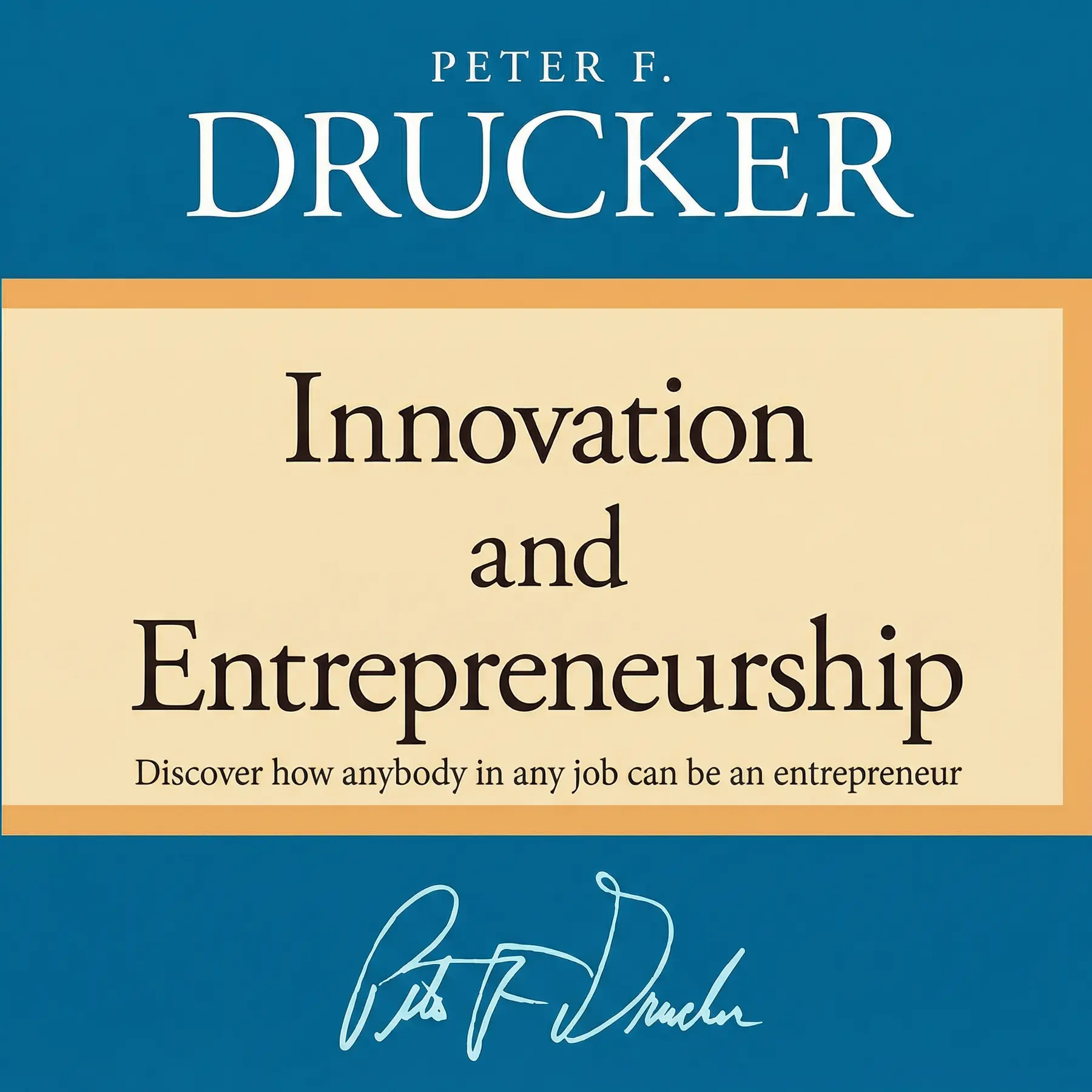
Listeners view this title as an essential read for anyone launching new enterprises, commending its clear prose and approachable style. They value the book's lasting pertinence, with one listener observing that its teachings never age, and regard it as a definitive guide to the commercialization of original concepts. Listeners respect the depth of thought leadership provided, especially the way it encourages people to act on new possibilities. Views on the overall value are varied; some characterize it as an enduring masterpiece, whereas others feel that certain sections are now behind the times.
Ever wonder why some 'brilliant' ideas fail while simple ones take over the world? Drucker breaks this down with a clarity that few modern business gurus can match. He defines entrepreneurship not as a personality trait, but as a behavior that can be learned, which is such an empowering perspective. I particularly loved the section on 'creative imitation'—it’s a refreshing take on how to enter a market without having to be the first one through the door. While some of the corporate examples are dated, the underlying principles of looking for the 'unexpected success' or 'process needs' are timeless. This is a masterclass in seeing the world through an opportunistic lens. If you’re serious about commercializing new ideas, you cannot afford to skip this classic.
Show moreThe chapter on social innovation blew my mind. Most people equate innovation with high-tech software, but Drucker shows how things like the modern hospital or the university system were the real game-changers of their eras. He has this unique way of making you realize that the most successful innovations are often the ones that seem 'obvious' once they've been done. I loved his insistence that innovation must start small and focused—trying to be 'clever' or 'innovating for the future' is usually a recipe for disaster. This book encouraged me to stop looking for a 'miracle idea' and start looking for small incongruities in the market. It’s smart, deeply researched, and surprisingly practical. A must-read for anyone who thinks entrepreneurship is just about taking wild risks.
Show moreFinally got around to reading this, and I'm honestly annoyed I waited so long. Drucker basically predicted the 'shakeout' patterns we see in every new tech wave. His description of the 'window' of opportunity for knowledge-based industries explains exactly why so many venture-backed firms fail after the initial hype dies down. It’s not just about having the best technology; it’s about management, timing, and luck. I found his distinction between 'bright ideas' and 'systematic innovation' to be the most helpful part of the whole book. One is a lottery ticket, the other is a repeatable process. It’s a thick read, but it provides a mental model for business that is far superior to the 'move fast and break things' mantra.
Show moreDrucker manages to turn the chaotic world of entrepreneurship into a manageable, rational process. This book is a masterwork because it doesn't just tell you to be 'innovative'—it shows you exactly where to look for the opportunities that everyone else is ignoring. Whether it's changes in demographics or the 'unexpected failure' of a product, he provides a roadmap for the observant mind. To be fair, some sections on the 19th-century economy could have been trimmed, but they serve to prove that his principles are universal across time. I especially liked the 'Don'ts' section: don't try to be clever, don't diversify too early. It’s grounding advice for any dreamer. If you want to understand the DNA of progress, this is the book you start with.
Show moreThis book provides a remarkably structured approach to something most people think is just lightning in a bottle. Drucker argues that innovation is actually a systematic discipline, which was a huge eye-opener for me. The '7 sources of innovative opportunity' are still incredibly relevant today, even if the case studies about 1980s computer companies feel a bit like ancient history. Truth is, his analysis of demographics and market incongruities feels like it was written for the current tech landscape. I did find the middle section on 'entrepreneurial management' a bit dense, but the payoff is worth it if you’re looking to scale a business. It’s not just for startups; it’s for any organization that doesn't want to get left behind by the next big shift. Definitely a foundational text that requires some patience.
Show moreWow. I didn't expect a book written in 1985 to be this prophetic about our current economic shifts. Drucker’s take on 'knowledge-based innovation'—and why it’s the riskiest, most unpredictable path—really hit home for me. He explains that high-tech is often a gamble on receptivity, whereas social innovation often goes unnoticed despite its massive impact. Think about his example of the textbook making universal education possible; that’s the kind of insight that changes how you look at 'innovation' beyond just gadgets. The writing style is analytical and a bit stiff, but the logic is airtight. My only real gripe is that he can be a bit repetitive with his warnings about management. Still, it’s a required read for any founder who wants to understand the 'why' behind the 'what'.
Show moreAfter hearing so much about the 'Drucker way,' I finally dove into this one to help with my current role in corporate strategy. The most striking takeaway was the idea that an existing business must organize its entrepreneurial side separately from its daily operations. He’s right—the daily crisis will always swallow the new venture if they share the same space. I also appreciated his breakdown of 'entrepreneurial judo' and how to use a competitor’s arrogance against them. It’s a very tactical book once you get past the introductory theory. Look, it’s not a beach read, and the sentences can be long and winding, but the strategies for market dominance are pure gold. It’s a foundational piece of work that still holds its weight in a fast-paced world.
Show moreAs someone who has been in the startup world for a decade, I was surprised by how much I still had to learn from this 'old' book. Drucker’s focus on the customer is relentless. He argues that quality isn't what the supplier puts in, but what the customer gets out and is willing to pay for. It’s such a simple truth that is so often forgotten in the rush to build cool features. Personally, I found the section on 'fustest with the mostest' a bit too aggressive for my taste, but his analysis of the risks involved was spot on. The book is definitely wordy, and you have to ignore some of the outdated mentions of Japanese farmers and old computer labs, but the framework for identifying opportunity is flawless.
Show morePicked this up because it’s cited in almost every modern business book I’ve read lately. While the core philosophy is sound, I struggled with the sheer amount of antiquated references to 1950s light bulb manufacturing and 19th-century dynamos. It’s hard to stay engaged when you're wading through 200 pages of examples that feel completely disconnected from the digital age. Frankly, many of these concepts have been distilled into much more readable formats by modern authors. The seven sources of innovation are brilliant, don't get me wrong, but the delivery is quite dry and academic. It's a solid 3-star read for the historical context, but maybe just skim the first half if you're looking for immediate, actionable advice for a 2024 startup.
Show moreNot what I expected at all. I was looking for an inspiring guide to entrepreneurship, but what I got was a very dry, academic lecture on economic theory from the mid-80s. The writing is incredibly dense, and the author spends way too much time on historical examples that haven't been relevant for forty years. It felt like a chore to get through each chapter. Truth is, I think the 'classic' status of this book keeps it on reading lists more than its actual utility does. If you’re a history buff who wants to see where modern management theory started, go for it. But if you're actually trying to build a business today, there are much more concise and engaging resources available that don't require you to translate 1980s corporate-speak.
Show more
Joseph A. Maciariello

Deborah Gruenfeld
Mike Michalowicz
AUDIO SUMMARY AVAILABLE
Get the key ideas from Innovation and Entrepreneurship by Peter Drucker, plus 5,000+ more titles in English and Thai.