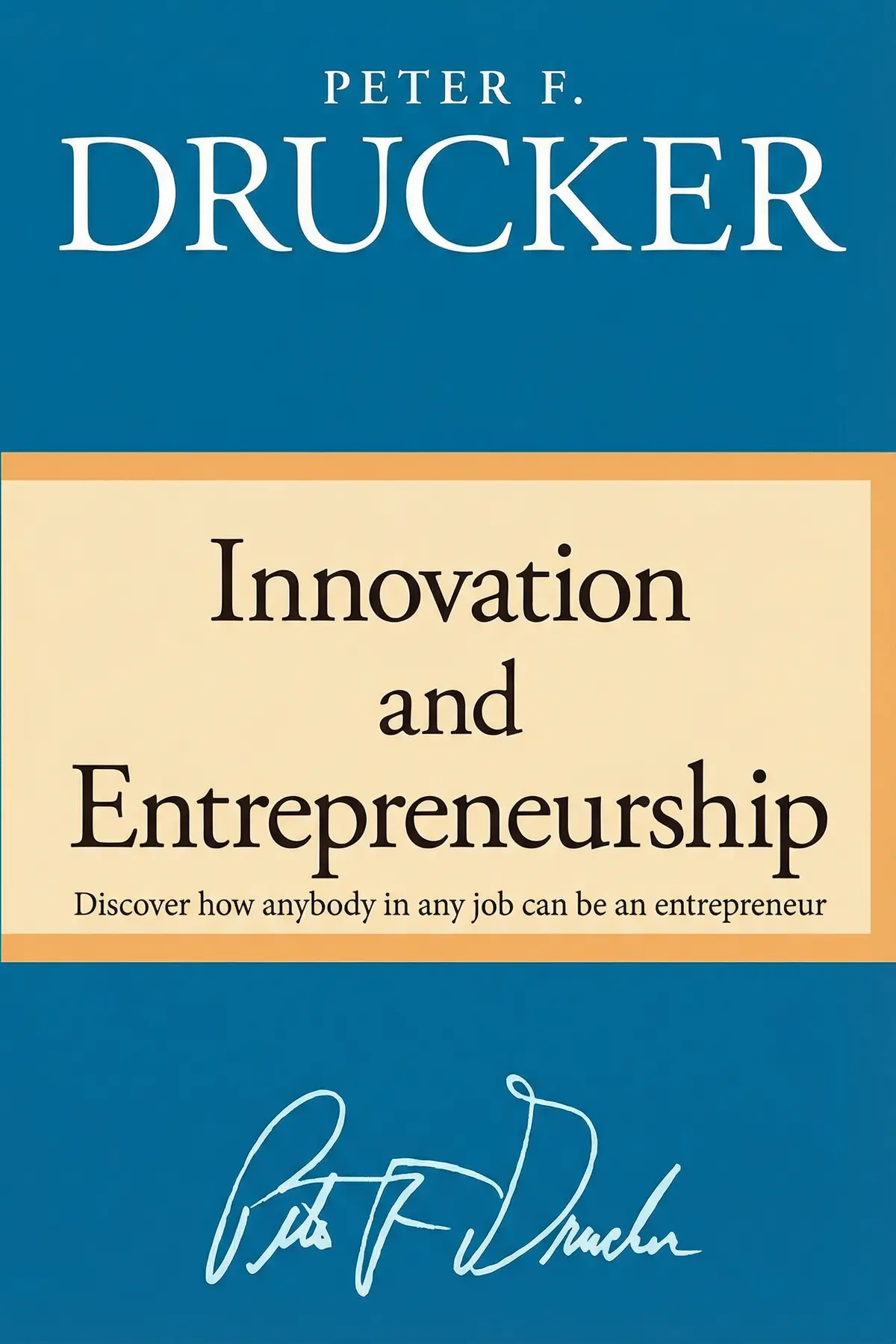
Innovation and Entrepreneurship
Peter Drucker
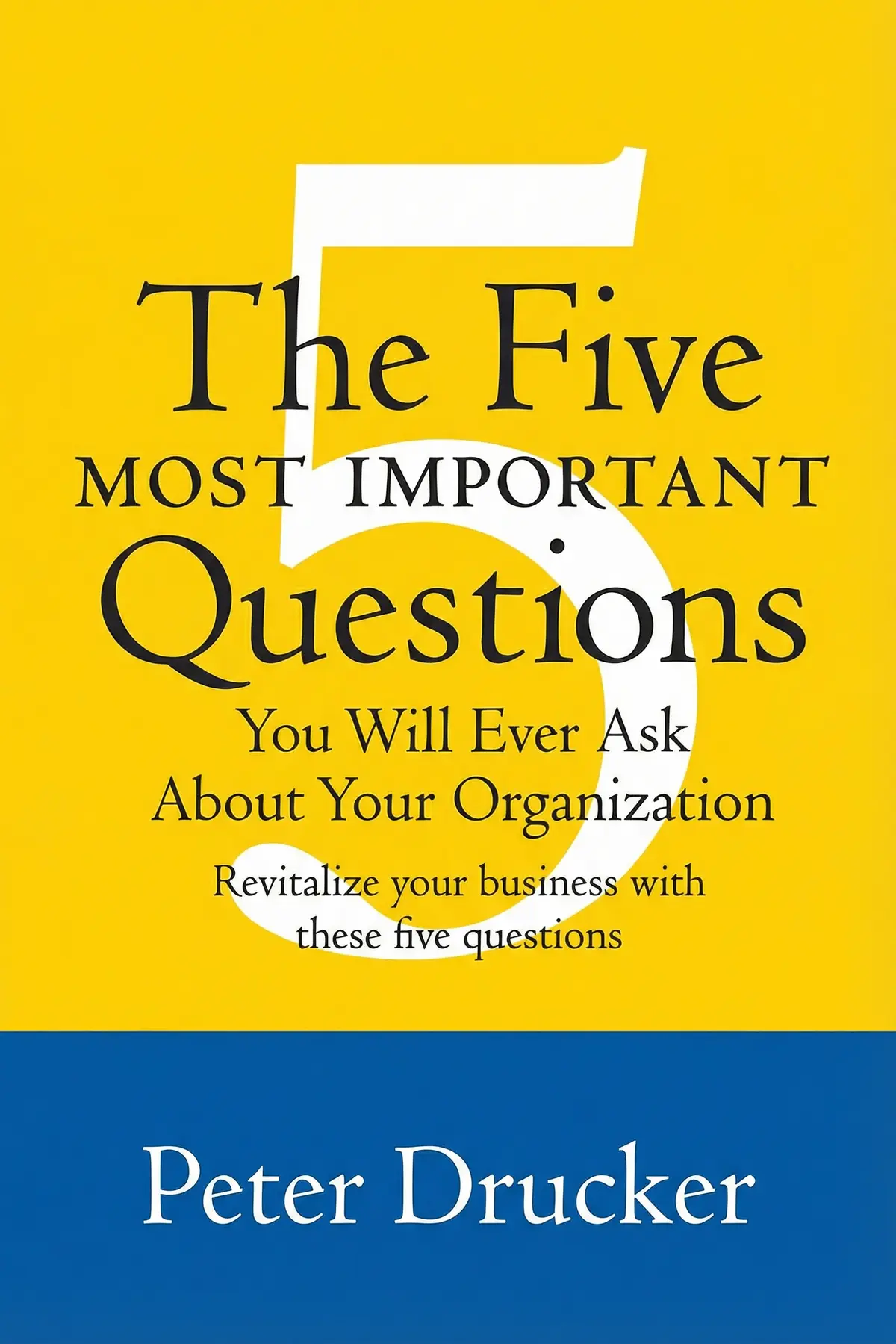
Explore the foundational framework for organizational excellence developed by Peter Drucker. This guide presents five transformative questions designed to help leaders clarify their purpose, identify their customers, and achieve meaningful, long-term results.
1 min 46 sec
In the world of leadership and management, there is a common trap that many people fall into. It is the tendency to keep doing things the same way, over and over, while secretly hoping for a different outcome. We often call this a recipe for frustration, but in a business context, it is simply a missed opportunity for growth. If an organization feels like it is treading water or losing its way, the solution is rarely to just work harder. Instead, the solution is to pause and ask the difficult questions that get to the heart of why the organization exists in the first place.
Peter F. Drucker, a man often cited as the father of modern management, spent his life helping organizations find their footing. He realized that success isn’t built on complex jargon or fleeting trends, but on clarity. To achieve that clarity, he distilled the essence of organizational health into five specific questions. These are not questions you answer once and put in a drawer; they are a framework for constant self-reflection and strategic alignment.
While Drucker’s work frequently touched on the unique challenges of the non-profit and social sectors, the wisdom he shares is universal. Whether you are leading a massive corporation, managing a small local team, or launching a new venture, these five inquiries serve as a diagnostic tool to help you understand what is working, what has become obsolete, and what needs to change. Over the course of this summary, we will explore each of these questions in depth. We will see how a hospital ER redefined its entire approach to patient care, how a school identifies its web of stakeholders, and how a museum uses flexible planning to thrive in unpredictable times. The goal is to move past the ‘business as usual’ mindset and toward a revitalized vision of what your organization can truly achieve.
2 min 22 sec
Uncover why a concise mission statement is the ultimate anchor for any organization and how it helps leaders navigate through periods of rapid change.
1 min 57 sec
Learn the vital distinction between those whose lives you transform and those who support your efforts to stay relevant in a shifting market.
2 min 13 sec
Discover the danger of assuming you know what your customers want and how direct feedback can lead to radical organizational improvements.
2 min 03 sec
Examine how to judge your organization’s performance through both hard data and the subjective experiences of those you serve.
2 min 19 sec
Learn the essentials of strategic planning, from setting measurable objectives to maintaining the flexibility needed to seize new opportunities.
1 min 27 sec
As we reach the end of this exploration into Peter Drucker’s five essential questions, it becomes clear that the path to organizational excellence is paved with clarity. We have seen that a mission is more than just words; it is a functional tool that guides every decision and provides a sense of purpose to the entire team. We have learned that knowing your customer—and truly understanding what they value—is the only way to ensure your efforts are hitting the mark. We have also examined how to judge success through a combination of hard data and human impact, and how to translate all of this into a plan that is both focused and flexible.
The beauty of these questions lies in their simplicity, but don’t let that fool you. Answering them honestly requires courage and a willingness to look at uncomfortable truths. It requires a leader to step back from the daily grind and think deeply about the ‘why’ and the ‘how’ of their work.
Your journey shouldn’t stop here. The next time you see an organization that is thriving, take a moment to analyze them through the lens of these questions. What is their mission? Who are they serving? How do they measure their impact? By practicing this kind of analysis, you will sharpen your own strategic thinking. Now, it’s time to take these five questions back to your own team. Start the conversation, challenge the status quo, and use these insights to build an organization that is not only successful but truly meaningful.
Organizations often find themselves trapped in cycles of stagnation, repeating the same methods while hoping for a breakthrough. This summary explores Peter Drucker’s legendary framework for breaking that cycle through rigorous self-examination. By stripping away complexity, Drucker identifies five fundamental questions that every leader—whether in the corporate world or the social sector—must answer to ensure their organization remains relevant and effective. The journey begins with defining a mission that serves as a North Star and moves through identifying who the customer truly is and what that customer values most. From there, the focus shifts to measuring results both qualitatively and quantitatively, concluding with the development of a flexible, actionable plan. The promise is simple yet profound: by honestly engaging with these questions, you can revitalize your business, align your team, and create a roadmap for sustainable success in an ever-changing landscape.
Peter F. Drucker was a preeminent figure in the field of management theory, living from 1909 to 2005. Throughout his career, he served as a writer, educator, and consultant, specializing in strategy for both commercial businesses and social sector organizations. Drucker authored more than 30 books, including landmark titles such as Concept of the Corporation and Post-Capitalist Society, cementing his legacy as a pioneer of modern management practices.
Listeners find the work full of insight, offering excellent essential questions, and value its surprisingly accessible writing style. They characterize it as an efficient read that justifies the time spent, while one listener points out its utility as a framework for strategic planning within nonprofits. The text is brief, lucid, and highly motivating, serving as a practical tool for its audience.
After hearing so much about the Drucker legacy, I finally picked this up for my charity’s board members, and it didn't disappoint. This is not a dense academic tome, but rather a strategic planning framework that is refreshingly easy to read and deeply inspiring. It gets straight to the point: you have to know who your primary customer is and what they actually value, not just what you think they should value. The concept of defining results as 'changed lives' has completely shifted how we measure our impact this year. It’s a slim volume, but the weight of the questions it poses is immense. If you’re leading any kind of mission-driven organization, this is essentially your roadmap.
Show moreWow. I wasn’t expecting such a slim volume to pack this much of a punch regarding the 'why' behind our daily operations. Peter Drucker’s core philosophy shines through here, especially the idea that a mission must have deep meaning and be something you want to be remembered for. It’s remarkably concise, yet it manages to be incredibly inspiring by focusing on the human element of organizations. I loved the warning about not getting into a debate over the term 'customer' and instead just focusing on who must be satisfied for results to happen. This is the kind of book you keep on your desk and flip through whenever you feel the organization is losing its way or getting bogged down in bureaucracy.
Show moreThis book serves as a masterclass in simplicity for the modern leader. The chapter on defining results by focusing on 'changed lives' completely reframed how I view my team's impact on our community. Most business books try to make things more complicated to seem more valuable, but Drucker does the opposite by stripping everything down to five essential pillars. It is clear, incredibly inspiring, and provides the kind of critical questions that lead to real breakthroughs. I’ve already bought copies for my entire executive team. Even though it's short, you will spend weeks actually answering the questions it poses if you do it right.
Show moreAs someone who has struggled with long-winded business manuals, this was a breath of fresh air because of its brevity. It provides five critical questions that force you to strip away the jargon and look at the skeleton of your organization. I found the section on the 'plan' particularly useful, as it emphasizes that planning is a continuous process rather than a one-time event you check off a list. To be fair, some of the advice feels basic if you’ve been in management for decades, but the clarity of the presentation makes it a great tool for team alignment. We used it to kick off our annual retreat and it saved us hours of circular debate.
Show moreFinally got around to reading this for our leadership team, and the clarity it provides is undeniable. Drucker sees the essence of the problem: most companies are too busy doing things to ask if they are the right things. I particularly appreciated the focus on 'abandonment'—the idea that you have to stop doing what no longer works to make room for innovation. It's a tough pill to swallow but a necessary one. The book is very focused on the non-profit world, which is a bit of a curveball if you're in tech, but the logic carries over perfectly if you have the patience to translate the terms. A solid, quick read for any leader.
Show moreDirect and punchy, this guide forces you to look at your customer through a lens of actual value rather than just safe assumptions. I've read plenty of strategy books, but few are this effective at highlighting the danger of acting on what you believe satisfies the customer without actually asking them. The chapter on results is a great reminder that if you have more than five goals, you effectively have none. My only minor gripe is that it feels a bit like a Blinkist summary expanded into a book format. However, the questions themselves are so fundamental that they deserve the dedicated space. It’s a useful resource for any startup founder trying to find their footing.
Show moreEver wonder why your team is spinning its wheels despite having a clear mission statement on the wall? This guide suggests that it’s probably because you haven't dared to ask what you should stop doing. Drucker’s focus on 'abandonment' is probably the most radical and necessary part of this whole framework. Most leaders just add more goals, but this book forces you to prune the dead wood so that new growth actually has a chance. I'm taking one star off because it focuses so heavily on non-profits that business owners have to do some mental translation, but the core wisdom regarding risk-taking and analysis is universal and timeless.
Show moreThe truth is, this feels more like a summarized workbook or a glorified blog post than a comprehensive business book. I finished it in under forty minutes, which makes me wonder if the price tag is truly justified for what is essentially a high-level framework. It’s certainly a quick read and the formatting is clear, but don’t expect deep dives into the complex mechanics of organizational behavior. It pushes you to think, which is good, but it leaves you to do all the heavy lifting yourself without much guidance on implementation. If you’re looking for Drucker’s legendary depth, you might want to look at his earlier, meatier works instead of this thin summary.
Show moreLook, the advice here is foundational, but if you’ve spent more than five years in management, you might find it a bit basic for your needs. It serves as a decent reminder to stay customer-first, but it doesn't offer much in the way of new or revolutionary insights. Personally, I found the constant quoting of Drucker by other authors to be a little disjointed, as it lacks the cohesive voice of his solo works. It is definitely worth the time because it only takes an hour to get through, but don't go in expecting a detailed manual. It's a high-level strategic overview that works best for new managers or struggling non-profit boards.
Show moreNot what I expected given that Peter Drucker is the only name on the cover, yet the actual text is heavily supplemented by other contributors since he passed away. Frankly, it feels a bit like a bait and switch where his name is used to sell a collection of thoughts that aren't exclusively his. While the five core questions are decent, the book is remarkably obsessed with non-profits and has a weirdly disappointed tone toward them at times. If you are in a corporate setting, you might find the 'beneficiary' language distracting or irrelevant to your bottom line. It's mercifully short, but I wouldn't call it a masterpiece or a must-read for anyone outside the non-profit sector.
Show more
Hamilton Helmer

Margaret Heffernan
Joseph A. Maciariello
AUDIO SUMMARY AVAILABLE
Get the key ideas from The Five Most Important Questions You Will Ever Ask About Your Organization by Peter Drucker, plus 5,000+ more titles in English and Thai.