

Adults in The Room: My Battle With Europe’s Deep Establishment
Yanis Varoufakis
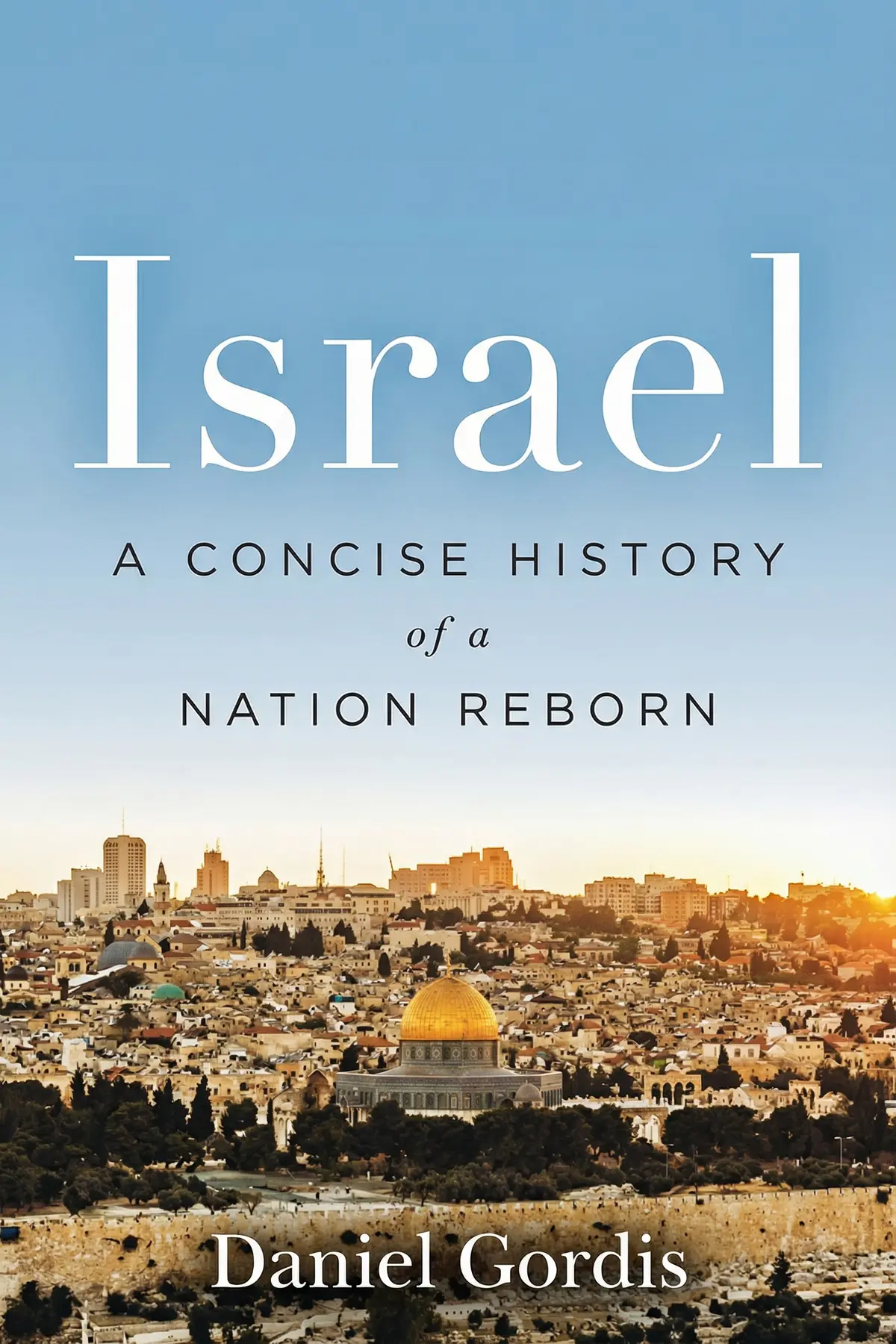
Explore the dramatic journey of a nation reborn, from the early stirrings of Zionist thought in Europe to the complex realities and economic triumphs of modern-day Israel.
1 min 52 sec
The story of Israel is not merely the chronicle of a piece of land, but the narrative of a people seeking to redefine their destiny after centuries of displacement. To understand modern Israel, one must look back at the desperate conditions of nineteenth-century Europe, where the Jewish population faced a cycle of hope and systemic violence. For many, the dream of a sovereign home was more than a political ambition; it was a matter of basic survival. This history is marked by a series of profound transformations—from the intellectual debates of European cafes to the physical labor of reclaiming a desert, and from the idealistic hope of peaceful coexistence to the harsh realities of perpetual conflict.
In this exploration, we will follow the arc of a nation that was willed into existence against nearly impossible odds. We will see how early Zionist thinkers envisioned a “new kind of Jew,” one who was self-reliant and connected to the soil, and how those ideals were tested by the complexities of governing a diverse population in a volatile region. We’ll examine the internal tensions that have shaped the country, including the friction between secularism and religious tradition, and the ongoing struggle to balance democratic values with the demands of security.
Through the lens of Daniel Gordis’s research, we are invited to look past the headlines and understand the “throughline” of the Israeli experience: the persistent effort to build a home that is both a refuge for the Jewish people and a thriving, modern democracy. As we walk through the milestones of this journey—the world wars, the declarations of independence, the military victories, and the stalled peace talks—we gain a clearer picture of a country that is constantly reinventing itself while remaining deeply rooted in its ancient heritage. This is the story of a nation reborn, a concise yet deep look at the struggles and triumphs that define the state of Israel today.
2 min 33 sec
Discover how the recurring violence of European pogroms and the failure of social integration forced a radical rethinking of the Jewish future.
2 min 24 sec
Explore the early tensions between those who saw the return to Israel as a human political act and those who believed it should remain a divine mystery.
2 min 22 sec
Learn how the early pioneers sought to shed the perceived weakness of the European diaspora by embracing physical labor and communal living.
2 min 24 sec
Trace the incredible story of the early Aliyahs and how immigrants turned inhospitable swamps into a thriving agricultural and urban hub.
2 min 25 sec
Examine the escalating conflict between Jewish defense groups, the British Mandate, and the Arab population as the dream of statehood neared reality.
2 min 32 sec
Unpack the moral and political dilemmas faced by Israel’s founders as they balanced democratic ideals with the harsh necessity of survival.
2 min 35 sec
See how the reality of constant conflict and the arrival of diverse Jewish populations shifted the country’s political and cultural center of gravity.
2 min 27 sec
Follow the nation through the trauma of the 1970s and 80s, from the shock of the Yom Kippur War to the moral reckoning of the Lebanon conflict.
2 min 34 sec
Reflect on how Israel has managed to become a global economic powerhouse while continuing to wrestle with its core existential questions.
1 min 46 sec
The history of Israel is a testament to the power of a shared dream and the staggering resilience required to bring that dream into reality. From the desperate fleeing of European pogroms to the creation of a global economic hub, the journey has been one of constant transformation and existential challenge. We have seen how the Zionist movement was born out of a practical need for safety, yet was always fueled by a deeper, ancient connection to the land. We’ve explored how the early pioneers’ vision of the “New Jew” fundamentally reshaped the Jewish identity, replacing a sense of vulnerability with a fierce, self-reliant independence.
As we look at Israel today, we see a nation that is still very much in the process of defining itself. It is a place where the echoes of the Balfour Declaration, the trauma of the Holocaust, and the triumphs of the Six-Day War are all present in the daily lives of its citizens. The moral dilemmas of the past—how to balance security with human rights, and how to maintain a Jewish identity within a democratic framework—are not historical footnotes; they are the living questions that continue to drive the country’s political and social debates.
The takeaway from this narrative is that Israel’s survival was never guaranteed; it was willed into existence through diplomacy, labor, and sacrifice. While the path has often been marked by conflict and controversy, the nation’s ability to flourish and innovate despite these challenges is undeniable. To understand Israel is to recognize it as a vibrant, complex, and often contradictory society that is forever striving to live up to its founding promise as a secure and sovereign home. As the story continues to unfold, the world remains a witness to the ongoing rebirth of a nation that refuses to be defined by its limitations, but rather by its persistent will to thrive.
Daniel Gordis offers a sweeping narrative of the Israeli experience, moving far beyond simple dates and battles to explore the soul of a nation. The book traces the origins of the Jewish longing for a homeland, sparked by centuries of European persecution and the visionary ideas of Theodor Herzl. It follows the pioneers who drained swamps and built cities, the soldiers who fought for survival, and the leaders who wrestled with the moral dilemmas of statehood. At its heart, this is a story about the transformation of a people. Gordis examines how the early dream of a secular, agricultural utopia evolved into a complex, multifaceted society balancing tradition and innovation. By examining pivotal moments like the 1948 War of Independence, the Six-Day War, and the subsequent peace efforts, the narrative promises a deeper understanding of why Israel remains one of the most significant and scrutinized nations on the global stage.
Daniel Gordis is a distinguished scholar serving as the Senior Vice President at Jerusalem's Shalem College. A prominent voice in contemporary Jewish thought, he is a regular contributor to major publications like Bloomberg View and the Jerusalem Post. His insights have also been featured in the New York Times, Foreign Affairs, and the New Republic. Gordis has authored numerous books examining the intersection of Israeli culture, politics, and the relationship between Israel and the wider Jewish world, including the acclaimed work We Stand Divided.
Listeners find that this historical work offers a solid grasp of Israel’s past, crafted in a compelling style that feels like reading an absorbing novel. Additionally, the book is well-researched, succinct, and informative, with one listener remarking that it functions as an excellent primer on the topic. The writing remains neutral, while one review emphasizes its polished storytelling technique.
Wow. I didn't expect a 500-page history of a Middle Eastern nation to read like a page-turning novel, but Daniel Gordis has achieved something truly remarkable here. He manages to weave together the political, the cultural, and the deeply personal into a narrative that feels both educational and visceral. While some might find the prose a bit too celebratory of the Zionist cause, the sheer depth of research on display is undeniable. The way he describes the 19th-century pogroms in Russia provides a heartbreaking but necessary context for why the Jewish people felt they had no other choice. It is a sophisticated narrative that doesn't just list dates, but attempts to explain the soul of a country that probably shouldn't exist based on the odds. If you want to understand the modern identity of Israel, start with this book.
Show morePicked this up after a friend recommended it as the definitive 'introductory' book for the region, and I was not disappointed. The author’s writing style is incredibly engaging, almost like a novel, yet it remains rigorously well-documented and educational. I particularly appreciated the focus on the diverse backgrounds of the Jewish people who moved there, from the religious Haredi to the secular socialists. It highlights the unlikely nature of the state’s survival, making the history feel urgent and fragile. Even if you think you know everything about the 1948 war, Gordis brings new perspectives to the table. This is an essential read for anyone wanting a deep, sophisticated understanding of the Israeli experience. The way he integrates poetry and music into the historical timeline is a stroke of genius.
Show moreTruth is, I was worried this would be a dry, boring account of policy papers and border disputes. Instead, I found a deeply emotional and poetic exploration of what it means for a people to return home after two thousand years. The inclusion of Hebrew poetry and music throughout the text adds a layer of cultural depth that most history books completely ignore. It’s an engaging style that really helps you empathize with the pioneers who built the country from nothing. While the author is undeniably passionate about his subject, he doesn’t shy away from some of the internal friction points of Israeli society. This is a sophisticated and beautifully written piece of historical scholarship. It makes the complex reality of Israel much more accessible to the average reader.
Show moreThe chapter on the 1977 election and the rise of Menachem Begin was a turning point in my understanding of modern Israel. It did a great job explaining the shift from the old Labor guard to a more nationalist, religious focus. Gordis has a way of making complex political shifts feel like a compelling drama between powerful personalities. The book is incredibly well-documented, yet it never feels like it's bogged down in minutiae or boring statistics. You get a real sense of the anxiety and hope that has defined the country since its inception. I would recommend this to anyone looking for a comprehensive, sophisticated narrative of the region. It is easily one of the most informative books I have picked up this year.
Show moreLooking back at my time reading this, I’m struck by how much more I understand the internal diversity of the Jewish state. I never realized how contentious the divide between secular and religious groups has been from the very beginning. Gordis presents these arguments with a level of sophistication that forces you to think deeply about democracy and identity. It is an educational journey that reads like a page-turning novel, which is no small feat for a historical text. The prose is beautiful, and the structure is concise enough to keep the story moving without losing the 'big picture.' For anyone wanting to know what makes Israel tick, this is the book to buy. It is a brilliant achievement in historical writing.
Show moreEver wonder how a language that was effectively dead for two thousand years became the primary tongue of a modern, high-tech democracy? The section on Eliezer Ben-Yehuda and his obsessive quest to revive Hebrew was easily my favorite part of this entire book. Gordis does a fantastic job showing that Israel isn't just a collection of soldiers and politicians, but a wild mix of poets, dreamers, and cultural rebels. He spends a lot of time on the internal divisions between the Ashkenazim and the Mizrahim, which I found really eye-opening. In my experience, most histories ignore these internal class struggles. I think he goes a little light on the military tactics of the Six-Day War, but since this is more of a political and cultural history, I can forgive it. It’s a well-documented look at a very complicated place.
Show moreThis book serves as a masterclass in how to condense a massive amount of history into something digestible and compelling. Gordis focuses heavily on the big ideas and the 'why' behind the state, rather than just the 'what' and 'when' of various battles. I found his analysis of the 'New Jew' concept—the idea of moving away from the perpetual victimhood of the Diaspora—to be fascinating. Look, it’s clearly written from a Zionist perspective, so don't go in expecting a cold, detached academic text. But as a political history, it provides a crucial look at the internal debates that shaped the nation. My only real complaint is that the latter chapters feel a bit rushed compared to the early history. Despite that, it remains a fantastic, sophisticated introduction to a very dense subject.
Show moreAfter hearing so much noise in the news, I wanted to find a source that explained the foundational logic of the Jewish state. Gordis delivers exactly that, providing a clear and well-documented timeline from the 1800s to the modern era. The analogy of an indigenous tribe returning to their ancestral lands after centuries away really helped frame the narrative for me. I do wish he had spent more time on the Entebbe raid and other major military moments, as they felt a bit glossed over in favor of political theory. However, as an educational tool for understanding the political landscape, it’s hard to beat. It’s a readable, fast-paced account that kept me interested for the full length of the book. It certainly provides a perspective you won't get from headlines.
Show moreAs someone who has tried to stay neutral on Middle Eastern politics, I found this work to be a bit of a struggle to finish. The first half, which deals with the roots of Zionism and the struggle against the British, is absolutely brilliant and informative. However, once the narrative hits the 1967 war and the subsequent occupation, the author's pro-Israel bias becomes quite overwhelming. He presents the IDF’s actions with a lot of empathy while painting the Palestinian response as almost entirely irrational and driven by hatred. I really wanted a more balanced view that took the suffering of the local Arab populations into account. It is well-written and engaging, but it definitely feels like a one-sided story meant to bolster a specific national narrative. The prose is beautiful, but the perspective is limited.
Show moreFrankly, I have some mixed feelings about the way this book handles the more controversial aspects of the occupation. While the early history of the Zionist movement is explained with incredible clarity and detail, the treatment of the Intifadas felt somewhat dismissive. The author tends to focus almost exclusively on the losses sustained by the Jewish community while barely touching on the humanitarian issues in Palestinian territories. It is an engaging read and very educational on the internal Jewish experience, but it lacks the balance I was hoping for in a 'concise history.' If you read this, I'd suggest pairing it with a book written from a different perspective to get the full picture. It's a good history, but it's certainly not an objective one.
Show moreYanis Varoufakis

Yuval Noah Harari

Jacinda Ardern
Pankaj Mishra
Michael Axworthy
James Comey
Anthony Pratkanis
AUDIO SUMMARY AVAILABLE
Get the key ideas from Israel by Daniel Gordis, plus 5,000+ more titles in English and Thai.







